Ingredients
Each ingredient plays an important role in creating the jelly’s flavor, color, and texture.
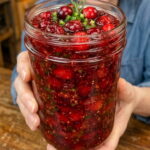
Fresh or Frozen Cranberries: 12 Ounces
Cranberries are the star ingredient. They provide the fruity tartness, natural color, and distinctive flavor that make this jelly different from traditional pepper jelly.
Fresh cranberries should be firm and brightly colored. Remove any soft, damaged, or shriveled berries before cooking.
Frozen cranberries work well, too. They can be added directly to the saucepan, although the mixture may take slightly longer to return to a boil.
Jalapeños: 2 Peppers
Jalapeños add fresh pepper flavor and a pleasant level of heat.
For a milder jelly, remove the stems, seeds, and inner membranes before finely mincing the peppers. For a spicier version, retain some of the membranes or use peppers that have a stronger natural heat.
Wear food-safe gloves when handling jalapeños, and wash your hands and utensils thoroughly afterward. Avoid touching your eyes or face.
Granulated Sugar: 1½ Cups
Sugar provides sweetness and helps balance the natural tartness of cranberries and vinegar.
It also contributes to the jelly’s overall structure, depending on the pectin formulation. Because different pectin products have different requirements, follow the package directions and do not assume that sugar can be reduced without affecting the set.
Apple Cider Vinegar: ½ Cup
Apple cider vinegar contributes a tangy flavor that complements the cranberries and peppers.
Use the type specified in your recipe, and do not substitute a different vinegar strength without a reliable recipe adjustment.
Water: ½ Cup
Water helps the cranberries soften and cook evenly. It also provides the liquid needed to create the initial fruit mixture.
Lemon Juice: 1 Tablespoon
Lemon juice adds a bright citrus note that enhances the fruit’s flavor.
Because the amount and type of acid can affect a preserve’s safety and setting behavior, use the specified ingredient and quantity rather than making untested substitutions.
Powdered Fruit Pectin: 1 Packet, Approximately 1.75 Ounces
Pectin is the gelling agent that helps the cooked mixture develop a jelly-like texture.
Different pectin brands and varieties may require different cooking methods, sugar quantities, or processing times. Check the product label carefully and follow the directions for the type you have.
Instructions
This simple cooking method transforms cranberries and jalapeños into a vibrant sweet-and-spicy condiment.
Step 1: Prepare the Ingredients
Rinse the cranberries under cool running water and remove any soft or damaged berries.
Wash the jalapeños, remove their stems, and finely mince them. For a milder flavor, remove the seeds and membranes before chopping.
Wear gloves when handling the peppers to help prevent skin irritation. Measure the remaining ingredients before starting so everything is ready when needed.
Step 2: Cook the Cranberries
Place the cranberries, minced jalapeños, apple cider vinegar, water, and lemon juice in a medium saucepan.
Set the saucepan over medium-high heat and bring the mixture to a boil, stirring occasionally to prevent sticking.
As the cranberries heat, their skins begin to split and release their juices. The liquid gradually becomes a rich red color, and the fruit begins to soften.
Step 3: Soften the Fruit
Reduce the heat slightly and simmer for approximately 8–10 minutes, until the cranberries have burst and softened.
Use a wooden spoon to gently mash some of the fruit against the side of the pan. This helps release more juice and creates a more uniform texture.
If you prefer a rustic jelly with small pieces of fruit, leave some cranberry pieces intact. For a smoother consistency, prepare the mixture according to the instructions for your chosen pectin.
Avoid blending a hot mixture in a sealed blender container, as steam can create dangerous pressure. If blending is appropriate for your pectin product, use a heat-safe method and allow the mixture to cool sufficiently before processing.
Step 4: Add the Powdered Pectin
Stir the powdered fruit pectin into the cooked cranberry mixture according to the directions on the package.
Bring the mixture to a full rolling boil, stirring as directed. A full rolling boil continues bubbling even when you stir it.
Pectin products differ, so the manufacturer’s instructions should determine exactly when the pectin is added and how long it cooks.
Step 5: Add the Sugar
Add the granulated sugar and stir continuously until it dissolves completely.
Bring the mixture back to a full rolling boil and cook for the time specified by the pectin manufacturer. For many conventional powdered pectin products, this may be around one minute after the mixture reaches a full rolling boil, but always follow the instructions for your specific product.
Avoid extending the cooking time unnecessarily. Excessive cooking can affect the texture, flavor, and ability of the jelly to set properly.
Step 6: Check the Consistency
Remove the saucepan from the heat once the required cooking time is complete.
The jelly may appear relatively thin while hot. This is normal because it needs time to cool before its final texture becomes apparent.
Avoid adding more pectin or cooking the mixture for an extended period simply because it has not thickened immediately. Follow the manufacturer’s guidance if you need to troubleshoot a jelly that does not set.
Step 7: Transfer to Clean Jars
Carefully ladle the hot mixture into clean, heat-safe containers, leaving appropriate headspace and following the container manufacturer’s guidance.
Use a clean utensil to remove any drips from the rims before securing the lids.
Because this version is intended for refrigerator storage rather than shelf-stable canning, do not assume that filling hot jars makes the jelly safe to store at room temperature.
Step 8: Cool and Refrigerate
Allow the jars to cool briefly, then refrigerate promptly. Do not leave the jelly at room temperature for an extended period.
Allow several hours for the jelly to set before serving. The final consistency may continue to develop as the mixture cools.