Ingredients
Each ingredient contributes to the bread’s texture, structure, or flavor.
Cottage Cheese: 1½ Cups (340 g)
Cottage cheese is the main ingredient that gives this loaf its creamy consistency and contributes much of its protein.
Its moisture helps soften the oats, while its mild, slightly tangy flavor works well with savory seasoning.
For the smoothest batter, blend the cottage cheese with the eggs until creamy before adding the oats.
Different cottage cheese brands have different moisture levels. If your cottage cheese contains a particularly large amount of liquid, the finished batter may be looser, which can affect baking time and texture.
Rolled Oats: 2 Cups (180 g)
Rolled oats provide the body of the loaf and help create its hearty texture.
When blended, the oats break down into smaller particles that absorb moisture and help bind the batter. The degree of blending determines whether the finished bread has a smoother texture or a more rustic crumb.
For a uniform loaf, blend the oats into a fine flour. If you prefer a slightly more textured bread, pulse them briefly and leave some small pieces intact.
Use the specified weight for the most consistent results, as the volume of oats can vary depending on how they are measured.
Large Eggs: 3
Eggs help bind the ingredients together and provide structure as the bread bakes.
They also contribute protein, moisture, and richness. As the eggs set in the oven, they help the batter hold its shape and form a sliceable loaf.
For consistent results, use three large eggs as specified.
Baking Powder: 2 Teaspoons
Baking powder is the leavening agent in this recipe. It releases gas during baking, helping the batter rise and develop a lighter texture.
Because this bread does not use yeast, baking powder plays an important role in its overall structure.
Check that your baking powder is fresh for the best results.
Everything Bagel Seasoning: 2 Tablespoons
Everything bagel seasoning delivers the distinctive savory flavor that makes this loaf special.
Most blends contain sesame seeds, poppy seeds, dried garlic, dried onion, and salt. The exact ingredients vary by brand, so check the label if you have particular dietary requirements.
One tablespoon is mixed into the batter, while the remaining tablespoon is sprinkled over the top before baking.
Some seasoning blends are quite salty, so taste your mixture before adding extra salt.
Olive Oil: 1 Tablespoon
Olive oil adds richness and helps keep the loaf from feeling too dry.
It also contributes to the bread’s tender texture and works well with the savory garlic and onion notes in the seasoning.
Use a mild olive oil if you prefer the everything bagel flavor to remain the main focus.
Salt: 1 Pinch, If Needed
Additional salt is optional because cottage cheese and everything bagel seasoning may already contain enough.
Instructions
This straightforward method produces a savory loaf with minimal hands-on preparation.
Step 1: Prepare the Oven and Loaf Pan
Preheat your oven to 350°F (180°C).
Line a loaf pan with parchment paper or lightly grease it with olive oil. Make sure the parchment is suitable for the intended oven temperature and fits securely inside the pan.
Preparing the pan first makes it easier to transfer the batter and remove the finished loaf after baking.
Step 2: Blend the Cottage Cheese and Eggs
Add the cottage cheese and three large eggs to a blender or food processor.
Blend until the mixture is smooth and creamy. Scrape down the sides if necessary so that the cottage cheese is evenly incorporated.
This step helps distribute the moisture throughout the batter and reduces large curds in the finished loaf.
If you prefer a more rustic texture, you can leave the cottage cheese slightly textured, but a smooth mixture generally produces more consistent results.
Step 3: Add the Rolled Oats
Add the rolled oats to the blender and pulse until the mixture forms a thick batter.
For a smoother loaf, blend the oats into a fine flour before incorporating them into the wet ingredients. For a more rustic bread, leave some small oat pieces intact.
The batter should be thick enough to spoon or pour into the prepared loaf pan. It will not have the elastic texture of traditional wheat bread dough, and there is no need to knead it.
Step 4: Add the Remaining Ingredients
Transfer the batter to a mixing bowl if your blender is too full or difficult to stir.
Add the baking powder, olive oil, and one tablespoon of everything bagel seasoning. Stir gently until the ingredients are evenly distributed.
Taste a small amount of the unbaked mixture only if it can be done safely without consuming raw egg; otherwise, adjust the salt based on the seasoning label.
Avoid excessive mixing after adding the baking powder. A gentle, thorough stir is enough.
Step 5: Fill the Loaf Pan
Spoon the batter into the prepared loaf pan.
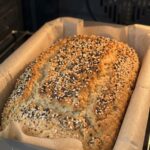
Use a spatula to spread it evenly into the corners and smooth the surface. Sprinkle the remaining tablespoon of everything bagel seasoning over the top.
The seasoning forms a savory, attractive crust as the bread bakes.
Step 6: Bake Until Firm
Place the loaf pan in the preheated oven and bake for approximately 40–50 minutes.
The exact time will depend on your loaf pan, oven, batter consistency, and how finely the oats were blended.
The top should become golden, and the center should feel firm rather than wet. A toothpick inserted into the middle should come out without wet batter, although a few moist crumbs may remain.
Because the loaf contains eggs and cottage cheese, ensure that the center is fully cooked. If the surface browns too quickly while the middle remains underdone, loosely cover the top with foil and continue baking until the center is set.
Step 7: Cool the Bread in the Pan
Remove the loaf from the oven and let it rest in the pan for approximately 10 minutes.
This short resting period helps the bread settle and makes it easier to remove without breaking.
Carefully lift the loaf out using the parchment paper, or turn it out gently if the pan was greased.
Step 8: Cool Completely Before Slicing
Transfer the bread to a wire rack and allow it to cool completely before cutting.
The interior needs time to stabilize after baking. Slicing too early can make this type of moist, oat-based bread appear gummy or cause it to crumble.