
Homemade Oatmeal Bread in a Pan (Soft, Fluffy & Easy Sandwich Loaf)
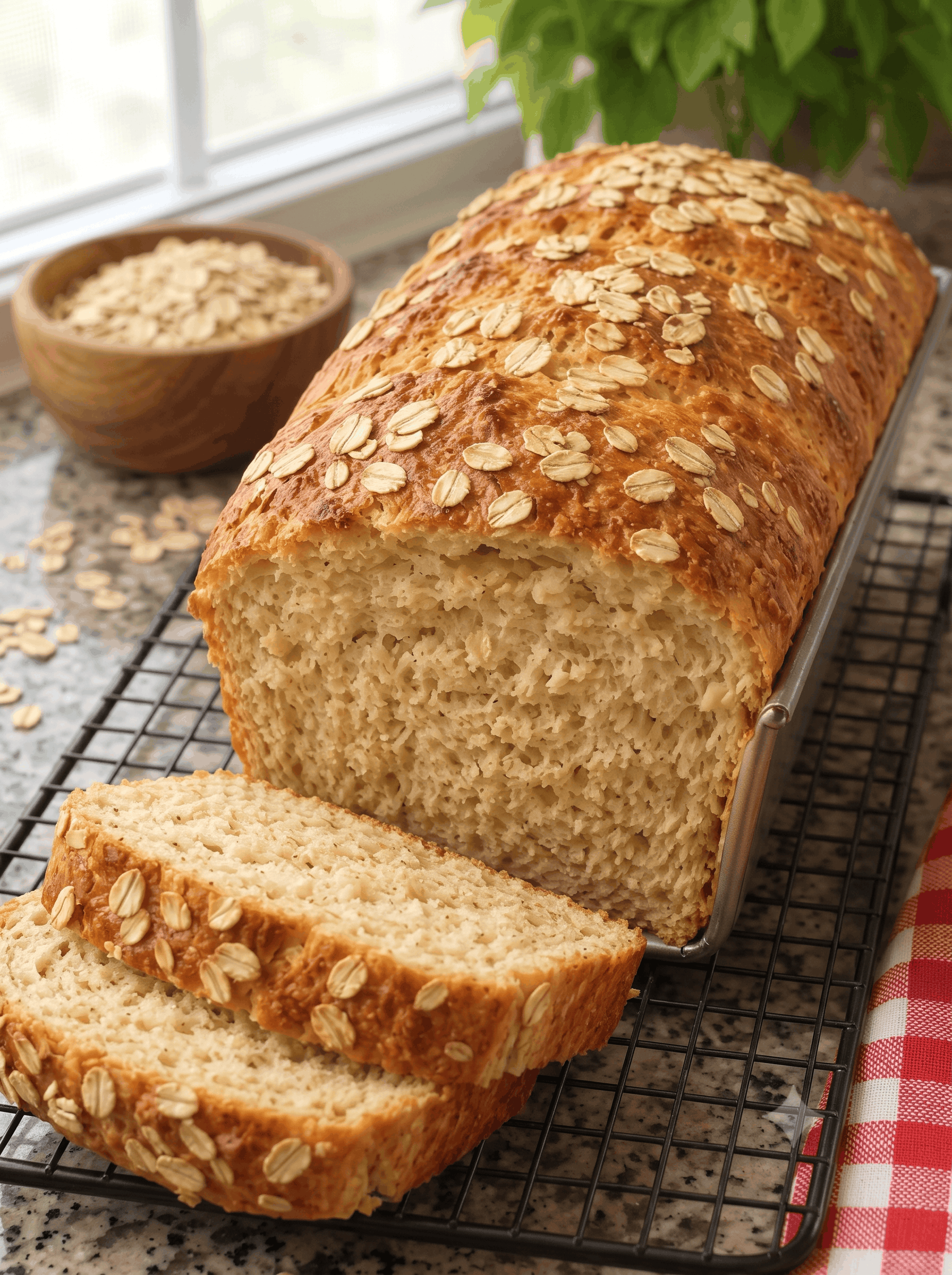
There’s something deeply satisfying about slicing into a loaf of bread you made yourself. This homemade oatmeal bread is soft, lightly sweet, and wonderfully tender, with a golden oat-sprinkled crust and a hearty, wholesome flavor. It’s baked in a standard loaf pan, which gives you even, sandwich-ready slices that are perfect for toast, breakfast, or lunchboxes.
Best of all, this recipe is beginner-friendly. It uses just a handful of pantry ingredients, needs no special equipment, and comes together with simple kneading and two rises. If you’ve ever been nervous about baking yeast bread, this oatmeal loaf is a great place to start. The oats soak in warm milk first, which makes the crumb moist and soft rather than dry or heavy, and the honey and butter add gentle sweetness and richness.
Why You’ll Love This Oatmeal Bread
It’s soft and moist. Soaking the oats in warm milk softens them completely, so they melt into the dough and keep the loaf tender for days.
It uses simple ingredients. Oats, flour, milk, yeast, honey, butter, and salt. That’s the whole list.
It’s beginner-friendly. There’s no complicated shaping, no sourdough starter, and no fancy techniques. If you can mix and knead, you can make this bread.
It’s naturally wholesome. Oats add fiber and a nutty flavor, and the honey provides subtle sweetness without refined sugar.
It makes the perfect sandwich loaf. Baked in a loaf pan, it slices evenly and holds up to sandwiches, toast, and spreads.
It makes your kitchen smell amazing. Warm bread, honey, and toasted oats are hard to beat.
Ingredients You’ll Need
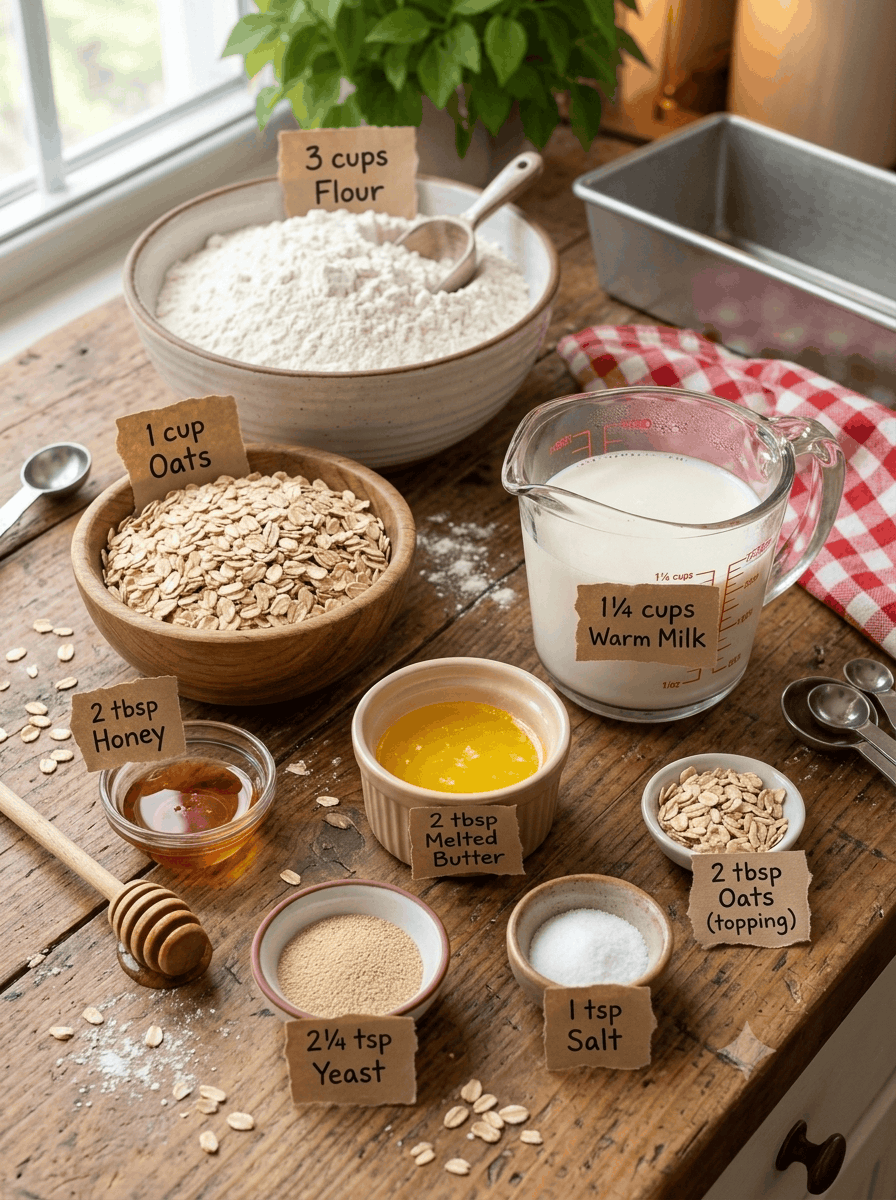
- 1 cup (90 g) rolled oats
- 3 cups (375 g) all-purpose flour
- 1¼ cups (300 ml) warm milk
- 2¼ tsp (7 g) instant yeast
- 2 tbsp honey
- 2 tbsp melted butter
- 1 tsp salt
- 2 tbsp rolled oats, for topping
- A little extra milk, for brushing
- Butter or oil, for greasing the pan
Ingredient Notes
Rolled oats. Old-fashioned rolled oats give the best texture and a pretty topping. Quick oats work too, though they’ll disappear more into the crumb. Avoid steel-cut oats, which stay too firm in this recipe.
All-purpose flour. All-purpose flour gives a soft, tender loaf. Bread flour will produce a slightly chewier, taller result, and you may need a splash more milk. Measure carefully: spoon the flour into your cup and level it, or weigh it for the most reliable results.
Warm milk. Aim for about 40 to 43°C (105 to 110°F), warm to the touch but not hot. Milk that’s too hot can kill the yeast, while cold milk slows the rise. Whole milk gives the richest flavor, but any milk works. Plant-based milks can be substituted in a pinch.
Instant yeast. Instant yeast can be mixed straight into the dough. If you only have active dry yeast, dissolve it in the warm milk with a pinch of honey for 5 to 10 minutes until foamy before using.
Honey. Honey adds mild sweetness, moisture, and a lovely golden color. Maple syrup or brown sugar can stand in.
Butter. Melted butter enriches the dough and keeps the crumb soft. Cool it slightly before adding so it doesn’t overheat the yeast.
Salt. Salt controls the yeast and builds flavor. Don’t skip it, but add it to the flour rather than directly onto the yeast.
How to Make Oatmeal Bread in a Pan (Step by Step)
Step 1: Soak the Oats
Place the rolled oats in a large mixing bowl and pour the warm milk over them. Stir, then let the mixture sit for 10 minutes. The oats will absorb the milk and turn soft and porridge-like. This step is what makes the bread so tender.
Step 2: Add the Remaining Ingredients
Stir in the yeast, honey, and melted butter. Add the flour and salt. Mix with a wooden spoon or your hands until a shaggy dough forms and no dry flour remains.
Step 3: Knead the Dough
Turn the dough out onto a lightly floured surface and knead for 8 to 10 minutes, until smooth and elastic. You can also use a stand mixer with a dough hook on medium-low speed for about 6 to 8 minutes. The dough should be soft and slightly tacky, but not sticky enough to cling to your hands. If it’s too sticky, add flour one tablespoon at a time. If it’s too dry or stiff, add a teaspoon of milk.
To check whether you’ve kneaded enough, try the windowpane test. Pinch off a small piece and gently stretch it. If it thins into a translucent film without tearing right away, the gluten is well developed.
Step 4: First Rise
Shape the dough into a ball and place it in a lightly greased bowl, turning it once to coat. Cover with a clean towel or plastic wrap and let it rise in a warm spot for about 1 hour, until doubled in size.
Step 5: Shape the Loaf
Gently press the air out of the dough and turn it onto a lightly floured surface. Pat it into a rectangle roughly 20 x 30 cm (8 x 12 inches). Roll it up tightly from the short end, pinching the seam closed as you go, and tuck the ends under. Place the loaf seam-side down in a greased loaf pan, about 22 x 12 cm (9 x 5 inches).
Step 6: Second Rise
Brush the top with milk and sprinkle with the 2 tablespoons of rolled oats, pressing lightly so they stick. Cover loosely and let the loaf rise for 30 minutes, until it crowns just above the rim of the pan. Preheat your oven to 175°C (350°F) during this time.
Step 7: Bake
Bake for 35 to 40 minutes, until the crust is deep golden brown. The loaf should sound hollow when tapped on the bottom, and a thermometer inserted in the center should read about 93 to 96°C (200 to 205°F). If the top browns too quickly, tent it loosely with foil for the last 10 to 15 minutes.
Step 8: Cool
Remove the loaf from the pan right away and place it on a wire rack. For a softer crust, brush the top with a little melted butter. Let the bread cool for at least 1 hour before slicing. Cutting too early can make the interior gummy, because the crumb is still setting as it cools.
Tips for the Best Oatmeal Bread
Don’t skip the soak. Soaking the oats in warm milk is what gives the loaf its soft, moist texture.
Check your milk temperature. If you don’t have a thermometer, it should feel comfortably warm on your wrist, like a baby’s bottle.
Knead until smooth. Proper kneading builds structure, which gives you a loaf that rises tall and slices cleanly.
Find a warm spot for rising. An oven with just the light on, or a spot near a warm (not hot) appliance, works well. If your kitchen is cool, the rise may take longer, so go by the dough rather than the clock.
Don’t over-proof. If the dough rises too far in the pan, it can collapse in the oven. It’s ready when it has crowned about 2 to 3 cm above the rim and springs back slowly when gently pressed.
Use the right pan size. A 9 x 5 inch pan gives a nicely domed loaf. A smaller pan will make a taller, narrower loaf that needs a little longer to bake.
Be patient with cooling. It’s tempting to cut into warm bread, but waiting gives you cleaner slices and a better crumb.
Use a serrated knife. A bread knife and a gentle sawing motion give neat slices without squashing the loaf.
Easy Variations to Try
- Honey whole wheat oatmeal bread: Replace up to 1 cup of the all-purpose flour with whole wheat flour for a heartier loaf. You may need a tablespoon or two more milk.
- Cinnamon raisin oatmeal bread: Knead in 1 teaspoon of cinnamon and ½ cup of raisins.
- Seeded oatmeal bread: Add sunflower, pumpkin, or flax seeds to the dough and sprinkle some on top.
- Maple oatmeal bread: Swap the honey for maple syrup for a warmer, deeper sweetness.
- Cheddar oat bread: Knead in ¾ cup of shredded cheddar for a savory loaf.
- Oatmeal dinner rolls: Divide the dough into 12 pieces, shape into balls, and bake in a greased pan for 20 to 25 minutes.
- Overnight version: After kneading, refrigerate the dough in a covered bowl overnight. Let it come to room temperature, shape, and proceed with the second rise.
How to Serve Oatmeal Bread
This loaf is wonderful in so many ways:
- Toasted with butter and honey for breakfast.
- Spread with jam, peanut butter, or almond butter.
- Used for sandwiches, such as turkey and cheese, egg salad, or grilled cheese.
- Served alongside soups and stews for dipping.
- Turned into French toast or bread pudding.
- Topped with avocado, a fried egg, and a pinch of salt.
- Cut into cubes and baked into homemade croutons or stuffing.
How to Store Oatmeal Bread
Room temperature: Store in a bread bag or airtight container for up to 3 days. A sealed bag keeps the crust soft.
Refrigerator: Not generally recommended, since refrigeration can dry bread out faster. It can be useful in very warm, humid weather to prevent mold.
Freezer: Slice the cooled loaf and freeze the slices in a zip-top bag for up to 3 months. Toast them straight from frozen, or let them thaw at room temperature.
Refreshing day-old bread: Wrap in foil and warm in a 150°C (300°F) oven for 10 minutes, or toast individual slices.
Common Problems and How to Fix Them
My bread didn’t rise. The yeast may be old or the milk may have been too hot or too cold. Check the expiration date on your yeast, and use milk that’s warm, not hot. A cool kitchen can also slow the rise, so give it more time.
The loaf is dense. Common causes include too much flour, not enough kneading, or under-proofing. Measure flour carefully and make sure the dough doubles during the first rise.
The crust is too dark. Tent the loaf with foil partway through baking, or move the rack to a lower position.
The loaf collapsed or has a wrinkled top. It was likely over-proofed. Shorten the second rise and bake as soon as the dough has crowned over the pan.
The bread is gummy inside. It may have been underbaked or sliced too early. Check that the internal temperature reaches about 93 to 96°C (200 to 205°F) and let it cool fully.
The dough is too sticky. Oats can make the dough feel wetter at first. Knead for a few more minutes before adding flour, then add only a tablespoon at a time.
The oat topping fell off. Brush the loaf with milk, or an egg wash, right before sprinkling and gently press the oats in.
Frequently Asked Questions
Can I use quick oats instead of rolled oats?
Yes. Quick oats soften faster and blend more into the crumb, giving a finer texture. The topping will look less rustic, but the bread will taste great.
Can I make this bread without milk?
You can use water, which gives a slightly crustier, less rich loaf. Plant-based milks such as oat or almond milk also work well.
Can I use bread flour?
Yes. Bread flour has more protein, which gives a chewier, taller loaf. You may need a little extra milk.
Can I use active dry yeast?
Yes. Dissolve it in the warm milk with a little honey and wait until it foams, about 5 to 10 minutes, before adding the other ingredients.
Can I make this vegan?
You can substitute plant-based milk, maple syrup for the honey, and oil or vegan butter for the butter. The texture will be very similar.
Can I knead this in a stand mixer or bread machine?
A stand mixer with a dough hook works great. For a bread machine, use the dough cycle, then shape and bake in the oven.
How do I know when the bread is done?
The crust should be deep golden brown, the loaf should sound hollow when tapped on the bottom, and the internal temperature should be about 93 to 96°C (200 to 205°F).
Why is my bread crumbly?
This usually means the dough was too dry or the loaf was sliced while still hot. Add a splash more milk if the dough feels stiff, and let the bread cool completely.
Can I add more oats?
A little extra is fine, but too many oats can weigh down the dough. If you add more, increase the milk slightly.
Is oatmeal bread healthy?
Oats contribute fiber, including beta-glucan, and the bread uses simple ingredients with no preservatives. It’s a better choice than many store-bought white breads, though it’s still made with refined flour. Using part whole wheat flour boosts the fiber further.
Can I double the recipe?
Yes. Double all the ingredients and bake in two loaf pans, or make one loaf and a batch of rolls.
Final Thoughts
This homemade oatmeal bread in a pan is the kind of recipe you’ll return to again and again. It’s soft, golden, and slightly sweet, with a tender crumb and a rustic oat-topped crust that looks as good as it tastes. It needs only a few simple ingredients and a little patience, and the reward is a fresh loaf that fills your kitchen with the smell of warm bread.
The keys to success are simple: soak the oats in warm milk, knead until smooth, let the dough rise fully, and cool the loaf before slicing. Once you’ve mastered the basics, you can try whole wheat, seeds, cinnamon, or cheese to make it your own.
Print
Homemade Oatmeal Bread in a Pan
Ingredients
- 1 cup (90 g) rolled oats
- 3 cups (375 g) all-purpose flour
- 1¼ cups (300 ml) warm milk
- 2¼ tsp (7 g) instant yeast
- 2 tbsp honey
- 2 tbsp melted butter
- 1 tsp salt
- 2 tbsp rolled oats, for topping
- A little extra milk, for brushing
- Butter or oil, for greasing the pan
Instructions
Place the rolled oats in a large mixing bowl and pour the warm milk over them. Stir, then let the mixture sit for 10 minutes. The oats will absorb the milk and turn soft and porridge-like. This step is what makes the bread so tender.
Stir in the yeast, honey, and melted butter. Add the flour and salt. Mix with a wooden spoon or your hands until a shaggy dough forms and no dry flour remains.
Turn the dough out onto a lightly floured surface and knead for 8 to 10 minutes, until smooth and elastic. You can also use a stand mixer with a dough hook on medium-low speed for about 6 to 8 minutes. The dough should be soft and slightly tacky, but not sticky enough to cling to your hands. If it’s too sticky, add flour one tablespoon at a time. If it’s too dry or stiff, add a teaspoon of milk.
To check whether you’ve kneaded enough, try the windowpane test. Pinch off a small piece and gently stretch it. If it thins into a translucent film without tearing right away, the gluten is well developed.
Shape the dough into a ball and place it in a lightly greased bowl, turning it once to coat. Cover with a clean towel or plastic wrap and let it rise in a warm spot for about 1 hour, until doubled in size.
Gently press the air out of the dough and turn it onto a lightly floured surface. Pat it into a rectangle roughly 20 x 30 cm (8 x 12 inches). Roll it up tightly from the short end, pinching the seam closed as you go, and tuck the ends under. Place the loaf seam-side down in a greased loaf pan, about 22 x 12 cm (9 x 5 inches).
Brush the top with milk and sprinkle with the 2 tablespoons of rolled oats, pressing lightly so they stick. Cover loosely and let the loaf rise for 30 minutes, until it crowns just above the rim of the pan. Preheat your oven to 175°C (350°F) during this time.
Bake for 35 to 40 minutes, until the crust is deep golden brown. The loaf should sound hollow when tapped on the bottom, and a thermometer inserted in the center should read about 93 to 96°C (200 to 205°F). If the top browns too quickly, tent it loosely with foil for the last 10 to 15 minutes.
Remove the loaf from the pan right away and place it on a wire rack. For a softer crust, brush the top with a little melted butter. Let the bread cool for at least 1 hour before slicing. Cutting too early can make the interior gummy, because the crumb is still setting as it cools.