Ingredients
- 1 medium green cabbage, about 1 kg
- 20 g non-iodized salt, approximately 2% of the cabbage’s weight
Instructions
Remove any damaged outer leaves. Set aside one clean outer leaf for later, then cut the cabbage into quarters, remove the core, and slice it thinly. Thin, even shreds, about the thickness of a coin or thinner, ferment evenly and give the best texture. A sharp knife, a mandoline, or a food processor makes quick work of it. Wash your hands, tools, and the bowl well before you start.
Weigh the prepared cabbage and calculate the salt at 2% of its weight. For 1 kg of cabbage, use 20 g of salt. Measure the salt on a scale. This is the most important measurement in the recipe.
Place the sliced cabbage in a large clean bowl. Sprinkle the salt over it and massage firmly for 5 to 10 minutes, until the cabbage softens and releases plenty of liquid. At first it will look dry, but keep squeezing and pressing. Eventually the cabbage will become limp and glistening, and you will see liquid pooling in the bottom of the bowl. If it seems dry after several minutes, let it rest for 10 to 15 minutes, then massage again.
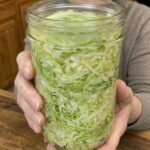
Transfer the cabbage into a clean glass fermentation jar a handful at a time, pressing it down firmly after each addition. Use your fist or a clean tamper to remove air pockets and encourage the natural brine to rise above the cabbage. Pour any liquid left in the bowl into the jar. The goal is to have the cabbage fully covered by its own brine.
Place the reserved cabbage leaf over the shredded cabbage, tucking it down at the sides, and use a suitable fermentation weight to keep everything below the brine. Leave a little headspace at the top of the jar, usually an inch or so, since the ferment bubbles and may rise. Anything exposed to air can grow mold, so submersion is the key to a safe, successful ferment.
Fit the jar with an airlock lid, or use a fermentation lid designed to release gas. If using a regular lid, follow a suitable fermentation method that prevents pressure buildup, such as loosening it slightly or opening it periodically to release the gas, known as burping. A tightly sealed jar with no way for gas to escape can build pressure. Keep the jar away from direct sunlight at a stable room temperature, ideally around 65 to 72°F (18 to 22°C). Setting the jar on a plate or in a shallow dish is a good idea in case any brine bubbles over.
Over the next several days, check that the cabbage remains submerged beneath the brine. Bubbles and a pleasantly sour aroma are normal signs of fermentation. If needed, gently press the cabbage down with a clean utensil. It is normal for the brine to look cloudy and for the level to rise and fall as gas is produced.
Begin tasting after about 7 days using a clean utensil. Fermentation commonly takes 1 to 4 weeks, depending on temperature and your preferred flavor. In a warm kitchen, the sauerkraut will ferment faster, and in a cool one, more slowly. A young sauerkraut is mild and crisp. A longer-fermented one is more sour and softer. There is no single correct finish point, so stop when it tastes right to you.
Once the sauerkraut has reached your preferred sourness, transfer it to the refrigerator, keeping the cabbage submerged in brine. Replace the fermentation lid with a regular lid. The cold slows fermentation dramatically, and the flavor stays stable for a long time.