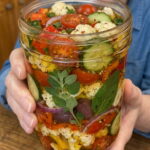
Ingredients
Let’s take a closer look at what goes into this recipe and why each component matters.
The Vegetables
- 1 large head cauliflower, cut into bite-sized florets – The star of the dish. Cauliflower’s mild flavor makes it an excellent canvas for absorbing the bright, garlicky vinaigrette.
- 1 cup cherry tomatoes, halved – Add juicy bursts of sweetness and vibrant color throughout the dish.
- 1 large cucumber, sliced – Contributes a cool, crisp crunch that balances the richness of the olive oil-based vinaigrette.
- 1 red bell pepper and 1 yellow bell pepper, cut into bite-sized pieces – Add natural sweetness, crunch, and eye-catching color contrast.
- ½ red onion, thinly sliced – Provides a sharp, slightly sweet bite that mellows beautifully as it marinates.
- ½ cup sliced green olives – Bring a briny, salty component that’s essential to achieving that classic Mediterranean flavor profile.
- ¼ cup fresh parsley, chopped, 2 tablespoons fresh oregano leaves, and 2 tablespoons fresh basil leaves – This trio of fresh herbs adds layers of aromatic, herbaceous flavor that dried herbs alone simply can’t replicate.
The Lemon-Garlic Vinaigrette
- ½ cup extra-virgin olive oil – Forms the rich base of the vinaigrette. A good-quality extra-virgin olive oil makes a noticeable difference in the final flavor.
- ¼ cup fresh lemon juice – Adds bright, tangy acidity that ties the entire dish together.
- 3 garlic cloves, finely minced – Infuses the vinaigrette with bold, aromatic flavor that intensifies as the dish marinates.
- 2 tablespoons red wine vinegar – Adds an additional layer of acidity and depth alongside the lemon juice.
- 1 teaspoon dried oregano – Reinforces the fresh oregano in the vegetable mixture with a more concentrated, earthy flavor.
- 1 teaspoon Dijon mustard – Acts as an emulsifier, helping the vinaigrette come together smoothly while adding a subtle tang.
- 1 teaspoon honey – Balances the acidity and saltiness of the dish with a touch of natural sweetness.
- ½ teaspoon salt and ½ teaspoon black pepper – Essential for seasoning the vinaigrette and, by extension, the entire dish.
- ½ teaspoon red pepper flakes – Adds a gentle, background heat that rounds out the flavor profile without overwhelming it.
Instructions
Step 1: Blanch the Cauliflower
Bring a large pot of salted water to a boil. Add the cauliflower florets and cook for 2 to 3 minutes, just until they’re slightly tender but still crisp. This brief cooking time is key — you want to soften the cauliflower just enough to make it pleasant to eat while retaining a satisfying bite.
Step 2: Shock in Ice Water
Drain the cauliflower and immediately transfer it to a bowl of ice water. Let it sit for about 2 minutes, then drain thoroughly. This step, known as “shocking,” stops the cooking process immediately and helps the cauliflower retain its bright color and crisp texture.
Step 3: Layer the Vegetables
In a large bowl or glass jar, layer the blanched cauliflower along with the cherry tomatoes, cucumber, bell peppers, red onion, olives, parsley, oregano, and basil. Using a jar can make this dish especially convenient for storage and transport, while a large bowl works just as well for immediate tossing.
Step 4: Whisk the Vinaigrette
In a separate bowl, whisk together the olive oil, lemon juice, minced garlic, red wine vinegar, Dijon mustard, honey, dried oregano, salt, black pepper, and red pepper flakes until fully combined and slightly emulsified.
Step 5: Combine and Coat
Pour the lemon-garlic vinaigrette over the vegetables. If using a bowl, gently toss everything together until evenly coated. If using a jar, seal it tightly and carefully turn it several times to distribute the vinaigrette throughout.
Step 6: Marinate
Cover the bowl or seal the jar and refrigerate for at least 4 hours to allow the flavors to develop. For the best, most deeply developed flavor, marinate overnight.
Step 7: Serve
Stir the mixture gently before serving. This dish can be enjoyed chilled straight from the refrigerator or allowed to sit at room temperature for a few minutes for a slightly less cold serving temperature.
Tips for the Best Marinated Cauliflower
A few small techniques can elevate this dish even further:
- Don’t overcook the cauliflower. A quick 2–3 minute blanch is all you need — overcooking will result in mushy florets that lose their satisfying crunch.
- Shock immediately. Don’t skip the ice bath step; it’s essential for locking in that crisp-tender texture and vibrant color.
- Use fresh herbs whenever possible. While dried oregano is included in the vinaigrette for depth, the fresh herbs in the vegetable mixture add a brightness that dried herbs can’t match.
- Let it marinate as long as possible. This dish truly shines after sitting overnight, as the vegetables have time to soak up the garlicky, lemony flavors.
- Cut vegetables uniformly. Keeping the cauliflower florets and other vegetables roughly the same size ensures even marinating and a more pleasant eating experience.
- Taste and adjust before serving. After marinating, give the dish a taste and add an extra squeeze of lemon juice or a pinch of salt if needed.