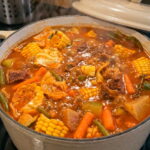
Ingredients
Let’s break this recipe down into its core components: the broth, the chile sauce, the vegetables, and the optional garnishes.
For the Broth
- 2–3 pounds beef chuck roast, cut into large chunks – Provides tender, flavorful meat that becomes fork-tender after simmering.
- 2–3 pounds beef bones (short ribs, beef shank, or marrow bones) – Essential for building a rich, deeply flavored broth. Bones with marrow add extra body and richness to the finished soup.
- 1½ onions, divided – Used both in the broth and in the chile sauce to build layers of savory flavor.
- 1 whole head garlic – Simmered whole in the broth, infusing it with mellow, aromatic depth.
- 3 garlic cloves – Used separately in the chile sauce for a more concentrated garlic flavor.
- 3 bay leaves – Add a subtle herbal note that develops over the long simmer.
- 3 tablespoons salt, or to taste – Essential for properly seasoning the broth as it cooks.
- 3½ quarts (14 cups) water – Forms the base of the broth, providing enough liquid for a generous pot of soup.
For the Chile Sauce
- 7 guajillo chiles, stemmed and seeded – The backbone of the chile sauce, offering mild heat and a deep, fruity flavor.
- 1 ancho chile, stemmed and seeded – Adds a rich, slightly sweet depth that rounds out the guajillo’s flavor.
- 1 Roma tomato – Contributes acidity and body to the sauce.
- ½ onion and 3 garlic cloves – Charred alongside the tomato to build a smoky, aromatic base for the sauce.
- ½ teaspoon dried oregano and ½ teaspoon ground cumin – Add warm, earthy undertones.
- 2½ cups water – Used to blend the chile sauce to a smooth, pourable consistency.
- 1 tablespoon oil – Used to lightly fry the chiles and char the vegetables, deepening their flavor.
Vegetables
- 2–3 ears corn, cut into thirds – A classic addition to Mole de Olla, adding sweetness and heartiness.
- 1 chayote, peeled and cut into chunks – A mild, slightly sweet squash that softens beautifully as it simmers.
- ½–1 pound baby potatoes – Add heartiness and help make the soup a complete, filling meal.
- ½ pound baby carrots – Contribute natural sweetness and vibrant color.
- 1 cup green beans, trimmed – Add a fresh, slightly crisp texture to balance the tender beef and vegetables.
- 1 Mexican squash or zucchini, sliced – A tender vegetable that cooks quickly, best added toward the end.
- ½ small cabbage, cut into wedges – Adds a slightly sweet, tender bite once cooked.
- 1 handful fresh cilantro and a few sprigs fresh epazote – Essential fresh herbs that give this soup its distinctive, authentic flavor.
For Serving (Optional)
- Lime wedges – Add a bright, acidic finish to each bowl.
- Chopped onion and chopped cilantro – Classic garnishes that add freshness and texture.
- Warm corn tortillas – Perfect for serving alongside the soup, ideal for scooping up beef and vegetables.
- Mexican rice – A traditional accompaniment that rounds out the meal.
Instructions
Step 1: Build the Broth Base
Bring the water to a boil in a large stockpot. Add 1 onion, the whole head of garlic, bay leaves, and salt. Add the beef bones and beef chuck roast. Return to a boil, skim off any foam that rises to the surface, then cover and simmer over medium heat for 1 hour.
Step 2: Char the Chile Sauce Vegetables
While the broth simmers, heat the oil in a skillet over medium-high heat. Add the Roma tomato, ½ onion, and 3 garlic cloves, cooking until softened and lightly charred. Transfer everything to a blender.
Step 3: Fry the Chiles
In the same skillet, lightly fry the guajillo chiles for about 30 seconds per side, just until fragrant and slightly softened. Add them to the blender. Repeat with the ancho chile, frying for about 30 seconds per side before adding it to the blender as well.
Step 4: Blend the Chile Sauce
Add the oregano, cumin, water, and a pinch of salt to the blender. Blend until the mixture is completely smooth.
Step 5: Skim and Strain
After the beef has cooked for 1 hour, skim off any excess fat from the surface of the broth. Remove and discard the cooked onion and whole head of garlic.
Step 6: Add the Chile Sauce
Pour the chile sauce into the broth, straining it through a fine-mesh strainer if you prefer a completely smooth broth. Rinse the blender with a little water and add that liquid to the pot as well, to capture every bit of flavor.
Step 7: Season and Simmer
Stir in the epazote, bring the soup to a gentle boil, and adjust the salt to taste.
Step 8: Add the Longer-Cooking Vegetables
Add the corn and chayote to the pot. Cover and cook for 20 minutes, allowing these heartier vegetables time to soften.
Step 9: Add the Root Vegetables
Add the baby potatoes, baby carrots, and green beans. Cook for another 10 minutes.
Step 10: Add the Delicate Vegetables
Add the Mexican squash (or zucchini), cabbage, and fresh cilantro. Cover and cook for another 7–8 minutes, or until all the vegetables are tender and the beef is completely fork-tender.
Step 11: Serve
Ladle the soup into bowls, distributing the beef and vegetables evenly. Garnish with chopped onion, chopped cilantro, and a squeeze of fresh lime if desired. Serve hot with warm corn tortillas and Mexican rice on the side.
Tips for the Best Mole de Olla
A few key techniques can elevate this dish from good to exceptional:
- Don’t skip the bones. Beef bones are essential for building a rich, deeply flavored broth — using chuck roast alone will result in a noticeably thinner, less complex broth.
- Skim the broth regularly. Removing foam and excess fat as the beef simmers helps create a cleaner, more refined final broth.
- Lightly fry the chiles, don’t burn them. A quick 30-second fry per side is enough to deepen their flavor — burning them will introduce bitterness into the sauce.
- Add vegetables in stages. Staggering the vegetable additions ensures everything finishes cooking at the same time, with nothing overcooked or undercooked.
- Use fresh epazote if possible. This herb is essential to an authentic Mole de Olla flavor; while it can be difficult to find outside of Mexican grocery stores, it makes a noticeable difference.
- Let it rest before serving again. Like many soups, Mole de Olla often tastes even better the next day, once the flavors have had extra time to meld.