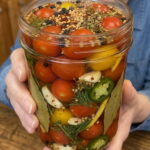
Ingredients
Let’s take a closer look at what goes into this recipe and why each ingredient matters.
The Tomatoes
- 2 lbs firm grape tomatoes – The star of the recipe. Grape tomatoes are ideal for pickling thanks to their firm texture, thin skin, and naturally sweet flavor, which balances beautifully against the tangy brine.
The Aromatics
- 6 cloves garlic, peeled and lightly crushed – Infuse the tomatoes with bold, aromatic flavor that intensifies the longer they sit in the brine.
- 2 sprigs fresh dill and 2 sprigs fresh thyme – Add classic pickling flavor and herbal complexity that pairs beautifully with the tomatoes’ natural sweetness.
- 1 tsp whole black peppercorns – Add a mild, peppery bite throughout the jar.
- 1 tsp mustard seeds – Contribute a subtle tang and pleasant textural pop, classic in traditional pickle recipes.
- 1 tsp coriander seeds – Add a warm, slightly citrusy note that complements the other spices.
- ½ tsp celery seeds – Reinforce the savory, aromatic profile of the brine.
- ½ tsp red pepper flakes (optional) – Add a gentle, background heat for those who enjoy a little extra kick.
- 2 bay leaves – Contribute a subtle herbal note that rounds out the brine’s overall complexity.
The Brine
- 2 cups white vinegar – Forms the tangy, acidic base of the brine, essential for both flavor and preservation.
- 2 cups water – Balances the acidity of the vinegar, preventing the brine from becoming overly sharp.
- 2 tbsp pickling salt or kosher salt – Essential for seasoning the brine and helping to preserve the tomatoes’ texture as they pickle.
- 1 tbsp granulated sugar – Adds a touch of sweetness that balances the tanginess of the vinegar.
Optional Flavor Add-Ins
- 2 small jalapeños, sliced – Add a spicy kick for those who want extra heat.
- 1 tsp dill seed – Reinforces the dill flavor with a more concentrated, slightly warmer note than fresh dill alone.
- ½ tsp fennel seeds – Contribute a subtle, sweet anise-like flavor that pairs beautifully with tomatoes.
- Lemon peel strips – Add a bright, citrusy aroma that lifts the entire brine.
Instructions
Step 1: Wash and Dry the Tomatoes
Wash the grape tomatoes thoroughly and pat them completely dry. Starting with dry tomatoes helps ensure the brine isn’t diluted by excess water.
Step 2: Prick Each Tomato
Using a toothpick or small skewer, prick each tomato once near the stem end. This small step allows the brine to penetrate the tomatoes while helping them keep their shape and preventing them from bursting during the pickling process.
Step 3: Pack the Jars
Pack the tomatoes tightly into one large glass jar or two quart-sized sterilized jars, filling them as full as possible while still allowing room for the brine.
Step 4: Add the Aromatics
Divide the garlic, dill, thyme, bay leaves, peppercorns, mustard seeds, coriander seeds, celery seeds, and any optional flavor add-ins evenly between the jars.
Step 5: Make the Brine
In a medium saucepan, combine the white vinegar, water, pickling salt, and sugar.
Step 6: Heat the Brine
Heat over medium heat, stirring until the salt and sugar have completely dissolved. Be careful not to let the brine boil vigorously, as this can affect the texture of the finished pickles.
Step 7: Cool Slightly
Remove the brine from the heat and allow it to cool for about 5 minutes before pouring it over the tomatoes.
Step 8: Pour Over the Tomatoes
Carefully pour the warm brine over the tomatoes until they are completely submerged.
Step 9: Weigh Down if Needed
Use a pickle weight or another food-safe weight if necessary to keep the tomatoes beneath the surface of the brine, ensuring even pickling throughout.
Step 10: Cool and Seal
Let the jars cool to room temperature on the counter, then seal them tightly.
Step 11: Refrigerate
Refrigerate for at least 48 hours before serving. For the best flavor, allow the tomatoes to pickle for 5–7 days.
Step 12: Serve
Serve chilled as a snack, alongside grilled meats, on salads, in pasta dishes, with cheese boards, or tucked into sandwiches and wraps.
Tips for the Best Pickled Grape Tomatoes
A few small techniques can make a noticeable difference in the final result:
- Don’t skip pricking the tomatoes. This small step is essential for allowing the brine to penetrate the tomatoes without causing them to split or burst.
- Use firm, unblemished tomatoes. Starting with high-quality, firm grape tomatoes ensures the best texture once pickled.
- Don’t let the brine boil vigorously. A gentle heat is enough to dissolve the salt and sugar — boiling too aggressively can affect the texture of the finished tomatoes.
- Keep the tomatoes fully submerged. Using a pickle weight or a small, food-safe object helps ensure even pickling and prevents any tomatoes from floating above the brine.
- Be patient. While these pickles are technically ready after 48 hours, letting them sit for 5–7 days results in a much more developed, well-rounded flavor.
- Customize with add-ins. Experimenting with jalapeños, fennel seeds, or lemon peel is a great way to tailor this recipe to your specific taste preferences.