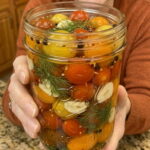
Ingredients
This recipe uses a short, simple ingredient list that lets the natural sweetness and juiciness of the tomatoes shine.
2 cups cherry or grape tomatoes — Small, firm cherry or grape tomatoes are ideal for this recipe. Choose tomatoes that are ripe but still firm, avoiding any that are overly soft or starting to split.
3 cloves garlic, thinly sliced — Fresh garlic infuses the brine with savory depth, a flavor that pairs beautifully with the sweet, juicy tomatoes.
3 to 4 sprigs fresh dill — Fresh dill provides that classic, aromatic dill pickle flavor essential to this recipe.
1 cup white vinegar — White vinegar provides the sharp, clean acidity that’s essential to a proper pickle.
1/2 cup water — Water dilutes the vinegar slightly, softening the acidity so the other flavors can shine through.
1 1/2 tablespoons kosher salt — Salt is essential for both flavor and the pickling process, helping season the tomatoes throughout.
1 teaspoon granulated sugar — A small amount of sugar helps balance the sharp acidity of the vinegar and complements the tomatoes’ natural sweetness.
1/2 teaspoon black peppercorns — Whole peppercorns add warm, slightly floral heat to the brine.
1/2 teaspoon mustard seeds — Mustard seeds are a classic pickling spice, contributing subtle tang and texture.
1/4 teaspoon red pepper flakes — A touch of red pepper flakes adds a gentle background heat that keeps the flavor interesting without overwhelming the tomatoes’ natural sweetness.
Instructions
This recipe is wonderfully simple and comes together with very little hands-on time, since the tomatoes go into the jar completely raw. Here’s exactly how to make it from start to finish.
Wash the cherry or grape tomatoes thoroughly, then gently pierce each one once with a toothpick. This small step is key to helping the brine penetrate the tomatoes’ skin and properly season them all the way through.
Pack the pierced tomatoes into a clean glass jar, tucking in the sliced garlic, fresh dill sprigs, black peppercorns, mustard seeds, and red pepper flakes as you go. Distributing the aromatics evenly throughout the jar ensures every tomato gets plenty of flavor contact.
In a small saucepan, combine the white vinegar, water, kosher salt, and sugar. This simple combination of acid, salt, and a touch of sugar forms the base of a well-balanced pickling brine.
Place the saucepan over medium heat and warm the mixture gently, stirring until the salt and sugar have completely dissolved. It’s important not to bring this brine to a hard boil; a gentle warm-through is all that’s needed to dissolve the salt and sugar without cooking the tomatoes or altering the brine’s flavor.
Carefully pour the warm brine over the tomatoes in the jar, making sure they are completely covered and submerged in liquid. Any tomatoes poking above the brine line are more likely to discolor or spoil, so top off with a little extra brine if needed.
Let the jar cool on the counter until it reaches room temperature. Allowing the jar to cool before sealing helps prevent excess condensation from building up inside once closed.
Once cooled, cover the jar tightly with a lid and transfer it to the refrigerator.
Let the tomatoes chill for at least 24 hours before serving, which gives the brine enough time to fully penetrate through the small punctures. For a deeper, more developed flavor, refrigerate for 2 to 3 days before digging in.
Once ready, keep the jar refrigerated and serve your tiny tomato pickles cold as a snack, appetizer, salad topping, or alongside sandwiches and grilled meats.