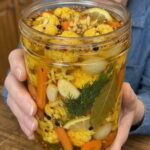
Ingredients
Let’s take a closer look at what goes into this recipe and why each ingredient matters.
The Vegetables
- 1 medium head cauliflower, cut into bite-sized florets – The primary vegetable in this recipe, offering a mild flavor that beautifully absorbs the tangy, spiced brine.
- 3 large carrots, peeled and sliced into thin rounds – Add natural sweetness and vibrant color that pairs perfectly with the golden turmeric brine.
- 1 small red onion, thinly sliced – Contributes a sharp, slightly sweet bite that mellows as it pickles.
- 4 garlic cloves, peeled and lightly crushed – Infuse the brine with bold, aromatic flavor that intensifies the longer the vegetables sit.
- 1 small fresh chili pepper, sliced, optional – Adds a gentle kick of heat for those who enjoy a spicier pickle.
The Turmeric Pickling Brine
- 2 cups white vinegar – Forms the tangy, acidic base of the brine, essential for both flavor and preservation.
- 1 cup water – Balances the acidity of the vinegar, preventing the brine from becoming overly sharp.
- 2 tablespoons honey or granulated sugar – Adds a touch of sweetness that balances the tanginess of the vinegar and the earthiness of the turmeric.
- 1 tablespoon sea salt – Essential for seasoning the brine and helping to draw out moisture from the vegetables.
- 1 tablespoon ground turmeric – The defining ingredient of this recipe, providing both its signature golden color and warm, earthy flavor.
- 1 teaspoon mustard seeds – Add a subtle, tangy pop of flavor and texture throughout the brine.
- 1 teaspoon coriander seeds – Contribute a warm, slightly citrusy note that complements the turmeric beautifully.
- ½ teaspoon black peppercorns – Add a mild, peppery bite to the overall flavor profile.
- ½ teaspoon cumin seeds – Reinforce the warm, earthy spice blend with a toasty, aromatic depth.
- 2 bay leaves – Contribute a subtle herbal note that rounds out the brine’s complexity.
Instructions
Step 1: Prepare the Vegetables
Wash and prepare the cauliflower, carrots, red onion, garlic, and chili pepper (if using), cutting everything into the appropriate sizes as listed in the ingredients.
Step 2: Blanch the Cauliflower and Carrots
Bring a large pot of water to a boil. Add the cauliflower and carrots and blanch for 1 minute — just enough to soften them slightly while keeping them crisp and vibrant.
Step 3: Shock in Ice Water
Drain the vegetables and immediately transfer them to a bowl of ice water. Let them cool for 2 minutes, then drain well. This step locks in their color and crisp texture before pickling.
Step 4: Fill the Jars
Divide the cauliflower, carrots, red onion, garlic, and chili pepper (if using) evenly between clean glass jars, packing them in fairly snugly.
Step 5: Make the Brine
In a saucepan, combine the vinegar, water, honey, salt, turmeric, mustard seeds, coriander seeds, black peppercorns, cumin seeds, and bay leaves.
Step 6: Simmer the Brine
Bring the mixture to a gentle simmer over medium heat, stirring until the honey and salt are completely dissolved.
Step 7: Pour Over the Vegetables
Carefully pour the hot turmeric brine over the vegetables in the jars, making sure they’re fully submerged and covered by the liquid.
Step 8: Cool and Seal
Allow the jars to cool to room temperature on the counter, then seal them tightly and transfer to the refrigerator. Let them chill for at least 24 hours before tasting.
Step 9: Let the Flavor Develop
For the best flavor, allow the vegetables to pickle for 2 to 3 days before serving, giving the brine time to fully penetrate the cauliflower and carrots.
Step 10: Serve and Enjoy
Enjoy these pickled vegetables chilled as a crunchy topping for sandwiches, tacos, salads, charcuterie boards, or simply as a bright, refreshing snack straight from the jar.
Tips for the Best Turmeric Pickled Vegetables
A few small techniques can make a noticeable difference in the final result:
- Don’t skip the blanching step. A quick 1-minute blanch softens the vegetables just enough to make them pleasant to eat while preserving their satisfying crunch.
- Shock immediately in ice water. This step is essential for locking in vibrant color and preventing the vegetables from continuing to cook after draining.
- Pour the brine while it’s hot. Pouring the hot brine directly over the vegetables helps kickstart the pickling process and ensures the spices are well distributed.
- Pack the jars snugly. Fitting the vegetables tightly into the jars helps ensure they stay fully submerged in the brine as they pickle.
- Be patient. While these pickles are technically ready after 24 hours, letting them sit for 2 to 3 days results in a much more developed, flavorful pickle.
- Use fresh spices when possible. Whole mustard seeds, coriander seeds, and cumin seeds that haven’t been sitting in your pantry for years will provide a more vibrant, aromatic flavor.