
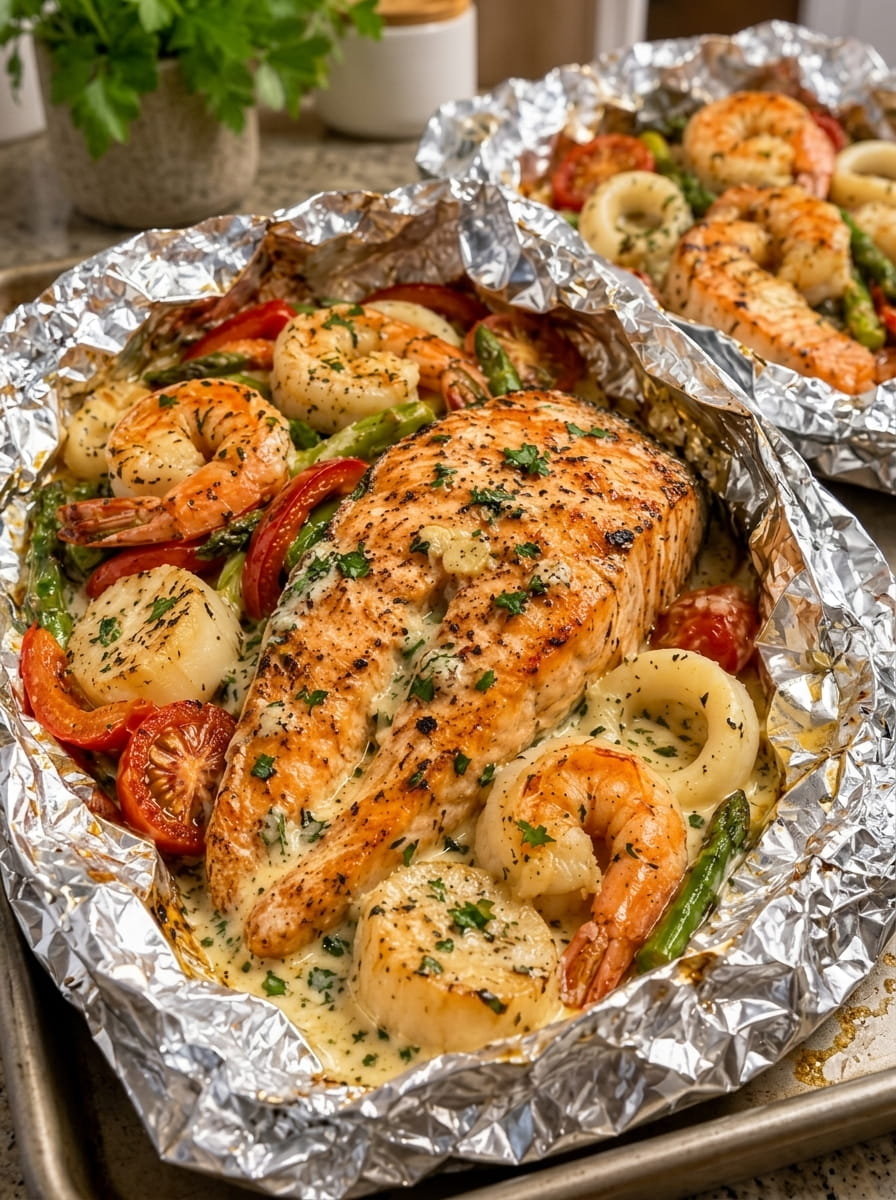
Creamy Garlic Herb Seafood Foil Packs with Salmon Steaks 🧄🦐🐟
Some dinners look like a restaurant meal and clean up like a picnic, and these seafood foil packs are one of them. Tender, flaky salmon steaks and juicy shrimp are nestled on a bed of zucchini, cherry tomatoes, bell pepper, and red onion. They’re then spooned with a rich garlic butter cream sauce, sealed in foil, and baked until everything is cooked through. The packets trap steam and flavor, so the seafood soaks up the creamy, savory sauce while the vegetables soften and turn sweet.
The method is simple: assemble, seal, bake, and open at the table. Each person gets their own packet, so it works for an easy weeknight dinner and a special seafood feast alike, and there are no pans to scrub afterward.
This guide covers the full recipe, step-by-step instructions, and the tips that keep the salmon flaky and the shrimp tender. You’ll also find ingredient notes, a doneness guide, grill and variation options, make-ahead and storage advice, and answers to common questions.
Recipe at a Glance
- Servings: 4
- Prep time: 15 minutes
- Cook time: 20-25 minutes
- Oven temperature: 400°F (200°C)
- Difficulty: Easy
Why You’ll Love These Creamy Garlic Herb Seafood Foil Packs
Two kinds of seafood in one meal. Salmon steaks and shrimp give you rich, flaky fish and sweet, snappy shellfish in every packet.
A creamy, flavorful sauce. Garlic, butter, cream, Parmesan, herbs, and lemon melt together into a sauce that bastes the seafood as it cooks.
Minimal cleanup. Everything cooks and serves in the foil. Open it, eat, and toss.
Built-in vegetables. Zucchini, tomatoes, peppers, and onion cook right alongside, so dinner is a complete meal.
Impressive but easy. The packets look special at the table but need no real technique.
Individual portions. Each guest gets a personal packet, and you can adjust for allergies or preferences.
Forgiving. Steam cooking is gentle, which helps keep the seafood moist.
Ingredients for Seafood Foil Packs with Salmon Steaks
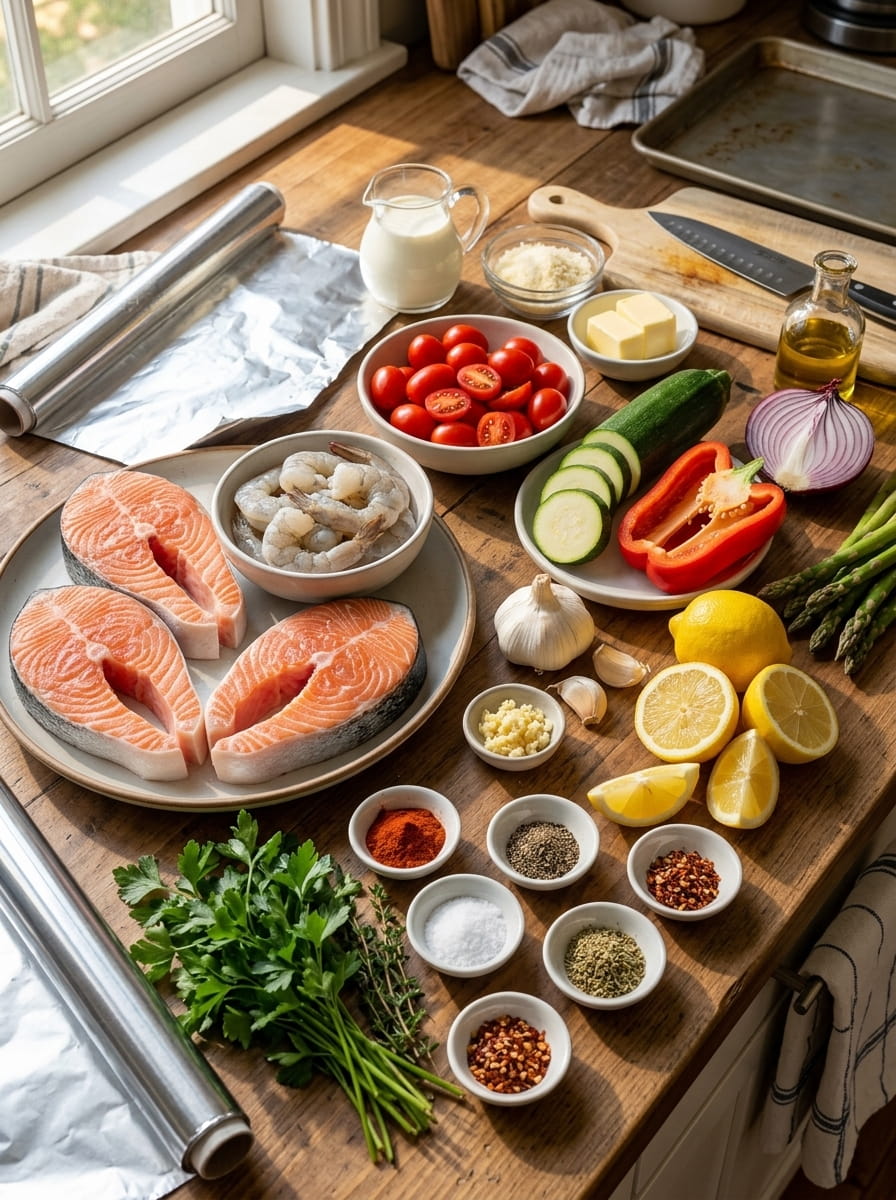
For the Seafood Foil Packs
- 4 salmon steaks (about 5-6 oz / 140-170 g each)
- ½ lb (225 g) large shrimp, peeled and deveined
- 1 medium zucchini, sliced
- 1 cup (150 g) cherry tomatoes, halved
- 1 small red bell pepper, sliced
- ½ small red onion, thinly sliced
- 1 tablespoon olive oil
- ½ teaspoon paprika
- ½ teaspoon salt
- ¼ teaspoon black pepper
- 1 tablespoon fresh lemon juice
For the Creamy Garlic Herb Sauce
- 3 tablespoons unsalted butter, melted
- 4 cloves garlic, minced
- ½ cup (120 ml) heavy cream
- ¼ cup (25 g) grated Parmesan cheese
- 1 teaspoon Italian seasoning
- 1 tablespoon fresh parsley, chopped
- ½ teaspoon dried thyme
- 1 tablespoon lemon juice
- A pinch of red pepper flakes (optional)
For Garnish
- Fresh parsley
- Lemon wedges
- Extra grated Parmesan cheese
Ingredient Notes and Tips
Salmon steaks. A salmon steak is a cross-section cut that includes the bone and skin, which keeps the fish juicy. Choose steaks of similar thickness, ideally about 1 inch, so they cook at the same pace. Fresh or thawed frozen both work. If the steaks are thicker, expect a few extra minutes. Warn guests about the central bone, or ask the fishmonger to remove it. Skinless fillets also work, and they usually cook a little faster.
Shrimp. Large shrimp (21-25 per pound) hold up well. Fresh or frozen both work. Thaw frozen shrimp in the refrigerator overnight or in a colander under cold running water, then pat them thoroughly dry.
Zucchini. Slice into half-moons about ¼ inch thick so it softens in the same time the seafood cooks. Thinner slices turn mushy.
Cherry tomatoes. They burst in the heat and add juicy sweetness that blends into the sauce.
Red bell pepper and red onion. They add sweetness and color. Slice the pepper into thin strips and the onion thinly, so both soften in the time available.
Heavy cream. It gives the sauce richness and body. Half-and-half works for a lighter version, though the sauce will be thinner.
Parmesan. Freshly grated Parmesan melts into the sauce smoothly and adds a nutty, salty depth. Pre-grated cheese works, but may be a bit grainy.
Butter and garlic. Fresh garlic cooked in a sealed packet turns mellow and sweet. Unsalted butter lets you control the seasoning, which matters because Parmesan is salty.
Herbs. Italian seasoning, thyme, and parsley give the sauce a garden-fresh character. Fresh thyme (about 1 teaspoon of leaves) can replace the dried.
Lemon juice. It brightens the dish and cuts through the cream. Fresh is far better than bottled.
Paprika. It adds mild smokiness and a warm color to the seafood.
Equipment You’ll Need
- Heavy-duty aluminum foil (regular foil can tear, so double it if needed)
- A large rimmed baking sheet
- Two mixing bowls (one for the vegetables, one for the sauce)
- A whisk or fork
- A sharp knife and cutting board
- An instant-read thermometer (recommended for the salmon)
- Cooking spray or a little oil to grease the foil
Heavy-duty foil is worth the small extra cost here. It holds up to the weight of the salmon and keeps the creamy sauce from leaking.
How to Make Creamy Garlic Herb Seafood Foil Packs (Step by Step)
Step 1: Prepare the Oven and Foil
Preheat the oven to 400°F (200°C). Cut four large sheets of heavy-duty aluminum foil, each about 12-14 inches long. Lightly grease the center of each sheet with cooking spray or a little oil so nothing sticks.
Step 2: Prepare the Seafood
Pat the salmon steaks and shrimp dry with paper towels. This helps the seasoning stick and prevents a watery sauce. Season them with the paprika, salt, and black pepper. Keep the seafood chilled until you’re ready to assemble.
Step 3: Prepare the Vegetables
In a bowl, combine the zucchini, cherry tomatoes, red bell pepper, and red onion. Add the olive oil and lemon juice, and toss gently to coat.
Step 4: Make the Creamy Garlic Herb Sauce
In a small bowl, whisk together the melted butter, minced garlic, heavy cream, Parmesan, Italian seasoning, thyme, parsley, and lemon juice. Add a pinch of red pepper flakes if you like a little heat. The sauce will look loose at this stage, and it will thicken as it bakes.
Step 5: Assemble the Foil Packs
Divide the vegetables evenly among the four foil sheets, piling them in the center. Place one salmon steak on top of each vegetable portion. Divide the shrimp between the packets and arrange them around the salmon.
Setting the salmon on the vegetables keeps it from sitting directly on the foil and lets the vegetables catch the juices.
Step 6: Add the Sauce
Spoon the creamy garlic herb sauce evenly over the salmon, shrimp, and vegetables. Make sure each packet gets plenty of the garlic butter sauce, including some pooled around the base.
Step 7: Seal the Packets
Fold the long sides of each foil sheet together and crimp them tightly. Fold the ends upward to create a sealed pouch. Leave a little room inside so the steam can circulate. The seal must be tight, or the cream sauce will leak out.
Step 8: Bake Until Cooked Through
Place the foil packets on a large baking sheet and bake for 20-25 minutes, depending on the thickness of the salmon steaks and shrimp. The salmon should reach 145°F (63°C) in the thickest part, and the shrimp should be pink and opaque. Insert a thermometer through the foil if you want to check without opening the packet, or open one packet to test.
Step 9: Open Carefully
Remove the packets from the oven and let them rest for 2-3 minutes. Carefully open each packet, pulling the foil away from you, because hot steam will escape.
Step 10: Garnish and Serve
Sprinkle with fresh parsley and extra Parmesan, and add a squeeze of fresh lemon juice. Serve directly in the foil or transfer to plates, spooning the creamy sauce over everything.
Expert Tips for the Best Seafood Foil Packs
1. Match the salmon thickness. Steaks of similar size finish at the same time. If one is thicker, put it on the baking sheet’s hotter side or check it last.
2. Use a thermometer. The most reliable way to avoid dry salmon is to check for 145°F (63°C) in the thickest part.
3. Pat everything dry. Excess water thins the sauce and dilutes the seasoning.
4. Don’t overcook the shrimp. They turn pink and opaque and curl into a loose “C.” A tight “O” means they’re overcooked and rubbery.
5. Cut vegetables to similar sizes. Uniform pieces soften together.
6. Seal tightly, but leave room. A good seal holds in the sauce and steam. A little air space lets that steam circulate.
7. Use heavy-duty foil. It resists tearing and leaking. Double up regular foil if that’s what you have.
8. Place the packets on a baking sheet. It catches any drips and makes moving them easier.
9. Open away from your face. Steam burns are the most common mishap with foil packets.
10. Finish with fresh lemon and herbs. They lift the richness of the cream sauce and make the dish taste freshly made.
11. Thicken the sauce if you like. For a thicker sauce, stir in an extra tablespoon of Parmesan. You can also spoon the liquid into a small saucepan after baking and simmer it for a few minutes.
Doneness Guide: Salmon and Shrimp
Salmon: Properly cooked salmon turns opaque and flakes easily with a fork. The USDA recommends an internal temperature of 145°F (63°C). Some cooks prefer to pull it slightly earlier for a more tender texture, but follow the recommended temperature if you’re serving children, older adults, pregnant women, or anyone with a weakened immune system.
Shrimp: Shrimp are done when they’re pink and opaque and form a loose “C” shape. Translucent gray flesh means they need more time.
If one is done before the other: If the shrimp are cooked but the salmon needs longer, remove the shrimp, return the salmon packet to the oven, and add the shrimp back at the end. Thicker steaks may need a few extra minutes.
Cooking Methods: Oven, Grill, and Air Fryer
Oven (recipe method): Bake on a baking sheet at 400°F (200°C) for 20-25 minutes.
Grill: Place the sealed packets over medium-high heat (about 400°F) with the lid closed. Grill for 15-20 minutes, rotating once, and check the salmon’s temperature. Use heavy-duty or double foil to prevent leaks.
Air fryer: Smaller packets (one or two at a time) fit in most air fryers. Cook at 390°F (200°C) for 12-16 minutes, checking the salmon for 145°F (63°C). Make sure the foil doesn’t touch the heating element.
Recipe Variations and Substitutions
Use salmon fillets. Skinless fillets are easier to eat and may cook in 15-20 minutes depending on thickness.
Swap the seafood. Cod, halibut, scallops, or mahi-mahi work in place of the salmon. Scallops cook in about the same time as shrimp.
Add other vegetables. Asparagus, broccoli, green beans, mushrooms, corn, and baby potatoes (pre-cooked) are good additions. Cut dense vegetables small, or microwave them for a minute first.
Add white wine. Replace 2 tablespoons of the cream with dry white wine for extra acidity and depth.
Make it spicier. Increase the red pepper flakes, or add a pinch of cayenne or a dash of hot sauce to the sauce.
Cajun version. Replace the Italian seasoning with Cajun seasoning for a bold, Southern-style twist.
Add cheese. Top with shredded mozzarella during the last few minutes after opening the packets and broil briefly.
Lighter sauce. Use half-and-half and reduce the butter to 2 tablespoons. The sauce will be thinner but still flavorful.
Dairy-free option. Use coconut cream or a plant-based cream, dairy-free butter, and nutritional yeast in place of Parmesan. The flavor will change, so taste as you go.
Gluten-free. The recipe contains no gluten-containing ingredients. Check the labels on your seasonings.
Keto and low-carb. The recipe is naturally low in carbs. Skip the tomatoes and onion if you need to cut carbs further.
What to Serve with Seafood Foil Packs
These packets are a complete meal, but a few sides soak up the sauce and round out the plate:
- Fluffy rice or cauliflower rice to soak up the creamy garlic sauce
- Roasted potatoes or buttery mashed potatoes
- Warm crusty bread for dipping
- Steamed asparagus or green beans
- A fresh green salad with lemon vinaigrette
- Extra lemon wedges for a bright, fresh finish
- A crisp white wine such as Sauvignon Blanc or Pinot Grigio
Make-Ahead, Storage, and Reheating
Make-ahead: Slice the vegetables and make the sauce up to 1 day ahead, storing them separately in the refrigerator. For the best texture and food safety, assemble the packets shortly before baking and keep the seafood chilled until then. You can assemble the packets up to 2-3 hours in advance and refrigerate them.
Refrigerator: Store leftover seafood and vegetables in an airtight container for up to 2 days.
Reheating: Warm gently in a covered baking dish at 300°F (150°C) until heated through. Add a splash of cream or broth if the sauce has thickened. Avoid high heat or the microwave, which can toughen the shrimp and dry out the salmon.
Freezing: Not recommended after cooking, because the creamy sauce and seafood may change texture. If you want to prep ahead, freeze raw salmon and shrimp separately, and thaw them overnight before assembling.
Food safety: Refrigerate leftovers within 2 hours of cooking, and reheat until steaming hot.
Nutrition Overview
This meal offers lean protein from salmon and shrimp, plus omega-3 fatty acids from the salmon. The vegetables add fiber, vitamin C, and antioxidants, while the butter, cream, and Parmesan provide the rich, satisfying sauce. It is a hearty dish, so portion size matters. To lighten it, use half-and-half, reduce the butter, and add more vegetables. Exact nutrition varies with ingredients and portions. If you follow a specific diet or manage a health condition, check with your healthcare provider about how this recipe fits your plan.
Frequently Asked Questions
What is a salmon steak?
A salmon steak is a cross-section cut of the whole fish, usually with the skin and a central bone. It cooks up juicy because the bone and skin help hold moisture.
Can I use salmon fillets instead of steaks?
Yes. Skinless fillets work well and may cook a little faster. Check the internal temperature for 145°F (63°C).
Can I use frozen salmon and shrimp?
Yes. Thaw them fully in the refrigerator, drain well, and pat them very dry before seasoning.
How do I know when the salmon is done?
It turns opaque and flakes easily with a fork, and reaches 145°F (63°C) in the thickest part.
How do I know when the shrimp are cooked?
They turn pink and opaque and curl into a loose “C” shape.
Can I cook these on the grill?
Yes. Grill over medium-high heat with the lid closed for 15-20 minutes, rotating once. Use heavy-duty or double foil.
Can I make the packets ahead of time?
You can assemble them a few hours ahead and refrigerate. For best texture, don’t prepare them much earlier than that.
Why is my sauce watery?
Wet seafood or vegetables release extra liquid. Pat everything dry, and serve over rice or bread to soak up the juices. You can also simmer the liquid in a small pan to thicken it.
Why are my vegetables still firm?
They were probably cut too thick. Slice dense vegetables thinner, or microwave them briefly first.
Can I use half-and-half instead of heavy cream?
Yes. The sauce will be thinner and lighter. Add an extra tablespoon of Parmesan to thicken it.
Can I use parchment paper instead of foil?
Yes, in the oven. Fold and crimp the edges tightly. Parchment isn’t suitable for the grill.
Is it safe to cook with aluminum foil?
Foil packets are widely used for everyday cooking. Some people prefer to limit contact between aluminum and acidic ingredients such as lemon juice and tomatoes. Parchment or non-stick foil is an option in that case.
Can I make this dairy-free?
Yes, with coconut cream, dairy-free butter, and nutritional yeast, though the flavor and texture will differ.
Can I double the recipe?
Yes. Use two baking sheets and rotate them halfway through for even cooking.
Can I use this recipe for meal prep?
Seafood is best fresh, but you can prep the vegetables and sauce ahead and assemble the packets just before baking.
What if my salmon steaks are very thick?
Extend the baking time by 5 minutes or so, and check the center with a thermometer for 145°F (63°C).
Final Thoughts
These creamy garlic herb seafood foil packs with salmon steaks deliver tender salmon, juicy shrimp, and colorful vegetables in a rich garlic butter cream sauce, with almost no cleanup. They are easy enough for a weeknight and special enough for a weekend seafood feast.
Match your salmon thickness, check the temperature, and seal the packets tightly. Then open them at the table and let everyone enjoy the aroma. ❤️
If you try these foil packs, leave a comment and a star rating, and share the recipe with a friend who loves seafood. Enjoy! 🧄🐟🦐
Print
Creamy Garlic Herb Seafood Foil Packs with Salmon Steaks
Ingredients
For the Seafood Foil Packs
- 4 salmon steaks (about 5–6 oz / 140–170 g each)
- ½ lb (225 g) large shrimp, peeled and deveined
- 1 medium zucchini, sliced
- 1 cup (150 g) cherry tomatoes, halved
- 1 small red bell pepper, sliced
- ½ small red onion, thinly sliced
- 1 tablespoon olive oil
- ½ teaspoon paprika
- ½ teaspoon salt
- ¼ teaspoon black pepper
- 1 tablespoon fresh lemon juice
For the Creamy Garlic Herb Sauce
- 3 tablespoons unsalted butter, melted
- 4 cloves garlic, minced
- ½ cup (120 ml) heavy cream
- ¼ cup (25 g) grated Parmesan cheese
- 1 teaspoon Italian seasoning
- 1 tablespoon fresh parsley, chopped
- ½ teaspoon dried thyme
- 1 tablespoon lemon juice
- A pinch of red pepper flakes (optional)
For Garnish
- Fresh parsley
- Lemon wedges
- Extra grated Parmesan cheese
Instructions
Preheat the oven to 400°F (200°C). Cut four large sheets of heavy-duty aluminum foil, each about 12-14 inches long. Lightly grease the center of each sheet with cooking spray or a little oil so nothing sticks.
Pat the salmon steaks and shrimp dry with paper towels. This helps the seasoning stick and prevents a watery sauce. Season them with the paprika, salt, and black pepper. Keep the seafood chilled until you’re ready to assemble.
In a bowl, combine the zucchini, cherry tomatoes, red bell pepper, and red onion. Add the olive oil and lemon juice, and toss gently to coat.
In a small bowl, whisk together the melted butter, minced garlic, heavy cream, Parmesan, Italian seasoning, thyme, parsley, and lemon juice. Add a pinch of red pepper flakes if you like a little heat. The sauce will look loose at this stage, and it will thicken as it bakes.
Divide the vegetables evenly among the four foil sheets, piling them in the center. Place one salmon steak on top of each vegetable portion. Divide the shrimp between the packets and arrange them around the salmon.
Setting the salmon on the vegetables keeps it from sitting directly on the foil and lets the vegetables catch the juices.
Spoon the creamy garlic herb sauce evenly over the salmon, shrimp, and vegetables. Make sure each packet gets plenty of the garlic butter sauce, including some pooled around the base.
Fold the long sides of each foil sheet together and crimp them tightly. Fold the ends upward to create a sealed pouch. Leave a little room inside so the steam can circulate. The seal must be tight, or the cream sauce will leak out.
Place the foil packets on a large baking sheet and bake for 20-25 minutes, depending on the thickness of the salmon steaks and shrimp. The salmon should reach 145°F (63°C) in the thickest part, and the shrimp should be pink and opaque. Insert a thermometer through the foil if you want to check without opening the packet, or open one packet to test.
Remove the packets from the oven and let them rest for 2-3 minutes. Carefully open each packet, pulling the foil away from you, because hot steam will escape.
Sprinkle with fresh parsley and extra Parmesan, and add a squeeze of fresh lemon juice. Serve directly in the foil or transfer to plates, spooning the creamy sauce over everything.