Ingredients
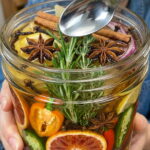
This recipe uses a generous mix of fresh roots, citrus, aromatics, and warming spices, all infused into raw apple cider vinegar.
1 small red onion, sliced — Onion adds pungent, savory depth to the infusion.
1 small orange, sliced — Fresh orange contributes bright citrus flavor and natural sweetness that balances the pungent, spicy ingredients.
1/2 cup fresh ginger, thinly sliced — Ginger is a cornerstone of fire cider, known for its warming, spicy, slightly sweet flavor.
1/2 cup fresh turmeric root, thinly sliced — Fresh turmeric root adds an earthy, slightly bitter, peppery flavor along with its signature vibrant golden-orange color.
6 cloves garlic, crushed — Garlic brings a pungent, savory punch that’s essential to the traditional fire cider flavor profile. Crushing the cloves, rather than leaving them whole, helps release more of their flavor into the vinegar.
1 to 2 fresh jalapeños, sliced — Fresh jalapeños provide the “fire” in fire cider, adding real, building heat to the infusion.
1 lemon, sliced — Lemon adds bright, tangy citrus flavor that complements the orange and balances the pungent roots.
2 sprigs fresh rosemary — Rosemary contributes an aromatic, slightly piney, herbal note to the infusion.
2 sprigs fresh thyme — Thyme adds a subtle, earthy, herbal flavor that rounds out the overall blend.
1 teaspoon black peppercorns — Whole peppercorns add warm, slightly floral heat to the infusion.
1 teaspoon dried cayenne pepper — Cayenne reinforces the heat from the jalapeños, adding an extra layer of warming spice.
1 cinnamon stick — Cinnamon adds a warm, slightly sweet, aromatic note that rounds out the bold, pungent flavors of the other ingredients.
2 to 3 cups raw apple cider vinegar — Raw, unfiltered apple cider vinegar (often labeled as containing “the mother”) serves as the base of the infusion, drawing out the flavors and compounds from all the other ingredients over several weeks.
2 tablespoons raw honey — Raw honey is stirred in at the end to balance the sharp vinegar and spicy heat with natural sweetness.
Instructions
Unlike a quick refrigerator pickle, fire cider requires a multi-week infusion period, so a bit of patience is required. Here’s exactly how to make it from start to finish.
Add the sliced red onion, orange, ginger, turmeric, crushed garlic, sliced jalapeños, lemon, rosemary, thyme, black peppercorns, cayenne, and cinnamon stick to a clean glass jar. A wide-mouth quart-sized jar works especially well for fitting all these ingredients comfortably.
Pour in enough raw apple cider vinegar to completely cover all the ingredients, leaving a small amount of headspace at the top of the jar. Make sure every ingredient is fully submerged, pressing down gently if needed, since anything exposed to air rather than vinegar is more prone to spoilage.
Seal the jar with a non-reactive lid, such as a plastic storage lid. If you’re using a standard metal canning lid, place a piece of parchment paper or wax paper between the lid and the jar opening before sealing. This step is important because the acidic vinegar can react with and corrode metal over the multi-week infusion period.
Store the jar in a cool, dark place, such as a pantry or cupboard, for 2 to 4 weeks. Gently shake the jar every day or two throughout this infusion period. This regular shaking helps redistribute the ingredients and vinegar, ensuring a more even, thorough infusion.
Once the infusion period is complete, strain the mixture through a fine-mesh strainer or cheesecloth into a clean bowl or jar, pressing down on the solids with the back of a spoon to extract as much of the flavorful, infused vinegar as possible. Discard the solids once you’ve extracted as much liquid as you can.
While the strained vinegar is at room temperature, stir in the raw honey until fully incorporated. Adding the honey at room temperature, rather than to hot vinegar, helps preserve more of the honey’s natural qualities.
Taste your finished fire cider and adjust the honey as needed to reach your preferred balance of sweetness and heat. Some people prefer a more pronounced sweetness to balance the intense heat and tang, while others prefer to keep it sharper and spicier.
Transfer your finished fire cider to a clean bottle or jar and store it in the refrigerator.
Use your fire cider as a bold vinegar tonic by the spoonful, or add small amounts to dressings, marinades, sauces, and other recipes for an extra kick of warming, tangy flavor.