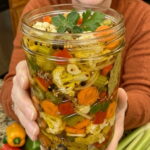
Ingredients
This recipe is broken into two components: the vegetables and aromatics, and the tangy pickling brine.
For the Pickled Vegetables
2 cups cauliflower florets — Cauliflower is a classic giardiniera ingredient, offering a satisfying crunch and a mild flavor that soaks up the tangy brine beautifully.
1 1/2 cups carrots, sliced — Carrots add natural sweetness, vibrant color, and a firm, crisp bite that holds up well to pickling.
1 cup celery, sliced — Celery contributes a fresh, slightly peppery crunch that balances out the richer, sweeter vegetables.
1 red bell pepper, sliced — Red bell pepper adds sweetness, color, and a tender-crisp texture.
1 green bell pepper, sliced — Green bell pepper brings a slightly more vegetal, savory flavor alongside the red pepper’s sweetness.
1 small yellow onion, thinly sliced — Onion adds sharpness and depth, softening slightly as it pickles while still retaining some bite.
3 cloves garlic, thinly sliced — Garlic infuses the entire jar with savory depth and pairs perfectly with the herbs and vinegar.
For the Brine
2 cups white vinegar — White vinegar provides the sharp, clean acidity that defines a good giardiniera.
1 cup water — Water dilutes the vinegar slightly, softening the acidity so the other flavors can shine through.
1 tablespoon kosher salt — Salt seasons the vegetables and brine while also supporting preservation.
1 tablespoon granulated sugar — A touch of sugar balances out the sharp vinegar and enhances the natural sweetness of the carrots and peppers.
1 teaspoon black peppercorns — Whole peppercorns add warm, slightly floral heat to the brine.
1 teaspoon dried oregano — Oregano brings a classic, earthy Italian herb flavor that’s essential to a good giardiniera.
1 teaspoon Italian seasoning — This herb blend layers in additional flavor complexity, typically including basil, thyme, rosemary, and marjoram.
1/2 teaspoon red pepper flakes — Red pepper flakes add a gentle, steady heat throughout the brine.
2 bay leaves — Bay leaves contribute a subtle herbal, aromatic depth to round out the spice blend.
Instructions
This recipe is simple to prepare and doesn’t require any special canning equipment, since it’s a refrigerator pickle rather than a shelf-stable canned product. Here’s exactly how to make it from start to finish.
Wash all of your vegetables thoroughly, then cut the cauliflower, carrots, celery, and bell peppers into similar-sized pieces. Cutting everything to a roughly consistent size ensures even pickling and a more uniform texture throughout the jar. Thinly slice the onion and garlic as well.
Bring a large pot of water to a boil. Add the cauliflower, carrots, and celery to the boiling water and blanch for 2 to 3 minutes. Blanching briefly softens these firmer vegetables just enough so they pickle properly while still retaining a satisfying crunch. Bell peppers, onion, and garlic are added later without blanching, since they’re more delicate and don’t need the same precooking.
As soon as the cauliflower, carrots, and celery are done blanching, drain them immediately and rinse them under cold water. This stops the cooking process right away and locks in that tender-crisp texture that’s essential to good giardiniera. Skipping this step can lead to overcooked, mushy vegetables.
In a saucepan, combine the white vinegar, water, salt, sugar, black peppercorns, dried oregano, Italian seasoning, red pepper flakes, and bay leaves. This blend of acid, salt, sugar, and herbs is what gives the giardiniera its signature tangy, herby, Italian flavor.
Place the saucepan over medium heat and bring the brine to a gentle boil, stirring occasionally to fully dissolve the salt and sugar. Let it boil gently for a minute or two to allow the herbs and spices to infuse into the liquid.
Divide the blanched cauliflower, carrots, and celery among clean glass jars, along with the sliced bell peppers, onion, and garlic. Distribute the vegetables evenly so each jar gets a good mix of colors, textures, and flavors.
Carefully pour the hot brine over the vegetables in each jar, making sure everything is fully submerged in liquid. Any vegetables poking above the brine line are more likely to spoil quickly or develop an unpleasant texture, so pack the jars snugly and press the vegetables down gently if needed.
Let the jars cool to room temperature on the counter before sealing them with tight-fitting lids. Sealing while the brine is still hot can trap excess condensation inside the jar, which isn’t ideal for a refrigerator pickle.
Once sealed, transfer the jars to the refrigerator. While the giardiniera is technically edible after a few hours, it’s best to let it pickle for at least 24 hours so the vegetables have time to fully absorb the tangy, herby brine. For the best flavor, let the jars rest for 3 to 5 days, or even up to a week, before serving.
Once your giardiniera has had time to develop its flavor, it’s ready to serve alongside sandwiches, grilled meats, Italian dishes, or antipasto platters, or simply enjoyed straight from the jar.