
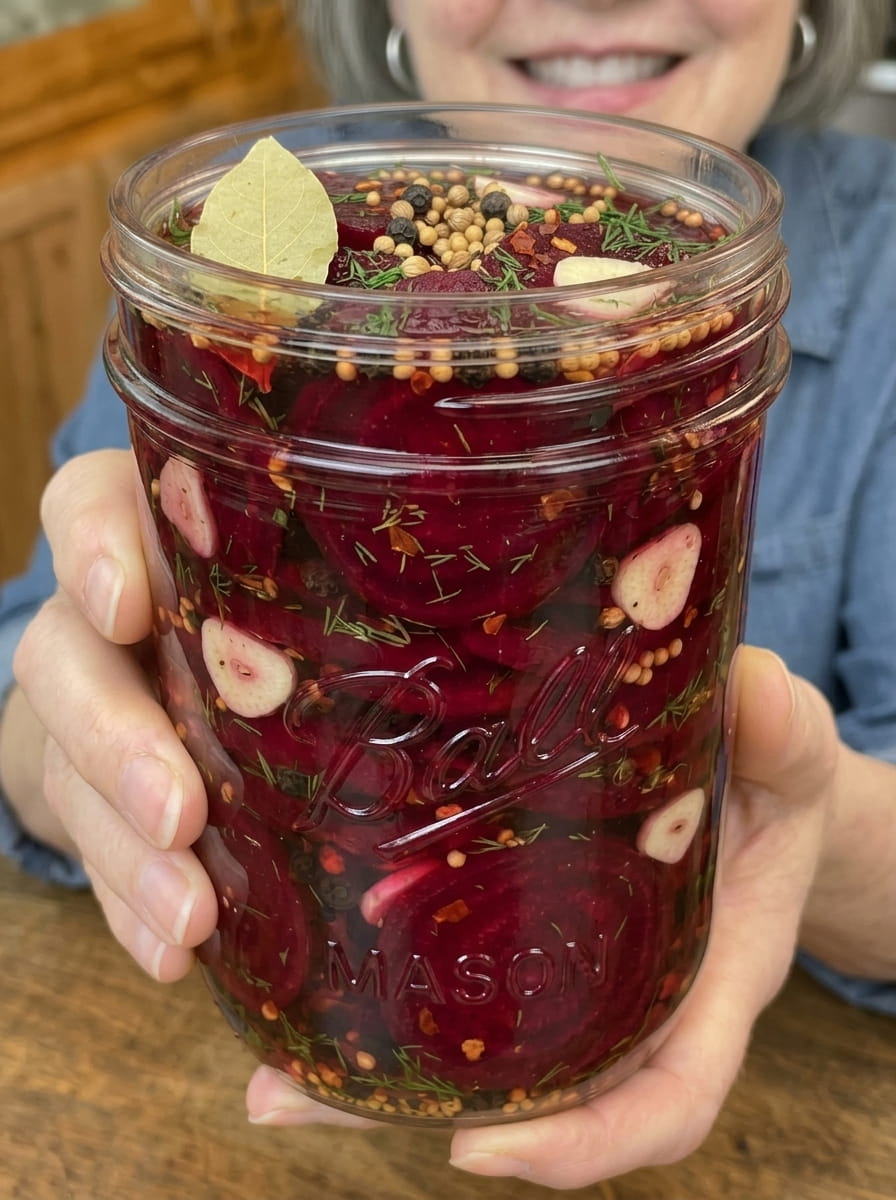
Pickled Beets: A Tender, Tangy, Slightly Sweet Homemade Classic
If you grew up eating pickled beets from a jar at family gatherings, or you’re just discovering how delicious this earthy, tangy vegetable can be, this homemade Pickled Beets recipe is about to become a staple in your kitchen. Tender, tangy, slightly sweet, and bursting with rich, earthy beet flavor, this recipe combines fresh garlic, fragrant dill, and warm pickling spices to create a jar of pickled beets that’s leagues beyond anything you’ll find pre-made at the grocery store.
Whether you’re a longtime beet lover, a home canning enthusiast looking for a reliable go-to recipe, or someone who’s always found beets a little intimidating to cook, this recipe will walk you through everything you need to know. Below, you’ll find a complete ingredient breakdown, detailed step-by-step instructions, expert tips for the best texture and flavor, storage guidance, serving suggestions, and answers to the most frequently asked questions about making pickled beets at home.
Why You’ll Love This Pickled Beets Recipe
Pickled beets have been a beloved pantry staple for generations, and this homemade version brings that classic flavor to a whole new level.
The flavor is perfectly balanced. This recipe strikes an ideal balance between tangy vinegar, gentle sweetness from the sugar, and warm, aromatic spices like mustard seeds, coriander seeds, and black peppercorns. Fresh garlic and dill add another layer of savory, herby complexity that takes this recipe far beyond a basic sweet-and-sour pickle.
The texture is spot-on. By simmering the beets separately until just tender before adding them to the hot pickling liquid, this method ensures the beets end up tender but not mushy, with just enough bite to hold their shape in a salad, sandwich, or straight off a fork.
It’s a nutritious, naturally vibrant addition to your meals. Beets are packed with fiber, folate, and antioxidants, and their naturally deep red color makes any dish they’re added to instantly more visually striking.
It’s incredibly versatile. Pickled beets aren’t just a side dish or snack. They can be chopped into salads, layered onto sandwiches and burgers, added to grain bowls, or served alongside grilled meats and charcuterie.
It’s a great make-ahead recipe. Since pickled beets need at least 24 hours to develop their full flavor, and taste even better after a few days, this is a perfect dish to prepare in advance for a party, holiday meal, or a week of easy meal prep.
It’s far superior to store-bought pickled beets. Canned pickled beets from the store often taste overly sweet or one-dimensional. This homemade version, with its layered spices and fresh dill, delivers a much more complex, balanced, and satisfying flavor.
A Brief Look at Pickled Beets
Pickled beets have a long history across many cuisines, from Eastern European traditions where pickled beets are a staple alongside hearty, savory dishes, to American potluck and picnic tables where a jar of sweet-tangy pickled beets is practically a rite of passage. Traditionally, beets are cooked until tender, then combined with a sweetened vinegar brine, often along with warm spices like cloves, cinnamon, or allspice, depending on the regional variation.
This recipe leans into a slightly more savory, herb-forward style, using mustard seeds, coriander seeds, black peppercorns, garlic, and fresh dill to create a pickled beet that’s tangy and a little sweet, but also deeply aromatic and savory, making it feel just as at home on a sophisticated charcuterie board as it does on a classic potluck table.
Ingredients You’ll Need
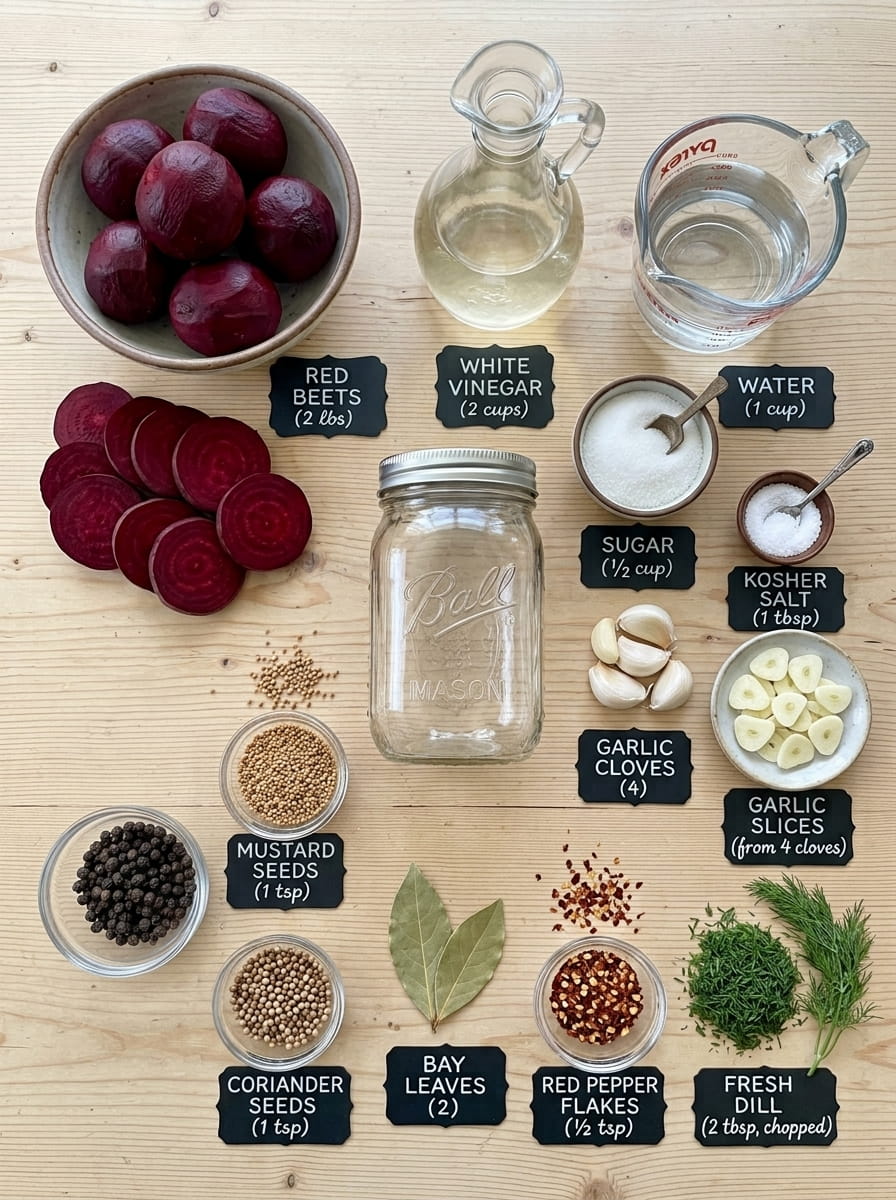
This recipe uses simple, accessible ingredients that come together to create a rich, well-balanced pickling liquid.
2 lbs fresh red beets, trimmed and peeled — Fresh beets are essential for the best flavor and texture. Choose beets that feel firm and heavy for their size, without any soft spots.
2 cups white vinegar — White vinegar provides the sharp, clean acidity that’s essential to a classic pickled beet.
1 cup water — Water dilutes the vinegar slightly so the pickling liquid isn’t overwhelmingly sharp, allowing the other flavors to come through.
1/2 cup granulated sugar — Sugar is key to that classic sweet-tangy pickled beet flavor, balancing out the vinegar’s acidity and complementing the beets’ natural earthy sweetness.
1 tablespoon kosher salt — Salt seasons the beets and brine while also supporting the pickling process.
4 cloves garlic, thinly sliced — Fresh garlic infuses the brine with savory depth, adding a layer of flavor that’s less common in traditional sweet pickled beet recipes but works beautifully here.
2 teaspoons black peppercorns — Whole peppercorns add warm, slightly floral heat throughout the pickling liquid.
1 teaspoon mustard seeds — Mustard seeds are a pickling staple, contributing a subtle tang and a bit of texture to the finished jar.
1 teaspoon coriander seeds — Coriander seeds bring a warm, slightly citrusy, floral note that pairs beautifully with the earthy beets.
2 bay leaves — Bay leaves lend a subtle herbal, aromatic depth that rounds out the overall spice profile.
1/2 teaspoon red pepper flakes — A touch of red pepper flakes adds a gentle warmth that keeps the flavor interesting without making the beets spicy.
2 tablespoons fresh dill, chopped — Fresh dill adds a bright, aromatic, herby finish that pairs perfectly with beets and echoes classic Eastern European pickling traditions.
How to Make Pickled Beets (Step-by-Step)
This recipe involves a bit more hands-on time than a simple raw-vegetable pickle, since the beets need to be cooked first, but the process is still straightforward. Here’s exactly how to make it from start to finish.
Step 1: Slice the Beets
After trimming and peeling your beets, slice them into thin rounds or wedges, depending on your preference. Thin, even slices will pickle more quickly and evenly, while wedges offer a heartier bite. Wearing gloves while handling beets can help prevent your hands from staining.
Step 2: Simmer the Beets
Place the sliced beets in a large pot and cover them with water. Bring the pot to a boil, then reduce the heat and simmer for 20 to 30 minutes, until the beets are tender but still slightly firm, not falling apart. Cooking time can vary depending on the thickness of your slices, so start checking for doneness around the 20-minute mark.
Step 3: Drain the Beets
Once the beets are tender, drain them well in a colander. Removing excess water helps prevent the pickling liquid from becoming overly diluted once the beets are added.
Step 4: Build the Pickling Liquid
In a saucepan, combine the white vinegar, water, sugar, salt, sliced garlic, black peppercorns, mustard seeds, coriander seeds, bay leaves, and red pepper flakes. This blend of acid, sugar, salt, and warm spices forms the flavorful backbone of the pickled beets.
Step 5: Bring to a Boil
Place the saucepan over medium heat and bring the pickling liquid to a gentle boil, stirring occasionally until the sugar and salt have completely dissolved.
Step 6: Add the Beets
Add the drained, cooked beets to the saucepan with the pickling liquid and simmer everything together for 2 to 3 minutes. This brief simmer allows the beets to begin absorbing the tangy, spiced brine right from the start.
Step 7: Stir in the Fresh Dill
Remove the saucepan from the heat and stir in the freshly chopped dill. Adding the dill at the end, rather than simmering it along with the other spices, helps preserve its bright, fresh flavor and vibrant green color.
Step 8: Pack the Jars
Using a slotted spoon or tongs, pack the beets into clean glass jars, then pour the warm pickling liquid over them, making sure the beets are completely submerged. Distribute the garlic slices and whole spices evenly among the jars as you go.
Step 9: Cool and Refrigerate
Let the jars cool to room temperature on the counter before sealing them with tight-fitting lids. Once cooled, transfer the jars to the refrigerator.
Step 10: Chill and Serve
Let the beets chill for at least 24 hours before serving, which allows the brine to fully penetrate the beets. For the best flavor, let them sit for 2 to 3 days, or even up to a week, before digging in. Keep the jars refrigerated at all times and use the pickled beets within about 2 weeks for the best quality.
Tips for the Best Pickled Beets
Wear gloves when handling beets. Fresh beets can stain your hands and cutting board, so wearing disposable gloves while peeling and slicing can save you some cleanup hassle.
Don’t overcook the beets during the initial simmer. You want the beets tender but still slightly firm, since they’ll continue to soften slightly once combined with the hot pickling liquid. Start checking for doneness at the 20-minute mark to avoid mushy beets.
Slice beets to a consistent thickness. Uniform slices ensure even cooking during the initial simmer and even pickling once combined with the brine.
Add fresh dill at the end. Stirring in the fresh dill after removing the pickling liquid from the heat helps preserve its bright color and fresh, herby flavor, rather than dulling it with prolonged heat.
Make sure the beets stay fully submerged. Any beets poking above the brine line are more prone to discoloration or spoilage. Pack the jars snugly and top off with extra brine if needed.
Be patient for the best flavor. While the beets are safe to eat after 24 hours, letting them sit for several days allows the tangy, sweet, garlicky brine to fully penetrate every slice.
Save the vibrant pickling liquid. The beautiful deep red pickling liquid left over after you finish a jar can be used to add color and tang to salad dressings or even pickle a batch of hard-boiled eggs for a naturally vibrant pink egg.
How to Store Pickled Beets
This is a refrigerator pickle, not a shelf-stable canned product, which means it must be stored in the refrigerator at all times rather than on the counter or in the pantry. Properly stored in a sealed jar with the beets fully submerged in the pickling liquid, homemade pickled beets will typically keep well in the refrigerator for up to about 2 weeks. Always use a clean utensil when removing beets from the jar to avoid introducing bacteria that could shorten their shelf life, and watch for any signs of spoilage, such as an off smell, unusual texture, or mold, before eating.
Ways to Use Pickled Beets
Part of what makes this recipe so rewarding is just how many ways you can enjoy the finished product. Here are some of the best ways to use pickled beets.
Salads — Chop or slice pickled beets and add them to green salads, grain salads, or a classic beet and goat cheese salad for a tangy, earthy bite.
Sandwiches and burgers — Layer a few slices onto sandwiches or burgers for a tangy, slightly sweet crunch that pairs especially well with rich, savory fillings.
Grain bowls — Add pickled beets to quinoa bowls, rice bowls, or Buddha bowls for extra color, tang, and nutrition.
Charcuterie boards — A small bowl of pickled beets adds a stunning pop of color and tangy contrast to any charcuterie or grazing board.
Grilled meats — Serve alongside grilled chicken, steak, or sausage, where the tangy, slightly sweet beets help cut through the richness of the meat.
Straight from the jar — Simple, quick, and satisfying: pickled beets make a great low-calorie, nutrient-packed snack straight out of the refrigerator.
Deviled eggs or egg salad — Dice pickled beets finely and mix them into deviled egg filling or egg salad for a tangy, colorful twist.
Cheese and charcuterie pairings — Pickled beets pair especially well with creamy cheeses like goat cheese, feta, or burrata, offering a tangy contrast to their richness.
Frequently Asked Questions
Do I have to peel the beets before cooking them? Yes, this recipe calls for peeling the beets before slicing and simmering, which results in a smoother texture and allows the pickling liquid to penetrate more easily.
Can I use golden beets instead of red beets? Yes, golden beets can be used in place of red beets for a milder flavor and a beautiful golden-hued pickle, though the deep red color of traditional beets won’t be present.
Is this recipe shelf-stable, or does it need refrigeration? This is a refrigerator pickle, not a canned, shelf-stable product. It must be kept refrigerated at all times and doesn’t go through a water bath or pressure canning process.
Why do I need to cook the beets before pickling them? Beets are a firm, dense root vegetable that needs to be cooked until tender before pickling. Unlike quick-pickled vegetables like cucumbers or radishes, raw beets would remain far too tough and wouldn’t properly absorb the pickling liquid.
How long do the beets need to sit before they’re ready to eat? At minimum, let the beets chill in the refrigerator for 24 hours before serving. For the best, most developed flavor, wait 2 to 3 days, or up to a week.
Can I make this recipe less sweet? Yes, you can reduce the sugar to your taste. Keep in mind that reducing the sugar significantly will result in a more sharply tangy, less classic pickled beet flavor.
Why did my hands and cutting board turn pink or red? This is completely normal and happens due to the natural pigment in beets. Wearing gloves while handling raw or cooked beets, and using a cutting board you don’t mind staining, can help minimize this.
How long do pickled beets stay fresh in the refrigerator? Properly stored in an airtight, sealed jar, homemade pickled beets will generally stay fresh for up to about 2 weeks in the refrigerator.
Do I need special canning jars for this recipe? No. Standard clean glass jars with tight-fitting lids, such as mason jars, work perfectly well since this recipe doesn’t require pressure canning or water bath processing.
Final Thoughts
This homemade Pickled Beets recipe proves that with a little bit of time and a well-balanced pickling liquid, you can transform humble, earthy beets into a tangy, slightly sweet, deeply flavorful condiment that beats anything you’ll find in a can at the grocery store. The combination of tender beets, fresh garlic, fragrant dill, and warm pickling spices creates a jar of pickled beets that’s just as delicious on a charcuterie board as it is chopped into a salad or served alongside a hearty dinner. Once you make a batch, don’t be surprised if this homemade version becomes a permanent fixture in your refrigerator.
Print
Pickled Beets
Ingredients
This recipe uses simple, accessible ingredients that come together to create a rich, well-balanced pickling liquid.
2 lbs fresh red beets, trimmed and peeled — Fresh beets are essential for the best flavor and texture. Choose beets that feel firm and heavy for their size, without any soft spots.
2 cups white vinegar — White vinegar provides the sharp, clean acidity that’s essential to a classic pickled beet.
1 cup water — Water dilutes the vinegar slightly so the pickling liquid isn’t overwhelmingly sharp, allowing the other flavors to come through.
1/2 cup granulated sugar — Sugar is key to that classic sweet-tangy pickled beet flavor, balancing out the vinegar’s acidity and complementing the beets’ natural earthy sweetness.
1 tablespoon kosher salt — Salt seasons the beets and brine while also supporting the pickling process.
4 cloves garlic, thinly sliced — Fresh garlic infuses the brine with savory depth, adding a layer of flavor that’s less common in traditional sweet pickled beet recipes but works beautifully here.
2 teaspoons black peppercorns — Whole peppercorns add warm, slightly floral heat throughout the pickling liquid.
1 teaspoon mustard seeds — Mustard seeds are a pickling staple, contributing a subtle tang and a bit of texture to the finished jar.
1 teaspoon coriander seeds — Coriander seeds bring a warm, slightly citrusy, floral note that pairs beautifully with the earthy beets.
2 bay leaves — Bay leaves lend a subtle herbal, aromatic depth that rounds out the overall spice profile.
1/2 teaspoon red pepper flakes — A touch of red pepper flakes adds a gentle warmth that keeps the flavor interesting without making the beets spicy.
2 tablespoons fresh dill, chopped — Fresh dill adds a bright, aromatic, herby finish that pairs perfectly with beets and echoes classic Eastern European pickling traditions.
Instructions
After trimming and peeling your beets, slice them into thin rounds or wedges, depending on your preference. Thin, even slices will pickle more quickly and evenly, while wedges offer a heartier bite. Wearing gloves while handling beets can help prevent your hands from staining.
Place the sliced beets in a large pot and cover them with water. Bring the pot to a boil, then reduce the heat and simmer for 20 to 30 minutes, until the beets are tender but still slightly firm, not falling apart. Cooking time can vary depending on the thickness of your slices, so start checking for doneness around the 20-minute mark.
Once the beets are tender, drain them well in a colander. Removing excess water helps prevent the pickling liquid from becoming overly diluted once the beets are added.
In a saucepan, combine the white vinegar, water, sugar, salt, sliced garlic, black peppercorns, mustard seeds, coriander seeds, bay leaves, and red pepper flakes. This blend of acid, sugar, salt, and warm spices forms the flavorful backbone of the pickled beets.
Place the saucepan over medium heat and bring the pickling liquid to a gentle boil, stirring occasionally until the sugar and salt have completely dissolved.
Add the drained, cooked beets to the saucepan with the pickling liquid and simmer everything together for 2 to 3 minutes. This brief simmer allows the beets to begin absorbing the tangy, spiced brine right from the start.
Remove the saucepan from the heat and stir in the freshly chopped dill. Adding the dill at the end, rather than simmering it along with the other spices, helps preserve its bright, fresh flavor and vibrant green color.
Using a slotted spoon or tongs, pack the beets into clean glass jars, then pour the warm pickling liquid over them, making sure the beets are completely submerged. Distribute the garlic slices and whole spices evenly among the jars as you go.
Let the jars cool to room temperature on the counter before sealing them with tight-fitting lids. Once cooled, transfer the jars to the refrigerator.
Let the beets chill for at least 24 hours before serving, which allows the brine to fully penetrate the beets. For the best flavor, let them sit for 2 to 3 days, or even up to a week, before digging in. Keep the jars refrigerated at all times and use the pickled beets within about 2 weeks for the best quality.