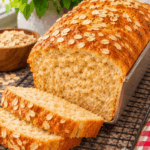
Ingredients
- 2 cups (180 g) rolled oats
- 2 large eggs
- 1 cup (245 g) plain Greek yogurt
- ¼ cup (60 ml) milk
- 2 tablespoons olive oil
- 1 tablespoon honey
- 2 teaspoons baking powder
- ½ teaspoon baking soda
- ½ teaspoon salt
- 2 tablespoons rolled oats, for topping
- Butter or oil, for greasing the pan
Instructions
Preheat your oven to 175°C (350°F). Grease a standard loaf pan, about 22 x 12 cm (9 x 5 inches), or line it with parchment paper with a little overhang. The parchment makes it easy to lift the loaf out.
Add the 2 cups of rolled oats to a blender or food processor. Pulse until they form a fairly fine flour with a few slightly coarse bits remaining. This only takes about 20 to 30 seconds. Blending the oats gives the bread a softer, more bread-like crumb than using whole oats.
Add the eggs, Greek yogurt, milk, olive oil, and honey to the blender. Blend until the mixture is smooth and thick, scraping down the sides once. No blender? Whisk the wet ingredients in a bowl, then stir in the oats that you’ve ground separately.
Add the baking powder, baking soda, and salt. Pulse just a few times, until combined. Don’t over-blend at this stage, since it can reduce the rise.
Let the batter sit for 5 minutes. The oats absorb moisture and thicken the batter, which improves the texture of the finished bread. The batter should be thick and spoonable, like a thick pancake batter or soft cake batter.
Pour the batter into the prepared loaf pan and smooth the top with a spatula. Sprinkle the remaining 2 tablespoons of rolled oats over the surface and press them in gently so they stick.
Bake for 40 to 50 minutes, until the top is golden brown and a toothpick inserted in the center comes out clean or with just a few dry crumbs. Ovens vary, so start checking at 40 minutes. If the top browns too quickly, tent the loaf loosely with foil for the last 10 to 15 minutes.
Let the bread cool in the pan for 10 minutes, then lift it out and place it on a wire rack. Let it cool for at least 30 to 45 minutes before slicing. Oat breads are delicate while warm, and the crumb sets as it cools, so waiting gives you cleaner slices.