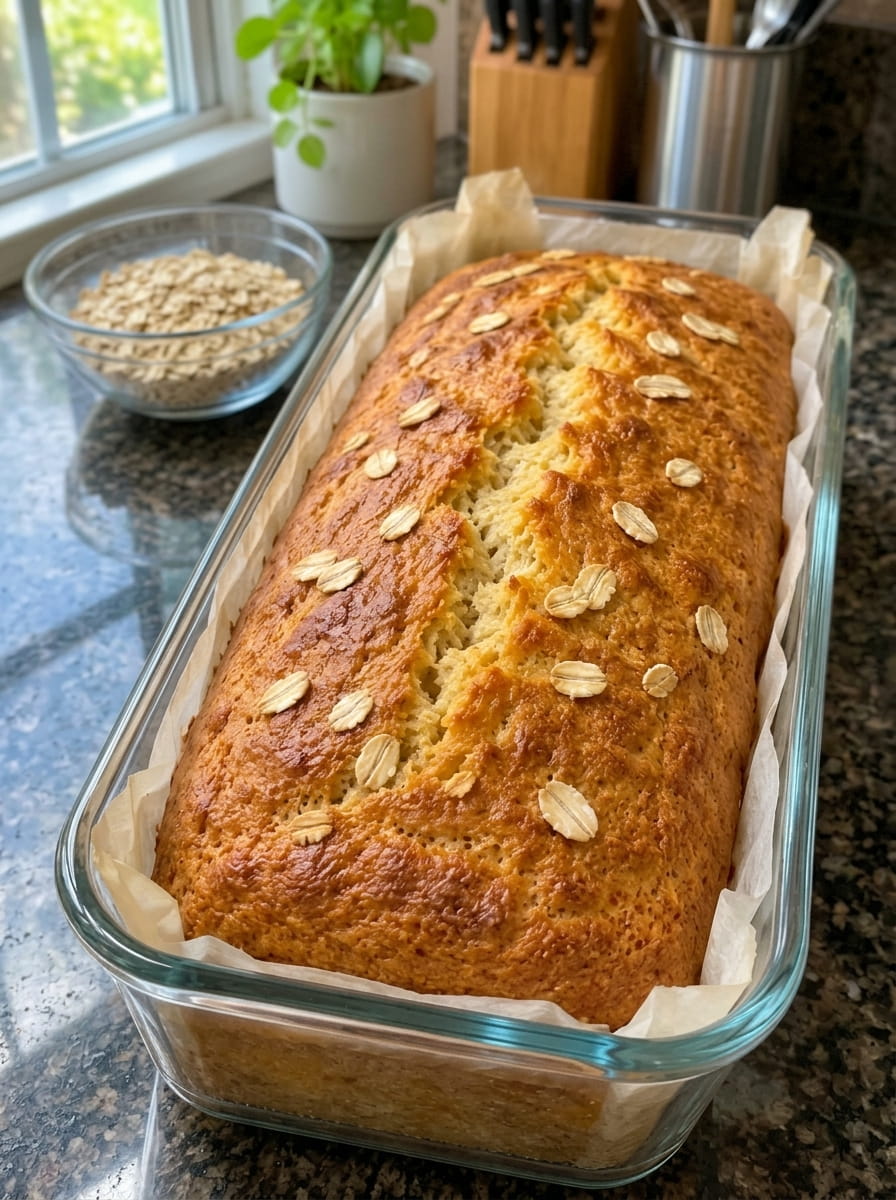

Soft and Delicious Oat Bread (Easy No-Yeast, No-Knead Greek Yogurt Loaf)
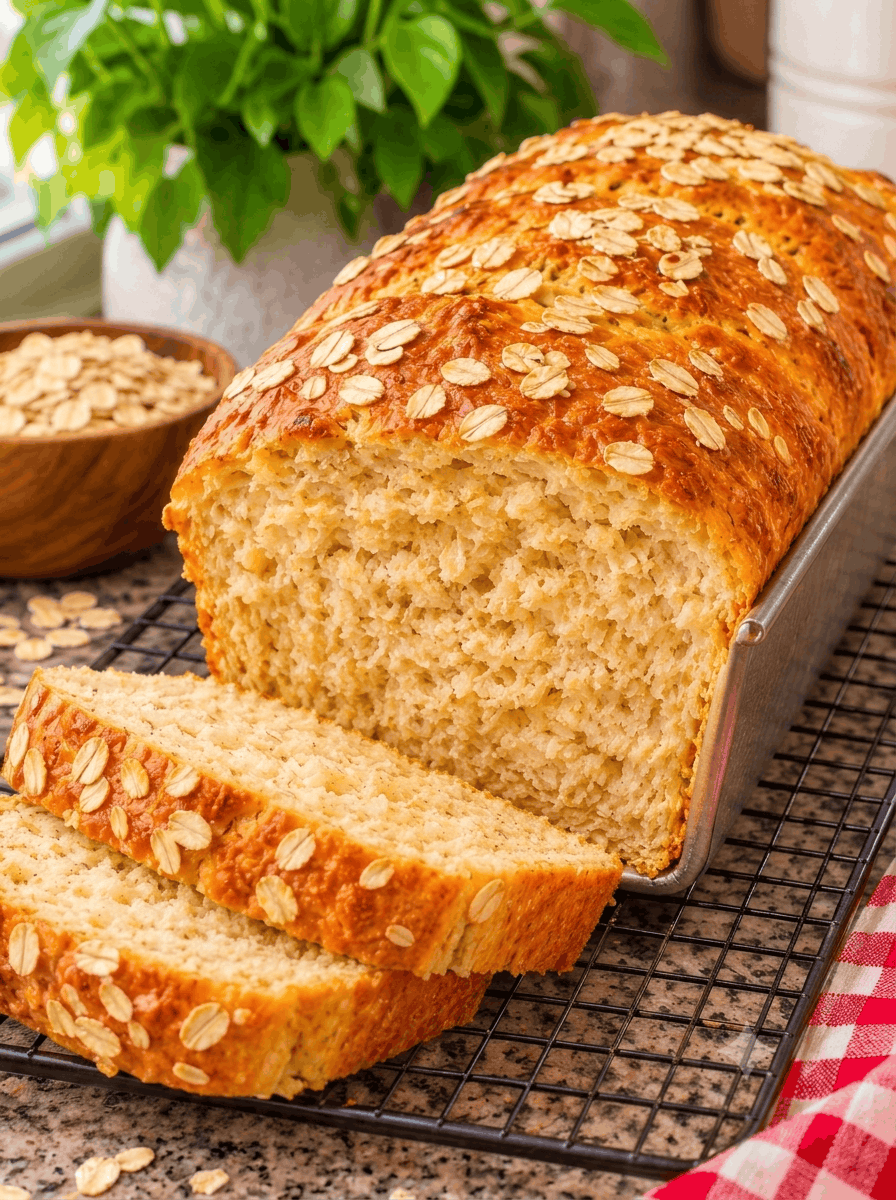
If you want fresh homemade bread without waiting hours for dough to rise, this soft and delicious oat bread is the answer. It’s a no-yeast, no-knead quick bread made with rolled oats, Greek yogurt, and eggs. You blend the batter, pour it into a pan, and bake. In about an hour, you have a tender, moist, lightly sweet loaf with a golden oat-sprinkled top.
The Greek yogurt keeps the crumb soft and gives it a gentle tang, while the oats add fiber and a hearty, nutty flavor. Olive oil and a touch of honey round out the taste without making the loaf heavy. It’s wonderful toasted for breakfast, spread with butter or jam, or served alongside soup. If you’re looking for an easy, wholesome bread recipe with simple pantry ingredients, this one belongs in your rotation.
Why You’ll Love This Oat Bread
There’s no yeast and no kneading. The loaf rises thanks to baking powder and baking soda, so there’s no proofing, no waiting, and no special technique.
It’s incredibly simple. Ten ingredients, one blender or bowl, and one loaf pan. Most of the work is done in 10 minutes.
It’s soft and moist. Greek yogurt and olive oil keep the crumb tender for days.
It’s wholesome. Oats provide fiber, and Greek yogurt adds protein. There’s no refined white flour in the batter.
It’s lightly sweet and versatile. One tablespoon of honey gives just a hint of sweetness, so the bread works for both sweet and savory toppings.
It’s great for meal prep. The loaf slices and freezes well, so you can toast a slice whenever you like.
Ingredients You’ll Need
- 2 cups (180 g) rolled oats
- 2 large eggs
- 1 cup (245 g) plain Greek yogurt
- ¼ cup (60 ml) milk
- 2 tablespoons olive oil
- 1 tablespoon honey
- 2 teaspoons baking powder
- ½ teaspoon baking soda
- ½ teaspoon salt
- 2 tablespoons rolled oats, for topping
- Butter or oil, for greasing the pan
Ingredient Notes
Rolled oats. Old-fashioned rolled oats work best. The oats are blended into a coarse flour, so they give the loaf structure without needing wheat flour. Quick oats also work. Avoid steel-cut oats, which won’t soften enough.
Eggs. Eggs bind the loaf and help it rise. Room temperature eggs blend more evenly into the batter.
Plain Greek yogurt. Use full-fat or low-fat plain Greek yogurt. Thick yogurt makes a moist, dense-but-tender crumb. Regular yogurt is thinner, so reduce the milk by a tablespoon or two if using it.
Milk. Milk loosens the batter so it blends smoothly. Any dairy or plant-based milk works.
Olive oil. Olive oil adds richness and keeps the bread soft. A mild-flavored olive oil is best. Melted butter or avocado oil also work.
Honey. Honey adds mild sweetness and helps the crust brown. Maple syrup is a good substitute.
Baking powder and baking soda. The two leaveners work together with the acidity of the yogurt to give the loaf lift. Make sure both are fresh. Expired leaveners are a common reason quick breads turn out flat.
Salt. Salt balances the flavors and keeps the loaf from tasting flat.
How to Make Oat Bread (Step by Step)
Step 1: Preheat the Oven and Prep the Pan
Preheat your oven to 175°C (350°F). Grease a standard loaf pan, about 22 x 12 cm (9 x 5 inches), or line it with parchment paper with a little overhang. The parchment makes it easy to lift the loaf out.
Step 2: Blend the Oats
Add the 2 cups of rolled oats to a blender or food processor. Pulse until they form a fairly fine flour with a few slightly coarse bits remaining. This only takes about 20 to 30 seconds. Blending the oats gives the bread a softer, more bread-like crumb than using whole oats.
Step 3: Add the Wet Ingredients
Add the eggs, Greek yogurt, milk, olive oil, and honey to the blender. Blend until the mixture is smooth and thick, scraping down the sides once. No blender? Whisk the wet ingredients in a bowl, then stir in the oats that you’ve ground separately.
Step 4: Add the Leavening and Salt
Add the baking powder, baking soda, and salt. Pulse just a few times, until combined. Don’t over-blend at this stage, since it can reduce the rise.
Step 5: Rest the Batter
Let the batter sit for 5 minutes. The oats absorb moisture and thicken the batter, which improves the texture of the finished bread. The batter should be thick and spoonable, like a thick pancake batter or soft cake batter.
Step 6: Fill the Pan
Pour the batter into the prepared loaf pan and smooth the top with a spatula. Sprinkle the remaining 2 tablespoons of rolled oats over the surface and press them in gently so they stick.
Step 7: Bake
Bake for 40 to 50 minutes, until the top is golden brown and a toothpick inserted in the center comes out clean or with just a few dry crumbs. Ovens vary, so start checking at 40 minutes. If the top browns too quickly, tent the loaf loosely with foil for the last 10 to 15 minutes.
Step 8: Cool
Let the bread cool in the pan for 10 minutes, then lift it out and place it on a wire rack. Let it cool for at least 30 to 45 minutes before slicing. Oat breads are delicate while warm, and the crumb sets as it cools, so waiting gives you cleaner slices.
Tips for the Best Oat Bread
Blend the oats well. A fine, flour-like texture gives a softer crumb. Whole oats will create a coarser, more porridge-like loaf.
Measure oats by weight if you can. Two cups of rolled oats is about 180 g. Too many oats make the loaf dry, and too few make it gummy.
Use fresh baking powder and baking soda. To test baking powder, stir a teaspoon into hot water. It should fizz right away. To test baking soda, add a few drops of vinegar, which should bubble.
Don’t skip the rest time. The 5-minute rest lets the oats hydrate, resulting in a more even texture.
Don’t overmix after adding the leaveners. Pulse briefly, since overmixing can knock out air.
Check doneness carefully. Underbaked oat bread can be gummy in the center. If the toothpick comes out wet, bake a few minutes longer.
Slice with a serrated knife. Use a gentle sawing motion to avoid crushing the loaf.
Toast the slices. Toasting gives the bread a crisp edge and a nutty flavor, and it’s the best way to enjoy day-old slices.
Easy Variations to Try
- Honey cinnamon oat bread: Add 1 teaspoon of ground cinnamon to the batter.
- Seeded oat bread: Fold in 2 tablespoons each of sunflower seeds, pumpkin seeds, or chia seeds.
- Banana oat bread: Replace the milk with ½ cup of mashed ripe banana for a sweeter loaf.
- Cheese and herb oat bread: Skip the honey, add ½ cup of shredded cheddar and 1 teaspoon of dried herbs such as rosemary or thyme.
- Raisin or cranberry oat bread: Stir in ½ cup of raisins or dried cranberries.
- Nutty oat bread: Add ⅓ cup of chopped walnuts or almonds.
- Dairy-free option: Use unsweetened coconut or plant-based yogurt and a plant-based milk. The texture may be slightly different.
- Oat bread muffins: Divide the batter among 10 to 12 lined muffin cups and bake for 20 to 25 minutes.
How to Serve Oat Bread
This loaf is flexible enough for any time of day:
- Toasted with butter and a drizzle of honey.
- Topped with avocado, a soft-boiled egg, and a pinch of salt.
- Spread with peanut butter or almond butter and sliced banana.
- Served with jam, cream cheese, or fresh berries.
- Used for sandwiches with turkey, cheese, or hummus and vegetables.
- Paired with soups, stews, and salads.
- Cut into cubes for homemade croutons.
How to Store Oat Bread
Room temperature: Keep the cooled loaf in an airtight container or bread bag for up to 2 days.
Refrigerator: Because the loaf contains yogurt and no preservatives, refrigerating it extends freshness to about 5 days. Toast slices to bring back the texture.
Freezer: Slice the loaf, place parchment between slices if you like, and freeze in a zip-top bag for up to 3 months. Toast the slices straight from frozen.
Common Problems and How to Fix Them
The bread is dense. Old baking powder or baking soda is the usual cause. Also, make sure you measured the oats accurately and didn’t overmix.
The center is gummy. The loaf may be underbaked or cut too early. Bake a few minutes longer and let it cool fully.
The bread is dry. Too many oats or overbaking can dry out the loaf. Weigh the oats and check for doneness at 40 minutes.
The loaf didn’t rise much. Check that your leaveners are fresh and don’t let the batter sit for much longer than 5 to 10 minutes before baking.
The top browned too fast. Tent the loaf with foil and continue baking.
The loaf crumbles when sliced. Let it cool completely and use a serrated knife. Toasting slices also helps them hold together.
The bread tastes bland. Make sure you included the salt, and consider adding a pinch of cinnamon or a little extra honey.
Frequently Asked Questions
Can I make this oat bread without a blender?
Yes. Grind the oats in a food processor or spice grinder, or use store-bought oat flour. Whisk the wet ingredients in a bowl, then stir in the oat flour and remaining dry ingredients until just combined.
Can I use oat flour instead of rolled oats?
Yes. Use about 1¾ cups (210 g) of oat flour in place of the blended oats. The texture will be very similar.
Is this oat bread gluten-free?
Oats are naturally gluten-free, but they’re often processed alongside wheat. If you need a gluten-free loaf, buy oats labeled certified gluten-free, and check the labels on your baking powder as well.
Can I use regular yogurt instead of Greek yogurt?
You can, but regular yogurt is thinner. Reduce the milk to 1 to 2 tablespoons so the batter doesn’t turn too runny.
Can I make it without eggs?
Eggs provide structure, so removing them will change the texture. A flax egg may work, but the loaf will likely be denser.
Can I use butter instead of olive oil?
Yes. Use the same amount of melted butter for a richer flavor.
Can I make it sweeter?
Add another tablespoon or two of honey or maple syrup. For a dessert-style loaf, stir in raisins, chocolate chips, or a pinch of cinnamon.
Is oat bread healthy?
It’s made with whole-grain oats, protein-rich Greek yogurt, and a small amount of honey, with no refined flour. Oats provide fiber, including beta-glucan. It makes a nutritious option for breakfast or snacks as part of a balanced diet.
Can I double the recipe?
Yes. Double all the ingredients and bake in two loaf pans, or in a larger pan, adjusting the baking time as needed.
How do I know when it’s done?
The top should be golden brown, the loaf should feel firm, and a toothpick inserted in the center should come out clean or with a few dry crumbs.
Final Thoughts
This soft and delicious oat bread proves that homemade bread doesn’t have to be complicated. With no yeast, no kneading, and no waiting for dough to rise, it’s one of the easiest loaves you can make, and the result is moist, tender, and full of wholesome oat flavor.
The keys to success are simple: blend the oats well, use fresh leaveners, let the batter rest for a few minutes, and cool the loaf before slicing. Once you’ve got the basic recipe down, you can add cinnamon, seeds, fruit, or cheese to make it your own.
Print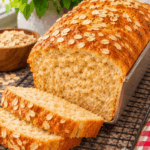
Soft and Delicious Oat Bread
Ingredients
- 2 cups (180 g) rolled oats
- 2 large eggs
- 1 cup (245 g) plain Greek yogurt
- ¼ cup (60 ml) milk
- 2 tablespoons olive oil
- 1 tablespoon honey
- 2 teaspoons baking powder
- ½ teaspoon baking soda
- ½ teaspoon salt
- 2 tablespoons rolled oats, for topping
- Butter or oil, for greasing the pan
Instructions
Preheat your oven to 175°C (350°F). Grease a standard loaf pan, about 22 x 12 cm (9 x 5 inches), or line it with parchment paper with a little overhang. The parchment makes it easy to lift the loaf out.
Add the 2 cups of rolled oats to a blender or food processor. Pulse until they form a fairly fine flour with a few slightly coarse bits remaining. This only takes about 20 to 30 seconds. Blending the oats gives the bread a softer, more bread-like crumb than using whole oats.
Add the eggs, Greek yogurt, milk, olive oil, and honey to the blender. Blend until the mixture is smooth and thick, scraping down the sides once. No blender? Whisk the wet ingredients in a bowl, then stir in the oats that you’ve ground separately.
Add the baking powder, baking soda, and salt. Pulse just a few times, until combined. Don’t over-blend at this stage, since it can reduce the rise.
Let the batter sit for 5 minutes. The oats absorb moisture and thicken the batter, which improves the texture of the finished bread. The batter should be thick and spoonable, like a thick pancake batter or soft cake batter.
Pour the batter into the prepared loaf pan and smooth the top with a spatula. Sprinkle the remaining 2 tablespoons of rolled oats over the surface and press them in gently so they stick.
Bake for 40 to 50 minutes, until the top is golden brown and a toothpick inserted in the center comes out clean or with just a few dry crumbs. Ovens vary, so start checking at 40 minutes. If the top browns too quickly, tent the loaf loosely with foil for the last 10 to 15 minutes.
Let the bread cool in the pan for 10 minutes, then lift it out and place it on a wire rack. Let it cool for at least 30 to 45 minutes before slicing. Oat breads are delicate while warm, and the crumb sets as it cools, so waiting gives you cleaner slices.