
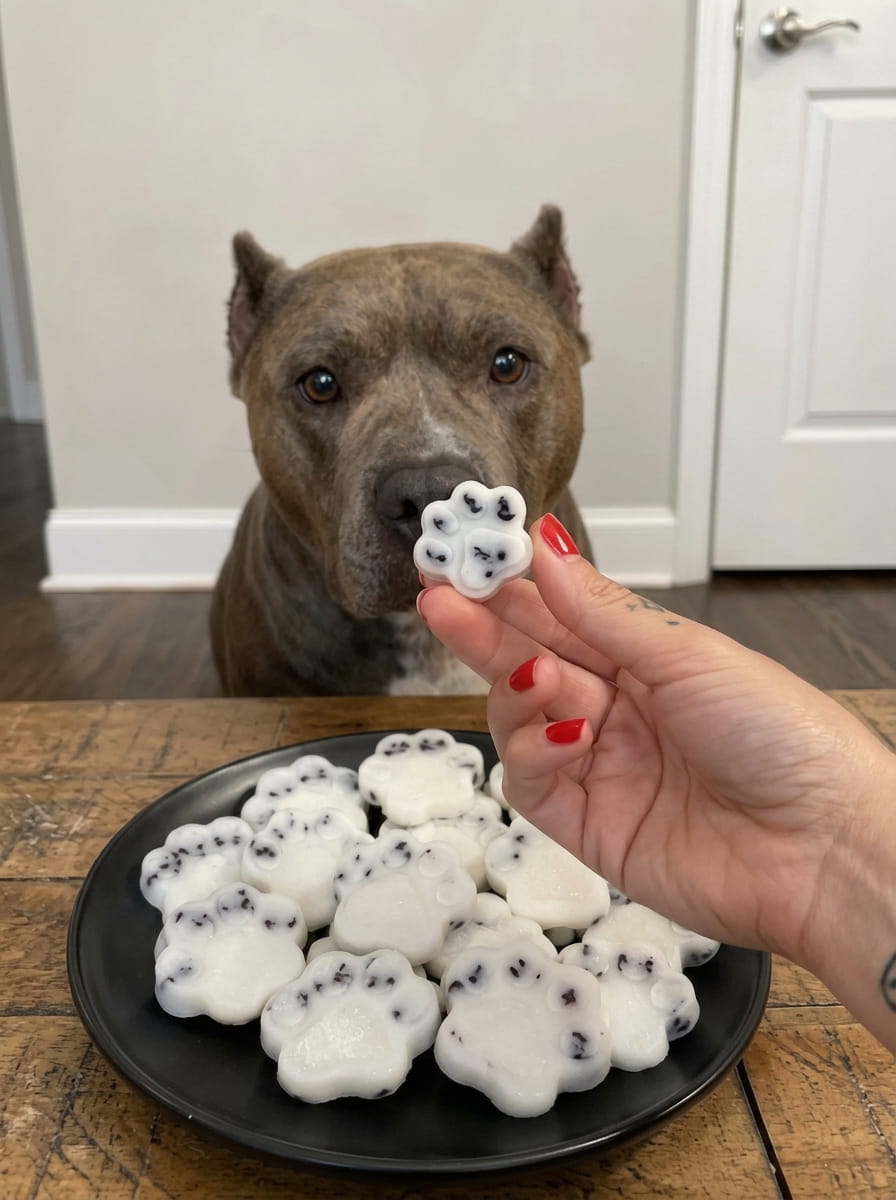
2-Ingredient Blueberry Coconut Oil Dog Treats 🫐🥥🐶
If your dog loves a cold, crunchy snack, these blueberry dog treats are an easy win. They use only two ingredients, fresh or frozen blueberries and a little coconut oil, and they take about 5 minutes to prepare. Freeze them in small molds and you have a colorful, refreshing treat for warm days, training sessions, or just because.
There’s no baking, no added sugar, and nothing complicated. You know exactly what’s in them, which is a big reason many owners prefer homemade treats.
This guide covers the full recipe, step-by-step instructions, and tips for smooth, easy-to-unmold treats. It also covers the safety points that matter for pet food, including portion size, how much coconut oil is reasonable, and when to check with your vet first. You’ll also find variations, storage advice, and answers to common questions.
Recipe at a Glance
- Makes: about 15-20 mini treats
- Prep time: 5 minutes
- Freezing time: 2-3 hours
- Difficulty: Very easy
Why You’ll Love These Blueberry Coconut Oil Dog Treats
Just two ingredients. Blueberries and coconut oil are easy to find and easy to keep on hand.
No baking required. Mash, stir, pour, and freeze.
No added sugar. The only sweetness comes from the fruit itself.
Refreshing in warm weather. Frozen treats are a nice way to help your dog cool off.
Perfectly small. Mini molds make small portions, which suits training rewards and small dogs.
Colorful and fun. The deep blue-purple color looks great, and dogs tend to love the taste.
Quick cleanup. One small bowl, a fork, and a mold.
Ingredients for Blueberry Coconut Oil Dog Treats
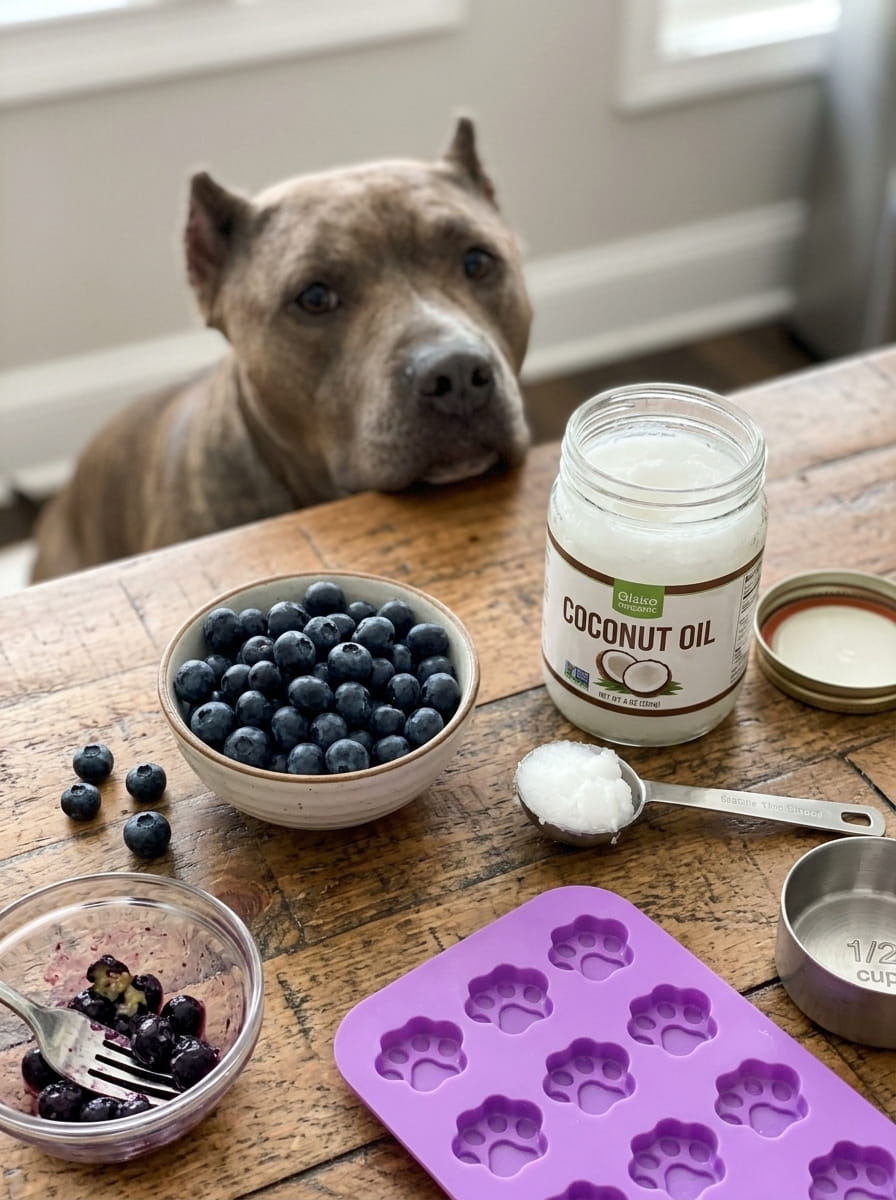
- ½ cup (75 g) fresh or frozen blueberries
- 1 tablespoon (14 g) plain, unflavored coconut oil
Ingredient Notes and Safety Tips
Blueberries. Blueberries are widely considered safe for dogs in small amounts. They’re low in calories and a popular choice for training treats. Use plain berries with nothing added. Avoid blueberry pie filling, sweetened dried blueberries, and anything with added sugar or artificial sweeteners. Very small dogs can choke on whole berries, which is one reason this recipe mashes them.
Coconut oil. Use plain, unflavored coconut oil with no additives. Coconut oil is high in fat and calories, and in larger amounts it can cause loose stools or an upset stomach. It can also be a problem for dogs prone to pancreatitis or those who are overweight. This recipe uses only one tablespoon for the whole batch, so each treat contains a tiny amount. Still, if your dog has a history of pancreatitis, a sensitive stomach, or weight issues, ask your vet before serving these.
Frozen vs. fresh berries. Either works. Frozen berries are convenient and often cheaper. Let them soften slightly so they mash easily.
A note about “dog-safe” food. Every dog is different. Allergies, sensitive stomachs, and medical conditions can change which foods are appropriate. If you’re unsure, a quick chat with your vet is worthwhile.
Equipment You’ll Need
- A small bowl
- A fork or small blender
- Small silicone molds or an ice cube tray (mini molds work best)
- A small microwave-safe dish or saucepan for melting the oil
- A freezer-safe container for storage
How to Make Blueberry Coconut Oil Dog Treats (Step by Step)
Step 1: Prepare the Blueberries
Wash fresh blueberries thoroughly and remove any stems. If you’re using frozen blueberries, let them soften slightly so they’re easy to mash.
Step 2: Mash the Berries
Place the blueberries in a small bowl and mash with a fork until they form a chunky puree. For smoother treats, blend them briefly. A smoother mixture is easier to spoon into tiny molds and is safer for small dogs.
Step 3: Melt the Coconut Oil
Gently melt the coconut oil until it’s just liquid. A few seconds in the microwave or a minute in a small pan over low heat is enough. Let it cool slightly so it isn’t hot. Hot oil can partially melt the berries and make the mixture too runny.
Step 4: Combine the Ingredients
Add the melted coconut oil to the mashed blueberries and stir until evenly combined. Work quickly, since the oil can start to solidify again as it hits the cold berries. Stir again right before filling the molds so the oil doesn’t separate.
Step 5: Fill the Molds
Spoon the mixture into small silicone dog-treat molds or an ice cube tray. Keep the portions small for easy serving. Filling the molds on a small tray makes them easy to carry to the freezer without spilling.
Step 6: Freeze
Place the molds in the freezer for 2-3 hours, or until the treats are completely firm.
Step 7: Serve
Remove the treats from the molds and offer one small piece to your dog as an occasional snack. Supervise while your dog eats, and return the rest to the freezer promptly.
Expert Tips for the Best Frozen Dog Treats
1. Stir right before filling. Coconut oil can separate from the berry puree. A last stir keeps the mixture even.
2. Let the oil cool a little. Warm, not hot, oil blends in without melting the berries.
3. Use small molds. Mini molds make appropriate portions and freeze faster.
4. Mash well for small dogs. A smoother puree lowers the choking risk.
5. Check the label. Choose plain coconut oil and unsweetened blueberries with no added ingredients.
6. Unmold gently. Flex the silicone and push from the bottom. If a treat sticks, wait a minute and try again.
7. Store in an airtight container. It prevents freezer odors and freezer burn.
8. Supervise. Always watch your dog while they eat a treat.
How Much Should You Feed?
Treats should be just that, treats. A commonly cited veterinary guideline is that treats should make up no more than about 10% of a dog’s daily calories, with the rest coming from a complete and balanced dog food.
- Small dogs and puppies: One mini treat, or even half.
- Medium and large dogs: One or two mini treats as an occasional snack.
- Start small. Offer one piece the first time and watch for signs of an upset stomach.
- Don’t overdo it. Too much fat or fruit can cause loose stools.
If your dog has health conditions, is on a prescription diet, is overweight, or is very young or senior, check with your veterinarian before adding new treats.
Recipe Variations and Add-Ins
Introduce new ingredients one at a time, and check with your vet if your dog has special dietary needs.
Add plain yogurt. Stir in a spoonful of plain, unsweetened yogurt for a creamier treat. Check the label to make sure it contains no xylitol, and skip it if your dog is sensitive to dairy.
Add mashed banana. A little ripe banana adds sweetness and a creamy texture. Keep portions small because of the sugar.
Add pumpkin puree. A spoonful of 100% plain pumpkin (not pie filling) adds fiber.
Make them oil-free. If your dog shouldn’t have extra fat, replace the coconut oil with plain, unsweetened yogurt or a little water. The treats will be icier and softer.
Use a stuffed toy. Spoon the mixture into a freezer-safe rubber chew toy and freeze it for a longer-lasting treat.
Make a “pupsicle.” Use a larger mold for a big dog on a hot day.
Try other safe fruits. Dog-safe options include strawberries, watermelon (seedless, no rind), and apple slices (no seeds or core). Introduce them slowly.
Ingredients to Avoid in Homemade Dog Treats
Know which common foods can be harmful. Never add:
- Xylitol (found in some peanut butters, yogurts, gums, and baked goods)
- Chocolate and cocoa
- Grapes and raisins
- Onions, garlic, chives, and leeks
- Macadamia nuts
- Nutmeg and large amounts of strong spices
- Alcohol and caffeine
- Excess salt or sugar
If your dog eats something toxic, call your veterinarian or a pet poison helpline right away.
How to Store Frozen Dog Treats
Freezer: Once the treats are solid, transfer them to an airtight freezer-safe container or bag. Store for up to about 2 to 3 months for the best quality. Layer them with parchment paper to keep them from sticking.
Serving from frozen: Take out one treat at a time and return the rest to the freezer.
Do not refreeze melted treats. If they melt into a puddle, discard them.
Making a big batch: Double or triple the recipe, keeping the same ratio of berries to oil.
Why Blueberries Are Popular in Dog Treats
Blueberries are small, low in calories, and naturally sweet, which makes them a popular fruit for dog treats. They contain fiber, vitamins, and antioxidants. Many dogs enjoy them fresh, frozen, or mashed. As with any fruit, they should be served in moderation because of the natural sugar.
Coconut oil gives the mixture a solid, scoopable texture once frozen and helps bind the puree. A little goes a long way, which is why this recipe uses just one tablespoon.
Frequently Asked Questions
Can dogs eat blueberries?
Yes, most dogs can eat blueberries in moderation. They’re a low-calorie snack. Serve plain berries, and mash them for small dogs.
Is coconut oil safe for dogs?
Small amounts are generally tolerated, but coconut oil is high in fat and can cause stomach upset or diarrhea. Dogs with pancreatitis, obesity, or sensitive stomachs should avoid it unless a vet approves.
How much coconut oil is in each treat?
Very little. A single tablespoon is spread across 15-20 treats. Still, keep servings small.
Can puppies eat these treats?
Many puppies can have a very small piece, but their stomachs are sensitive and they have specific nutritional needs. Check with your vet first.
Can I use frozen blueberries?
Yes. Let them soften slightly so they mash easily.
Can I skip the coconut oil?
Yes. You can replace it with plain, unsweetened yogurt (xylitol-free) or a little water, though the texture will change.
How long do the treats take to freeze?
About 2 to 3 hours for small molds. They’re ready when completely firm.
Why did my mixture separate?
Coconut oil can separate from the puree as it cools. Stir right before filling the molds and freeze promptly.
How many treats can my dog have each day?
Treats should be a small part of the diet, generally no more than about 10% of daily calories. For most dogs, one or two mini treats as an occasional snack is plenty.
Can these treats stain?
Blueberries can leave purple marks on carpet, fabric, and light floors, and they may tint your dog’s stool or mouth. Serve outdoors or on a tile floor if that’s a concern.
What if my dog has diarrhea after eating them?
Stop feeding the treats and call your veterinarian if the symptoms continue.
Are these treats good for hot weather?
They’re a nice cooling snack. Provide fresh water too, and watch for signs of overheating.
Do these treats replace a meal?
No. They’re an occasional snack, not a complete meal.
Can I use dried blueberries?
Plain, unsweetened dried berries are possible in tiny amounts, but they’re more concentrated in sugar and harder to mash. Fresh or frozen berries work better here.
Final Thoughts
These 2-ingredient blueberry coconut oil dog treats show that a special snack for your pup doesn’t need to be complicated. With fresh or frozen blueberries, a spoonful of coconut oil, and a silicone mold, you can make small, colorful frozen treats that dogs love.
Read your labels, keep portions small, and introduce the treats gradually. Do that, and you’ll have a cool, simple way to reward your best friend. ❤️🐾
If you make these treats, leave a comment and a star rating, and share the recipe with a fellow dog lover. 🫐🥥🐶
Print
2-Ingredient Blueberry Coconut Oil Dog Treats
Ingredients
- ½ cup (75 g) fresh or frozen blueberries
- 1 tablespoon (14 g) plain, unflavored coconut oil
Instructions
Wash fresh blueberries thoroughly and remove any stems. If you’re using frozen blueberries, let them soften slightly so they’re easy to mash.
Place the blueberries in a small bowl and mash with a fork until they form a chunky puree. For smoother treats, blend them briefly. A smoother mixture is easier to spoon into tiny molds and is safer for small dogs.
Gently melt the coconut oil until it’s just liquid. A few seconds in the microwave or a minute in a small pan over low heat is enough. Let it cool slightly so it isn’t hot. Hot oil can partially melt the berries and make the mixture too runny.
Add the melted coconut oil to the mashed blueberries and stir until evenly combined. Work quickly, since the oil can start to solidify again as it hits the cold berries. Stir again right before filling the molds so the oil doesn’t separate.
Spoon the mixture into small silicone dog-treat molds or an ice cube tray. Keep the portions small for easy serving. Filling the molds on a small tray makes them easy to carry to the freezer without spilling.
Place the molds in the freezer for 2-3 hours, or until the treats are completely firm.
Remove the treats from the molds and offer one small piece to your dog as an occasional snack. Supervise while your dog eats, and return the rest to the freezer promptly.