
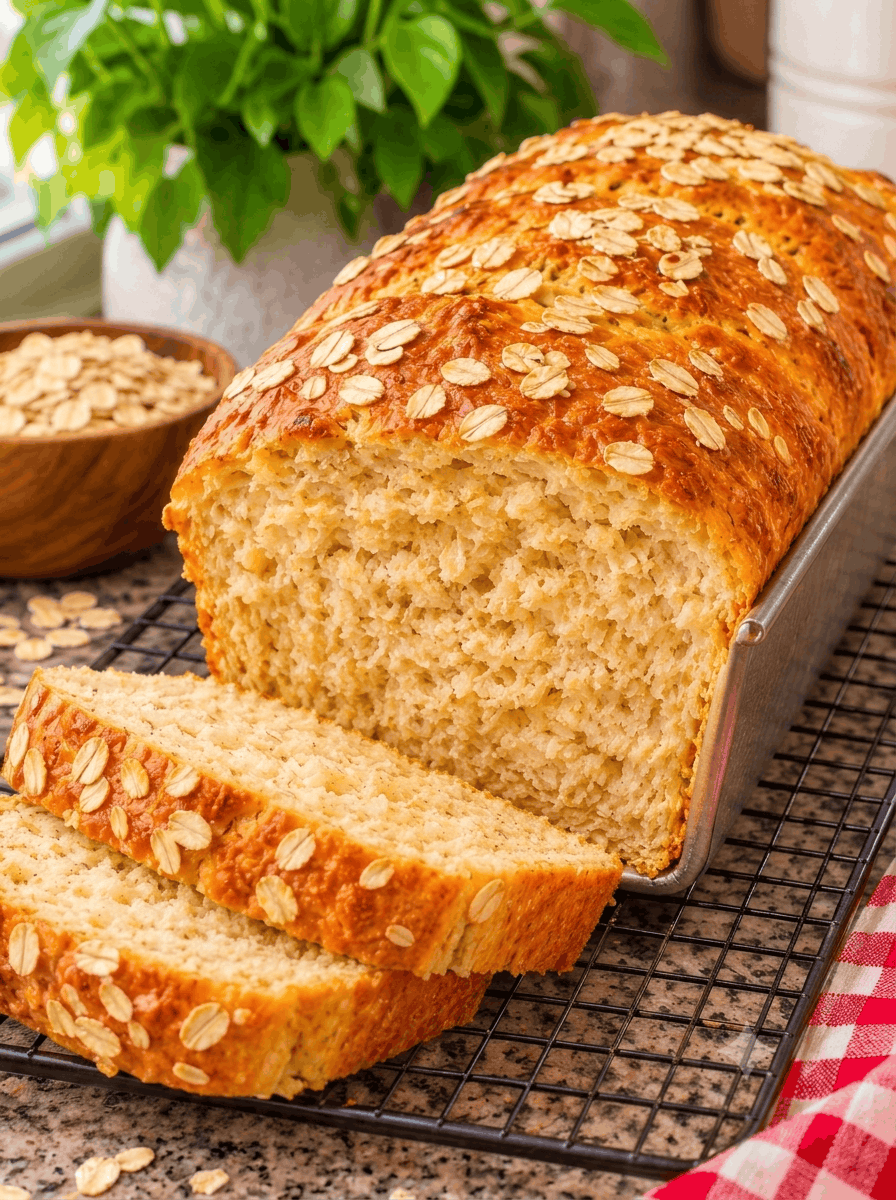
Easy Soft and Moist Oatmeal Carrot Bread (No-Yeast, No-Knead, Naturally Sweetened)
If you love carrot cake but want something you can enjoy at breakfast, this easy oatmeal carrot bread is the perfect compromise. It’s a soft, moist, lightly spiced quick bread made with rolled oats, fresh grated carrots, Greek yogurt, and a touch of honey. There’s no yeast, no kneading, and no refined flour. You blend the batter, pour it into a loaf pan, and bake.
The carrots melt into the crumb, adding natural sweetness and moisture, while cinnamon and vanilla give the loaf a warm, cozy flavor. The result is a tender, wholesome bread that’s delicious toasted with butter, spread with cream cheese, or eaten plain as a snack. If you’re looking for a healthy carrot bread recipe made with simple pantry ingredients, this one is hard to beat.
Why You’ll Love This Oatmeal Carrot Bread
It’s quick and easy. There’s no yeast, no proofing, and no kneading. Mix the batter in about 10 minutes and let the oven do the rest.
It’s soft and moist. Grated carrots and Greek yogurt keep the crumb tender for days, so it never turns dry like many oat-based loaves.
It’s naturally sweetened. Carrots and a few tablespoons of honey or maple syrup provide gentle sweetness without any white sugar.
It’s wholesome. Rolled oats provide fiber, Greek yogurt adds protein, and the carrots contribute vitamins and color.
It’s versatile. Enjoy it for breakfast, as an afternoon snack, in lunchboxes, or even as a lightly sweet side with soup.
It’s perfect for meal prep. The loaf slices and freezes beautifully, so you can toast a piece any time.
Ingredients You’ll Need
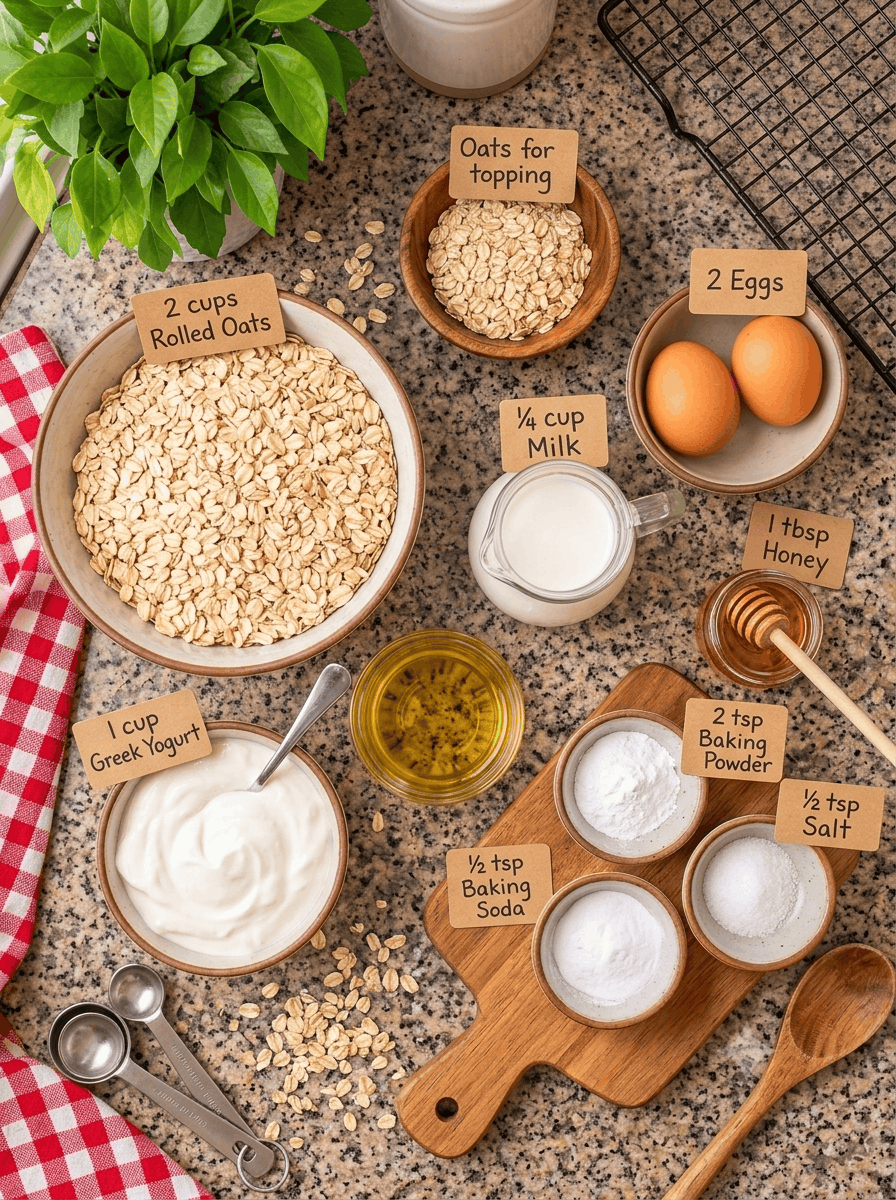
- 2 cups (180 g) rolled oats
- 1 cup (110 g) finely grated carrots
- 2 large eggs
- ½ cup (120 g) plain Greek yogurt
- ¼ cup (60 ml) milk
- 3 tablespoons honey or maple syrup
- 2 tablespoons olive oil
- 2 teaspoons baking powder
- ½ teaspoon baking soda
- 1 teaspoon ground cinnamon
- ½ teaspoon salt
- 1 teaspoon vanilla extract
- 2 tablespoons rolled oats, for topping
- Butter or oil, for greasing the pan
Ingredient Notes
Rolled oats. Old-fashioned rolled oats work best. They’re blended into a coarse flour that gives the loaf structure. Quick oats also work. Avoid steel-cut oats, which stay too firm.
Finely grated carrots. Use the small holes of a box grater so the carrots disappear into the crumb. Coarsely grated carrots leave wet, stringy pockets. Pack the carrots lightly into the measuring cup and don’t squeeze out their juice, since that moisture helps keep the loaf soft.
Eggs. Eggs bind the batter and help the loaf rise. Room temperature eggs mix in more evenly.
Plain Greek yogurt. Greek yogurt gives the loaf a soft, moist crumb and a slight tang. Regular yogurt is thinner, so reduce the milk by a tablespoon or two if you use it.
Milk. Milk loosens the batter so it blends smoothly. Any dairy or plant-based milk works.
Honey or maple syrup. Either one adds sweetness and helps the crust brown. Maple syrup gives a slightly warmer flavor. For a sweeter loaf, add another tablespoon.
Olive oil. Olive oil keeps the bread tender. Choose a mild one, or substitute melted butter or avocado oil.
Baking powder and baking soda. Together with the yogurt’s acidity, they provide the lift. Make sure both are fresh.
Cinnamon, vanilla, and salt. Cinnamon and vanilla give the bread its warm, bakery-style flavor, and salt balances the sweetness.
How to Make Oatmeal Carrot Bread (Step by Step)
Step 1: Preheat the Oven and Prep the Pan
Preheat your oven to 175°C (350°F). Grease a standard loaf pan, about 22 x 12 cm (9 x 5 inches), or line it with parchment paper, leaving a little overhang so you can lift the loaf out easily.
Step 2: Blend the Oats
Add the 2 cups of rolled oats to a blender or food processor. Pulse for 20 to 30 seconds, until you have a fairly fine flour with a few coarse bits remaining. Blending gives you a softer, more bread-like crumb.
Step 3: Add the Wet Ingredients
Add the eggs, Greek yogurt, milk, honey (or maple syrup), olive oil, and vanilla extract to the blender. Blend until smooth and thick, scraping down the sides once. If you don’t have a blender, whisk the wet ingredients in a bowl and stir in oat flour that you’ve ground separately.
Step 4: Add the Leaveners, Cinnamon, and Salt
Add the baking powder, baking soda, cinnamon, and salt. Pulse just a few times to combine. Overmixing at this stage can reduce the rise.
Step 5: Fold in the Carrots
Transfer the batter to a mixing bowl if needed, then fold in the finely grated carrots with a spatula until evenly distributed. Folding by hand keeps the carrots intact and prevents the batter from turning watery.
Step 6: Rest the Batter
Let the batter sit for 5 minutes. The oats absorb moisture and thicken the batter, which improves the texture. The batter should be thick and scoopable, similar to a thick muffin batter.
Step 7: Fill the Pan
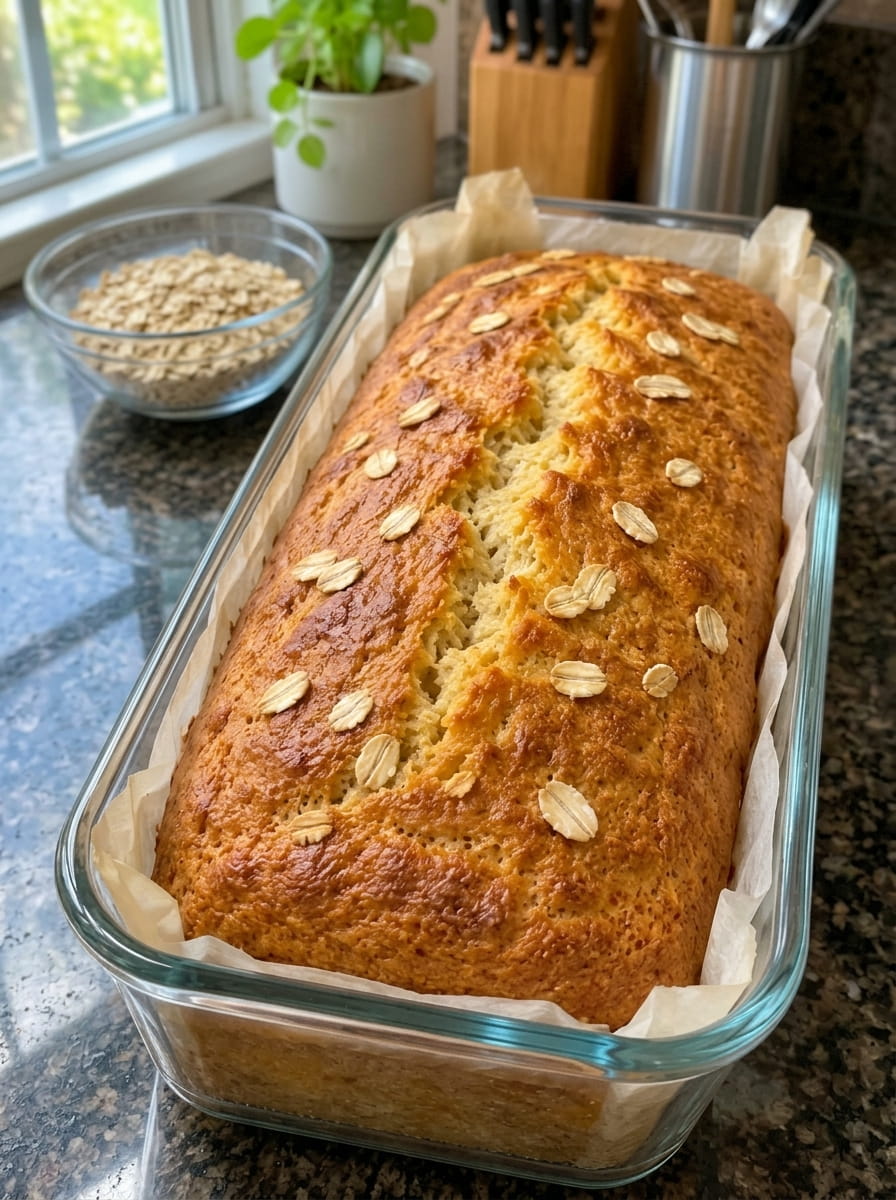
Pour the batter into the prepared pan and smooth the top. Sprinkle the 2 tablespoons of rolled oats over the surface and press them in gently so they stay put.
Step 8: Bake
Bake for 45 to 55 minutes, until the top is golden brown and a toothpick inserted into the center comes out clean or with a few dry crumbs. Because carrots add moisture, this loaf can take slightly longer than a plain oat bread, so start checking at 45 minutes. If the top browns too quickly, tent it loosely with foil for the last 10 to 15 minutes.
Step 9: Cool
Let the bread cool in the pan for 10 minutes, then lift it out and transfer it to a wire rack. Let it cool for at least 45 minutes before slicing. The crumb sets as it cools, which gives you cleaner slices and a better texture.
Tips for the Best Oatmeal Carrot Bread
Grate the carrots finely. Small shreds blend into the batter and bake evenly. Large shreds create soggy spots.
Blend the oats well. A flour-like texture gives a softer, more tender crumb.
Weigh your ingredients if possible. Two cups of rolled oats is about 180 g, and one cup of grated carrots is about 110 g. Too many oats can dry the loaf, while too many carrots can make it gummy.
Use fresh leaveners. To test baking powder, stir a teaspoon into hot water. It should fizz right away. To test baking soda, add a few drops of vinegar and look for bubbles.
Don’t skip the rest time. Five minutes gives the oats time to hydrate for a more even crumb.
Check doneness carefully. If the toothpick comes out wet, give the loaf another 5 minutes. Underbaked oat bread can be gummy in the center.
Slice with a serrated knife. Use a gentle sawing motion to avoid crushing the soft crumb.
Toast it. Toasted slices develop crisp edges and a nutty flavor, which is especially nice for day-old bread.
Easy Variations to Try
- Carrot cake oatmeal bread: Add ½ teaspoon of nutmeg and a pinch of ground ginger or cloves, then fold in ⅓ cup of chopped walnuts and ¼ cup of raisins.
- Pineapple carrot bread: Fold in ¼ cup of well-drained crushed pineapple.
- Apple carrot bread: Replace ½ cup of the carrots with finely grated apple.
- Seeded carrot bread: Add 2 tablespoons of sunflower seeds, pumpkin seeds, or chia seeds.
- Chocolate chip version: Fold in ¼ cup of mini chocolate chips for a treat.
- Cream cheese frosted loaf: Spread with a thin layer of cream cheese mixed with a little honey for a dessert-style loaf.
- Dairy-free option: Use plant-based yogurt and milk. The texture may be slightly different.
- Muffins: Divide the batter among 10 to 12 lined muffin cups and bake for 22 to 28 minutes.
How to Serve Oatmeal Carrot Bread
This loaf is delicious any time of day:
- Toasted with butter and a drizzle of honey.
- Spread with cream cheese or almond butter.
- Topped with Greek yogurt and walnuts for a protein-rich breakfast.
- Served with a cup of coffee or tea as an afternoon snack.
- Packed into lunchboxes in slices or small portions.
- Paired with soup or a salad as a lightly sweet side.
- Warmed slightly for a cozy dessert, with a scoop of vanilla yogurt or ice cream.
How to Store Oatmeal Carrot Bread
Room temperature: Keep the cooled loaf in an airtight container for up to 2 days.
Refrigerator: Because the bread contains carrots and yogurt, refrigerating it is the safest way to keep it fresh. It will last about 5 days. Toast or warm slices to bring back the texture.
Freezer: Slice the loaf and freeze the slices in a zip-top bag for up to 3 months. Toast straight from frozen or thaw at room temperature.
Common Problems and How to Fix Them
The bread is dense. Old leaveners, inaccurate measuring, or overmixing are the usual causes. Test your baking powder and baking soda, and weigh the oats if you can.
The center is gummy. The loaf may be underbaked or sliced too early. Bake a few more minutes and cool completely before cutting.
The loaf is too wet. Carrots release moisture as they bake. Grate them finely, don’t add extra liquid, and make sure the loaf bakes until fully set.
The bread is dry. Too many oats or overbaking is the usual reason. Check for doneness at 45 minutes.
The loaf didn’t rise much. Make sure your leaveners are fresh and bake the batter soon after the 5-minute rest.
The top browned too fast. Tent loosely with foil and continue baking.
The loaf crumbles when sliced. Cool completely and use a serrated knife. Toasting also helps hold the slices together.
The bread tastes bland. Check that you added the salt, cinnamon, and vanilla. A little extra honey or a pinch of nutmeg can also boost flavor.
Frequently Asked Questions
Can I make this oatmeal carrot bread without a blender?
Yes. Grind the oats in a food processor or spice grinder, or use store-bought oat flour. Whisk the wet ingredients in a bowl, then stir in the oat flour, dry ingredients, and carrots until just combined.
Can I use oat flour instead of rolled oats?
Yes. Use about 1¾ cups (210 g) of oat flour in place of the blended oats. The texture will be very similar.
Can I use pre-shredded carrots?
You can, but they’re often thicker and drier than freshly grated carrots. For the best texture, chop them smaller or grate your own.
Is this carrot bread gluten-free?
Oats are naturally gluten-free, but they’re often processed with wheat. For a gluten-free loaf, use certified gluten-free oats and check that your baking powder is gluten-free too.
Can I use regular yogurt instead of Greek yogurt?
Yes, but regular yogurt is thinner. Reduce the milk to 1 to 2 tablespoons so the batter doesn’t become too runny.
Can I make this without eggs?
Eggs provide structure, so removing them will change the texture. A flax egg may work, but expect a denser result.
Can I use butter instead of olive oil?
Yes. Use the same amount of melted butter for a richer flavor.
Can I make it sweeter?
Add another tablespoon or two of honey or maple syrup, or fold in raisins or chocolate chips. For a dessert-style loaf, top with cream cheese frosting.
Is oatmeal carrot bread healthy?
It’s made with whole-grain oats, protein-rich Greek yogurt, and vegetables, with no refined flour or white sugar. Oats provide fiber, and carrots contribute beta-carotene. As a lightly sweetened bread, it makes a nutritious breakfast or snack as part of a balanced diet.
Can I double the recipe?
Yes. Double all the ingredients and bake in two loaf pans, adjusting the baking time as needed.
How do I know when it’s done?
The top should be golden brown, the loaf should feel firm, and a toothpick inserted in the center should come out clean or with a few dry crumbs.
Final Thoughts
This easy soft and moist oatmeal carrot bread brings together the cozy flavors of carrot cake and the wholesome goodness of oats in a simple, no-yeast loaf. It’s naturally sweetened, tender, and full of flavor, and it comes together in minutes with ingredients you probably already have.
The keys to success are simple: grate the carrots finely, blend the oats well, use fresh leaveners, rest the batter for a few minutes, and cool the loaf before slicing. Once you’ve got the base recipe down, you can add nuts, raisins, spices, or a swirl of cream cheese to make it your own.
Print
Easy Soft and Moist Oatmeal Carrot Bread
Ingredients
- 2 cups (180 g) rolled oats
- 1 cup (110 g) finely grated carrots
- 2 large eggs
- ½ cup (120 g) plain Greek yogurt
- ¼ cup (60 ml) milk
- 3 tablespoons honey or maple syrup
- 2 tablespoons olive oil
- 2 teaspoons baking powder
- ½ teaspoon baking soda
- 1 teaspoon ground cinnamon
- ½ teaspoon salt
- 1 teaspoon vanilla extract
- 2 tablespoons rolled oats, for topping
- Butter or oil, for greasing the pan
Instructions
Preheat your oven to 175°C (350°F). Grease a standard loaf pan, about 22 x 12 cm (9 x 5 inches), or line it with parchment paper, leaving a little overhang so you can lift the loaf out easily.
Add the 2 cups of rolled oats to a blender or food processor. Pulse for 20 to 30 seconds, until you have a fairly fine flour with a few coarse bits remaining. Blending gives you a softer, more bread-like crumb.
Add the eggs, Greek yogurt, milk, honey (or maple syrup), olive oil, and vanilla extract to the blender. Blend until smooth and thick, scraping down the sides once. If you don’t have a blender, whisk the wet ingredients in a bowl and stir in oat flour that you’ve ground separately.
Add the baking powder, baking soda, cinnamon, and salt. Pulse just a few times to combine. Overmixing at this stage can reduce the rise.
Transfer the batter to a mixing bowl if needed, then fold in the finely grated carrots with a spatula until evenly distributed. Folding by hand keeps the carrots intact and prevents the batter from turning watery.
Let the batter sit for 5 minutes. The oats absorb moisture and thicken the batter, which improves the texture. The batter should be thick and scoopable, similar to a thick muffin batter.
Pour the batter into the prepared pan and smooth the top. Sprinkle the 2 tablespoons of rolled oats over the surface and press them in gently so they stay put.
Bake for 45 to 55 minutes, until the top is golden brown and a toothpick inserted into the center comes out clean or with a few dry crumbs. Because carrots add moisture, this loaf can take slightly longer than a plain oat bread, so start checking at 45 minutes. If the top browns too quickly, tent it loosely with foil for the last 10 to 15 minutes.
Let the bread cool in the pan for 10 minutes, then lift it out and transfer it to a wire rack. Let it cool for at least 45 minutes before slicing. The crumb sets as it cools, which gives you cleaner slices and a better texture.