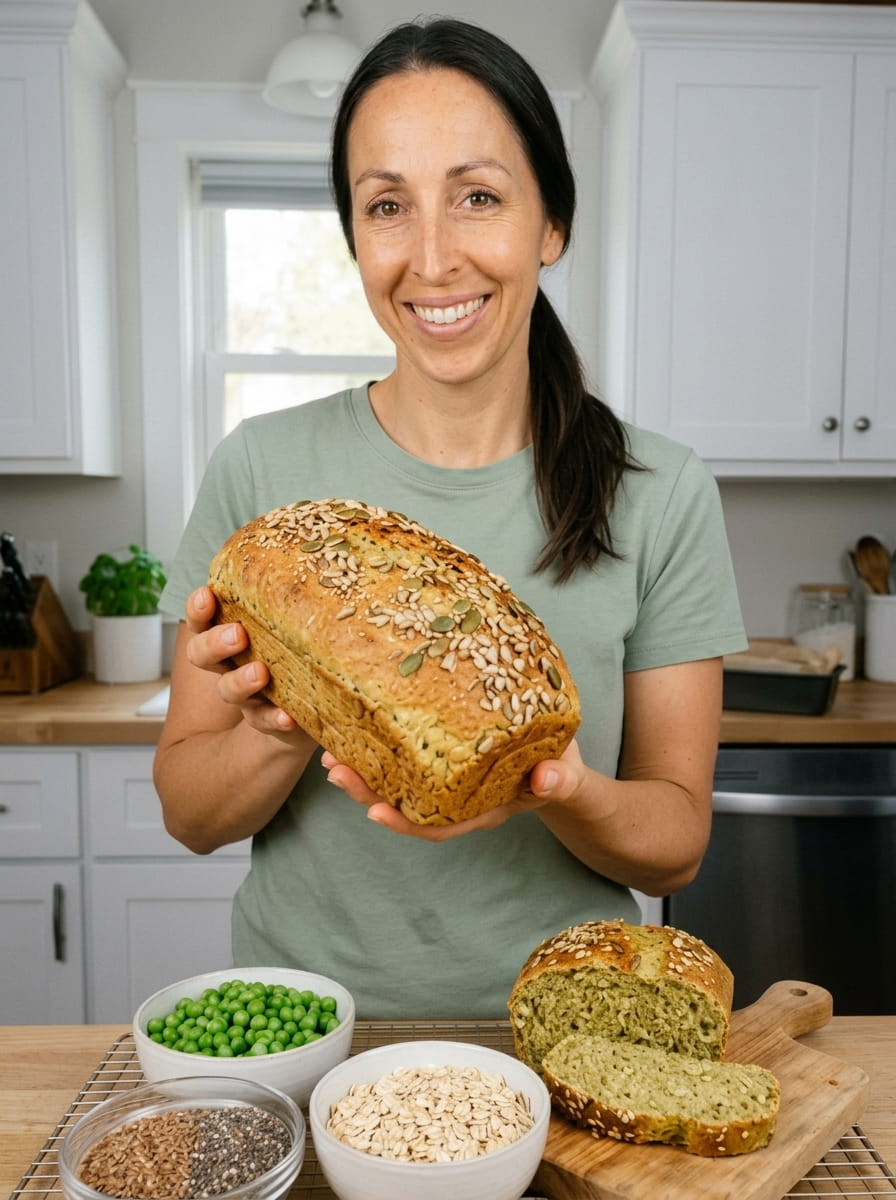

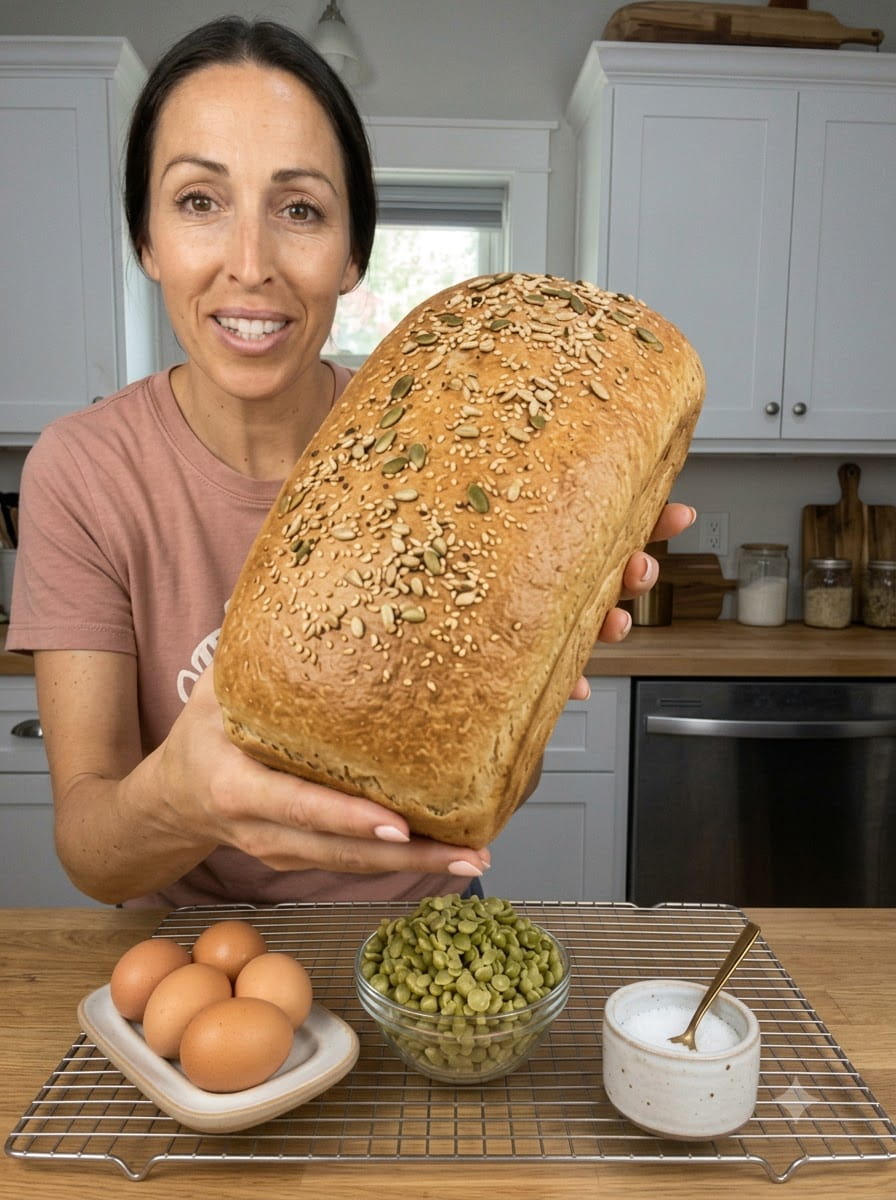
3-Ingredient Split Pea Bread: A Flourless, Yeast-Free Loaf Made With Pantry Staples
Soft, hearty, and packed with plant-based protein, this 3-Ingredient Split Pea Bread is a simple homemade loaf made without flour, yeast, or kneading. Blended green split peas, eggs, and baking powder come together to create a satisfying bread with a tender interior and a beautifully golden crust. It is perfect for breakfast toast, sandwiches, avocado, scrambled eggs, or a warm slice served with butter.
If you have ever wanted to turn humble pantry staples into real homemade bread, this easy split pea bread recipe is the one to try. There is no proofing, no waiting for dough to rise, and no special equipment beyond a blender and a loaf pan. All it takes is a little planning the night before, because the split peas need time to soak.
In this guide, you will find the full recipe, a clear step-by-step walkthrough, practical tips for the best texture, serving ideas, storage advice, variations, and answers to the most common questions about making bread from split peas.
Why You’ll Love This Split Pea Bread
Most breads depend on wheat flour, yeast, and a long rising process. This loaf skips all of that and still delivers a sliceable, toastable result. Here is why so many home cooks are drawn to it.
It only needs three ingredients. Dried green split peas, eggs, and baking powder are all you need. Most kitchens already have them, and none of them are expensive.
It is made without flour. Because the peas are blended into a smooth batter, there is no wheat flour, no almond flour, and no specialty flour blend to buy. For anyone looking for a flourless bread, this is a refreshingly simple option.
It is yeast-free and no-knead. There is no dough to work, no rising time, and no shaping. You blend, pour, and bake.
It is rich in plant-based protein and fiber. Split peas are a legume known for being a good source of protein and dietary fiber, which helps this bread feel filling and satisfying rather than light and airy.
It is endlessly versatile. Toast it, make sandwiches with it, top it with avocado, pile on scrambled eggs, or spread it with hummus. It works for breakfast, lunch, and snacks.
It looks and smells like real bread. The crust turns golden in the oven and the kitchen fills with a warm, savory aroma that makes the effort feel worthwhile.
What Is Split Pea Bread?
Split pea bread is a dense, moist, savory loaf made from soaked and blended dried split peas instead of grain flour. The peas are puréed with eggs until smooth, and a little baking powder gives the batter lift as it bakes. The eggs act as the binder, holding the purée together so it sets into a firm, sliceable loaf.
The result is not identical to a wheat sandwich loaf, and it is worth setting that expectation from the start. The texture is closer to a moist, tender, slightly custardy bread with a gentle earthy flavor from the peas. It slices well once cooled, and it toasts beautifully, developing crisp edges while staying soft in the middle.
If you enjoy lentil breads, chickpea flatbreads, or other legume-based baking, this loaf will feel familiar. It is part of a growing family of high-protein, grain-free-style recipes that use beans and pulses as the foundation.
Ingredients for 3-Ingredient Split Pea Bread
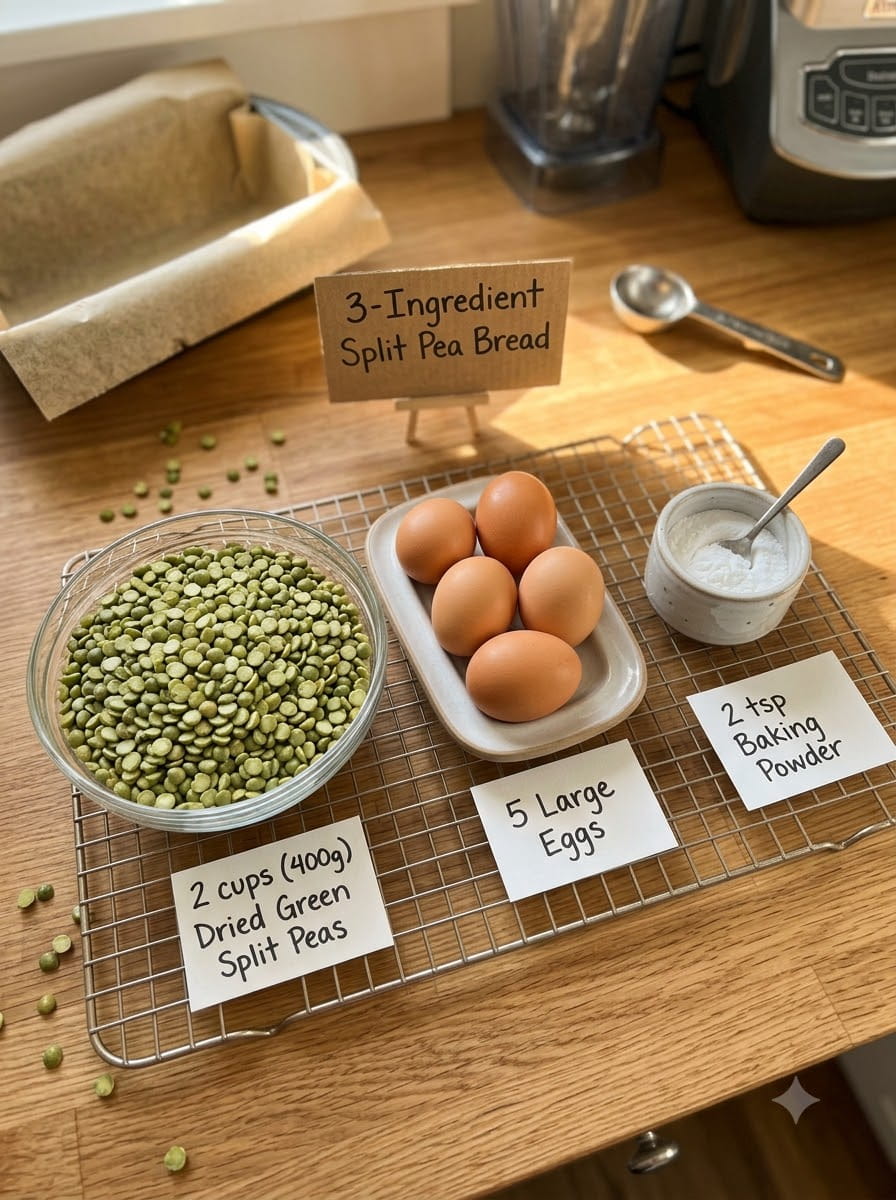
- 2 cups (400 g) dried green split peas
- 5 large eggs
- 2 teaspoons baking powder
That is the entire ingredient list. You will also need a little water for soaking the peas, plus parchment paper or a small amount of oil or butter to prepare your loaf pan.
A Note on the Ingredients
Dried green split peas. Choose dried green split peas rather than canned peas or fresh peas. Dried split peas are what give this bread its structure and protein. Look for ones that are uniform in color and free of debris, and rinse them well before soaking.
Large eggs. The eggs bind the blended peas together and help the loaf set and rise slightly. Five large eggs give the batter enough structure to hold its shape. Room-temperature eggs tend to blend a little more evenly into the peas.
Baking powder. Two teaspoons provide a modest lift so the loaf is not overly dense. Make sure your baking powder is fresh, since old baking powder loses its power and can leave the bread flat.
How to Make Split Pea Bread: Step-by-Step Instructions
Step 1: Soak the Split Peas
Rinse the dried green split peas thoroughly under cold running water. Place them in a large bowl and cover generously with water, since the peas will absorb liquid and expand. Let them soak overnight, or for 8 to 12 hours, until softened. Drain well and rinse again.
This soaking step is the most important part of the whole recipe. Properly softened peas blend into a smooth purée and bake evenly. Peas that have not soaked long enough can leave a gritty texture and an uneven bake.
Step 2: Preheat the Oven
Preheat your oven to 350°F (175°C). Line a loaf pan with parchment paper, or lightly grease it, to prevent sticking. Parchment is especially helpful with a legume-based batter, because it makes lifting the finished loaf out of the pan much easier.
Step 3: Blend the Ingredients
Add the drained split peas and the eggs to a high-powered blender or food processor. Blend until the mixture becomes as smooth as possible, stopping to scrape down the sides when needed. Add the baking powder and blend briefly until it is evenly incorporated.
Blend the peas and eggs first, and add the baking powder last. Mixing the baking powder in briefly at the end helps preserve its lifting power.
Step 4: Prepare the Batter
Pour the mixture into the prepared loaf pan and smooth the top with a spatula. The batter should be thick but pourable, with the split peas thoroughly blended. If you notice visible chunks of pea, you can return the batter to the blender for another short pulse before pouring.
Step 5: Bake the Bread
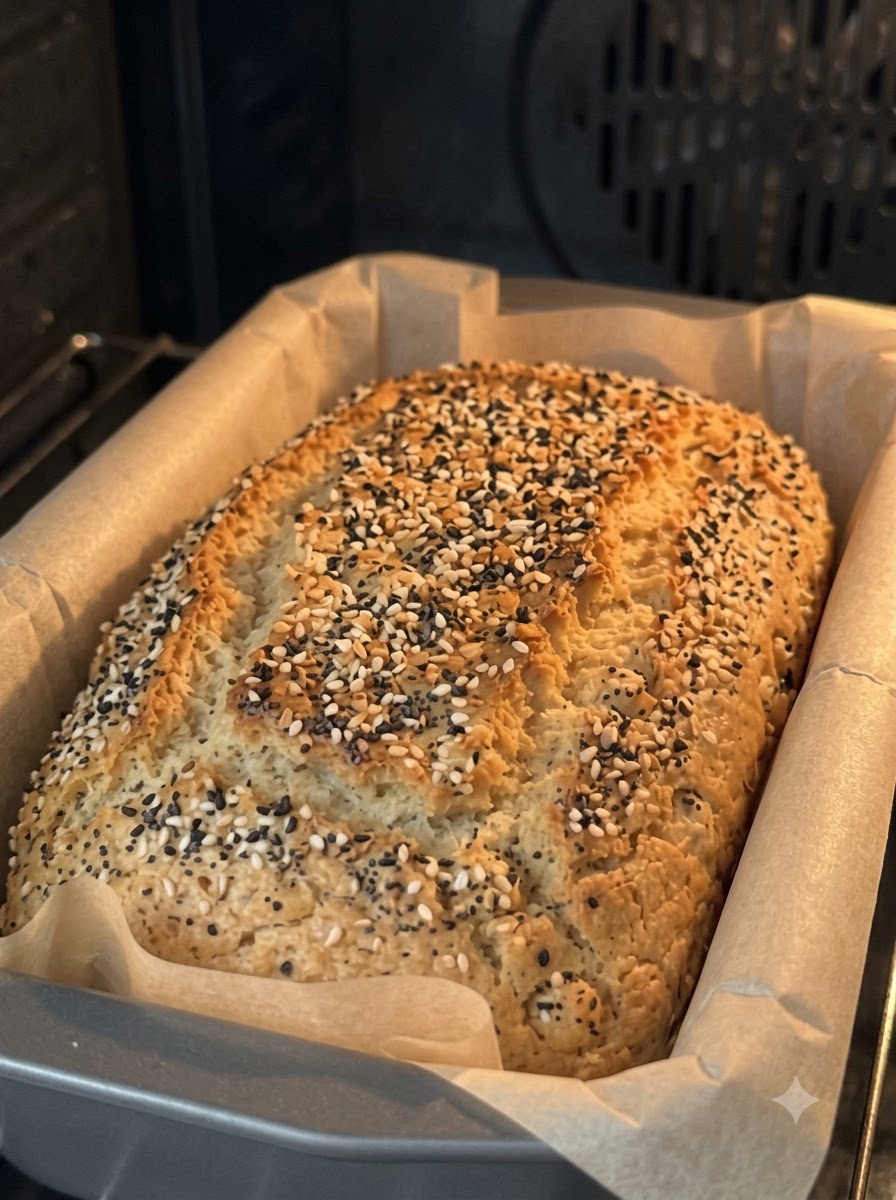
Bake for approximately 50 to 65 minutes, or until the loaf is firm, lightly golden, and cooked through in the center. Baking time may vary depending on your oven and loaf pan. A deeper, narrower pan generally needs more time than a wider, shallower one.
To check for doneness, press gently on the top. It should feel set rather than wobbly. You can also insert a knife or toothpick into the center, which should come out mostly clean.
Step 6: Cool and Slice
Remove the loaf from the oven and let it cool in the pan for 10 to 15 minutes. Then transfer it to a wire rack and let it cool completely before slicing. Patience here pays off. Cutting too early can make the interior seem damp or crumbly, while a fully cooled loaf holds together and slices cleanly.
Step 7: Serve and Enjoy
Slice and serve toasted with butter, mashed avocado, eggs, or hummus. You can also use the slices to make hearty sandwiches for breakfast or lunch.
Helpful Tips for the Best Split Pea Bread
Soak the split peas thoroughly. A full soak helps the peas blend smoothly and cook evenly. Aim for at least 8 hours, and up to 12.
Use a powerful blender. A high-powered blender produces a finer, more bread-like texture. If you are using a food processor, blend for longer and scrape the sides often, since it may leave the batter a bit more rustic.
Let the loaf cool completely. Cooling lets the structure set, so the bread holds together when sliced.
Make sure the center is fully cooked. Because this loaf contains raw eggs in the batter, it is important for food safety that the center is cooked all the way through before serving. If the top is browning too quickly but the middle still seems soft, loosely tent the loaf with foil and bake a little longer.
Slice it thin for toasting. Thinner slices crisp up nicely in the toaster or a hot pan, while thicker slices stay soft and hearty for sandwiches.
Use a properly sized pan. A standard loaf pan works well. If your pan is much larger, the loaf will be flatter and bake faster, so start checking earlier.
Troubleshooting Common Problems
The bread is gritty. This usually means the peas were not soaked long enough or were not blended finely enough. Soak for the full 8 to 12 hours next time and blend longer.
The center is wet or gummy. The loaf may need more baking time, or it may have been sliced before cooling. Bake until firm in the center and let it cool fully on a wire rack.
The loaf did not rise much. Check that your baking powder is fresh. Also remember that this is a dense legume bread, so it will not rise like a yeasted loaf.
The bread tastes too earthy. Split peas have a mild, savory flavor. Serving the bread with bold toppings such as avocado, tomato, or hummus balances it nicely, and the optional seasonings below can help.
The bread sticks to the pan. Use parchment paper with an overhang so you can lift the loaf out easily, or grease the pan more generously.
Delicious Ways to Serve Split Pea Bread
This bread is a blank canvas. Here are some of the best ways to enjoy it.
Avocado toast. Toast a slice, spread on mashed avocado, and finish with salt, pepper, and a squeeze of lemon.
With eggs. Top a toasted slice with scrambled, fried, or poached eggs for a protein-packed breakfast.
Butter and warm slices. Sometimes simple is best. A warm slice with a little butter is comforting and satisfying.
Hummus and vegetables. Spread on hummus and layer cucumber, tomato, or roasted peppers for a light lunch.
Hearty sandwiches. Use two slices for a sandwich with your favorite fillings. The bread is sturdy enough to hold up to spreads and vegetables.
Alongside soup. Serve a slice on the side of a warm bowl of soup or stew for dipping.
Savory snack toast. Top with cottage cheese, sliced tomato, and fresh herbs for a quick afternoon bite.
Flavor Variations to Try
Once you are comfortable with the base recipe, you can experiment. The following are simple ideas to try, so start small and adjust to taste.
- Herb loaf. Blend in a small handful of fresh herbs, such as parsley or chives, for a fresher flavor.
- Garlic and onion. A little garlic powder or onion powder adds savory depth.
- Spiced version. A pinch of cumin, paprika, or black pepper gives the loaf a warm, savory kick.
- Seeded top. Sprinkle sesame seeds, pumpkin seeds, or sunflower seeds over the batter before baking for added crunch.
- Cheesy loaf. Fold in a little grated cheese for extra richness and a golden finish.
Keep in mind that additions can change the moisture and baking time, so check the center carefully before removing the loaf from the oven.
How to Store Split Pea Bread
At room temperature. Once completely cooled, you can keep the bread wrapped or in an airtight container for a day.
In the refrigerator. For longer storage, keep the loaf in an airtight container in the fridge. Because it is a moist, egg-based bread, refrigeration is the safer option beyond the first day. It generally keeps for several days when stored properly.
In the freezer. Slice the cooled loaf, place parchment between the slices, and freeze them in a freezer-safe bag. You can toast slices straight from the freezer, which makes this a convenient make-ahead bread for busy mornings.
Reheating. Warm slices in a toaster, toaster oven, or a lightly oiled skillet to bring back the crisp edges and soft center.
Is Split Pea Bread Healthy?
Split peas are a legume, and legumes are widely recognized as a nutritious food. They are a good source of plant-based protein and fiber, and they contain a range of vitamins and minerals. Combined with eggs, which add more protein, this bread can be a satisfying option that keeps you full longer than many conventional sandwich breads.
That said, a few honest notes are worth making. This recipe contains eggs, so it is vegetarian but not vegan. It is also a dense, hearty bread, so portion sizes and toppings will affect how it fits into your overall eating pattern. Nutritional values will vary depending on the specific ingredients and slice size, so if you are tracking nutrition closely, it is best to calculate it with your own products.
If you have a food allergy, intolerance, or a medical dietary requirement, check your ingredient labels and speak with a healthcare professional as needed.
Can This Bread Be Gluten-Free?
The recipe contains no wheat flour, so it is naturally flourless. However, if you need to avoid gluten strictly, check that your baking powder and your split peas are labeled gluten-free, since packaged ingredients can sometimes be processed alongside gluten-containing grains. Always read the label to be sure.
Frequently Asked Questions
Do I really need to soak the split peas overnight?
Yes. Soaking softens the peas so they blend into a smooth batter and cook through during baking. Skipping or shortening the soak can lead to a gritty texture and a bread that does not bake evenly. Plan for 8 to 12 hours.
Can I use yellow split peas instead of green?
Yellow split peas are a close relative and may work, though the flavor will be slightly milder and the color of the bread lighter. This recipe was developed with green split peas, so results with other peas may vary.
Can I make this bread without eggs?
The eggs are what bind the batter and give the loaf its structure, so this recipe relies on them. Egg replacements may change the texture significantly, and this recipe has not been tested without eggs.
Why is my split pea bread dense?
Split pea bread is naturally denser than yeasted wheat bread because it has no gluten network. To get the lightest result possible, blend the batter very smooth, use fresh baking powder, and avoid over-handling the batter after adding the baking powder.
Do I need a high-powered blender?
A high-powered blender gives the smoothest, most bread-like texture. A food processor can work too, but you may need to blend longer and scrape down the sides more often. The finer the purée, the better the final loaf.
How do I know when the bread is done?
Look for a loaf that is firm to the touch, lightly golden on top, and set in the center. A knife or toothpick inserted into the middle should come out mostly clean. Because the batter contains eggs, always make sure the center is fully cooked before serving.
Can I freeze split pea bread?
Yes. Let the loaf cool completely, slice it, and freeze the slices in an airtight bag with parchment between them. Toast them straight from the freezer when you are ready to eat.
Can I add seasonings to the batter?
Yes. Small amounts of herbs, garlic powder, onion powder, or spices can be blended in with the baking powder to add flavor. Add them gradually so the taste does not overpower the peas.
How long does it take to make?
Active time is short, since you only rinse, blend, pour, and bake. The longest parts are the overnight soak and the 50 to 65 minute bake, plus cooling time before slicing.
Is this bread good for sandwiches?
Yes, once it has cooled completely it slices well and holds up to spreads and fillings. Toasting the slices first can make them even sturdier.
Final Thoughts
This 3-Ingredient Split Pea Bread proves that real, satisfying homemade bread does not need flour, yeast, or kneading. With just dried green split peas, eggs, and baking powder, you can create a tender, golden loaf that is perfect for toast, sandwiches, and savory toppings.
The recipe rewards a little planning, since soaking the peas the night before is the key to a smooth, well-baked loaf. From there, the process is wonderfully simple: blend, pour, bake, and cool. Once you have the base down, you can experiment with herbs, spices, and seeds to make it your own.
If you are looking for a creative way to turn pantry staples into something wholesome and filling, give this easy split pea bread a try. Slice it, toast it, top it however you like, and enjoy a warm, protein-rich loaf made from just three simple ingredients. 🫛🍞✨
Print
3-Ingredient Split Pea Bread
Ingredients
- 2 cups (400 g) dried green split peas
- 5 large eggs
- 2 teaspoons baking powder
That is the entire ingredient list. You will also need a little water for soaking the peas, plus parchment paper or a small amount of oil or butter to prepare your loaf pan.
Instructions
Rinse the dried green split peas thoroughly under cold running water. Place them in a large bowl and cover generously with water, since the peas will absorb liquid and expand. Let them soak overnight, or for 8 to 12 hours, until softened. Drain well and rinse again.
This soaking step is the most important part of the whole recipe. Properly softened peas blend into a smooth purée and bake evenly. Peas that have not soaked long enough can leave a gritty texture and an uneven bake.
Preheat your oven to 350°F (175°C). Line a loaf pan with parchment paper, or lightly grease it, to prevent sticking. Parchment is especially helpful with a legume-based batter, because it makes lifting the finished loaf out of the pan much easier.
Add the drained split peas and the eggs to a high-powered blender or food processor. Blend until the mixture becomes as smooth as possible, stopping to scrape down the sides when needed. Add the baking powder and blend briefly until it is evenly incorporated.
Blend the peas and eggs first, and add the baking powder last. Mixing the baking powder in briefly at the end helps preserve its lifting power.
Pour the mixture into the prepared loaf pan and smooth the top with a spatula. The batter should be thick but pourable, with the split peas thoroughly blended. If you notice visible chunks of pea, you can return the batter to the blender for another short pulse before pouring.
Bake for approximately 50 to 65 minutes, or until the loaf is firm, lightly golden, and cooked through in the center. Baking time may vary depending on your oven and loaf pan. A deeper, narrower pan generally needs more time than a wider, shallower one.
To check for doneness, press gently on the top. It should feel set rather than wobbly. You can also insert a knife or toothpick into the center, which should come out mostly clean.
Remove the loaf from the oven and let it cool in the pan for 10 to 15 minutes. Then transfer it to a wire rack and let it cool completely before slicing. Patience here pays off. Cutting too early can make the interior seem damp or crumbly, while a fully cooled loaf holds together and slices cleanly.
Slice and serve toasted with butter, mashed avocado, eggs, or hummus. You can also use the slices to make hearty sandwiches for breakfast or lunch.