
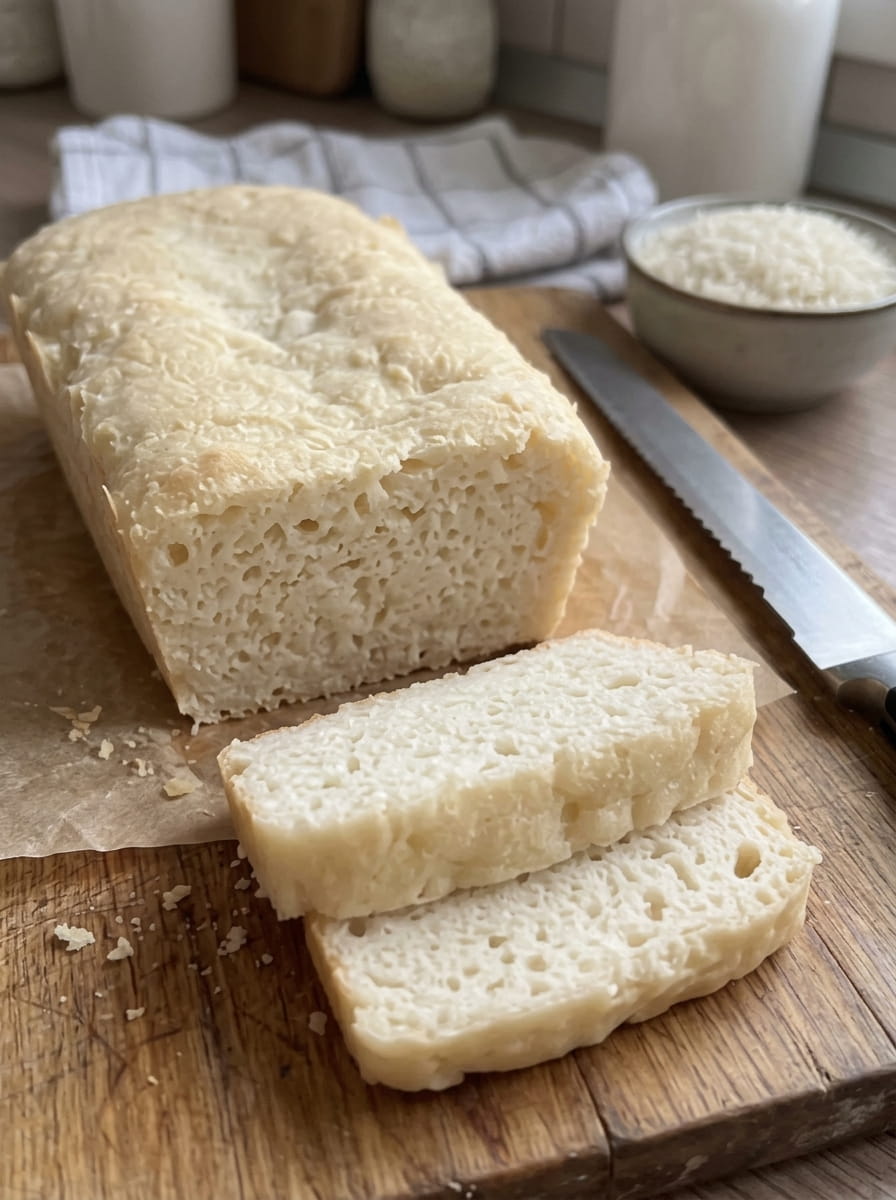
Homemade Rice Bread: A Soft, Light, Wheat-Free Loaf Made With Simple Ingredients
If you’re looking for a tasty alternative to traditional wheat bread, this Homemade Rice Bread is a wonderful option. 🍚🍞 It’s soft, light, and made from everyday ingredients, with no wheat flour involved. The flavor is mild and the texture is tender, which makes it a versatile loaf for breakfast, toast, sandwiches, or serving alongside your favorite meals.
The secret is in the method. Instead of using store-bought rice flour, you soak plain white rice, blend it with water until smooth, and mix in eggs, olive oil, baking powder, and salt. The result is a simple batter that bakes into a golden loaf. You’ll need a high-powered blender, a loaf pan, and a little planning ahead for the soaking time.
In this guide, you’ll find the full recipe, step-by-step instructions, helpful tips, troubleshooting advice, flavor variations, serving ideas, and storage tips so you can bake a great loaf every time.
Why You’ll Love This Rice Bread
- No wheat flour. The loaf gets its structure from blended rice and eggs.
- Simple pantry ingredients. White rice, eggs, olive oil, baking powder, and salt are all you need.
- No yeast and no kneading. Baking powder provides lift, so there’s no proofing or waiting for dough to rise.
- Mild and versatile. The neutral flavor works with both sweet and savory toppings.
- Light, tender texture. It’s softer and less dense than many bean-based or seed-based loaves.
- Budget-friendly. Rice is inexpensive and keeps well in the pantry.
- Freezer-friendly. Slice and freeze for quick breakfasts and sandwiches.
Ingredients You’ll Need 🛒
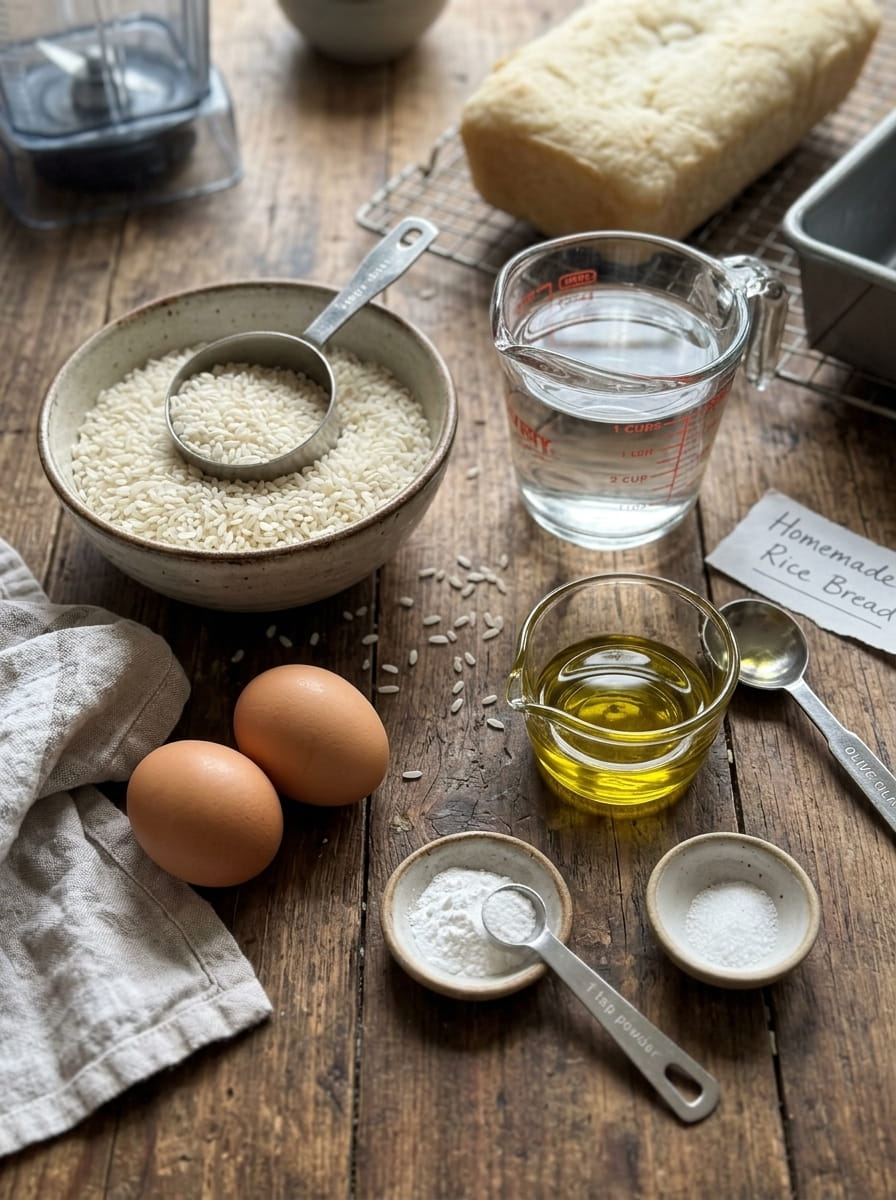
- 2 cups uncooked white rice
- 1 cup water, for blending
- 2 large eggs
- 1 tablespoon olive oil
- 1 teaspoon baking powder
- ½ teaspoon salt
For equipment, you’ll need a high-powered blender, a bowl for soaking, a loaf pan, parchment paper (or a little oil for greasing), a spatula, and a wire cooling rack.
A Closer Look at the Ingredients
White rice. Rice is the base of the loaf. Once soaked and blended, it turns into a creamy, starchy batter that sets as it bakes. White rice works best here because it softens more easily than brown rice and gives a lighter crumb. Long-grain or medium-grain varieties both work, though results can vary slightly by type.
Water. One cup of fresh water helps the blender turn the soaked rice into a smooth batter. Use fresh water rather than the soaking water.
Eggs. Eggs bind the batter, add moisture, and help the loaf set and hold together. Room-temperature eggs blend in more evenly, so take them out of the fridge about 15 to 20 minutes before you start.
Olive oil. A tablespoon of olive oil adds richness and helps keep the crumb tender.
Baking powder. This provides a little lift so the loaf isn’t heavy. Make sure it’s fresh. If the container has been open for more than six months, it may have lost strength.
Salt. Salt brings out the mild flavor of the rice and keeps the bread from tasting bland.
How to Make Homemade Rice Bread 👩🍳
Step 1: Rinse and Soak the Rice
Rinse the rice thoroughly under cold water until the water runs mostly clear. Place it in a bowl, cover with plenty of water, and soak for 4 to 6 hours or overnight. Soaking softens the grains so the blender can break them down into a smooth batter. Drain well when you’re ready to use it.
Step 2: Preheat and Prepare the Pan
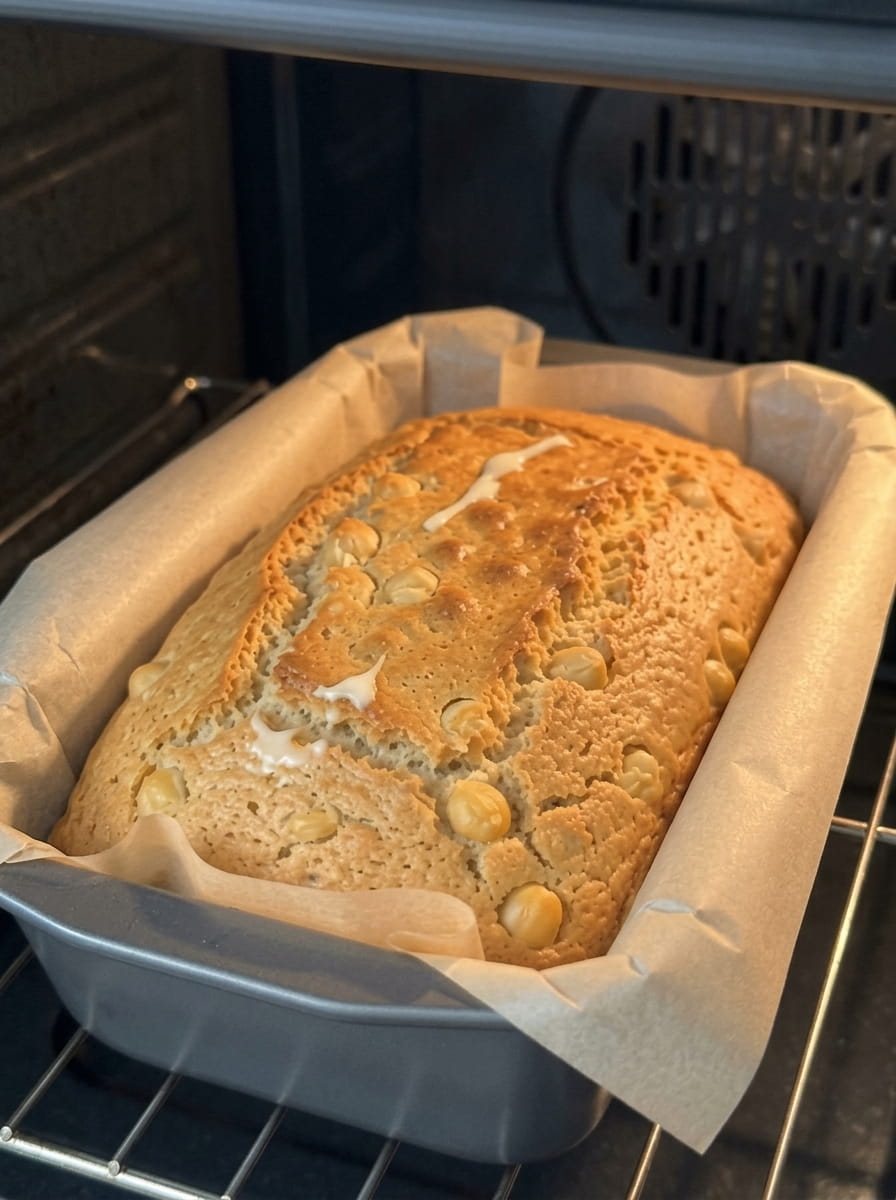
Preheat your oven to 350°F (175°C). Line a loaf pan with parchment paper, leaving a little overhang on the long sides so the loaf lifts out easily. You can also lightly grease the pan instead.
Step 3: Blend the Rice
Add the soaked, drained rice and 1 cup of fresh water to a high-powered blender. Blend until the mixture is as smooth as possible. Stop and scrape down the sides once or twice. The smoother the batter, the softer the finished bread will be, so don’t rush this step.
Step 4: Add the Remaining Ingredients
Add the eggs, olive oil, baking powder, and salt. Blend again until the batter is evenly combined. The batter will be fairly thin and pourable.
Step 5: Fill the Pan
Pour the batter into the prepared loaf pan and smooth the top. Give the pan a gentle tap on the counter to release any large air bubbles.
Step 6: Bake
Bake for 45 to 60 minutes. The loaf is ready when the center is set, the top is lightly golden, and a toothpick inserted in the center comes out without wet batter. Ovens vary, so start checking at around 45 minutes. If the top browns too quickly, loosely cover it with foil for the last 10 to 15 minutes.
Step 7: Cool Completely
Let the bread cool in the pan for 10 to 15 minutes, then transfer it to a wire rack. Allow it to cool completely before slicing. The loaf continues to set as it cools, and cutting too soon can make the inside seem gummy.
Pro Tips for the Best Rice Bread
Don’t skip the soaking. Soaked rice blends much more smoothly. Without enough soaking time, you may end up with a gritty texture.
Use a high-powered blender. Rice is hard, and a weaker blender may leave grainy bits. If your blender struggles, blend in two batches or blend for longer, pausing so the motor doesn’t overheat.
Drain well. Excess soaking water can thin the batter and make the loaf wet. Let the rice sit in a colander for a few minutes before blending.
Blend until very smooth. A smooth batter gives a softer, more even crumb.
Check for doneness carefully. Because the batter is quite liquid, the center can take longer to set. Use the toothpick test rather than relying on time alone.
Cool fully before slicing. This is the best way to get clean slices and the right texture.
Toast your slices. Toasting adds a crisp edge and improves the texture, especially on the day after baking.
Troubleshooting Common Problems
The texture is gritty. The rice probably needed more soaking or longer blending. Soak for the full 4 to 6 hours or overnight, and blend until the batter is very smooth.
The center is wet or gummy. The loaf may need more baking time, or it was sliced before cooling. Bake a little longer and let it cool completely on a wire rack.
The bread is too dense. Check that your baking powder is fresh, and make sure the batter is well combined. A deeper loaf pan can also help the batter rise better.
The loaf is crumbly. Let it cool completely, then use a sharp serrated knife with a gentle sawing motion.
The bread stuck to the pan. Use parchment paper, or grease the pan generously, including the corners.
The flavor is bland. Rice is naturally mild. Make sure you’ve added the full amount of salt, and try herbs, garlic powder, or flavorful toppings.
Delicious Variations to Try
The basic loaf is a blank canvas. Here are some ideas, though keep in mind that added ingredients change the original recipe, so start with small amounts.
Savory ideas
- Garlic powder or onion powder
- Dried herbs such as rosemary, thyme, or oregano
- A handful of grated cheese
- Sesame seeds, sunflower seeds, or pumpkin seeds on top
- A pinch of black pepper
Sweet ideas
- A teaspoon of cinnamon
- A splash of vanilla extract
- A little honey or maple syrup
- A handful of raisins or chopped nuts
What to Serve With Rice Bread
For breakfast
- Toasted with butter and a drizzle of honey
- Topped with mashed avocado and a squeeze of lemon
- Spread with jam or nut butter
- Served with scrambled or fried eggs
For lunch
- As sandwich bread with chicken, turkey, tuna, or vegetables
- Topped with hummus and sliced cucumber
- Alongside a fresh green salad
- Cut into strips for dipping into soup
For dinner
- Served beside a warm bowl of soup or stew
- Used as a base for open-faced toasts with roasted vegetables
- Paired with a simple omelet and greens
For snacks
- Toasted with cream cheese and sliced fruit
- Spread with peanut or almond butter
- Topped with ricotta, honey, and a pinch of cinnamon
Storage and Meal Prep Tips
Refrigerator. Once completely cool, wrap the loaf tightly or store it in an airtight container. It keeps for about 4 to 5 days in the fridge. Because the bread is moist, refrigeration is the safest option.
Freezer. For longer storage, slice the cooled loaf, place parchment between the slices, and freeze them in a freezer-safe bag for up to 2 to 3 months. Toast slices straight from frozen.
Reheating. A toaster, toaster oven, or hot skillet all work well and bring back a slightly crisp outside and soft inside.
Meal prep. Soak the rice the night before, then blend and bake in the morning. Slice and freeze portions for the week ahead.
Is Rice Bread Healthy?
This loaf is made from whole, simple ingredients, and it’s a handy option if you’re avoiding wheat. Rice provides carbohydrates for energy, and the eggs add protein. Because it uses white rice, it’s lighter in fiber than bean- or oat-based loaves, so it pairs well with fiber-rich toppings like avocado, vegetables, or nut butter.
The exact nutrition depends on the type of rice, the size of your eggs, and how thickly you slice the loaf. If you’re tracking calories or macros, enter your specific ingredients into a nutrition calculator for the most accurate numbers.
A few things to keep in mind:
- Gluten. The recipe contains no wheat flour, but if you need to avoid gluten strictly, check that your rice, baking powder, and other ingredients are labeled gluten-free.
- Allergens. The recipe contains eggs, so it isn’t suitable for people with an egg allergy.
- Dietary needs. If you follow a special diet for medical reasons, check with your healthcare provider about whether this bread fits your plan.
Frequently Asked Questions
Can I use brown rice?
It’s possible, but brown rice is tougher and may need a longer soak and a very powerful blender. The texture will also be denser and less smooth than with white rice.
Can I use cooked rice instead?
This recipe is designed for uncooked, soaked rice, so cooked rice would change the batter’s consistency. If you experiment, expect to adjust the water and baking time.
Can I use rice flour instead?
Rice flour is a different ingredient and would need different proportions, so this recipe isn’t a direct swap.
Do I have to soak the rice?
Yes, soaking is important. It softens the grains so they blend into a smooth batter.
Can I make this bread without eggs?
Eggs provide much of the structure here, so an egg-free version would need a different formulation.
Why is my batter so thin?
That’s normal. The batter is pourable, and it thickens and sets as it bakes.
What size loaf pan should I use?
A standard 9 x 5-inch (23 x 13 cm) loaf pan works well. A smaller pan gives a taller loaf that may need more baking time.
Is this good for sandwiches?
Yes, especially when toasted. Slice it moderately thick so it holds up to fillings.
Final Thoughts
This Homemade Rice Bread proves that you can bake a soft, light loaf without wheat flour. With soaked white rice, eggs, olive oil, baking powder, and salt, you get a mild, tender bread that’s perfect for toast, sandwiches, or enjoying alongside your favorite meals. The only real planning is the soaking time, and after that, it’s a simple blend, pour, and bake.
Print
Homemade Rice Bread
Ingredients
- 2 cups uncooked white rice
- 1 cup water, for blending
- 2 large eggs
- 1 tablespoon olive oil
- 1 teaspoon baking powder
- ½ teaspoon salt
For equipment, you’ll need a high-powered blender, a bowl for soaking, a loaf pan, parchment paper (or a little oil for greasing), a spatula, and a wire cooling rack.
Instructions
Rinse the rice thoroughly under cold water until the water runs mostly clear. Place it in a bowl, cover with plenty of water, and soak for 4 to 6 hours or overnight. Soaking softens the grains so the blender can break them down into a smooth batter. Drain well when you’re ready to use it.
Preheat your oven to 350°F (175°C). Line a loaf pan with parchment paper, leaving a little overhang on the long sides so the loaf lifts out easily. You can also lightly grease the pan instead.
Add the soaked, drained rice and 1 cup of fresh water to a high-powered blender. Blend until the mixture is as smooth as possible. Stop and scrape down the sides once or twice. The smoother the batter, the softer the finished bread will be, so don’t rush this step.
Add the eggs, olive oil, baking powder, and salt. Blend again until the batter is evenly combined. The batter will be fairly thin and pourable.
Pour the batter into the prepared loaf pan and smooth the top. Give the pan a gentle tap on the counter to release any large air bubbles.
Bake for 45 to 60 minutes. The loaf is ready when the center is set, the top is lightly golden, and a toothpick inserted in the center comes out without wet batter. Ovens vary, so start checking at around 45 minutes. If the top browns too quickly, loosely cover it with foil for the last 10 to 15 minutes.
Let the bread cool in the pan for 10 to 15 minutes, then transfer it to a wire rack. Allow it to cool completely before slicing. The loaf continues to set as it cools, and cutting too soon can make the inside seem gummy.