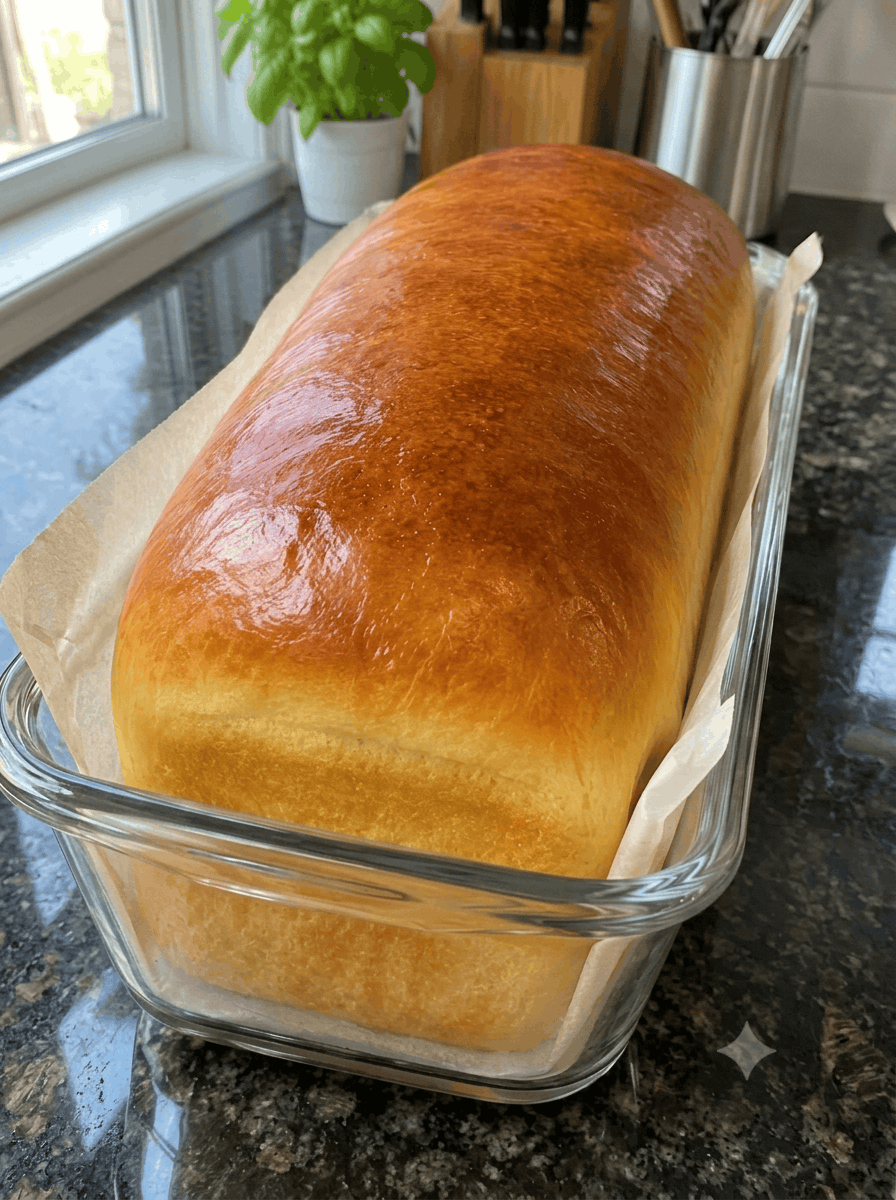

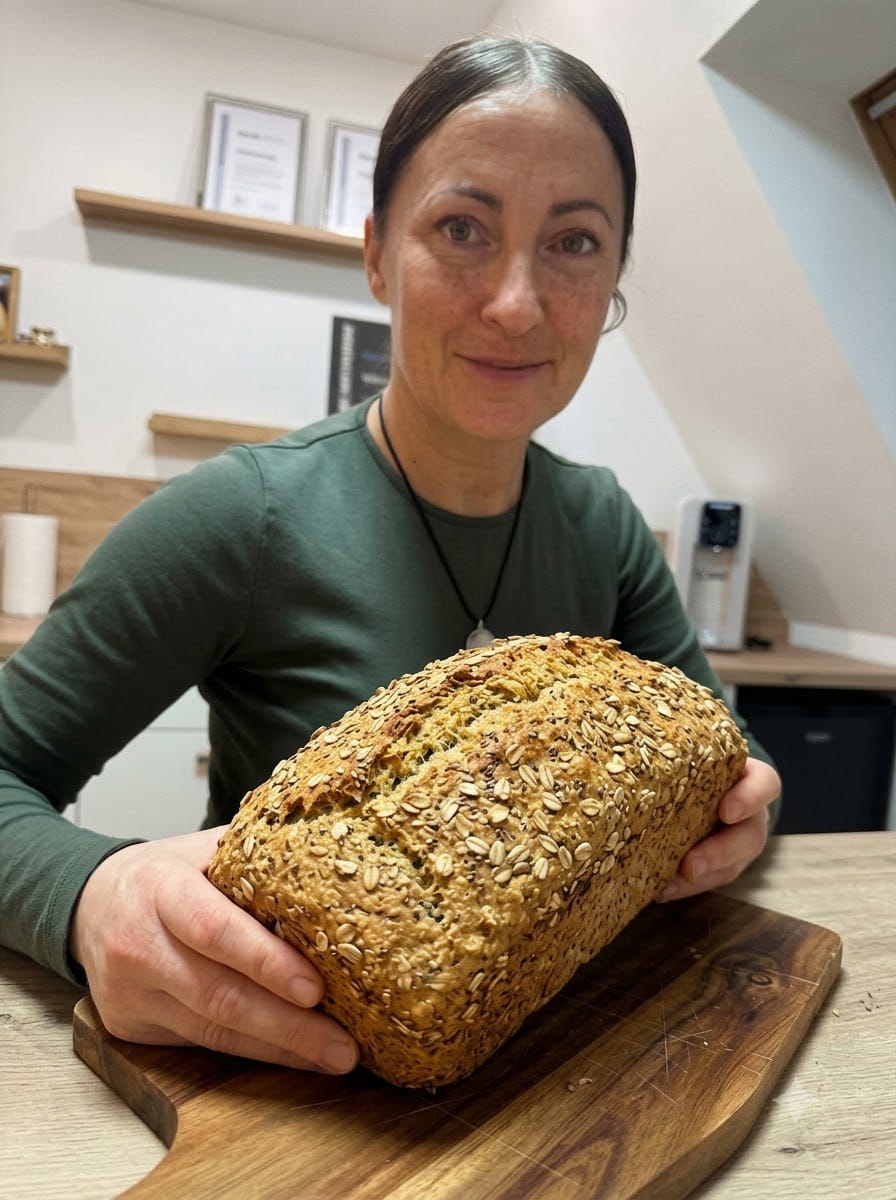
Flourless Gluten-Free Protein Toast Bread: A Hearty Oat and Chia Loaf 🌾🍞
This Flourless Gluten-Free Protein Toast Bread is hearty, satisfying, and perfect for anyone looking for a wholesome alternative to traditional bread. Made with gluten-free oats, chia seeds, and protein-rich ingredients, this homemade loaf has a lovely texture that makes it ideal for breakfast, toasted sandwiches, or your favorite sweet and savory toppings.
Store-bought gluten-free bread can be expensive, small, and crumbly, and it often comes with a long ingredient list. This homemade version keeps things simple. You grind rolled oats into a fine flour right in your blender, mix it with chia seeds, eggs, Greek yogurt, a little water and olive oil, and bake it in a small loaf pan. The eggs and Greek yogurt add protein and structure, the chia seeds absorb moisture and help bind the loaf, and the oats provide a mild, naturally sweet, wholesome flavor. There is no yeast, no kneading, and no rising time, and the whole thing goes from bowl to oven in about 15 minutes.
A quick note on the word “flourless”: this loaf contains no wheat flour or store-bought flour blend. The rolled oats are ground into a fine, flour-like powder in your blender, which is what gives the bread its body. It is also a “toast bread” for a reason. Its texture is firm and sturdy, and it is at its best sliced and toasted until golden and crisp.
In this guide, you will find the full recipe, a step-by-step walkthrough, tips for sturdy slices, gluten-free safety notes, troubleshooting help, sweet and savory serving ideas, variations, storage and freezing advice, and answers to frequently asked questions about oat protein bread.
Why You’ll Love This Protein Toast Bread
It is made without wheat flour. There is no wheat flour and no specialty gluten-free flour blend. Rolled oats do all the work.
It is gluten-free when you use certified ingredients. With certified gluten-free oats and baking powder, it is a good option for a gluten-free diet.
It is packed with protein. Eggs and Greek yogurt supply protein, and the oats and chia seeds add more, which keeps the loaf filling.
It is full of fiber. Oats and chia seeds are both known for their fiber, which makes the bread hearty and satisfying.
It needs no yeast or rising time. Baking powder gives the loaf its lift, so there is no proofing or waiting.
It is simple to make. One blender, one bowl, and one loaf pan are all you need.
It toasts beautifully. The slices crisp up well in a toaster, making them ideal for toppings.
It is versatile. Top it with avocado and eggs for a savory breakfast, or peanut butter and banana for a sweet one.
It uses pantry staples. Oats, chia seeds, eggs, yogurt, and olive oil are easy to find and keep well.
What Is Oat Protein Bread?
Oat protein bread is a quick bread made from ground oats rather than wheat flour, with eggs and Greek yogurt supplying protein and structure. Oats contain no gluten of their own, so the loaf cannot rise or stretch like wheat bread. Instead, it relies on eggs to set the structure and on chia seeds and oat starch to hold moisture and bind everything together. Baking powder provides a gentle lift.
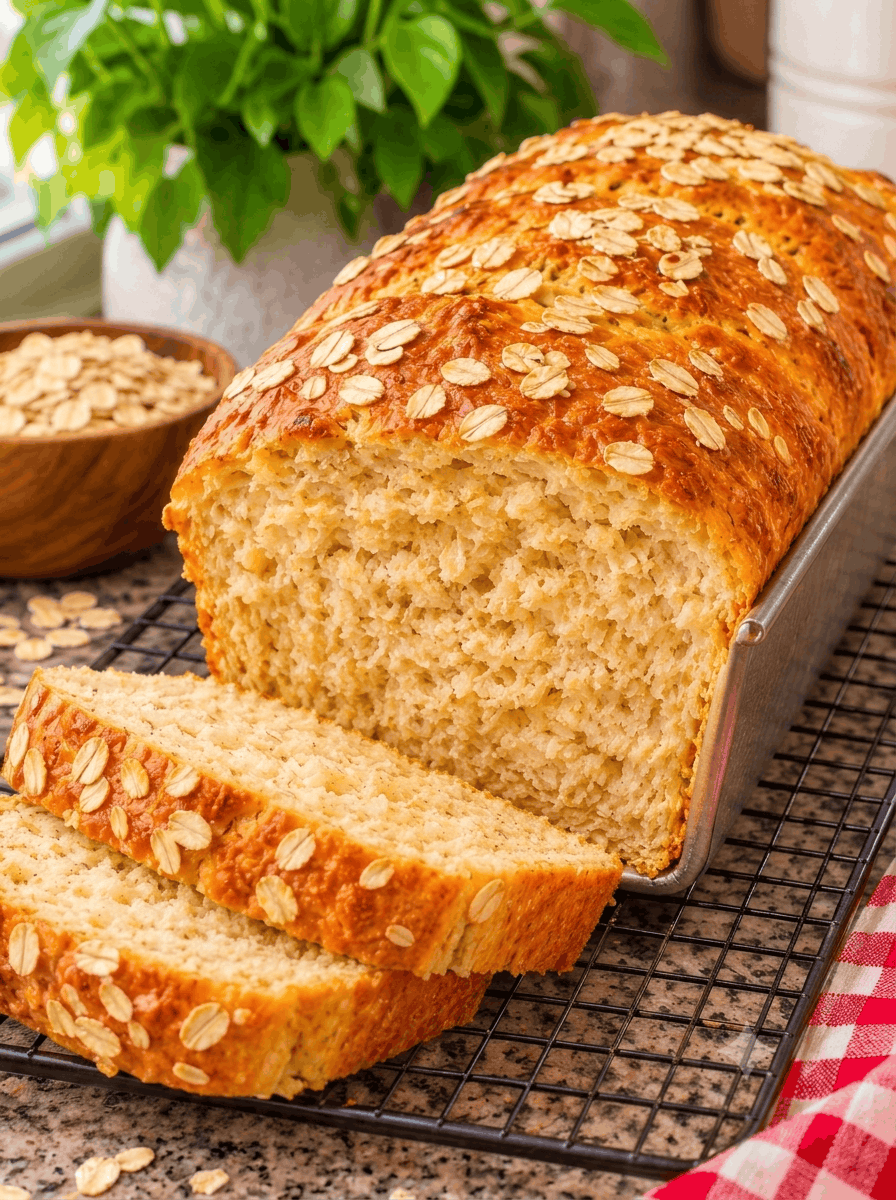
The result is a dense, moist, slightly chewy loaf with a mild, nutty, oaty flavor. It is closer to a hearty, sturdy seed-and-oat bread than to a light, airy sandwich loaf. This is a feature rather than a flaw, since the firm texture is what allows the slices to hold up in the toaster and under heavy toppings.
Ingredients for Flourless Gluten-Free Protein Toast Bread
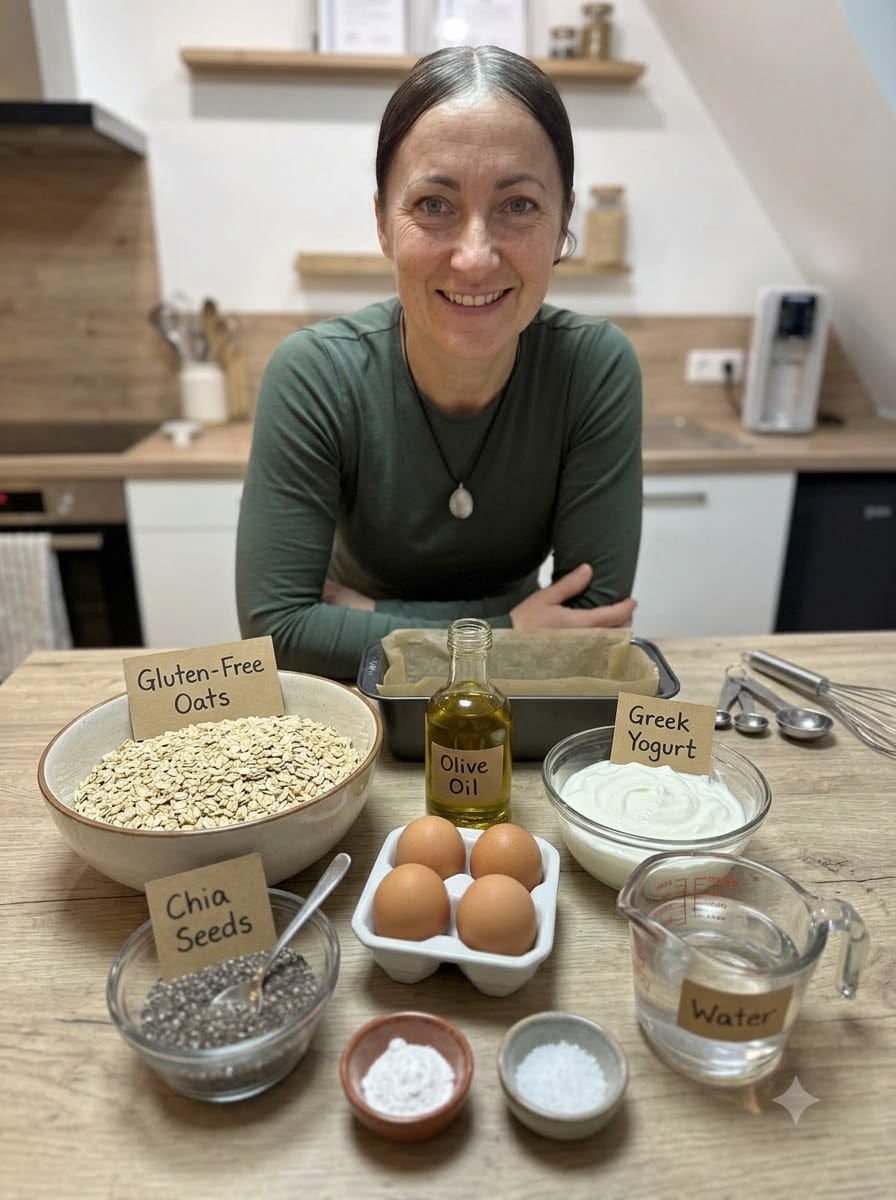
- 2 cups rolled oats, certified gluten-free
- 3 tablespoons chia seeds
- 3 large eggs
- ½ cup plain Greek yogurt
- ¼ cup water
- 1 teaspoon baking powder, certified gluten-free
- ¼ teaspoon salt
- 1 tablespoon olive oil
A Closer Look at the Ingredients
Rolled oats, certified gluten-free. Oats are naturally free of gluten, but they are often grown, harvested, or processed alongside wheat, barley, or rye, so regular oats can be contaminated. If you need to avoid gluten, choose oats that are clearly labeled certified gluten-free. Use old-fashioned rolled oats rather than steel-cut oats. Quick oats also work, though they grind a little more easily. Avoid flavored instant oat packets.
Chia seeds. Chia seeds absorb many times their weight in liquid and form a gel, which helps bind the loaf and keep it moist. They also add fiber and omega-3 fatty acids. Whole chia seeds work well in this recipe.
Large eggs. The eggs provide the main structure, binding the batter and setting as the bread bakes. They also add protein and richness.
Plain Greek yogurt. Greek yogurt adds moisture, a gentle tang, and extra protein. Choose plain, unsweetened yogurt. Full-fat yogurt gives a softer, richer crumb, though low-fat can also be used. Avoid flavored yogurts.
Water. A quarter cup of water thins the batter slightly so that the oat flour and chia can hydrate.
Baking powder, certified gluten-free. Baking powder gives the loaf its lift. Some brands may contain gluten-containing starches, so check the label. Make sure it is fresh.
Salt. A small amount of salt brings out the flavor of the oats.
Olive oil. One tablespoon adds richness and helps keep the crumb tender.
How to Make Flourless Gluten-Free Protein Toast Bread: Step-by-Step Instructions
Step 1: Prepare the Oven and Pan
Preheat your oven to 350°F (175°C). Line a small loaf pan with parchment paper. A small pan, such as 8 x 4 inches, helps the loaf rise higher and bake evenly. Leave a little parchment overhang to use as handles for lifting out the loaf.
Step 2: Grind the Oats
Blend the rolled oats into a fine flour using a blender or food processor. Blend for about 30 to 60 seconds, until the oats look like a fine, powdery flour with no large flakes. A finer flour gives a smoother, more bread-like crumb. If you have a blender with a small jar, grind the oats in batches.
Step 3: Mix the Dry Ingredients
In a large bowl, combine the ground oats, chia seeds, baking powder, and salt. Whisk well so that the baking powder and salt are evenly distributed.
Step 4: Add the Wet Ingredients
Whisk the eggs, Greek yogurt, water, and olive oil in a separate bowl until smooth. Whisk well, so the yogurt breaks down completely and the eggs are fully blended in.
Step 5: Make the Batter
Add the wet mixture to the dry ingredients and stir until fully combined. Let the batter rest for 10 minutes so the chia seeds can absorb moisture. The batter will thicken noticeably as it rests, becoming thick and scoopable. This resting step is important, since it helps prevent a crumbly loaf.
Step 6: Fill the Pan
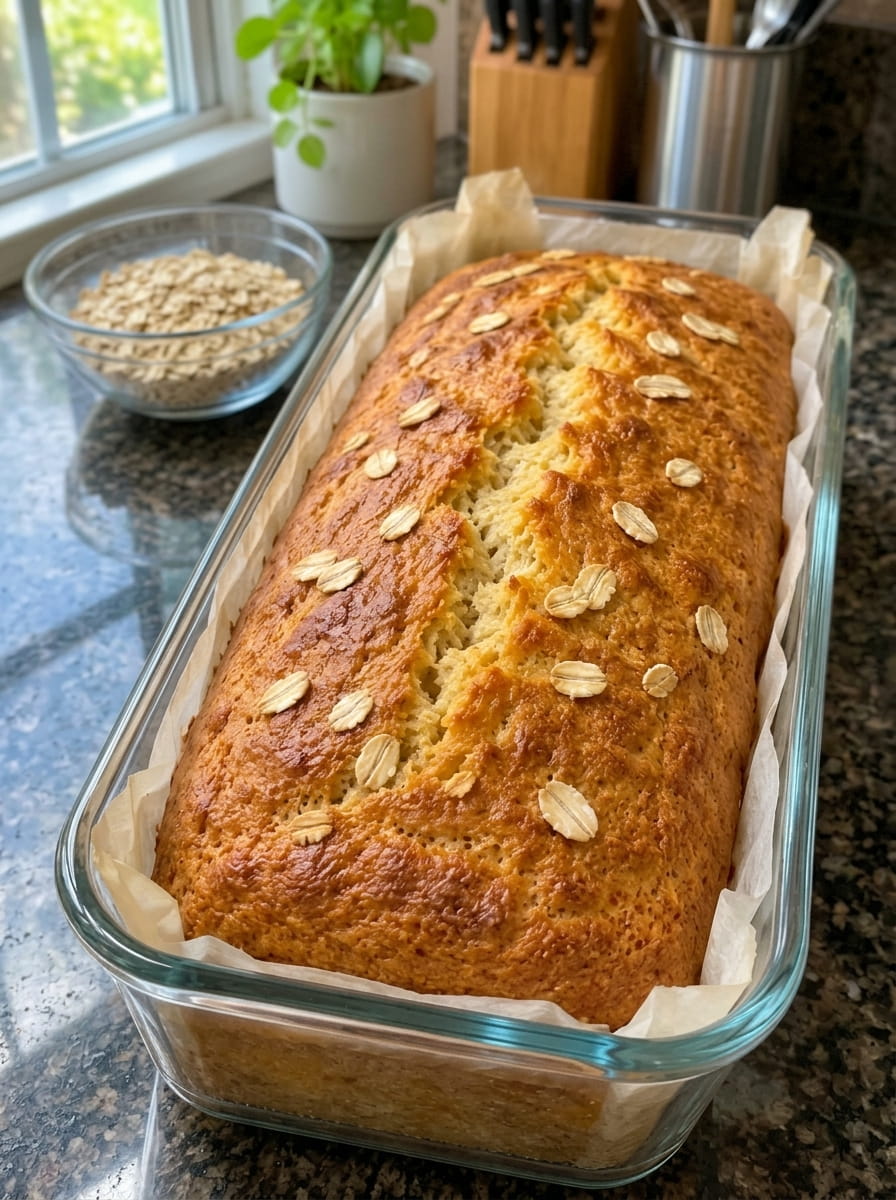
Transfer the thick batter to the prepared loaf pan and smooth the top. Press the batter into the corners of the pan with the back of a spoon or a wet spatula. If you like, sprinkle a few oats or seeds on top.
Step 7: Bake
Bake for 40 to 50 minutes, until the loaf is firm and a toothpick inserted into the center comes out clean. If the top is browning too quickly, loosely tent it with foil. Since the loaf contains eggs, make sure the center is fully cooked. An instant-read thermometer inserted into the center should read about 190°F to 200°F (88°C to 93°C).
Step 8: Cool Completely
Let the bread cool in the pan for 10 minutes, then transfer it to a wire rack. Allow it to cool completely before slicing. A fully cooled loaf slices cleanly and holds together much better. Cutting too soon can make the bread seem damp or crumbly.
Step 9: Toast and Enjoy
Toast individual slices until golden and crisp, then add your favorite toppings. Toasting is what turns this loaf from good to great. It crisps the edges, drives off a little moisture, and brings out the nutty flavor of the oats.
Helpful Tips for Sturdy Slices
Grind the oats finely. A fine oat flour gives a smoother, more cohesive crumb and a more bread-like texture.
Do not skip the rest. The 10-minute rest lets the chia seeds and oat flour absorb moisture, which thickens the batter and helps the loaf hold together.
Use fresh baking powder. It is the only leavener, so it needs to be active.
Measure the oats carefully. Measure the oats before grinding. Too much oat flour can make the loaf dry, and too little can make it wet.
Cool completely before slicing. This is the most important tip for slices that stay together in the toaster.
Use a serrated knife. A bread knife and a gentle sawing motion cut cleanly through the loaf.
Slice a little thick. Slices about ½ inch thick are sturdier than very thin slices.
Toast from chilled or frozen. Slices often toast better when they are cold from the refrigerator or freezer.
Check the center. Use a toothpick or a thermometer to make sure the middle is fully cooked.
Line the pan. Parchment paper helps release the loaf cleanly.
Troubleshooting Common Problems
The bread is crumbly. The loaf may have been sliced too soon, or the oats may not have been ground finely enough. Let the loaf cool completely, grind the oats very fine, and do not skip the resting step.
The bread is gummy in the center. It may be underbaked. Bake until a toothpick comes out clean and the center reaches about 190°F to 200°F (88°C to 93°C), then cool fully.
The bread is dry. It may have been overbaked, or there may have been too much oat flour. Measure carefully, and check for doneness at the early end of the baking time.
The bread is dense. Oat-based breads are naturally dense because they have no gluten. Fresh baking powder and a small loaf pan help with the rise, but expect a hearty loaf.
The loaf did not rise much. Check that the baking powder is fresh. A modest rise is normal for this type of bread.
The top is too dark. Loosely tent the loaf with foil for the remainder of the bake.
The bread tastes eggy. Egg flavor is common in egg-based breads. Toasting the slices and adding flavorful toppings help balance it.
The bread sticks to the pan. Use parchment paper, and let the loaf cool for 10 minutes before lifting it out.
The batter is too thick to spread. Add a teaspoon or two of water, or use a wet spatula to press it into the pan.
The slices fall apart in the toaster. The loaf may not have cooled enough, or the slices may be too thin. Cut slightly thicker slices from a fully cooled loaf, and toast on a lower setting.
Delicious Ways to Serve Protein Toast Bread
Savory Toppings
Avocado toast. Top toasted bread with mashed avocado, salt, pepper, and a squeeze of lemon.
Scrambled or fried eggs. Add eggs for an extra protein boost.
Cottage cheese and tomato. Spread cottage cheese and top with sliced tomato, black pepper, and fresh herbs.
Hummus and vegetables. Spread hummus and layer cucumber, roasted peppers, or sprouts.
Smoked salmon. Add cream cheese, smoked salmon, and a little dill.
Cheese melt. Top with cheese and broil briefly.
Sweet Toppings
Peanut or almond butter and banana. A classic combination for a filling breakfast.
Honey drizzle. Add a drizzle of honey and a sprinkle of cinnamon.
Greek yogurt and berries. Spread thick yogurt and top with fresh berries.
Nut butter and chia jam. Layer nut butter with a spoonful of fruit spread.
Ricotta and fruit. Spread ricotta and top with sliced peaches or figs.
Other Ideas
Toasted sandwiches. Use two slices to make a toasted sandwich with your favorite fillings.
Grilled cheese. Butter the outside and grill until golden.
French toast. Dip slices in egg and milk and pan-fry for a protein-rich breakfast.
Croutons. Cube and toast leftover slices for salads and soup.
Variations to Try
The base recipe is simple, and you can customize it in a few ways. These are optional ideas that go beyond the original recipe and have not been tested, so make small changes at a time.
- Seeded loaf. Add a tablespoon of sunflower, pumpkin, or sesame seeds to the batter or on top.
- Herb loaf. Add a teaspoon of dried herbs, such as rosemary or Italian seasoning.
- Garlic and onion. A pinch of garlic powder or onion powder adds savory flavor.
- Cheesy loaf. Fold in a small handful of shredded cheese.
- Cinnamon and honey. Add a half teaspoon of cinnamon and a spoonful of honey for a lightly sweet loaf.
- Flax boost. Add a tablespoon of ground flaxseed for extra fiber.
- Everything seasoning. Sprinkle everything bagel seasoning on top before baking.
- Mini loaves or muffins. Divide the batter among a muffin tin, and reduce the baking time, checking with a toothpick.
Any changes can affect moisture and baking time, so check the center carefully.
How to Store Protein Toast Bread
At room temperature. Once completely cooled, store the loaf wrapped or in an airtight container for about a day.
In the refrigerator. Because the bread contains eggs and yogurt, refrigeration is the better choice for longer storage. Keep it in an airtight container for up to about 5 days.
In the freezer. Slice the cooled loaf, place parchment between slices, and freeze them in an airtight bag for up to 2 to 3 months. Toast slices directly from the freezer, which is very convenient for busy mornings.
Reheating. Toast slices until golden and crisp. The toaster is the best way to refresh this bread.
Meal prep tip. Bake a loaf on the weekend, slice it, and freeze the slices so you can pull out a piece or two each morning.
Is This Protein Bread Healthy?
This loaf is built from whole food ingredients. Oats provide fiber and slow-digesting carbohydrates, chia seeds add fiber and omega-3 fats, and eggs and Greek yogurt supply protein. It has a short ingredient list, with no preservatives or added sugars.
Nutritional values depend on your ingredients, the size of your slices, and the toppings you choose. If you track nutrition closely, calculate it using your own products. If you have a medical condition or specific dietary needs, check with a healthcare professional about how the bread fits into your meals.
If you have food allergies or intolerances, check your ingredients. This bread contains eggs and dairy.
Is This Bread Really Gluten-Free?
Oats are naturally free of gluten, and this recipe contains no wheat flour. However, whether the finished loaf is safe for someone who must avoid gluten depends on your ingredients and your kitchen.
Use certified gluten-free oats. Regular oats are often contaminated with wheat, barley, or rye during growing or processing. Choose oats that are labeled certified gluten-free.
Check the baking powder. Some brands contain gluten-containing starches. Look for one that is labeled gluten-free.
Check the other ingredients. Chia seeds, Greek yogurt, and olive oil are usually gluten-free, but always read the labels.
Prevent cross-contact. If gluten-containing foods are prepared in your kitchen, use clean equipment, a clean blender jar, and a clean pan so that no flour residue ends up in the bread.
A note on oats and celiac disease. A small number of people with celiac disease also react to a protein found in oats called avenin. If you have celiac disease, talk with your healthcare provider about whether oats are appropriate for you.
Frequently Asked Questions
Why is it called flourless if it uses oat flour?
The recipe contains no wheat flour or store-bought flour. The oats are ground into a flour-like powder in your blender, which gives the loaf its body. If you are looking for a loaf without any ground grains at all, this is not that recipe.
Do I need certified gluten-free oats?
If you are avoiding gluten, yes. Regular oats are frequently cross-contaminated with gluten-containing grains.
Can I use quick oats or old-fashioned oats?
Either works. Old-fashioned rolled oats are recommended. Quick oats grind more easily. Avoid steel-cut oats, which are harder to grind, and flavored instant oats.
Can I use oat flour instead of grinding the oats?
Yes. You can use about 2 cups of certified gluten-free oat flour, though the amount may differ slightly since oats and oat flour weigh differently. Rolled oats ground at home give consistent results in this recipe.
Can I make this bread without eggs?
The eggs are the main binder and provide structure. Egg replacements may change the texture significantly, and this recipe has not been tested without eggs.
Can I use dairy-free yogurt?
A thick, plain, unsweetened dairy-free yogurt may work, but the texture and protein content will differ, and this recipe has not been tested with it.
Do I have to let the batter rest?
Yes. The 10-minute rest lets the chia seeds and oat flour absorb moisture. It helps prevent a crumbly loaf.
Why is my bread crumbly?
Crumbliness usually comes from oats that were not ground finely, skipping the rest, or slicing the loaf while it was still warm. Grind the oats fine, rest the batter, and cool the loaf completely.
How do I know when it is done?
The loaf should be firm to the touch, lightly golden, and a toothpick inserted into the center should come out clean. An internal temperature of about 190°F to 200°F (88°C to 93°C) is a reliable sign.
Is this good for sandwiches?
It works best as toast or in a toasted sandwich. Untoasted, the slices are more delicate and may crumble under heavy fillings.
Can I freeze the bread?
Yes. Slice the cooled loaf, freeze the slices with parchment between them, and toast them straight from the freezer.
Can I double the recipe?
Yes. Use a larger pan or two small loaf pans, and check for doneness, since the baking time may change.
Final Thoughts
This Flourless Gluten-Free Protein Toast Bread shows that a wholesome, satisfying loaf does not need wheat flour, yeast, or complicated techniques. With gluten-free oats, chia seeds, eggs, Greek yogurt, and a few pantry staples, you can bake a hearty, protein-rich bread that toasts up golden and crisp.
The method is simple: grind the oats, mix the dry and wet ingredients, let the batter rest, bake, and cool. A few small steps, such as grinding the oats finely, letting the chia seeds hydrate, and cooling the loaf completely, make all the difference in getting sturdy slices.
If you are looking for a gluten-free bread for breakfast, toasted sandwiches, or sweet and savory toppings, give this recipe a try. Toast a slice, add your favorite topping, and enjoy a hearty, homemade loaf made from wholesome ingredients. 🌾🍞✨
Print
Flourless Gluten-Free Protein Toast Bread
Ingredients
- 2 cups rolled oats, certified gluten-free
- 3 tablespoons chia seeds
- 3 large eggs
- ½ cup plain Greek yogurt
- ¼ cup water
- 1 teaspoon baking powder, certified gluten-free
- ¼ teaspoon salt
- 1 tablespoon olive oil
Instructions
Preheat your oven to 350°F (175°C). Line a small loaf pan with parchment paper. A small pan, such as 8 x 4 inches, helps the loaf rise higher and bake evenly. Leave a little parchment overhang to use as handles for lifting out the loaf.
Blend the rolled oats into a fine flour using a blender or food processor. Blend for about 30 to 60 seconds, until the oats look like a fine, powdery flour with no large flakes. A finer flour gives a smoother, more bread-like crumb. If you have a blender with a small jar, grind the oats in batches.
In a large bowl, combine the ground oats, chia seeds, baking powder, and salt. Whisk well so that the baking powder and salt are evenly distributed.
Whisk the eggs, Greek yogurt, water, and olive oil in a separate bowl until smooth. Whisk well, so the yogurt breaks down completely and the eggs are fully blended in.
Add the wet mixture to the dry ingredients and stir until fully combined. Let the batter rest for 10 minutes so the chia seeds can absorb moisture. The batter will thicken noticeably as it rests, becoming thick and scoopable. This resting step is important, since it helps prevent a crumbly loaf.
Transfer the thick batter to the prepared loaf pan and smooth the top. Press the batter into the corners of the pan with the back of a spoon or a wet spatula. If you like, sprinkle a few oats or seeds on top.
Bake for 40 to 50 minutes, until the loaf is firm and a toothpick inserted into the center comes out clean. If the top is browning too quickly, loosely tent it with foil. Since the loaf contains eggs, make sure the center is fully cooked. An instant-read thermometer inserted into the center should read about 190°F to 200°F (88°C to 93°C).
Let the bread cool in the pan for 10 minutes, then transfer it to a wire rack. Allow it to cool completely before slicing. A fully cooled loaf slices cleanly and holds together much better. Cutting too soon can make the bread seem damp or crumbly.
Toast individual slices until golden and crisp, then add your favorite toppings. Toasting is what turns this loaf from good to great. It crisps the edges, drives off a little moisture, and brings out the nutty flavor of the oats.