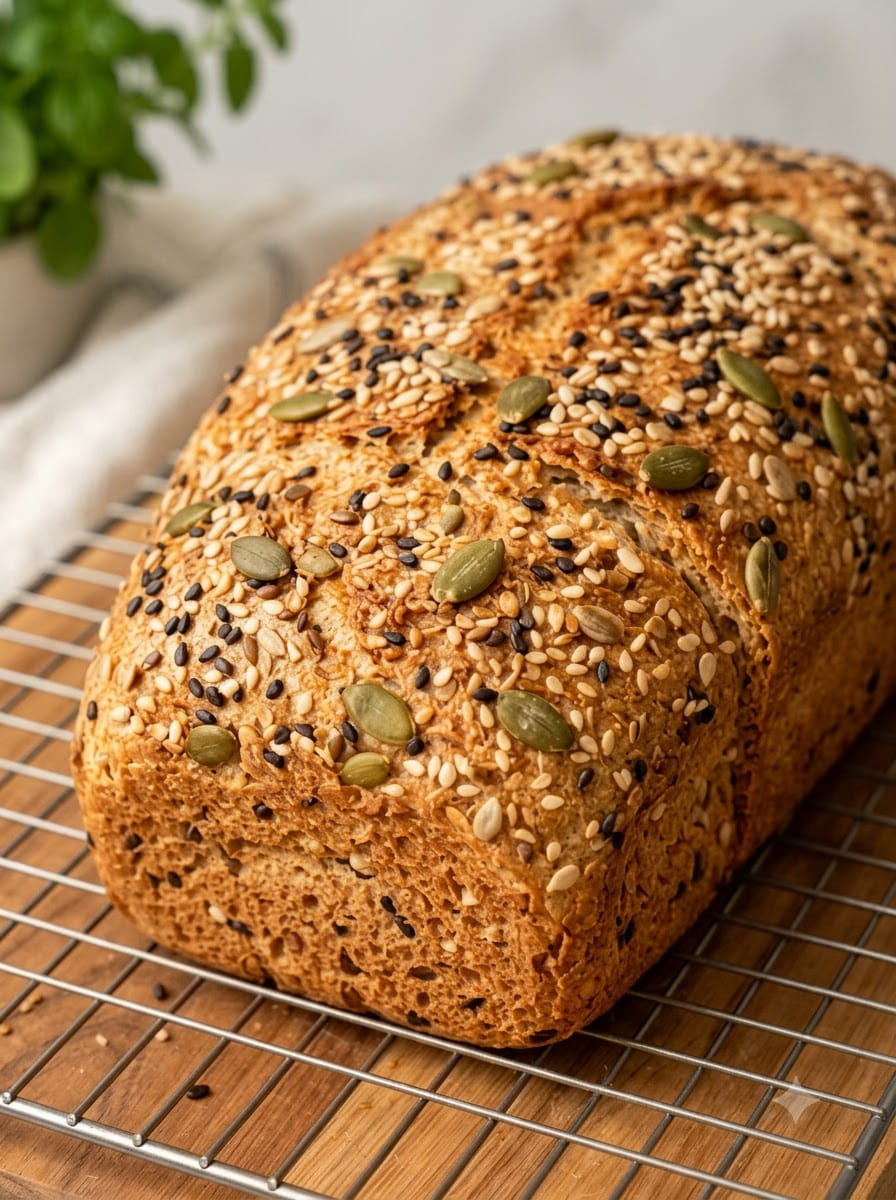

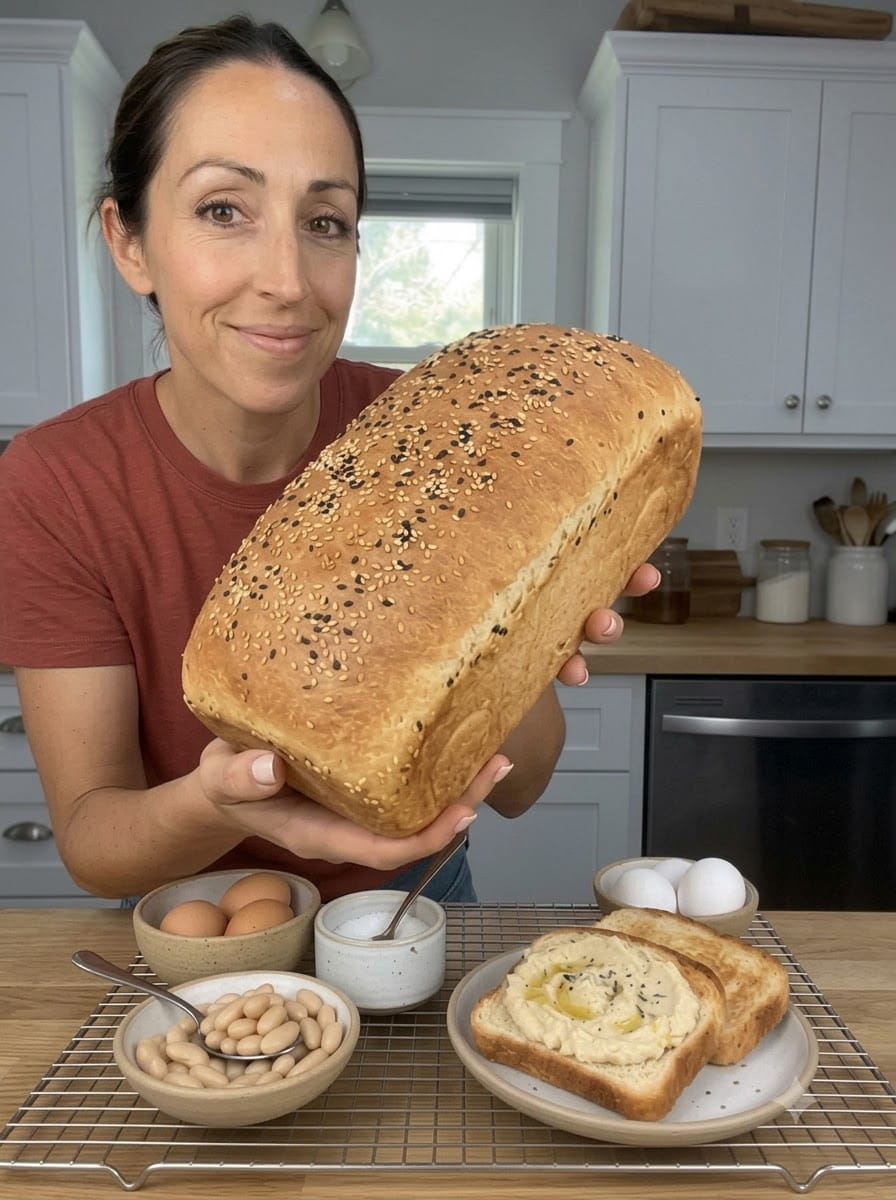
3-Ingredient White Bean Bread: Easy, Gluten-Free, High-Protein Homemade Bread
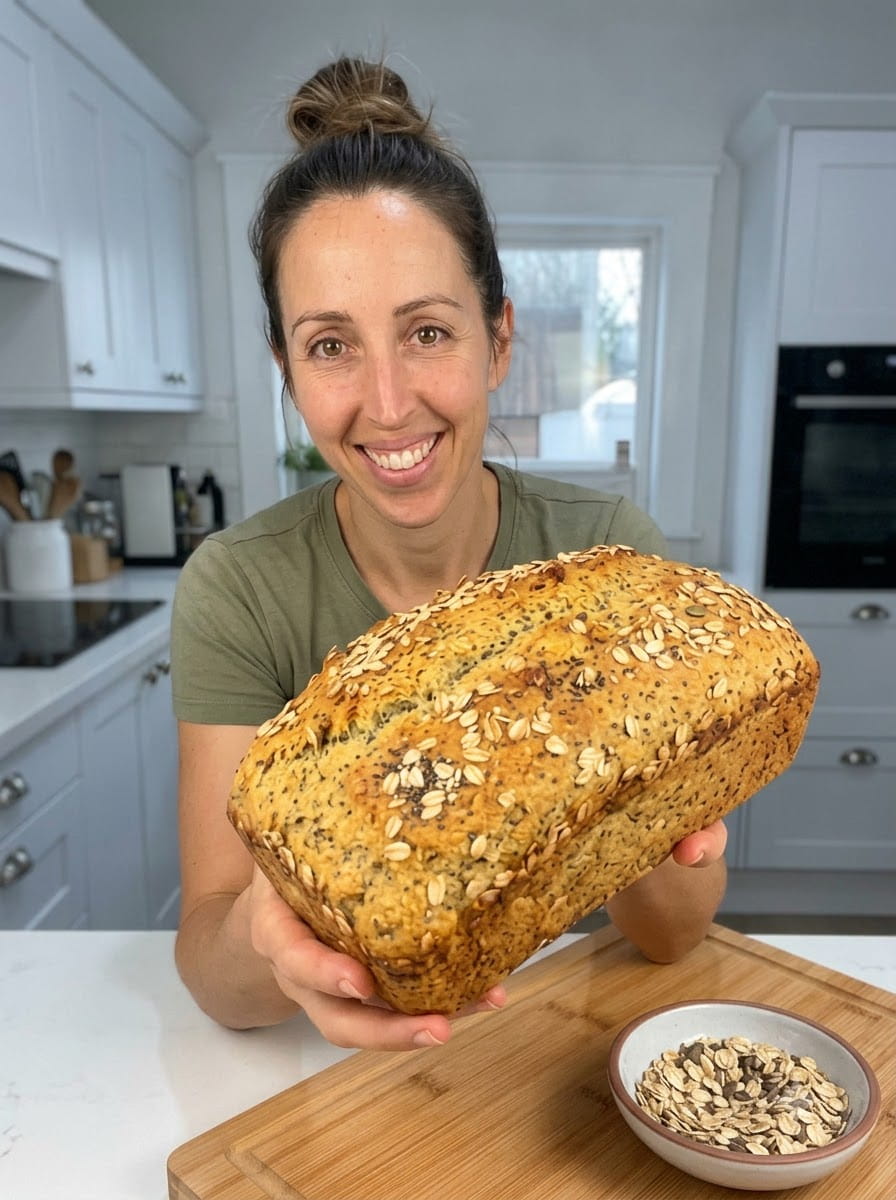
Looking for an easy homemade bread recipe that requires no flour, no yeast, and no kneading? This 3-Ingredient White Bean Bread is a simple, wholesome alternative to traditional bread, made with white beans, eggs, and baking powder. It is easy to prepare, uses everyday ingredients, and creates a soft, hearty loaf that you can enjoy for breakfast, lunch, or a satisfying snack.
Unlike conventional bread recipes that require flour, yeast, rising time, and several preparation steps, this white bean bread comes together quickly in a blender or food processor. Simply blend the ingredients into a smooth batter, pour it into a loaf pan, and bake until the center is firm and the outside is lightly golden.
White beans provide plant-based protein, fiber, and a naturally creamy texture, while eggs help bind the ingredients together. Baking powder provides lift, allowing the loaf to rise without yeast. The result is a compact, moist, savory bread that can be toasted, sliced for sandwiches, or served alongside your favorite meals.
This recipe is especially appealing to anyone looking for a flourless bread alternative, a simple way to incorporate legumes into everyday meals, or an easy baking project that does not require advanced cooking skills. It also offers a practical option for people who want to experiment with different ingredients in their homemade bread.
Whether you top a slice with avocado, serve it with scrambled eggs, spread it with hummus, or enjoy it warm alongside a bowl of soup, this three-ingredient white bean bread is a versatile addition to your kitchen.
Why You Will Love This 3-Ingredient White Bean Bread
There are plenty of reasons to try this easy homemade loaf. Its short ingredient list, straightforward preparation, and versatile flavor make it a useful recipe for everyday cooking.
1. Only Three Main Ingredients
You do not need a pantry full of baking ingredients to make this bread. The recipe uses white beans, eggs, and baking powder.
White beans create the main structure of the loaf, eggs provide binding and richness, and baking powder helps the batter rise during baking.
There is no need to purchase bread flour, instant yeast, or specialty baking mixes. Canned cannellini beans or other plain white beans work well, making this recipe convenient when you want to bake something with ingredients you already have at home.
2. No Yeast or Rising Time
Traditional bread often requires yeast activation, kneading, proofing, and sometimes several hours of preparation.
This recipe skips those steps. Baking powder provides the lift, so there is no dough to knead and no yeast dough to leave rising on the counter.
After blending the ingredients, you can transfer the batter directly to the loaf pan and bake it.
3. Naturally Flourless
This white bean bread contains no wheat flour or conventional grain flour in its basic recipe. Instead, blended beans provide the bulk and structure.
The texture is different from traditional sandwich bread. It is generally denser and more moist, with a soft, tender interior rather than the airy crumb produced by yeast and gluten development.
If you need the bread to be gluten-free, check the labels on your baking powder and any other packaged ingredients to ensure they meet your requirements.
4. A Source of Protein and Fiber
White beans contain plant-based protein and dietary fiber, while eggs contribute additional protein and several essential nutrients.
Together, these ingredients make the loaf a useful alternative to conventional white bread for people looking to vary their meals.
The exact protein, carbohydrate, fiber, and calorie content depends on the brands and quantities used. If nutritional values are important to you, calculate them from your specific ingredient labels and the number of slices you make.
5. Easy to Customize
The three-ingredient version has a mild, savory flavor that works with many toppings and meals.
Once you have tried the basic recipe, you can experiment with herbs, spices, seeds, or other additions. These extras are not required, but they can help you adapt the loaf to your personal taste.
Ingredients for 3-Ingredient White Bean Bread
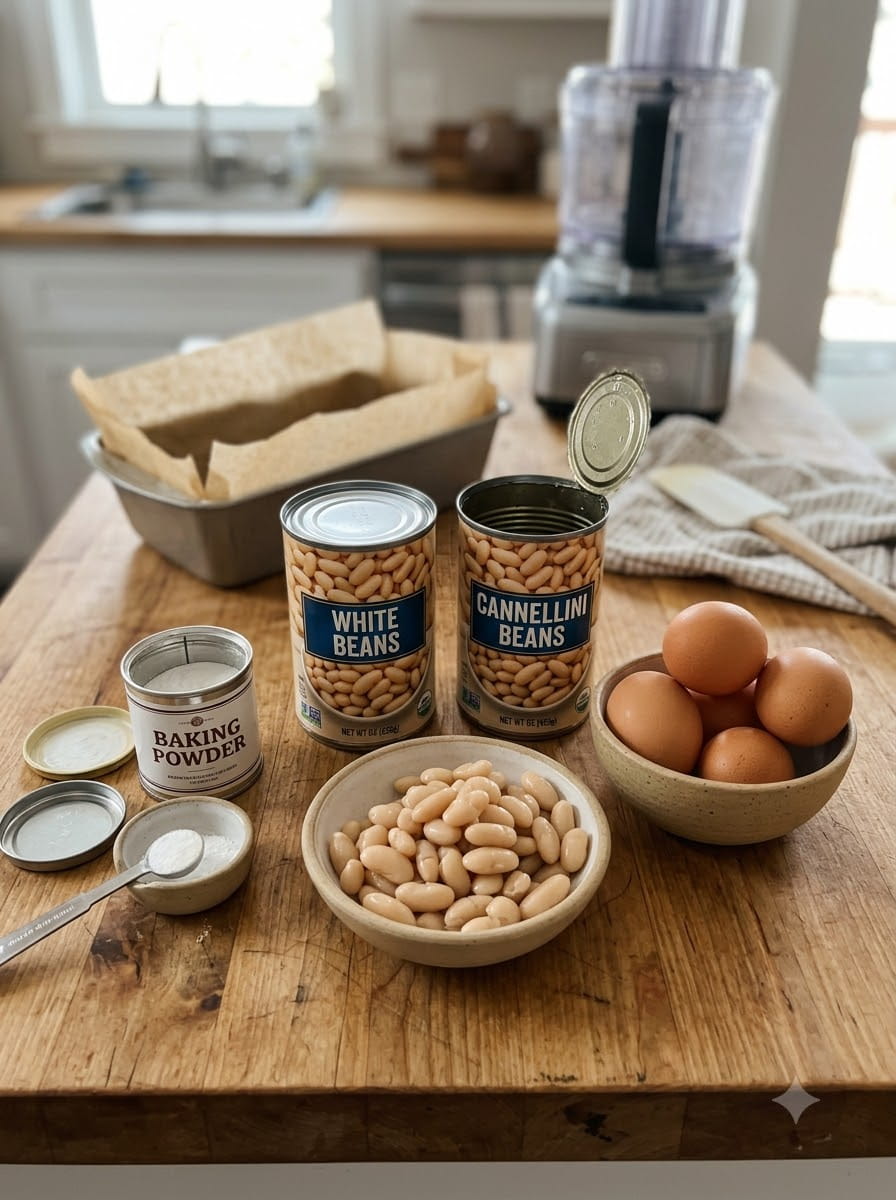
You need just three ingredients to prepare this simple loaf.
- 2 cans white beans or cannellini beans, 15 ounces each: Drain and rinse thoroughly before blending.
- 4 large eggs: Help bind the beans together and give the bread structure.
- 2 teaspoons baking powder: Provides lift and helps the loaf become lighter during baking.
You will also need parchment paper and a loaf pan for baking. These are preparation supplies rather than ingredients in the three-ingredient recipe.
Which White Beans Work Best?
Cannellini beans are an excellent choice because they have a creamy texture and mild flavor. Great Northern beans and navy beans can also work well.
Choose plain canned beans without added sauces or strong seasonings. The beans should be drained and rinsed thoroughly to remove the canning liquid, which can otherwise affect the batter’s flavor and moisture.
If you prefer to cook dried white beans from scratch, cook them until completely tender before measuring the quantity needed. The moisture content may differ from canned beans, so the final texture can vary.
How to Make White Bean Bread Step by Step
This recipe is straightforward, but a few details make a significant difference in the final texture. Follow the instructions carefully for a loaf that slices more easily and holds together well.
Step 1: Preheat the Oven
Preheat your oven to 350°F (175°C).
Line a loaf pan with parchment paper, leaving enough overhang to help lift the bread out after baking.
Parchment paper helps prevent sticking, which is particularly helpful for flourless loaves because their soft interior may cling to an unlined pan.
Step 2: Drain and Rinse the Beans
Open both cans of white beans and drain away the liquid.
Rinse the beans thoroughly under cool running water. Allow them to drain well, then gently pat them dry with a clean kitchen towel or paper towel.
Removing excess surface moisture helps keep the batter from becoming unnecessarily watery.
The beans do not need to be completely dehydrated. Simply remove the liquid clinging to their surfaces and allow any remaining water to drain away.
Step 3: Blend the Beans and Eggs
Place the drained white beans and four large eggs in a food processor or blender.
Blend until the mixture is as smooth as possible, scraping down the sides if necessary.
A smooth batter helps create a more uniform loaf. If whole beans or large pieces remain, they can create uneven areas in the finished bread.
Depending on the power of your blender, you may need to pause and scrape the sides once or twice. Avoid adding water unless absolutely necessary, because additional liquid may make the loaf too moist.
Step 4: Add the Baking Powder
Add the baking powder to the blended bean-and-egg mixture.
Blend briefly until the baking powder is evenly distributed.
Avoid blending for an unnecessarily long time after adding it. Once the baking powder is incorporated, move directly to the next step so that the leavening can do its work during baking.
Step 5: Transfer the Batter to the Loaf Pan
Pour the batter into the prepared loaf pan.
Use a spatula to scrape the blender or food processor clean and smooth the top of the batter.
The mixture will resemble a thick, smooth batter rather than traditional kneaded bread dough. This is normal because the recipe does not contain flour or gluten.
Place the pan on a stable oven rack, keeping it level so the batter bakes evenly.
Step 6: Bake Until the Center Is Set
Bake at 350°F (175°C) for approximately 45–55 minutes.
The exact baking time depends on your oven, loaf pan dimensions, and the moisture content of the beans.
As the bread bakes, the eggs set, the bean mixture firms up, and the baking powder helps create some lift.
The loaf is ready when the center feels firm and a toothpick inserted into the middle comes out without wet batter. If the center remains soft or the toothpick shows uncooked mixture, continue baking and check again after a few minutes.
If the top browns before the center is set, loosely cover the loaf with foil for the remaining baking time.
Step 7: Cool in the Pan
Remove the bread from the oven and let it rest in the pan for 10–15 minutes.
This brief cooling period allows the loaf to settle and makes it easier to remove without breaking.
Do not rush to slice it while it is extremely hot. The interior continues to firm up as the bread cools.
Step 8: Transfer to a Wire Rack
Carefully lift the bread out using the parchment paper and transfer it to a wire rack.
Allow it to cool completely before slicing.
This step is particularly important for flourless bread. Cutting it too early can produce a soft, gummy center or cause the slices to crumble because the interior has not fully stabilized.
Once cooled, use a sharp serrated knife and a gentle sawing motion to create cleaner slices.
What Does 3-Ingredient White Bean Bread Taste Like?
White bean bread has a mild, savory flavor that differs from conventional wheat bread.
The white beans provide a subtle earthy, creamy taste, while the eggs contribute richness and help give the loaf its structure. Baking powder creates some lift but does not produce the characteristic yeasty flavor of traditional bread.
The texture is usually soft, moist, and relatively dense. It may be slightly more delicate than a standard sandwich loaf, particularly when freshly baked.
Toasting the slices can improve their texture by creating a firmer exterior while warming the center. Toasting also makes the bread a useful base for toppings that would otherwise weigh down a softer slice.
Because the flavor is relatively neutral, the loaf works well with both savory and mildly sweet accompaniments.
Tips for the Best Flourless White Bean Bread
A few simple techniques can help you get better results every time.
Drain the Beans Thoroughly
Excess liquid is one of the main factors that can make bean bread too moist.
After rinsing the beans, give them enough time to drain. Gently patting them dry helps remove additional moisture before blending.
Blend Until Smooth
A smooth mixture produces a more even texture. If your blender struggles with the beans, stop occasionally and scrape down the sides before continuing.
Avoid leaving large chunks of beans in the batter if you want a loaf that slices uniformly.
Measure the Baking Powder Carefully
The baking powder helps the batter rise and contributes to the finished texture.
Use the specified two teaspoons and ensure that your baking powder is fresh. Old or poorly stored baking powder may lose some of its effectiveness.
Do Not Underbake the Center
The exterior may look ready before the center has fully set.
Check the middle with a toothpick and look for a firm texture. If wet batter remains, continue baking.
For an additional check, the center should no longer look liquid or collapse when the pan is moved gently.
Let the Bread Cool Completely
Cooling helps the loaf hold its shape.
Although the aroma may make it tempting to cut a slice immediately, waiting until the bread has cooled makes a noticeable difference in how cleanly it cuts.
Use Parchment Paper
Flourless bread can be more delicate than conventional loaves. Parchment paper makes it easier to lift the bread from the pan without tearing the sides.
How to Serve White Bean Bread
One of the best things about this recipe is how easily it fits into different meals. The loaf can be served warm, toasted, or sliced for sandwiches.
Avocado Toast
Toast a slice until lightly crisp, then top it with mashed avocado and freshly ground black pepper.
For a heartier breakfast, serve the avocado toast alongside a boiled egg or scrambled eggs.
Eggs for Breakfast
White bean bread works well with scrambled, fried, or poached eggs.
Its mild flavor complements the richness of the eggs, making it a useful alternative when you want something different from regular toast.
Hummus and Vegetables
Spread hummus over a toasted slice and add cucumber, tomato, or roasted vegetables.
The creamy beans in the bread complement the hummus, creating a satisfying savory snack.
Sandwiches
Allow the loaf to cool completely before slicing it for sandwiches.
Because the texture is softer and denser than conventional bread, thinner slices may be easier to handle. Pair them with cheese, lettuce, sliced tomato, egg, or your preferred sandwich filling.
For especially moist fillings, toasting the bread first can help it hold together.
Soup and Salad
Serve a slice alongside vegetable soup, tomato soup, lentil soup, or a fresh salad.
Toasted pieces can also be cut into cubes and used as a bread accompaniment for a hearty bowl of soup.
Nut Butter and Fruit
If you enjoy a slightly sweet snack, try a toasted slice with peanut butter or another nut butter and sliced banana.
The bread itself is not sweet, so the topping provides most of the sweetness.
Is White Bean Bread High in Protein?
White beans and eggs both contribute protein, making this loaf a useful option for people who want to incorporate more protein-containing foods into their meals.
However, the exact protein content per slice depends on the size and brand of the canned beans, the eggs, and how many slices you cut from the finished loaf.
For the most accurate estimate, add together the protein values on the ingredient labels and divide the total by the number of portions.
It is also worth remembering that a food being protein-rich does not automatically make it nutritionally complete. A balanced meal can include this bread alongside vegetables, healthy fats, and other foods that suit your dietary needs.
Is White Bean Bread Gluten-Free?
The basic recipe contains no wheat flour or other conventional grain flour, so its ingredients are naturally free from gluten.
However, if you have celiac disease or need to avoid gluten strictly, check the packaging of the baking powder and any other products you use. Cross-contact can occur during manufacturing or food preparation.
Use clean equipment and suitable ingredients if you require a strictly gluten-free loaf.
The texture also differs from ordinary gluten-free sandwich bread made with flour blends. White bean bread is more like a soft, savory, bean-based loaf.
Common Mistakes and How to Fix Them
Why Is My White Bean Bread Too Wet?
Excess moisture may come from beans that were not drained thoroughly, a batter that was too wet, or a loaf that was removed from the oven before the center had set.
Drain the beans well, avoid adding extra liquid, and bake until the center is firm. Allow the loaf to cool completely before judging its final texture.
Why Is the Bread Dense?
This bread is naturally denser than conventional yeast bread because it contains no flour-based dough or gluten network.
However, an excessively heavy loaf may also result from ineffective baking powder, uneven blending, or insufficient baking time.
Make sure the baking powder is fresh, blend the batter until smooth, and bake until the loaf is fully set.
Why Does the Bread Fall Apart When Sliced?
The loaf may be too warm when cut, or its center may not have baked completely.
Let the bread cool completely and use a sharp knife. If the interior is still gummy, the loaf may need additional baking time on your next attempt.
Why Did the Bread Not Rise Much?
Baking powder provides lift, but this recipe does not produce the same expansion as a conventional yeast loaf.
The final height also depends on the dimensions of your pan, the freshness of the baking powder, and the consistency of the batter.
Expect a compact loaf rather than a tall, airy sandwich bread.
Can I Make the Batter Ahead of Time?
It is best to blend the ingredients shortly before baking.
Once the baking powder has been added to the wet mixture, its leavening action begins. Preparing the batter well in advance may reduce the lift you get in the oven.
Easy Variations for Different Flavors
The three-ingredient version is a good starting point, but you can customize the loaf if you want additional flavor.
Remember that any additions will change the recipe from its original three-ingredient form.
Garlic and Herb Bean Bread
Add a small amount of garlic powder and dried herbs such as oregano or rosemary for a savory loaf.
These flavors work well with soup, roasted vegetables, and Mediterranean-inspired meals.
Seeded White Bean Bread
Sprinkle seeds over the top of the batter before baking, or mix a small amount into the batter.
Sesame, sunflower, and pumpkin seeds can provide extra texture. Adding too many seeds may affect the loaf’s structure, so start with a modest quantity.
Black Pepper and Herb Bread
A little black pepper and dried thyme create a savory variation that pairs nicely with scrambled eggs or vegetable soup.
Cheesy Bean Bread
For a richer variation, fold a small amount of finely grated cheese into the finished batter.
Cheese changes the moisture and fat content, so the loaf may bake differently. Check the center carefully before removing it from the oven.
Spiced Breakfast Bread
A small amount of cinnamon can create a different flavor profile, although the base loaf is savory rather than sweet.
If you want a genuinely sweet bread, you will need to adjust the recipe with suitable additional ingredients.
Frequently Asked Questions
Can I Use Cannellini Beans Instead of White Beans?
Yes. Cannellini beans are white beans and work very well in this recipe. Great Northern beans and navy beans are also suitable options.
Do I Need a Food Processor?
A food processor or powerful blender is recommended because it helps create a smooth batter.
If your appliance is small, blend the ingredients in batches and combine them before adding the baking powder.
Can I Make This Recipe Without Eggs?
Eggs are a key structural ingredient in this particular recipe. Replacing them may significantly change how well the loaf holds together.
An egg-free version would require a separately tested formulation rather than a simple one-for-one substitution.
Can I Use Dried Beans?
Yes, provided the dried beans are cooked thoroughly until tender before blending. Do not use uncooked dried beans in this recipe.
Because home-cooked beans can contain a different amount of moisture from canned beans, the finished texture may vary.
How Do I Know When the Bread Is Ready?
Bake for approximately 45–55 minutes at 350°F (175°C), then check the center with a toothpick.
The bread should feel firm, and the toothpick should not come out covered in wet batter. If necessary, continue baking in short increments.
Can I Toast White Bean Bread?
Yes. Toasting is one of the best ways to serve it. The outside becomes firmer, while the inside warms through.
Allow the loaf to cool before slicing, then toast individual slices as needed.
Is This Bread Suitable for Sandwiches?
Yes, provided the loaf has cooled completely and is firm enough to slice. Because it is more delicate than conventional bread, use a sharp knife and avoid making slices too thick.
Toasting the bread can also make it easier to handle with moist sandwich fillings.
Can I Freeze White Bean Bread?
Yes. Once the loaf has cooled completely, slice it and place parchment between the slices if you want to remove individual portions easily.
Store the slices in a well-sealed freezer-safe bag or container. Thaw individual portions in the refrigerator or toast them from frozen, checking that they heat through properly.
Does White Bean Bread Taste Like Beans?
It has a mild bean flavor, but the taste is generally subtle when the beans are blended smoothly. The eggs contribute a savory richness, and toppings can further change the overall flavor.
If you enjoy legumes and savory breads, you may find the taste particularly appealing.
How to Store White Bean Bread Safely
Because this loaf contains cooked beans and eggs and has a moist interior, it should be handled as a perishable food.
Allow the bread to cool, then place it in an airtight container and refrigerate it within two hours of baking. Refrigeration is preferable to leaving the loaf on the counter because its ingredients and moisture level make it more perishable than many traditional breads.
For best quality, consume refrigerated portions within approximately three to four days. Check for any unusual smell, appearance, or signs of spoilage before eating.
For longer storage, freeze individual slices in a freezer-safe container or bag. Separating the slices with parchment makes it easier to take out only what you need.
Reheat slices in a toaster or oven until warmed to your liking. Avoid leaving the loaf at room temperature for extended periods.
Nutritional Benefits of White Beans
White beans are a nutritious legume that contributes several useful nutrients to this recipe.
They contain plant-based protein, dietary fiber, and carbohydrates that provide energy. They also supply minerals such as iron, magnesium, and potassium, although the amounts vary by bean type and serving size.
The fiber in white beans contributes to digestive health as part of an overall balanced diet. Their protein content also makes them a useful ingredient in meals that include other protein sources.
Eggs contribute additional protein and nutrients, helping bind the loaf and support its structure.
Although this bread contains nutritious ingredients, its exact nutritional profile depends on the ingredients used and the size of each serving. It should be viewed as one option among many rather than a substitute for a varied diet.
Final Thoughts: A Simple Three-Ingredient Bread Worth Trying
This 3-Ingredient White Bean Bread is a practical recipe for anyone who wants to try a flourless homemade loaf without dealing with yeast, kneading, or a long rising process.
With just white beans, eggs, and baking powder, you can prepare a savory loaf that is easy to blend, simple to bake, and versatile enough for breakfast, lunch, and snacks.
The key to success is straightforward: drain the beans well, blend the batter until smooth, bake until the center is fully set, and let the loaf cool completely before slicing.
Enjoy it toasted with avocado, serve it alongside scrambled eggs, spread it with hummus, or pair it with a warm bowl of soup. Once you discover how easily it fits into everyday meals, you may find yourself making it whenever you want a simple alternative to conventional bread.
If you enjoy easy homemade recipes with just a few ingredients, save this white bean bread recipe and share it with someone who loves experimenting in the kitchen.
Print
3-Ingredient White Bean Bread
Ingredients
You need just three ingredients to prepare this simple loaf.
- 2 cans white beans or cannellini beans, 15 ounces each: Drain and rinse thoroughly before blending.
- 4 large eggs: Help bind the beans together and give the bread structure.
- 2 teaspoons baking powder: Provides lift and helps the loaf become lighter during baking.
You will also need parchment paper and a loaf pan for baking. These are preparation supplies rather than ingredients in the three-ingredient recipe.
Instructions
This recipe is straightforward, but a few details make a significant difference in the final texture. Follow the instructions carefully for a loaf that slices more easily and holds together well.
Step 1: Preheat the Oven
Preheat your oven to 350°F (175°C).
Line a loaf pan with parchment paper, leaving enough overhang to help lift the bread out after baking.
Parchment paper helps prevent sticking, which is particularly helpful for flourless loaves because their soft interior may cling to an unlined pan.
Step 2: Drain and Rinse the Beans
Open both cans of white beans and drain away the liquid.
Rinse the beans thoroughly under cool running water. Allow them to drain well, then gently pat them dry with a clean kitchen towel or paper towel.
Removing excess surface moisture helps keep the batter from becoming unnecessarily watery.
The beans do not need to be completely dehydrated. Simply remove the liquid clinging to their surfaces and allow any remaining water to drain away.
Step 3: Blend the Beans and Eggs
Place the drained white beans and four large eggs in a food processor or blender.
Blend until the mixture is as smooth as possible, scraping down the sides if necessary.
A smooth batter helps create a more uniform loaf. If whole beans or large pieces remain, they can create uneven areas in the finished bread.
Depending on the power of your blender, you may need to pause and scrape the sides once or twice. Avoid adding water unless absolutely necessary, because additional liquid may make the loaf too moist.
Step 4: Add the Baking Powder
Add the baking powder to the blended bean-and-egg mixture.
Blend briefly until the baking powder is evenly distributed.
Avoid blending for an unnecessarily long time after adding it. Once the baking powder is incorporated, move directly to the next step so that the leavening can do its work during baking.
Step 5: Transfer the Batter to the Loaf Pan
Pour the batter into the prepared loaf pan.
Use a spatula to scrape the blender or food processor clean and smooth the top of the batter.
The mixture will resemble a thick, smooth batter rather than traditional kneaded bread dough. This is normal because the recipe does not contain flour or gluten.
Place the pan on a stable oven rack, keeping it level so the batter bakes evenly.
Step 6: Bake Until the Center Is Set
Bake at 350°F (175°C) for approximately 45–55 minutes.
The exact baking time depends on your oven, loaf pan dimensions, and the moisture content of the beans.
As the bread bakes, the eggs set, the bean mixture firms up, and the baking powder helps create some lift.
The loaf is ready when the center feels firm and a toothpick inserted into the middle comes out without wet batter. If the center remains soft or the toothpick shows uncooked mixture, continue baking and check again after a few minutes.
If the top browns before the center is set, loosely cover the loaf with foil for the remaining baking time.
Step 7: Cool in the Pan
Remove the bread from the oven and let it rest in the pan for 10–15 minutes.
This brief cooling period allows the loaf to settle and makes it easier to remove without breaking.
Do not rush to slice it while it is extremely hot. The interior continues to firm up as the bread cools.
Step 8: Transfer to a Wire Rack
Carefully lift the bread out using the parchment paper and transfer it to a wire rack.
Allow it to cool completely before slicing.
This step is particularly important for flourless bread. Cutting it too early can produce a soft, gummy center or cause the slices to crumble because the interior has not fully stabilized.