
No-Knead Whole Wheat Seeded Bread: A Hearty, Wholesome Homemade Loaf
This No-Knead Whole Wheat Seeded Bread is hearty, wholesome, and wonderfully easy to make. Made with whole wheat flour, rolled oats, flaxseeds, chia seeds, and sunflower seeds, this homemade loaf has a beautiful golden crust, a tender center, and a delicious nutty flavor. No kneading and no complicated techniques required. Just mix, let it rise, add your favorite seeds, and bake.
It is perfect for breakfast, sandwiches, avocado toast, or enjoying a warm slice straight from the oven.
Whole grain bread often has a reputation for being dense or dry, and it can feel like a lot of work to bake at home. This recipe changes that. The dough is stirred together with a spoon in one bowl, left to rise, and baked in a standard loaf pan. A blend of whole wheat flour and bread flour keeps the crumb tender, while eggs, olive oil, and honey add moisture and richness. A generous mix of seeds and oats brings nutty flavor, texture, and a boost of fiber.
In this guide, you will find the full recipe, a clear step-by-step method, tips for a soft and moist whole wheat loaf, troubleshooting help, serving ideas, variations, storage and freezing advice, and answers to frequently asked questions about no-knead whole wheat seeded bread.
Why You’ll Love This Whole Wheat Seeded Bread
It is truly no-knead. The dough is mixed with a sturdy spoon. There is no kneading, no stand mixer, and no special technique.
It is hearty and wholesome. Whole wheat flour, rolled oats, and a variety of seeds make a filling, nutrient-rich loaf with a satisfying texture.
It has a nutty, toasty flavor. Flaxseeds, chia seeds, sunflower seeds, pumpkin seeds, and sesame seeds add layers of flavor and crunch.
It stays tender. The combination of bread flour, eggs, olive oil, and honey keeps the crumb soft and moist rather than dry and crumbly.
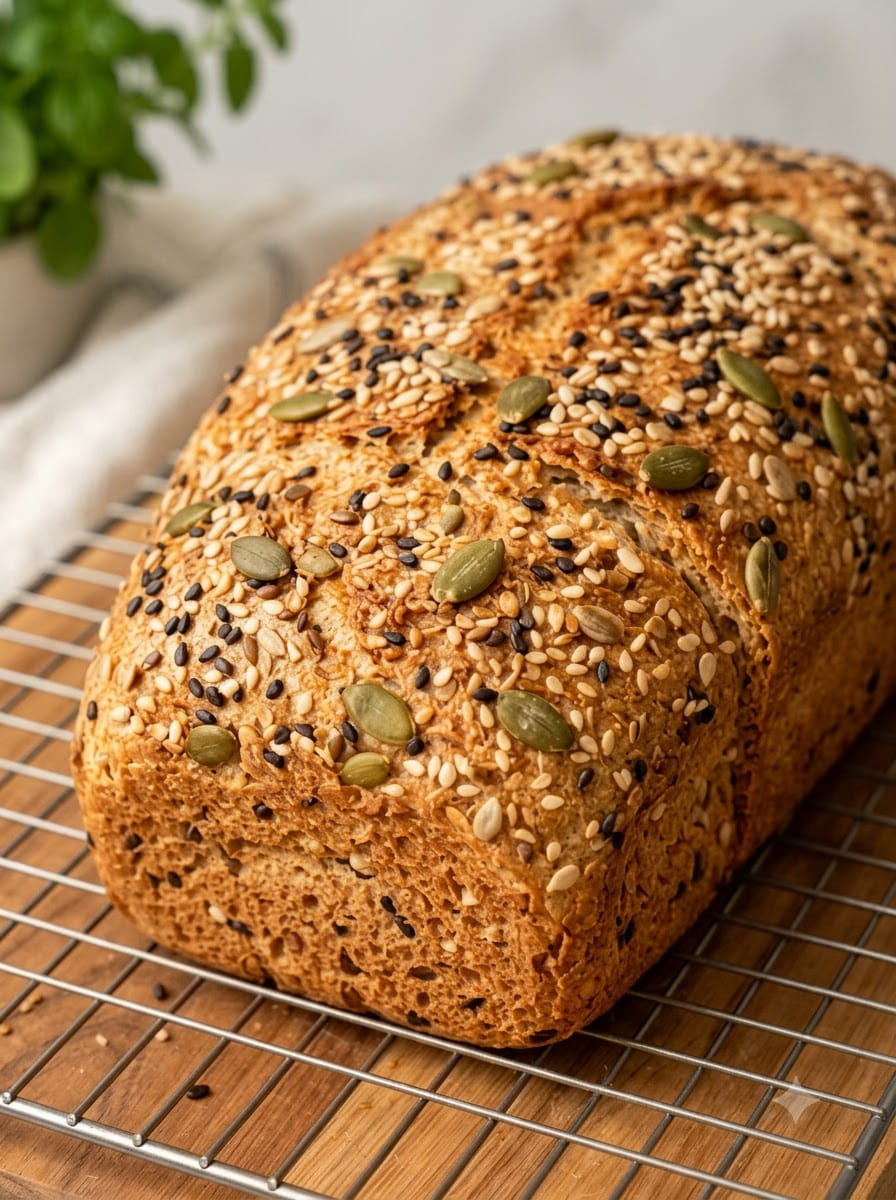
It looks beautiful. The seed-and-oat topping bakes into a golden, rustic crust that looks like it came from a bakery.
It is versatile. Toast it, make sandwiches, top it with avocado, or enjoy it with butter and jam.
It uses a standard loaf pan. A regular 9 x 5-inch pan is all you need, with no Dutch oven or baking stone required.
It is a great make-ahead bread. The loaf slices and freezes well, so you can enjoy it all week.
What Is No-Knead Seeded Whole Wheat Bread?
No-knead bread is made from a wet, sticky dough that develops its structure through time and hydration rather than through physical kneading. With a high-moisture dough, flour absorbs water and the gluten forms gradually as the dough rests and rises. This recipe applies that approach to a whole wheat loaf baked in a pan.
Whole wheat flour contains the bran and germ of the wheat kernel, which gives it a deeper flavor and more fiber than white flour. Because the bran can interfere with gluten development, whole wheat breads can be dense. Blending in bread flour, which is high in protein, helps the loaf rise higher and stay softer. The oats and seeds add texture, flavor, and nutrition.
The result is a moist, hearty, slightly dense sandwich-style loaf with a nutty flavor and a golden, seeded crust.
Ingredients for No-Knead Whole Wheat Seeded Bread
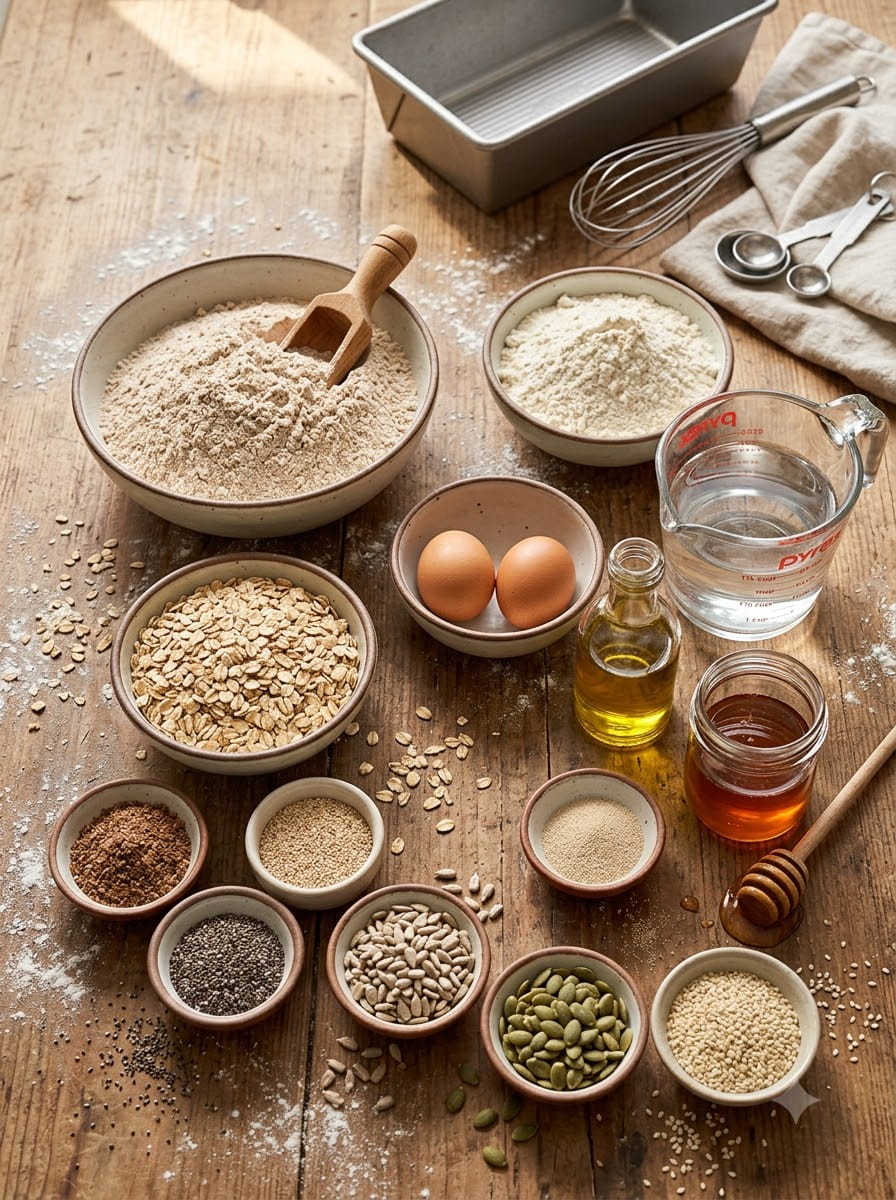
- 2 eggs
- 1½ cups warm water
- 2 tablespoons olive oil
- 2 tablespoons honey
- 2 cups whole wheat flour
- 1 cup bread flour
- ½ cup rolled oats
- 2¼ teaspoons instant yeast
- 1 teaspoon salt
- 2 tablespoons ground flaxseeds
- 1 tablespoon chia seeds
- ¼ cup sunflower seeds
- 2 tablespoons pumpkin seeds
- 1 tablespoon sesame seeds
- Extra rolled oats and seeds for topping
A Closer Look at the Ingredients
Eggs. The eggs add richness, moisture, and structure, and they help the bread stay soft. Room-temperature eggs blend more easily into the warm water.
Warm water. The water should be warm, about 105°F to 110°F (40°C to 43°C). It should feel comfortably warm, not hot. Hot water can kill the yeast, and cold water will slow it down.
Olive oil. Olive oil tenderizes the crumb and adds a gentle richness. You can use another neutral oil if you prefer.
Honey. Honey feeds the yeast, adds subtle sweetness, and helps keep the loaf moist. Maple syrup can be used instead.
Whole wheat flour. Whole wheat flour provides the hearty flavor and fiber. It absorbs more water than white flour, so the dough will be thick and sticky.
Bread flour. Bread flour has more protein than all-purpose flour, which gives the dough strength and helps the loaf rise. It balances the heaviness of the whole wheat flour.
Rolled oats. Oats add a soft, chewy texture and mild sweetness. Old-fashioned rolled oats are best, rather than instant oats.
Instant yeast. Instant yeast can be mixed directly into the dry ingredients. A standard packet contains about 2¼ teaspoons. Make sure your yeast is fresh.
Salt. Salt balances the flavor and regulates the yeast. Do not skip it.
Ground flaxseeds. Ground flaxseeds, also called flax meal, add fiber, healthy fats, and a nutty flavor. They also help hold moisture in the dough.
Chia seeds. Chia seeds absorb liquid and add small, crunchy specks of texture and nutrition.
Sunflower seeds. Sunflower seeds bring a rich, buttery crunch. They appear in both the dough and the topping.
Pumpkin seeds. Also known as pepitas, pumpkin seeds add a green color and a toasty flavor, especially on the crust.
Sesame seeds. Sesame seeds add a nutty aroma and a classic bakery look.
Extra oats and seeds for topping. The topping gives the loaf its signature rustic appearance and added crunch.
How to Make No-Knead Whole Wheat Seeded Bread: Step-by-Step Instructions
Step 1: Whisk the Wet Ingredients
In a large mixing bowl, whisk together the eggs, warm water, olive oil, and honey until combined. Whisk until the honey dissolves and the mixture looks even.
Step 2: Add the Dry Ingredients
Add the whole wheat flour, bread flour, rolled oats, instant yeast, salt, ground flaxseeds, chia seeds, and sunflower seeds.
Step 3: Stir the Dough
Stir with a sturdy spoon until a thick, sticky dough forms and no dry flour remains. The dough should be moist and slightly shaggy. It will look more like a thick batter than a traditional bread dough, and that is exactly what you want. Whole wheat flour and seeds absorb liquid as the dough rests, so resist the urge to add more flour.
Step 4: First Rise
Cover the bowl and let the dough rise in a warm place for 60 to 90 minutes, or until noticeably expanded. The dough should look puffy and show bubbles on the surface. It may not double in size, since whole grain doughs tend to rise less than white doughs.
Step 5: Transfer to the Pan
Grease a 9 x 5-inch loaf pan and transfer the dough into it. Smooth the top with a wet spatula. Wetting the spatula keeps the sticky dough from clinging.
Step 6: Add the Topping
Sprinkle the top with pumpkin seeds, sesame seeds, extra rolled oats, and sunflower seeds. Press the toppings gently into the surface so they stay in place during baking.
Step 7: Second Rise and Preheat
Cover loosely and let the dough rise for another 20 to 30 minutes while preheating the oven to 375°F (190°C). The dough should rise slightly and look puffy.
Step 8: Bake
Bake for 40 to 50 minutes, until the loaf is deeply golden and cooked through. If the top browns too quickly, cover it loosely with foil. For the most reliable doneness check, the internal temperature should reach about 190°F to 200°F (88°C to 93°C), and the loaf should sound hollow when tapped on the bottom.
Step 9: Cool
Let the bread rest in the pan for 10 minutes, then transfer it to a wire rack to cool completely before slicing. Cooling lets the crumb set and gives you clean slices. Slicing too early can make the bread seem gummy.
Helpful Tips for the Best Seeded Whole Wheat Bread
Do not add extra flour. The dough is meant to be wet and sticky. Whole grains and seeds keep absorbing liquid, so a wetter dough gives a softer, more tender loaf.
Use fresh yeast and warm water. Check the expiration date of your yeast and keep the water warm but not hot.
Give it a warm place to rise. A turned-off oven with the light on, or a warm corner of the kitchen, helps the dough rise. If your kitchen is cool, allow extra time.
Wet your spatula. Smoothing the top with a wet spatula prevents sticking and gives the loaf a tidy surface.
Press the toppings in. Gently pressing the oats and seeds into the dough helps them stay on the crust after baking.
Tent with foil if needed. Seeds and honey can brown quickly. If the top darkens too fast, loosely cover it with foil for the rest of the bake.
Check the center. Because the dough contains eggs and a lot of whole grains, make sure the center is fully cooked. An instant-read thermometer takes the guesswork out.
Cool completely. Whole grain loaves finish setting as they cool, so wait before slicing.
Use a serrated knife. A serrated bread knife cuts through the seeded crust without squashing the loaf.
Troubleshooting Common Problems
The dough did not rise. The yeast may be old, or the water may have been too hot or too cool. Use fresh yeast, warm water, and a warm spot, and give the dough more time.
The loaf is too dense. Whole wheat bread is naturally heavier, but you can help by using fresh yeast, avoiding extra flour, and allowing the dough to rise properly in both stages.
The loaf is dry. It may have been overbaked or too much flour may have been used. Measure flour by spooning it into the cup and leveling it off, and check the loaf near the end of the baking time.
The center is gummy. The loaf may have been underbaked or sliced while warm. Bake until the internal temperature reaches at least 190°F (88°C) and let it cool fully.
The top is too dark. Tent the loaf with foil during the last part of baking, or lower the oven rack.
The seeds fall off. Press the seeds in gently after sprinkling. You can also brush the top lightly with water or beaten egg before adding them.
The loaf collapsed. It may have over-risen during the second rise. Bake it as soon as it looks puffy.
The bread tastes bitter. Whole wheat flour can taste slightly bitter if it is old. Use fresh flour stored in a cool, dry place, and consider freezing it if you do not use it often.
Delicious Ways to Serve Whole Wheat Seeded Bread
Toasted with butter. A thick slice, toasted until crisp, with butter is hard to beat.
Avocado toast. Top toast with mashed avocado, salt, pepper, and a squeeze of lemon or a fried egg.
Sandwiches. The sturdy crumb is ideal for turkey, chicken, tuna, hummus and vegetables, or grilled cheese.
With nut butter and fruit. Spread peanut or almond butter and top with banana slices or berries.
With eggs. Serve toasted slices with scrambled, poached, or fried eggs.
With soup. A slice alongside a bowl of soup makes a hearty meal.
With cheese. Pair with sharp cheddar, goat cheese, or cream cheese.
With jam or honey. A simple, classic spread for breakfast or an afternoon snack.
Flavor Variations to Try
- Different seeds. Swap in pepitas, hemp seeds, or poppy seeds for variety.
- Dried fruit. Stir in a handful of raisins, cranberries, or chopped dates for a slightly sweet loaf.
- Nuts. Add chopped walnuts or pecans for extra richness and crunch.
- Cinnamon raisin. Add a teaspoon of cinnamon and a handful of raisins.
- Savory herbs. Add dried rosemary or thyme to the dough.
- Cheese. Fold in shredded cheese or sprinkle some on top during the last 10 minutes of baking.
- Maple instead of honey. Replace the honey with maple syrup for a slightly different sweetness.
- Dinner rolls. Divide the dough into a greased muffin tin or shape into rolls, and bake for a shorter time, until golden.
Keep in mind that changes can affect the moisture and baking time, so check the center before removing the loaf from the oven.
How to Store Whole Wheat Seeded Bread
At room temperature. Once completely cooled, wrap the loaf or store it in a bread bag. It stays fresh for about 2 to 3 days. Because the dough contains eggs and oil, it can also be stored in the refrigerator for longer freshness.
In the refrigerator. Store it wrapped in an airtight container or bag for up to about a week. Toast slices to refresh the texture.
In the freezer. Slice the cooled loaf and freeze the slices in a freezer-safe bag, with parchment between slices if you like. Toast slices directly from the freezer. Frozen bread keeps well for up to 2 to 3 months.
Reviving slices. Toasting is the best way to bring back a crisp edge and a soft interior.
Is Whole Wheat Seeded Bread Healthy?
This bread is made with whole grains and a variety of seeds, which makes it a nutrient-rich choice. Whole wheat flour and rolled oats provide fiber and complex carbohydrates. Flaxseeds and chia seeds supply plant-based omega-3 fats and fiber, and sunflower and pumpkin seeds add healthy fats, protein, and minerals. The eggs add additional protein.
The recipe also contains a small amount of honey and olive oil, which are used in modest quantities. Nutritional values vary depending on the slice size and the ingredients you choose. If you track nutrition closely, calculate it using your own products.
If you have food allergies, intolerances, or specific dietary needs, check the ingredient labels. This bread contains wheat, gluten, and eggs, and it includes several seeds, including sesame, which is a common allergen.
Can This Bread Be Made Dairy-Free?
Yes. The recipe contains no dairy as written, since it uses olive oil and water rather than milk or butter. If you grease the pan, use oil rather than butter to keep it dairy-free.
Frequently Asked Questions
Can I make this bread without eggs?
The eggs add moisture, richness, and structure. Egg replacements may change the texture, and this recipe has not been tested without eggs.
Can I use all whole wheat flour?
You can, but the loaf will be denser and less tender. The bread flour helps the loaf rise higher and stay softer. If you use all whole wheat flour, you may need slightly more water.
Can I use all-purpose flour instead of bread flour?
Yes. The loaf may be slightly less tall and chewy, but it will still be good.
Can I use active dry yeast?
Yes. Dissolve it in the warm water with the honey and let it sit for 5 to 10 minutes until foamy before adding the other ingredients. Use about 25 percent more by weight.
Do I have to use all the seeds?
No. You can adjust the seeds to your taste or what you have in the pantry. Try to keep the total amount of seeds similar so the dough stays balanced.
Why is my dough so sticky?
The dough is intentionally wet. Whole wheat flour, oats, and seeds absorb water over time, which makes for a softer loaf. Use a wet spatula to handle it.
Can I make the dough overnight?
Yes. After mixing, you can cover the bowl and refrigerate the dough overnight for a slow rise, which develops more flavor. Let it come to room temperature and finish rising before shaping into the pan.
How do I know when the bread is done?
The loaf should be deeply golden, sound hollow when tapped, and register about 190°F to 200°F (88°C to 93°C) in the center. Because the dough contains eggs, make sure it is fully cooked.
Can I use a different size pan?
Yes. A smaller pan makes a taller loaf and may take longer to bake. A larger pan makes a flatter loaf that bakes faster. Check for doneness earlier or later accordingly.
Can I freeze this bread?
Yes. Slice it, freeze the slices in an airtight bag, and toast them straight from the freezer.
How long does it last?
It stays fresh for about 2 to 3 days at room temperature and about a week in the refrigerator. For longer storage, freeze it.
Final Thoughts
This No-Knead Whole Wheat Seeded Bread shows how easy it can be to bake a hearty, wholesome loaf at home. With whole wheat flour, bread flour, oats, and a mix of flax, chia, sunflower, pumpkin, and sesame seeds, you get a tender, nutty, golden bread without any kneading.
The process is simple: whisk, stir, rise, pan, top, rise again, and bake. With a few easy tips, such as keeping the dough wet, using fresh yeast, and letting the loaf cool before slicing, you will have a delicious seeded bread every time.
If you are looking for a nourishing homemade bread for breakfast, sandwiches, or avocado toast, give this recipe a try. Toast a slice, add your favorite toppings, and enjoy a warm, seedy, wholesome loaf made with your own hands.
Print
No-Knead Whole Wheat Seeded Bread
Ingredients
- 2 eggs
- 1½ cups warm water
- 2 tablespoons olive oil
- 2 tablespoons honey
- 2 cups whole wheat flour
- 1 cup bread flour
- ½ cup rolled oats
- 2¼ teaspoons instant yeast
- 1 teaspoon salt
- 2 tablespoons ground flaxseeds
- 1 tablespoon chia seeds
- ¼ cup sunflower seeds
- 2 tablespoons pumpkin seeds
- 1 tablespoon sesame seeds
- Extra rolled oats and seeds for topping
Instructions
In a large mixing bowl, whisk together the eggs, warm water, olive oil, and honey until combined. Whisk until the honey dissolves and the mixture looks even.
Add the whole wheat flour, bread flour, rolled oats, instant yeast, salt, ground flaxseeds, chia seeds, and sunflower seeds.
Stir with a sturdy spoon until a thick, sticky dough forms and no dry flour remains. The dough should be moist and slightly shaggy. It will look more like a thick batter than a traditional bread dough, and that is exactly what you want. Whole wheat flour and seeds absorb liquid as the dough rests, so resist the urge to add more flour.
Cover the bowl and let the dough rise in a warm place for 60 to 90 minutes, or until noticeably expanded. The dough should look puffy and show bubbles on the surface. It may not double in size, since whole grain doughs tend to rise less than white doughs.
Grease a 9 x 5-inch loaf pan and transfer the dough into it. Smooth the top with a wet spatula. Wetting the spatula keeps the sticky dough from clinging.
Sprinkle the top with pumpkin seeds, sesame seeds, extra rolled oats, and sunflower seeds. Press the toppings gently into the surface so they stay in place during baking.
Cover loosely and let the dough rise for another 20 to 30 minutes while preheating the oven to 375°F (190°C). The dough should rise slightly and look puffy.
Bake for 40 to 50 minutes, until the loaf is deeply golden and cooked through. If the top browns too quickly, cover it loosely with foil. For the most reliable doneness check, the internal temperature should reach about 190°F to 200°F (88°C to 93°C), and the loaf should sound hollow when tapped on the bottom.
Let the bread rest in the pan for 10 minutes, then transfer it to a wire rack to cool completely before slicing. Cooling lets the crumb set and gives you clean slices. Slicing too early can make the bread seem gummy.