
Easy Homemade Baguettes: Crusty, Golden, and Airy With Just 4 Ingredients 🥖✨
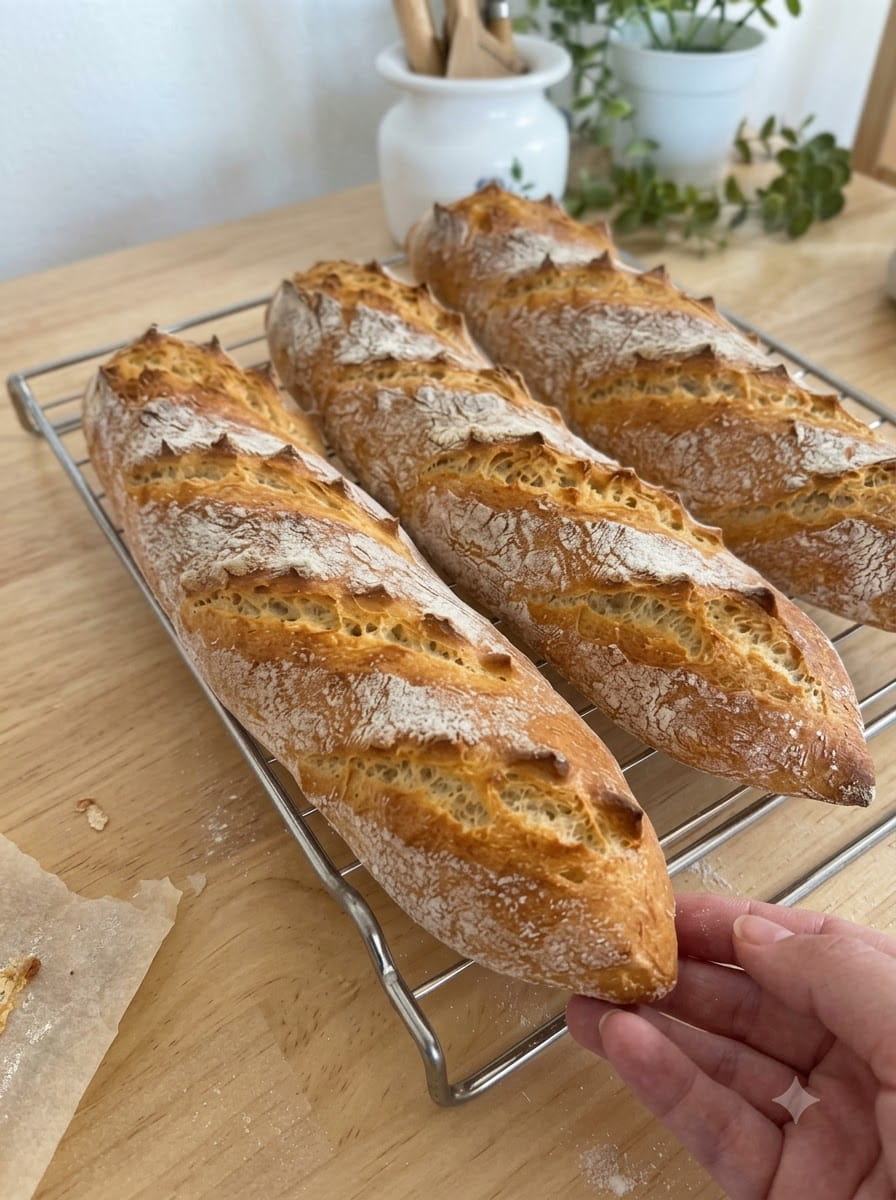
Fresh, crusty, and golden on the outside with a soft, airy center, these homemade baguettes bring a little French bakery magic into your kitchen. Made with simple ingredients, this easy dough requires minimal handling and develops a beautiful texture through resting and folding. Enjoy these baguettes with butter, alongside soups, for sandwiches, or dipped into olive oil for a delicious homemade treat.
Baguettes have a reputation for being difficult, but the truth is that they depend more on time and technique than on special skill. This recipe uses just four ingredients: water, instant yeast, bread flour, and salt. There is no long kneading session. Instead, a series of gentle stretch-and-fold rounds builds the dough’s structure while you go about your day. With a hot oven and a little steam, you will pull out three crackling, golden loaves that look and taste like they came from a bakery.
In this guide, you will find the full recipe, a clear step-by-step walkthrough, tips for crust and crumb, a simple method for creating steam at home, troubleshooting help, serving ideas, storage advice, and answers to frequently asked questions about making baguettes at home.
Why You’ll Love These Homemade Baguettes
They use only four ingredients. Bread flour, water, instant yeast, and salt are all you need. No sugar, no oil, and no special ingredients.
The dough requires minimal handling. Instead of kneading for a long time, you gently stretch and fold the dough a few times, letting rest periods do most of the work.
They have a crisp, golden crust. A hot oven and a burst of steam create the crackly crust that baguettes are known for.
They have a soft, airy center. The high hydration of the dough creates a tender, open crumb with a pleasantly chewy bite.
They are versatile. Slice them for sandwiches, serve them with soup, toast them for bruschetta, or tear off pieces and dip them in olive oil.
They are a rewarding project. Making baguettes at home feels special. The sound of the crust crackling as it cools is part of the reward.
They make three loaves. The recipe yields three baguettes, which is great for sharing, serving at a dinner, or freezing for later.
What Is a Baguette?
A baguette is a long, thin loaf of French bread, famous for its crisp crust and soft, airy interior. Traditional baguettes are made from just flour, water, yeast, and salt, which is exactly the formula used in this recipe. The signature look comes from the long, slender shape and the diagonal slashes cut across the top before baking. As the loaf bakes, those slashes open up and form the characteristic ridges, often called “ears.”
Because the ingredient list is so short, the quality of the bread depends on the details: how long the dough rests, how gently it is handled, how it is shaped, and how it is baked. The good news is that all of these steps are simple, and this recipe breaks them down so you can follow along.
Ingredients for Easy Homemade Baguettes
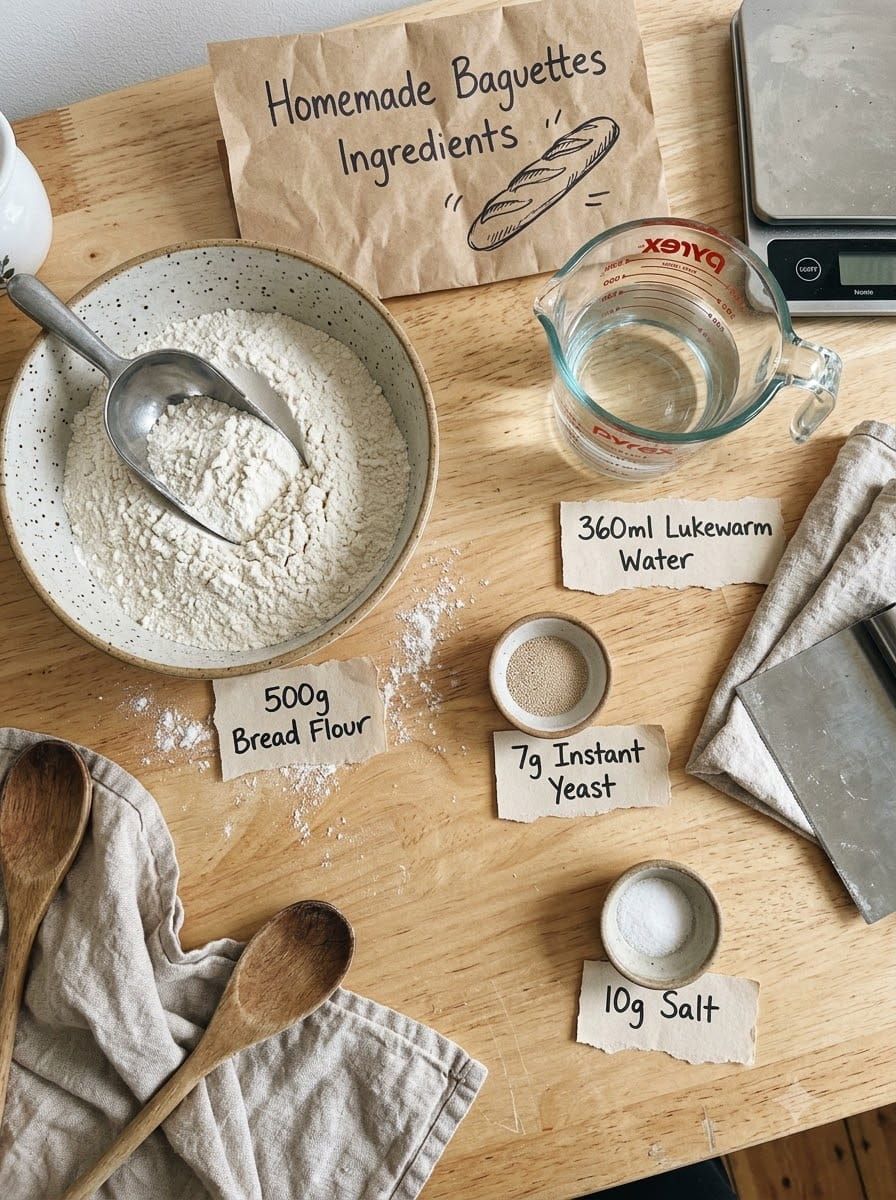
- 360 ml lukewarm water, 38 to 40°C
- 7 g instant yeast
- 500 g bread flour
- 10 g salt
You will also need a little extra flour for dusting, and either a floured couche (a heavy linen cloth) or a parchment-lined baking tray. An oven-safe metal pan is needed for creating steam.
A Closer Look at the Ingredients
Lukewarm water. The water should be lukewarm, between 38 and 40°C (about 100 to 104°F). This temperature wakes up the yeast without harming it. Water that is too hot can kill the yeast, while very cold water will slow it down.
Instant yeast. Instant yeast can be mixed straight into the water or flour without a separate proofing step. Seven grams is about one standard packet, or roughly 2¼ teaspoons. Check the date on the package, because old yeast is a common cause of dough that will not rise.
Bread flour. Bread flour has a higher protein content than all-purpose flour, which helps develop the gluten structure needed for a chewy, airy baguette. Using bread flour gives the best crumb and crust in this recipe.
Salt. Salt gives the bread flavor and strengthens the dough. Ten grams is about 1¾ teaspoons of fine salt, though measuring by weight is more accurate.
Why Weigh the Ingredients?
Bread recipes are most reliable when measured by weight. A cup of flour can vary significantly depending on how it is scooped, which changes the hydration of the dough. A kitchen scale takes the guesswork out and helps you repeat your results every time. This recipe is written in grams for that reason.
How to Make Easy Homemade Baguettes: Step-by-Step Instructions
Step 1: Combine the Water and Yeast
In a large bowl, combine the lukewarm water and instant yeast. Stir briefly to distribute the yeast.
Step 2: Mix the Dough
Add the bread flour and salt. Mix until a rough, sticky dough forms. Use a sturdy spoon, a dough whisk, or your hand. There is no need to knead at this stage. The dough will look shaggy and wet, and that is exactly right.
Step 3: Let the Dough Rest
Cover the bowl and let the dough rest for 20 minutes. This rest allows the flour to fully absorb the water and starts building gluten without any effort.
Step 4: Stretch and Fold
With damp hands, stretch and fold the dough over itself from all four sides. To do this, grab one edge of the dough, gently stretch it upward, and fold it over the center. Turn the bowl and repeat with the remaining sides. Cover and rest for another 20 minutes. Repeat this process two more times, for a total of three rounds of stretch and fold.
Damp hands prevent the sticky dough from clinging to your fingers. Each round of folding makes the dough smoother, stronger, and more elastic.
Step 5: First Rise
Cover the dough and let it rise for 60 to 90 minutes, or until noticeably puffy and nearly doubled in size. The dough should feel airy and jiggle slightly when the bowl is moved.
Step 6: Divide the Dough
Transfer the dough to a lightly floured surface and divide it into three equal portions. Use a bench scraper or a knife, and handle the dough gently to preserve the air bubbles. If you have a scale, weigh the portions so they are the same size.
Step 7: Shape the Baguettes
Gently shape each portion into a rectangle, fold it lengthwise, seal the seam, and roll it into a baguette shape. To do this, pat the dough into a rough rectangle. Fold the top third toward the center and press to seal, then fold again and seal the seam firmly with the heel of your hand. Roll the dough gently outward with both hands, working from the center to the ends, until it reaches about 30 to 35 cm in length.
Step 8: Final Proof
Place the baguettes seam-side down on a floured couche or a parchment-lined baking tray. Cover and let rise for 30 to 45 minutes. If you are using a couche, pleat the cloth between the loaves to help them keep their shape. The loaves should look puffy and feel soft when gently pressed.
Step 9: Preheat the Oven and Prepare Steam
Preheat the oven to 475°F (245°C). Place an oven-safe metal pan on the lower rack to create steam. Do not use glass or ceramic for the steam pan, since sudden temperature changes can cause them to crack.
Step 10: Score the Loaves
Carefully score each baguette with three or four diagonal slashes using a sharp blade. A razor blade or a very sharp knife works best. Cut at a shallow angle, about 1 cm deep, and overlap the slashes slightly. Confident, quick cuts give the best results.
Step 11: Bake With Steam
Place the baguettes in the oven and carefully add hot water to the preheated steam pan. Close the oven door immediately. The steam keeps the surface of the dough soft during the first part of baking, which allows the loaves to expand fully before the crust sets. Be careful of the hot steam when pouring the water, and use oven mitts.
Step 12: Bake Until Golden
Bake for 20 to 25 minutes until deeply golden and crusty. Remove the steam pan after the first 10 minutes if safe to do so. This lets the crust dry out and crisp. The baguettes are done when they are a deep golden brown and sound hollow when tapped on the bottom.
Step 13: Cool
Transfer the baguettes to a wire rack and allow them to cool before slicing. Cooling lets the interior finish setting, and you may hear the crust crackle as it cools. Wait at least 20 to 30 minutes before cutting.
Helpful Tips for the Best Baguettes
Weigh your ingredients. Weighing the flour and water gives consistent results and makes it easier to adjust.
Keep your hands damp. A wet dough is sticky. Dip your hands in water as needed during folding, which is much easier than adding more flour.
Be gentle. Handle the dough as little as possible and avoid pressing out all of the air bubbles. The gas pockets create the airy crumb.
Use a hot oven. A fully preheated oven is essential for a crisp crust and good oven spring. Give it at least 20 to 30 minutes to heat.
Create steam. Steam is the secret to a shiny, crackly crust. The hot water pan method is simple and effective.
Score confidently. Quick, shallow, angled cuts open up nicely. Hesitant, deep cuts can drag and deflate the dough.
Use a baking stone or steel if you have one. Preheating a baking stone or steel gives the bottom of the loaves extra heat and a crisper base. A regular baking tray works too.
Do not overproof. If the shaped loaves are left too long, they may spread outward or collapse when scored. They should look puffy but still hold their shape.
Eat them fresh. Baguettes are best on the day they are baked, ideally within a few hours.
Troubleshooting Common Problems
The dough is too sticky to handle. This dough is meant to be wet and sticky. Use damp hands for folding and a lightly floured surface for shaping. Resist adding too much flour, because that will make the crumb tight.
The dough did not rise. The yeast may be old, or the water may have been too hot or too cold. Make sure the yeast is fresh and the water is lukewarm. A cool kitchen can also slow the rise, so give the dough more time in a warm place.
The baguettes are flat. They may have been overproofed, handled too roughly, or made with a dough that was too wet. Shape gently, avoid overproofing, and weigh your ingredients.
The crust is pale and soft. The oven may not have been hot enough, or there was not enough time in the oven. Preheat fully, bake until deeply golden, and make sure the steam pan is removed after the first 10 minutes so the crust can dry.
The crust is too thick or hard. The loaves may have baked too long, or too much steam was used. Check them toward the end of the baking window.
The slashes did not open. The blade may have been dull, or the loaves may have been overproofed. Use a very sharp blade and bake the loaves while they are puffy but not overly risen.
The crumb is dense. This can be caused by under-proofing, old yeast, or too much flour. Allow the dough to fully rise and measure the ingredients by weight.
The loaves stuck to the parchment or couche. Dust the surface generously with flour, and consider using a little rice flour for extra non-stick protection.
Delicious Ways to Serve Homemade Baguettes
With butter. A warm slice of baguette with creamy butter is simple and delicious.
With olive oil. Tear off a piece and dip it into good olive oil, perhaps with a pinch of salt, herbs, or balsamic vinegar.
As sandwiches. Slice a baguette lengthwise and fill it with ham and cheese, roast chicken, tomato and mozzarella, or your favorite fillings.
With soup. Serve warm slices alongside soup or stew for dipping.
Bruschetta and crostini. Slice, toast, and top with tomatoes, basil, and olive oil, or with cheese and cured meats.
Garlic bread. Slice a baguette, spread with garlic butter, and bake until golden.
With a cheese board. Baguette slices are a classic pairing for cheese, charcuterie, olives, and fruit.
French toast. Day-old baguette makes excellent French toast, holding its shape well in the custard.
Flavor Variations to Try
Once you are comfortable with the basic method, you can experiment with different flavors.
- Herb baguettes. Add a tablespoon of dried herbs, such as rosemary or thyme, to the flour.
- Garlic baguettes. Mix in minced roasted garlic for a savory loaf.
- Cheese baguettes. Fold in grated cheese, such as cheddar or Gruyère, during the last fold.
- Seeded baguettes. Brush the shaped loaves with water and sprinkle on sesame or poppy seeds before scoring.
- Whole wheat blend. Replace up to 100 grams of the bread flour with whole wheat flour for a nuttier flavor. You may need slightly more water.
- Smaller baguettes. Divide the dough into four or five smaller portions for petite baguettes, and reduce the baking time slightly.
Keep in mind that additions can change the dough’s hydration and bake time, so watch the loaves closely.
How to Store Homemade Baguettes
At room temperature. Baguettes are best eaten the day they are baked. To keep one for a day, store it in a paper bag or wrapped in a clean kitchen towel. Avoid plastic, which softens the crust.
In the refrigerator. Refrigeration speeds up staling, so it is generally not recommended for baguettes.
In the freezer. Cool the loaves completely, wrap them tightly, and freeze them. You can also slice them first. Thaw at room temperature, then refresh in a hot oven for a few minutes.
Reviving day-old baguettes. Run the loaf quickly under water, or sprinkle it lightly with water, then bake at 350°F (175°C) for about 5 to 10 minutes. The crust crisps up again, and the inside softens.
Using leftovers. Turn stale baguette into croutons, breadcrumbs, French toast, or bread pudding.
Are Homemade Baguettes Healthy?
Baguettes made at home contain only flour, water, yeast, and salt. There are no preservatives, dough conditioners, or added sugars, which makes them a simple, honest bread. They provide carbohydrates for energy and a modest amount of protein.
Because they are made with refined bread flour, they are not high in fiber. You can add some whole wheat flour for more fiber and flavor. Nutritional values depend on the slice size and your specific ingredients, so if you track nutrition closely, calculate it using your own products.
If you have food allergies, intolerances, or dietary restrictions, check your ingredient labels. Baguettes contain wheat and gluten.
Frequently Asked Questions
Can I use all-purpose flour instead of bread flour?
Yes, but the result will be slightly softer and less chewy, and the dough may need a little less water. Bread flour has more protein, which creates better structure, so it is recommended for the best results.
Can I use active dry yeast instead of instant yeast?
Yes. Active dry yeast should be dissolved in the lukewarm water and left for 5 to 10 minutes until foamy before adding the flour. You may need slightly more yeast, so use about 25 percent more by weight.
Do I need a baking stone?
No. A baking stone or steel helps give a crisper base, but a regular baking tray works well. Preheat the tray if you want a hotter surface.
What if I do not have a couche?
Use a parchment-lined baking tray. You can also use a clean, heavy kitchen towel dusted generously with flour and pleated between the loaves.
How do I make steam in a home oven?
Place a metal pan on the lower rack while the oven preheats. When you load the baguettes, pour hot water into the pan and close the door immediately. You can also spray the oven walls with water, though use caution.
Why is my dough so sticky?
The dough is intentionally wet. High hydration creates an open, airy crumb. Use damp hands during folding and a lightly floured surface during shaping.
Can I make the dough ahead of time?
Yes. After the stretch-and-fold steps, you can refrigerate the dough overnight for a slow rise, which improves flavor. Let it warm up slightly, then shape, proof, and bake as directed.
How do I know when the baguettes are done?
They should be deeply golden brown and sound hollow when tapped on the bottom. The internal temperature should be about 205°F (96°C).
Why did my baguettes not get an ear?
An ear forms when the scored slash opens during baking. It may not appear if the blade was dull, the cuts were too deep or too shallow, the dough was overproofed, or there was not enough steam.
Can I freeze baguettes?
Yes. Cool them fully, wrap them tightly, and freeze. Reheat in a hot oven for a few minutes to bring back the crisp crust.
How long do homemade baguettes stay fresh?
They are best on the day they are made. They can be kept for a day in a paper bag, then refreshed in the oven. For longer storage, freeze them.
Final Thoughts
These Easy Homemade Baguettes prove that you can bring a little French bakery magic into your own kitchen with only four simple ingredients. Through gentle stretching, folding, and resting, the dough develops a beautiful texture with very little effort, and a hot oven with steam turns it into a golden, crackly loaf with a soft, airy center.
The process is easy to follow: mix, rest, fold, rise, shape, proof, score, and bake. With practice, your shaping and scoring will improve, and each batch will look more like the bakery loaves you admire.
If you are ready to try something that feels special without being complicated, give these baguettes a try. Serve them with butter, dip them in olive oil, build a sandwich, or enjoy them with a warm bowl of soup, and savor the crunch of the first slice. 🥖✨
Print
Easy Homemade Baguettes
Ingredients
- 360 ml lukewarm water, 38 to 40°C
- 7 g instant yeast
- 500 g bread flour
- 10 g salt
You will also need a little extra flour for dusting, and either a floured couche (a heavy linen cloth) or a parchment-lined baking tray. An oven-safe metal pan is needed for creating steam.
Instructions
In a large bowl, combine the lukewarm water and instant yeast. Stir briefly to distribute the yeast.
Add the bread flour and salt. Mix until a rough, sticky dough forms. Use a sturdy spoon, a dough whisk, or your hand. There is no need to knead at this stage. The dough will look shaggy and wet, and that is exactly right.
Cover the bowl and let the dough rest for 20 minutes. This rest allows the flour to fully absorb the water and starts building gluten without any effort.
With damp hands, stretch and fold the dough over itself from all four sides. To do this, grab one edge of the dough, gently stretch it upward, and fold it over the center. Turn the bowl and repeat with the remaining sides. Cover and rest for another 20 minutes. Repeat this process two more times, for a total of three rounds of stretch and fold.
Damp hands prevent the sticky dough from clinging to your fingers. Each round of folding makes the dough smoother, stronger, and more elastic.
Cover the dough and let it rise for 60 to 90 minutes, or until noticeably puffy and nearly doubled in size. The dough should feel airy and jiggle slightly when the bowl is moved.
Transfer the dough to a lightly floured surface and divide it into three equal portions. Use a bench scraper or a knife, and handle the dough gently to preserve the air bubbles. If you have a scale, weigh the portions so they are the same size.
Gently shape each portion into a rectangle, fold it lengthwise, seal the seam, and roll it into a baguette shape. To do this, pat the dough into a rough rectangle. Fold the top third toward the center and press to seal, then fold again and seal the seam firmly with the heel of your hand. Roll the dough gently outward with both hands, working from the center to the ends, until it reaches about 30 to 35 cm in length.
Place the baguettes seam-side down on a floured couche or a parchment-lined baking tray. Cover and let rise for 30 to 45 minutes. If you are using a couche, pleat the cloth between the loaves to help them keep their shape. The loaves should look puffy and feel soft when gently pressed.
Preheat the oven to 475°F (245°C). Place an oven-safe metal pan on the lower rack to create steam. Do not use glass or ceramic for the steam pan, since sudden temperature changes can cause them to crack.
Carefully score each baguette with three or four diagonal slashes using a sharp blade. A razor blade or a very sharp knife works best. Cut at a shallow angle, about 1 cm deep, and overlap the slashes slightly. Confident, quick cuts give the best results.
Place the baguettes in the oven and carefully add hot water to the preheated steam pan. Close the oven door immediately. The steam keeps the surface of the dough soft during the first part of baking, which allows the loaves to expand fully before the crust sets. Be careful of the hot steam when pouring the water, and use oven mitts.
Bake for 20 to 25 minutes until deeply golden and crusty. Remove the steam pan after the first 10 minutes if safe to do so. This lets the crust dry out and crisp. The baguettes are done when they are a deep golden brown and sound hollow when tapped on the bottom.
Transfer the baguettes to a wire rack and allow them to cool before slicing. Cooling lets the interior finish setting, and you may hear the crust crackle as it cools. Wait at least 20 to 30 minutes before cutting.