
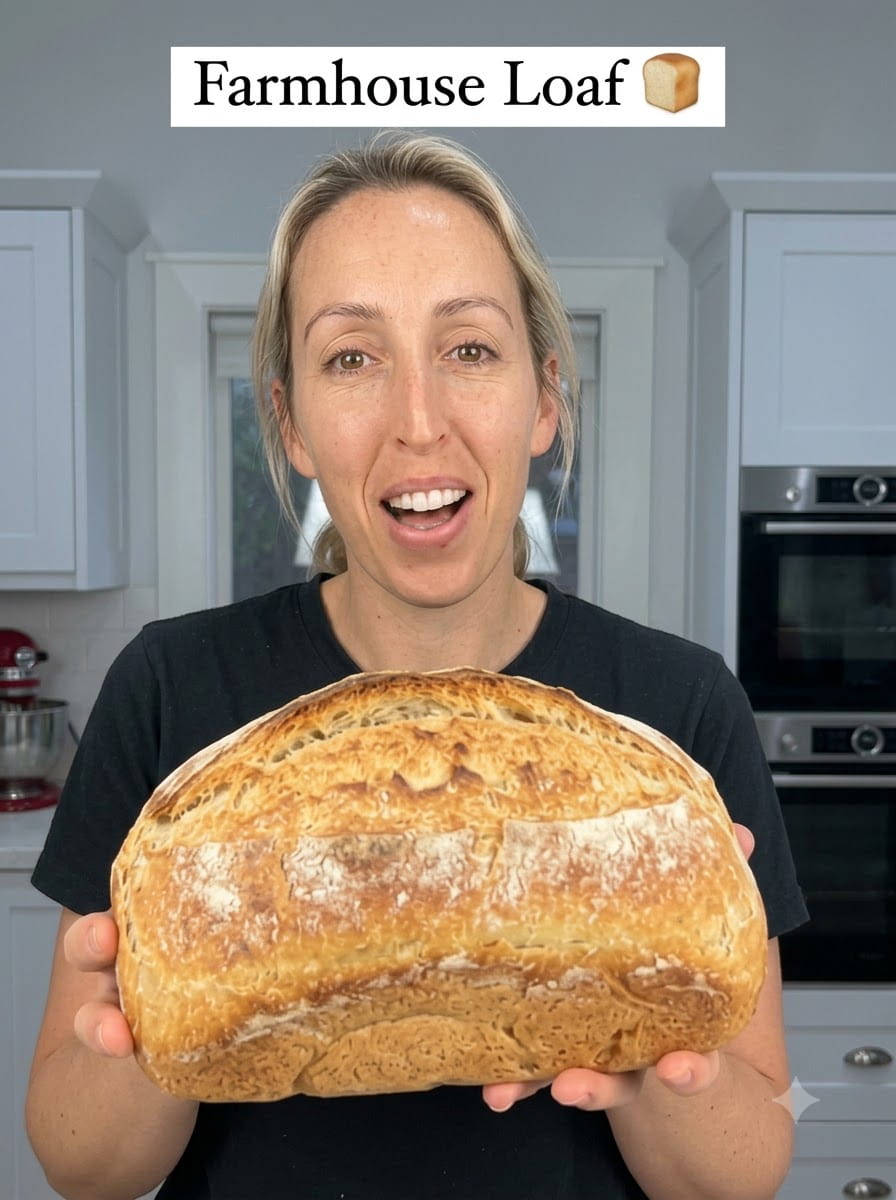
Farmhouse Loaf: An Easy Homemade Country Bread With a Golden Crust 🍞🏡
This homemade Farmhouse Loaf is everything you love about traditional country bread: a golden, crusty exterior, a soft and fluffy center, and that comforting homemade flavor that makes every slice irresistible. Made with simple pantry ingredients, this rustic loaf is perfect for breakfast toast, hearty sandwiches, or serving warm with butter alongside your favorite soups and family dinners. Fresh from the oven, it brings the cozy taste of farmhouse baking right into your kitchen.
Few things are as satisfying as pulling a golden loaf out of your own oven. The smell alone, warm, yeasty, and slightly sweet, is enough to make any kitchen feel like home. This farmhouse bread recipe uses just six basic ingredients: flour, water, yeast, sugar, salt, and olive oil. There are no special tools, no starter to feed, and no complicated shaping. If you have never baked bread before, this is a wonderful place to begin.
In this guide, you will find the full recipe, a detailed step-by-step walkthrough, tips for a soft crumb and a golden crust, troubleshooting advice, serving ideas, variations, storage and freezing instructions, and answers to frequently asked questions about making farmhouse bread at home.
Why You’ll Love This Farmhouse Loaf
It uses simple pantry ingredients. All-purpose flour, warm water, active dry yeast, sugar, salt, and olive oil are all you need. Most kitchens already have everything on hand.
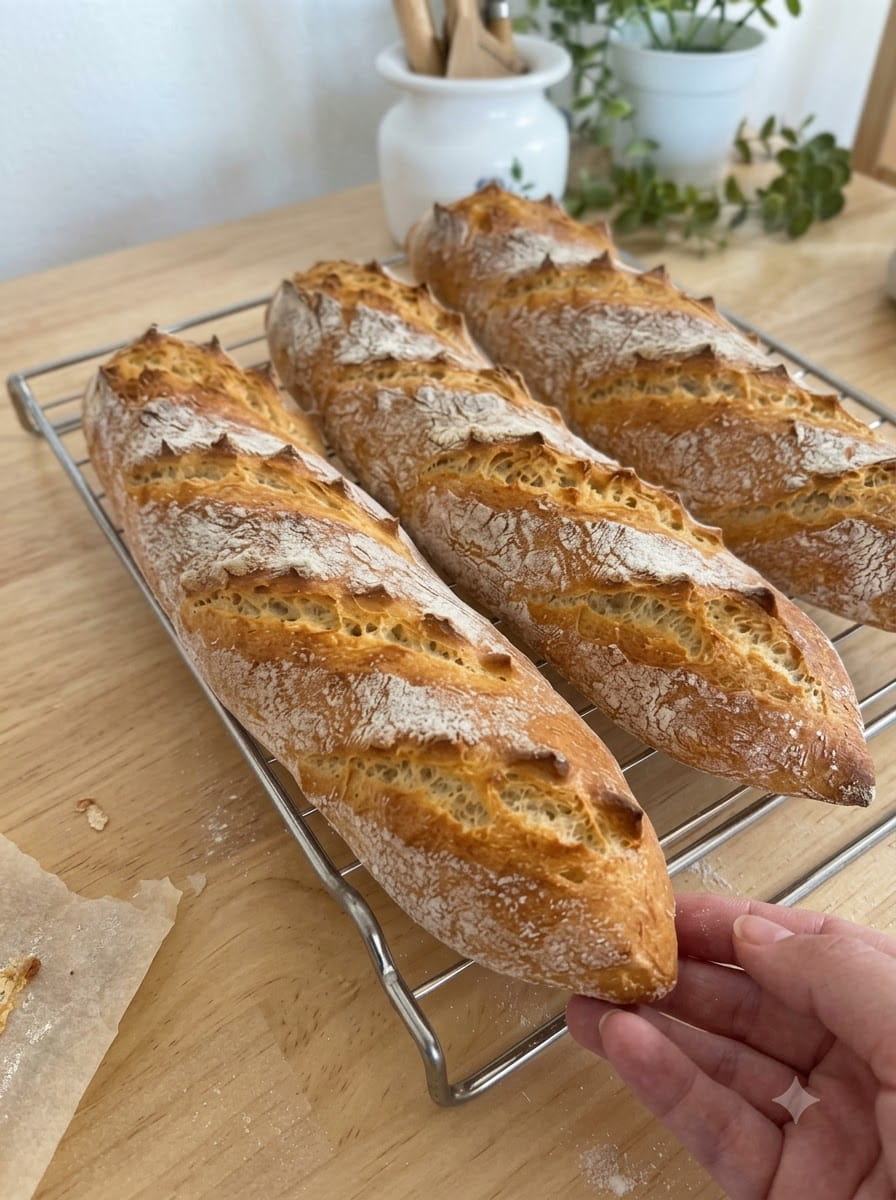
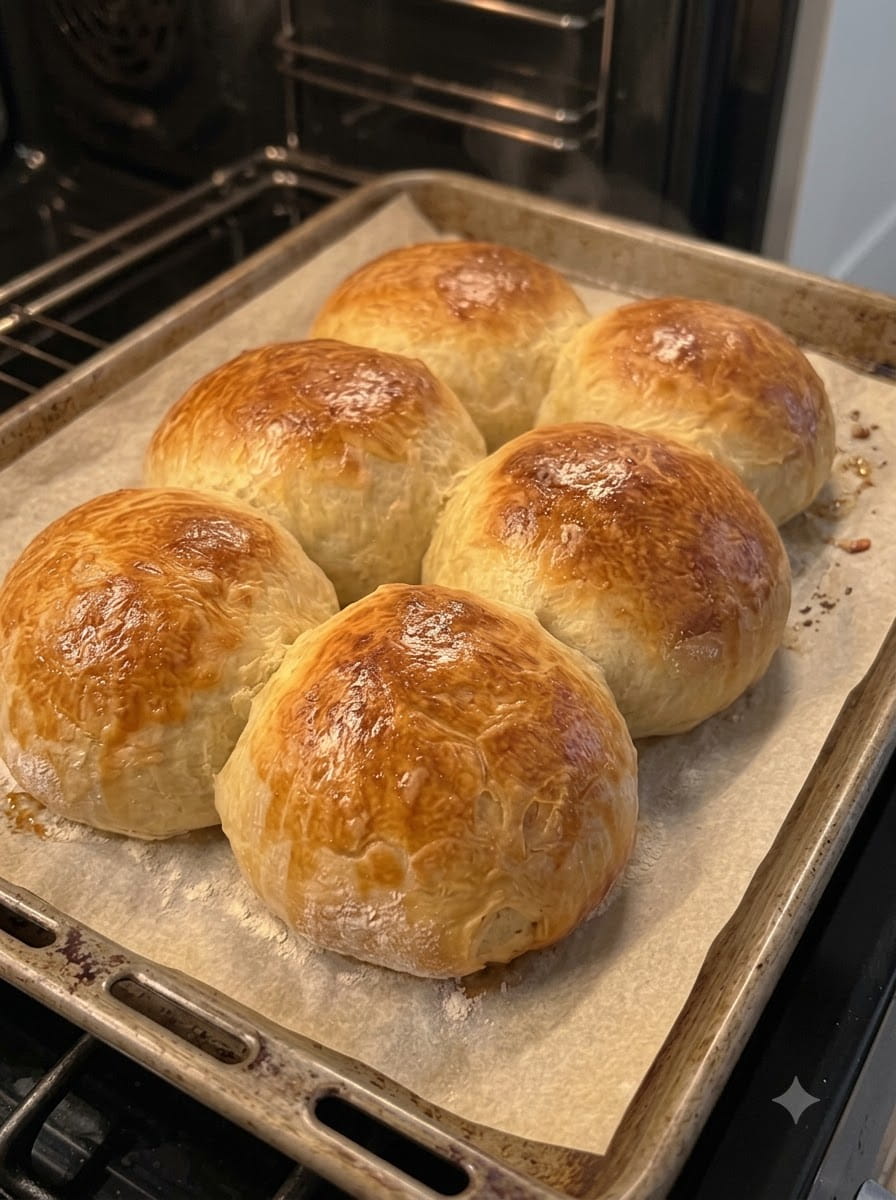
It has a golden, crusty exterior. The crust turns beautifully browned in the oven, with a slight crispness that gives each slice a satisfying bite.
It is soft and fluffy inside. The crumb is tender and light, which makes it ideal for sandwiches, toast, and dipping.
It is wonderfully versatile. Serve it with butter and jam, pile it with sandwich fillings, toast it for breakfast, or use it to soak up soup and stew.
It is beginner friendly. The dough is straightforward to mix and knead, and the bread is baked in a standard loaf pan, which helps it hold its shape.
It beats store-bought. Homemade bread has a fresher flavor and a softer texture, and it contains only the ingredients you choose.
It makes the house smell amazing. The aroma of baking bread is a bonus that no store-bought loaf can offer.
What Is Farmhouse Bread?
Farmhouse bread is a classic, traditional style of loaf associated with country baking. It is typically made with basic ingredients, shaped by hand, and baked until golden brown. The result is a soft, slightly chewy interior with a firm, golden crust, and a simple flavor that works with nearly any meal.
This version is made with all-purpose flour and a small amount of sugar and olive oil. The sugar feeds the yeast and adds a hint of sweetness, while the olive oil enriches the dough and keeps the crumb soft. The loaf is baked in a loaf pan, which gives it a neat, even shape that slices well for sandwiches and toast.
Ingredients for Farmhouse Loaf
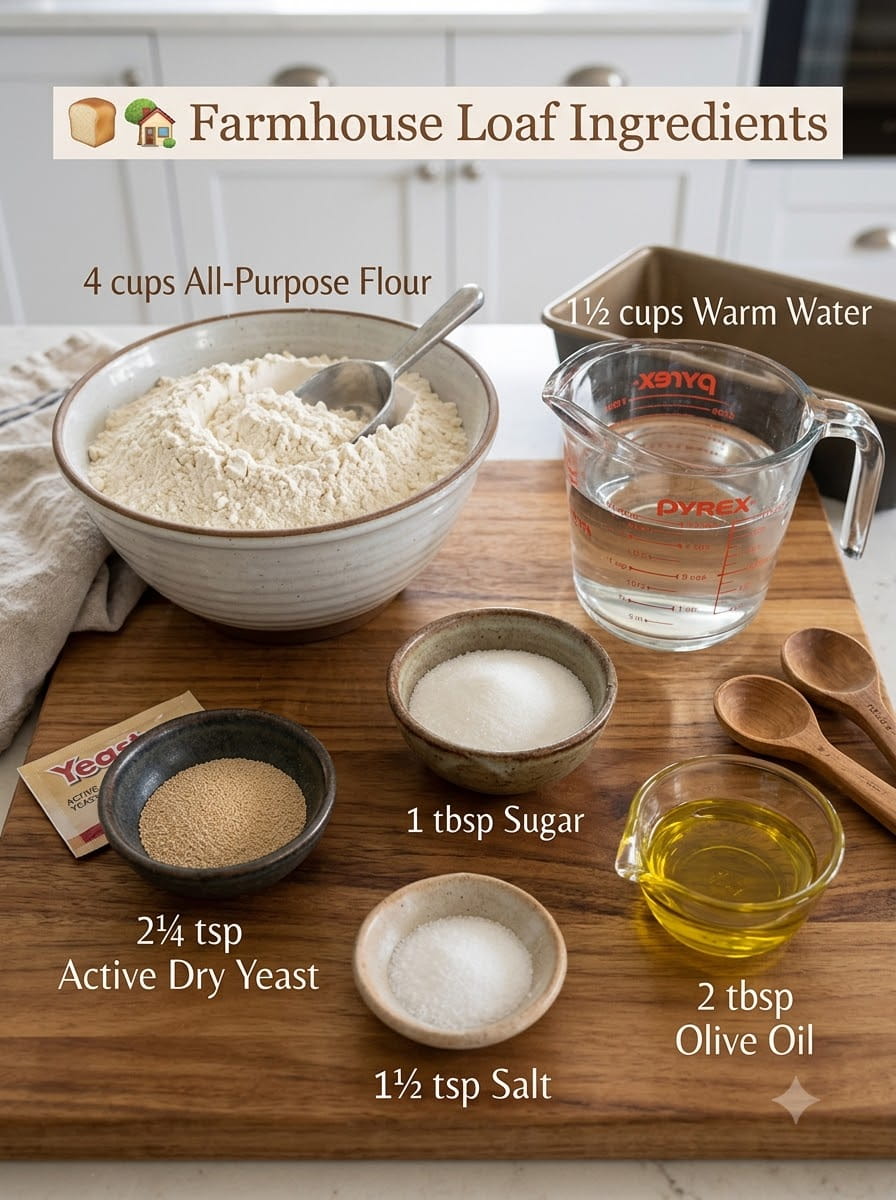
- 4 cups all-purpose flour
- 1½ cups warm water
- 2¼ teaspoons active dry yeast
- 1 tablespoon sugar
- 1½ teaspoons salt
- 2 tablespoons olive oil
You will also need a little extra oil or butter for greasing the bowl and the loaf pan.
A Closer Look at the Ingredients
All-purpose flour. All-purpose flour has a moderate protein content that makes it a reliable choice for a soft, tender loaf. Bread flour can be used if you prefer a chewier texture, though you may need slightly more water.
Warm water. The water should be warm, not hot. Aim for roughly 105°F to 110°F (about 40°C to 43°C), which feels comfortably warm to the touch. Water that is too hot can kill the yeast, while water that is too cool will make it slow to activate.
Active dry yeast. Yeast is what makes the bread rise. A standard packet contains about 2¼ teaspoons, which is the amount used here. Check the expiration date, because old yeast may not activate properly.
Sugar. One tablespoon of sugar gives the yeast something to feed on, helping it become foamy and active. It also adds a very slight sweetness and helps the crust brown.
Salt. Salt adds flavor and also helps control the yeast, giving the dough better structure. Without it, the bread tastes flat.
Olive oil. Olive oil adds richness, softens the crumb, and helps the bread stay fresh a little longer.
How to Make Farmhouse Loaf: Step-by-Step Instructions
Step 1: Activate the Yeast
In a large bowl, combine the warm water, sugar, and yeast. Let it stand for 5 to 10 minutes until foamy. The foam on top is a sign that the yeast is alive and active. If nothing happens after 10 minutes, the yeast may be old or the water may have been too hot or too cold, so it is best to start again with fresh yeast.
Step 2: Mix the Dough
Add the flour, salt, and olive oil to the yeast mixture. Mix until a rough dough forms. At this stage the dough will look shaggy and a bit sticky, which is normal.
Step 3: Knead the Dough
Knead the dough for 8 to 10 minutes until it is smooth and elastic. You can knead by hand on a lightly floured surface by pushing the dough away from you with the heel of your hand, folding it back over itself, and turning it a quarter turn. You can also use a stand mixer with a dough hook for about 6 to 8 minutes. The dough is ready when it feels smooth, springs back when poked, and is only slightly tacky. If it sticks heavily to your hands, add a small sprinkle of flour at a time.
Step 4: First Rise
Place the dough in a lightly greased bowl, turning it once to coat. Cover the bowl with a clean towel or plastic wrap and let it rise in a warm place for 1 to 1½ hours, or until doubled in size. A turned-off oven with the light on, or a warm spot away from drafts, works well.
Step 5: Shape the Loaf
Gently press down the dough to release the air. Turn it out onto a lightly floured surface and shape it into a loaf. To shape, pat the dough into a rectangle, roll it up tightly from the short end, and pinch the seam closed. Place it seam side down in a greased loaf pan.
Step 6: Second Rise
Cover and let the dough rise for another 30 to 45 minutes until puffy. The dough should rise to just above the rim of the pan. Avoid letting it over-proof, since a loaf that rises too far can collapse in the oven.
Step 7: Preheat the Oven
While the dough finishes rising, preheat the oven to 375°F (190°C).
Step 8: Bake
Bake for 30 to 35 minutes until the loaf is golden brown and sounds hollow when tapped on the bottom or top. If the top is browning too quickly, loosely tent it with foil for the remainder of the bake. For a fully baked loaf, the internal temperature should reach about 190°F to 200°F (88°C to 93°C).
Step 9: Cool
Remove the loaf from the pan and let it cool on a wire rack before slicing. Slicing while still hot can compress the crumb and make it gummy, so wait at least 30 to 45 minutes if you can.
Helpful Tips for the Best Farmhouse Loaf
Check your yeast. Always look for foam in the first step. It confirms that your yeast is active before you commit the rest of your ingredients.
Measure flour carefully. Spoon the flour into the measuring cup and level it off with a knife. Scooping directly from the bag packs in too much flour and can make the bread dry and dense.
Knead until smooth. Proper kneading builds gluten, which gives the loaf its structure and soft, fluffy texture. The dough should pass the windowpane test: a small piece should stretch thin enough to see light through it without tearing.
Use a warm spot for rising. Yeast likes warmth. If your kitchen is cool, the rise may take longer, so judge by the size of the dough rather than by the clock.
Do not skip the second rise. The second rise in the pan gives the loaf its light, airy crumb and a rounded top.
Cover the dough. Covering prevents the surface from drying out, which can form a skin and limit the rise.
Let the loaf cool. Patience pays off. A cooled loaf slices cleanly and has the best texture.
Brush with butter for a softer crust. For a softer, shinier crust, brush the top with melted butter as soon as the loaf comes out of the oven.
Troubleshooting Common Problems
The yeast did not foam. The yeast may be expired, or the water may have been too hot or too cold. Use fresh yeast and water at about 105°F to 110°F.
The dough did not rise. The room may be too cold, the yeast may be old, or the dough may need more time. Move the dough to a warmer spot and give it extra time.
The loaf is dense. This is often caused by too much flour, not enough kneading, or under-proofing. Measure carefully, knead until smooth, and allow the dough to fully double.
The loaf is dry. Too much flour or overbaking can cause this. Measure flour with the spoon-and-level method and check the loaf at the early end of the baking time.
The loaf collapsed. It may have over-proofed during the second rise. Next time, bake it as soon as it is puffy and just above the rim of the pan.
The crust is too dark. Tent the loaf with foil during the final minutes of baking, or lower the oven rack slightly.
The crust is too pale. Make sure your oven is fully preheated and bake for a few extra minutes, if needed.
The center is gummy. The loaf may have been underbaked or sliced too soon. Bake until it sounds hollow and cool it completely before slicing.
Delicious Ways to Serve Farmhouse Loaf
Butter and jam. A thick slice with melted butter and homemade jam is a classic.
Breakfast toast. Toast slices and serve with eggs, avocado, or nut butter.
Sandwiches. The soft, sturdy crumb is perfect for turkey, ham, chicken salad, grilled cheese, or a BLT.
With soup and stew. Serve warm slices alongside a bowl of tomato soup, chicken soup, or hearty stew for dipping.
French toast. Day-old slices of farmhouse bread make excellent French toast, since they soak up the custard without falling apart.
Garlic bread. Spread slices with garlic butter and bake until golden for a simple side dish.
Croutons and breadcrumbs. Cube leftover bread for croutons or pulse dried slices into breadcrumbs, so nothing goes to waste.
Bruschetta. Toast slices, rub with garlic, and top with tomato, basil, and olive oil.
Flavor Variations to Try
The base recipe is wonderful as written, and it also adapts easily to different flavors. Make small changes at first and adjust to taste.
- Herb loaf. Knead in a tablespoon or two of dried herbs, such as rosemary, thyme, or Italian seasoning.
- Garlic and cheese. Add minced garlic and a handful of shredded cheese to the dough for a savory loaf.
- Seeded top. Brush the top with water or egg wash and sprinkle on sesame, poppy, or sunflower seeds before baking.
- Whole wheat blend. Replace up to one cup of the all-purpose flour with whole wheat flour for a heartier loaf. You may need a little extra water.
- Honey version. Swap the sugar for honey for a slightly softer crumb and a hint of flavor.
- Butter instead of oil. Use melted butter in place of the olive oil for a richer taste.
- Rolls. Divide the dough into 10 to 12 portions, shape into rolls, and bake for about 18 to 22 minutes.
Remember that changes to the ingredients can affect the rise and bake time, so keep an eye on the dough.
How to Store Farmhouse Loaf
At room temperature. Once completely cooled, store the loaf in a bread box, a paper bag, or a loosely sealed plastic bag. It stays fresh for about 2 to 3 days. A plastic bag keeps the crumb soft but can soften the crust.
In the refrigerator. Refrigeration tends to dry out bread, so it is usually not recommended unless your kitchen is very warm or humid.
In the freezer. Slice the cooled loaf and freeze the slices in a freezer-safe bag with the air pressed out. Freezing individual slices lets you toast only what you need. Frozen bread keeps well for a few months.
Reviving stale bread. Warm slices in a toaster or oven for a few minutes, or sprinkle a whole loaf lightly with water and warm it in a 350°F (175°C) oven for about 10 minutes.
Is Homemade Farmhouse Bread Healthy?
Homemade bread lets you control what goes into your loaf. This recipe uses only six simple ingredients and contains no preservatives or additives. It provides carbohydrates for energy, and the olive oil adds a small amount of heart-friendly fat.
That said, this loaf is made with refined all-purpose flour, so it is not particularly high in fiber compared with whole grain breads. To boost fiber, you can swap part of the flour for whole wheat flour. Nutritional information varies with slice size and the specific ingredients you use, so if you track nutrition closely, calculate it using your own products.
If you have food allergies, intolerances, or specific dietary needs, check your ingredient labels. This bread contains wheat and gluten.
Frequently Asked Questions
Can I use instant yeast instead of active dry yeast?
Yes. Instant yeast can be mixed directly with the flour and does not need to be activated first, though you can still activate it in warm water. It is often slightly more potent, so the rise may be a little faster.
Can I make this farmhouse loaf in a stand mixer?
Yes. Use the dough hook and knead on low to medium speed for about 6 to 8 minutes, until the dough is smooth and elastic and pulls away from the sides of the bowl.
Can I use bread flour instead of all-purpose flour?
Yes. Bread flour has more protein, which gives the loaf a chewier, taller result. You may need a little more water, so add it gradually until the dough feels soft and slightly tacky.
How do I know when the dough has doubled?
The dough should look noticeably puffy and about twice its original size. You can also press a finger gently into the dough. If the indentation slowly springs back, it is ready.
What size loaf pan should I use?
A standard 9 x 5 inch (23 x 13 cm) loaf pan works well for this recipe. A slightly smaller pan will give a taller loaf, though the baking time may increase.
Can I let the dough rise overnight?
Yes. After kneading, you can cover the dough and refrigerate it overnight for a slow rise, which develops more flavor. Let it come to room temperature and finish rising before shaping and baking.
Why is my bread dense?
Dense bread is usually caused by old yeast, too much flour, too little kneading, or not allowing enough rise time. Check your yeast, measure carefully, and let the dough fully rise.
How do I get a softer crust?
Brush the loaf with melted butter right after baking and cover it with a towel while it cools. This traps steam and softens the crust.
How do I get a crustier loaf?
For a crispier crust, bake the loaf on a rack in a very hot, well-preheated oven, and leave it uncovered while it cools. Placing a small pan of hot water on the lower rack to create steam can also help.
Can I make this recipe without sugar?
The small amount of sugar helps feed the yeast and brown the crust. You can leave it out, but the yeast may be slightly slower and the crust a little paler.
Can I freeze the dough?
Yes. After shaping the loaf, you can wrap it tightly and freeze it, though results are best if the yeast is increased slightly. Thaw it in the refrigerator overnight, let it rise until puffy, and bake as directed.
How long does homemade bread last?
At room temperature, this loaf will stay fresh for about 2 to 3 days. For longer storage, slice and freeze it.
Final Thoughts
This homemade Farmhouse Loaf captures everything wonderful about traditional country bread: a golden, crusty exterior, a soft and fluffy center, and the comforting flavor of something baked from scratch. With just flour, warm water, yeast, sugar, salt, and olive oil, you can create a beautiful loaf that is perfect for toast, sandwiches, and serving alongside a warm family meal.
The method is easy to follow: activate the yeast, mix and knead the dough, let it rise, shape it, let it rise again, and bake until golden. With a little patience and a few simple tips, you will have a loaf that rivals any bakery, right from your own kitchen.
If you are looking for a classic, reliable bread recipe that fills your home with the cozy aroma of fresh baking, give this farmhouse loaf a try. Slice it, spread it with butter or jam, and enjoy every bite of your homemade country bread. 🍞✨
Print
Farmhouse Loaf
Ingredients
- 4 cups all-purpose flour
- 1½ cups warm water
- 2¼ teaspoons active dry yeast
- 1 tablespoon sugar
- 1½ teaspoons salt
- 2 tablespoons olive oil
You will also need a little extra oil or butter for greasing the bowl and the loaf pan.
Instructions
In a large bowl, combine the warm water, sugar, and yeast. Let it stand for 5 to 10 minutes until foamy. The foam on top is a sign that the yeast is alive and active. If nothing happens after 10 minutes, the yeast may be old or the water may have been too hot or too cold, so it is best to start again with fresh yeast.
Add the flour, salt, and olive oil to the yeast mixture. Mix until a rough dough forms. At this stage the dough will look shaggy and a bit sticky, which is normal.
Knead the dough for 8 to 10 minutes until it is smooth and elastic. You can knead by hand on a lightly floured surface by pushing the dough away from you with the heel of your hand, folding it back over itself, and turning it a quarter turn. You can also use a stand mixer with a dough hook for about 6 to 8 minutes. The dough is ready when it feels smooth, springs back when poked, and is only slightly tacky. If it sticks heavily to your hands, add a small sprinkle of flour at a time.
Place the dough in a lightly greased bowl, turning it once to coat. Cover the bowl with a clean towel or plastic wrap and let it rise in a warm place for 1 to 1½ hours, or until doubled in size. A turned-off oven with the light on, or a warm spot away from drafts, works well.
Gently press down the dough to release the air. Turn it out onto a lightly floured surface and shape it into a loaf. To shape, pat the dough into a rectangle, roll it up tightly from the short end, and pinch the seam closed. Place it seam side down in a greased loaf pan.
Cover and let the dough rise for another 30 to 45 minutes until puffy. The dough should rise to just above the rim of the pan. Avoid letting it over-proof, since a loaf that rises too far can collapse in the oven.
While the dough finishes rising, preheat the oven to 375°F (190°C).
Bake for 30 to 35 minutes until the loaf is golden brown and sounds hollow when tapped on the bottom or top. If the top is browning too quickly, loosely tent it with foil for the remainder of the bake. For a fully baked loaf, the internal temperature should reach about 190°F to 200°F (88°C to 93°C).
Remove the loaf from the pan and let it cool on a wire rack before slicing. Slicing while still hot can compress the crumb and make it gummy, so wait at least 30 to 45 minutes if you can.