
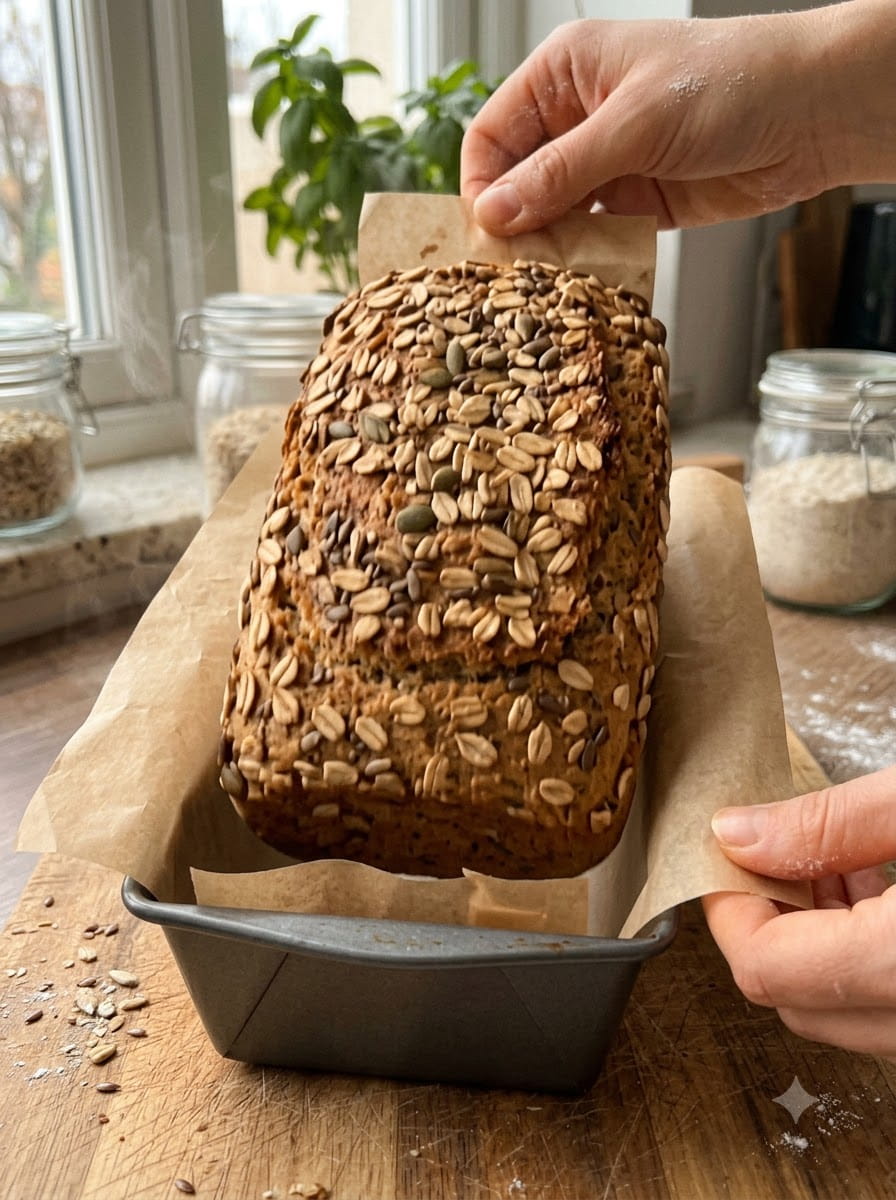
Flour-Free Oat & Chia Bread: A Simple 3-Ingredient Loaf for Breakfast and Snacks 🌾🍞✨
Sometimes the best recipes are the shortest ones. This flour-free oat and chia bread has just three ingredients: rolled oats, chia seeds, and eggs. There is no wheat flour, no yeast, no butter, and no long list of pantry items. It is soft, hearty, and naturally flour-free, and it makes a wholesome breakfast or a satisfying snack, with a tender center, a golden crust, and a nutty oat flavor.
You grind the oats into flour, stir in the chia seeds and eggs, let the mixture rest for 10 minutes, and bake it in a small loaf pan. Slice it, toast it, and top it with avocado, nut butter, or your favorite spread. In this guide, you’ll find the full recipe, a clear step-by-step walkthrough, an honest look at what texture to expect from a recipe this minimal, ingredient notes, tips, troubleshooting, optional variations, serving ideas, storage advice, and answers to common questions about oat and chia bread.
What Is Flour-Free Oat & Chia Bread?
Flour-free oat and chia bread is a dense, wholesome loaf made without any store-bought flour. Instead, you make your own flour by grinding rolled oats in a blender or food processor until fine. The chia seeds and eggs do the work of binding everything together. Chia seeds absorb moisture and form a gel-like coating as they sit, which thickens the mixture and helps hold the loaf together. The eggs add structure, richness, and moisture, and they set as the loaf bakes.
Because the recipe has only three ingredients, it is closer in texture to a hearty, moist oat loaf than to a light, airy sandwich bread. It does not contain yeast or a leavening agent, so it won’t rise dramatically in the oven. What you get instead is a tender, sliceable, nutty loaf that toasts beautifully and holds up to toppings. If you like simple, whole-food recipes with very short ingredient lists, this one is for you.
Why You’ll Love This Recipe
Only three ingredients. Rolled oats, chia seeds, and eggs are all you need.
Naturally flour-free. There’s no wheat flour. You make your own oat flour in seconds.
No yeast and no rising. There’s no proofing, no kneading, and no waiting for dough to rise. The only wait is a 10-minute rest.
Quick and easy. Mixing takes just a few minutes, and the oven does the rest.
Wholesome and hearty. Oats and chia seeds bring fiber, and the eggs add protein, so a slice is filling.
Versatile. Serve it for breakfast, as a snack, or alongside soups and salads.
Budget friendly. The ingredients are inexpensive and easy to find.
Great for toasting. A slice crisps up beautifully and holds spreads well.
Easy to customize. Once you’ve made the base loaf, you can build on it with optional add-ins.
Ingredients You’ll Need
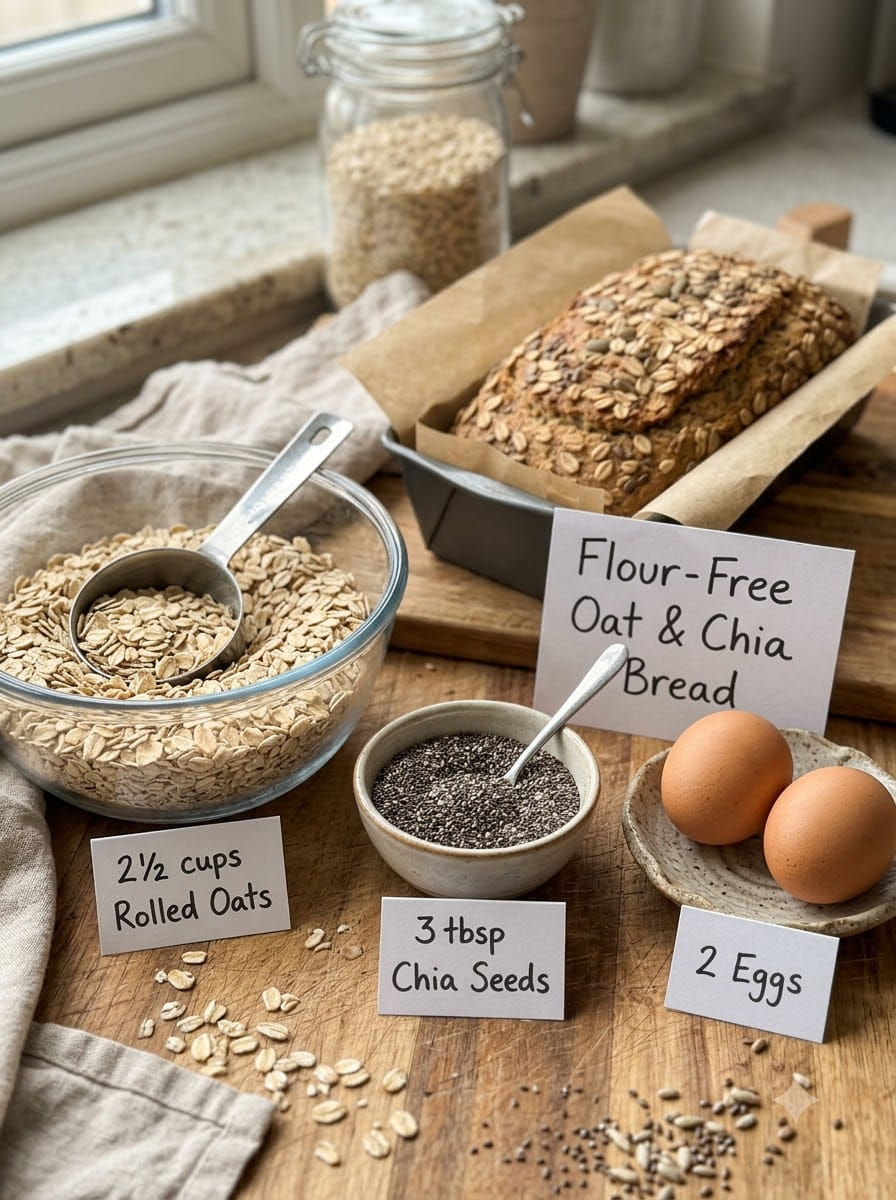
- 2 1/2 cups (225 g) rolled oats
- 3 tablespoons chia seeds
- 2 large eggs
You will also need a blender or food processor, a mixing bowl, a small loaf pan, and parchment paper. Extra oats or seeds for sprinkling on top are optional.
Ingredient Notes and Substitutions
With such a short ingredient list, each one matters. Here is what to know about each.
Rolled Oats
Rolled oats, also called old-fashioned oats, are the base of the loaf. When you grind them in a blender or food processor, they break down into a soft, fine oat flour. The recipe calls for 2 1/2 cups, which is about 225 grams. If you can, weigh the oats on a kitchen scale for the most consistent results, since a cup of loosely packed oats can weigh differently from a cup of tightly packed ones.
Quick oats can work, since they are already cut smaller and grind to flour even faster, but they can absorb moisture differently, so the loaf may turn out slightly drier or more crumbly. Steel-cut oats are too hard and dense for this recipe. Instant flavored oatmeal packets are not suitable, since they contain added sugar and flavoring.
Oats are naturally gluten-free, but they are often processed alongside wheat, barley, or rye, which can cause cross-contamination. If you need to avoid gluten for medical reasons, look for oats labeled certified gluten-free.
Chia Seeds
Chia seeds are the key binder in this loaf. Three tablespoons of chia seeds absorb liquid from the eggs and form a thick gel, which helps hold the loaf together. They also add fiber, healthy fats, and a mild, nutty flavor, along with tiny flecks of dark color throughout. Use whole chia seeds, either black or white, which work the same way. Make sure your chia seeds are fresh, since old seeds can taste stale.
If you don’t have chia seeds, ground flaxseed is the closest substitute, though the texture and flavor will be slightly different, and you may need to adjust the moisture.
Large Eggs
Two large eggs provide moisture, structure, and richness. Because there is no wheat gluten holding this loaf together, the eggs play a major role in binding and setting it. Use large eggs, ideally at room temperature, so they mix evenly into the oat flour. Egg substitutes such as flax eggs can change the texture considerably, so results will vary if you try them.
How to Make Flour-Free Oat & Chia Bread (Step by Step)
Follow these simple steps for a wholesome, sliceable loaf.
Step 1: Prepare the Oats
Preheat the oven to 350°F (175°C). Grind the rolled oats into a fine flour using a blender or food processor. This usually takes 30 to 60 seconds. Stop and scrape down the sides if needed, and blend until the oats look like a fine, powdery flour. A few small flecks of oat are fine.
Step 2: Mix the Ingredients
Transfer the ground oats to a bowl and stir in the chia seeds. Add the eggs and mix thoroughly until a thick dough forms. The mixture will be thick and sticky, closer to a dense dough than a pourable batter. Let the mixture rest for 10 minutes so the chia seeds can absorb moisture. This rest is important, since it lets the chia seeds swell and bind and gives the oat flour time to hydrate.
Step 3: Shape the Loaf
Spoon the mixture into a small parchment-lined loaf pan. Press it into the corners and smooth the top with a spatula or the back of a spoon, using slightly damp hands if it sticks. Sprinkle the top with extra oats or seeds if you’d like a rustic finish.
Step 4: Bake
Bake for 35 to 45 minutes, or until the loaf feels firm and the center is cooked through. Since there is no added liquid beyond the eggs, the loaf is dense, so allow extra time if needed. Check by pressing the center, which should feel firm and spring back, and by inserting a toothpick, which should come out clean or with just a few dry crumbs. If the top is browning too quickly, tent the loaf loosely with foil.
Step 5: Cool and Slice
Let the bread cool completely before slicing. This is especially important with an oat-based loaf, which continues to set as it cools. Slicing too soon can leave the center soft and crumbly. Once cool, slice with a sharp serrated knife and enjoy it toasted, topped with avocado, nut butter, or your favorite spread.
What Texture Should You Expect?
It helps to know what you’re getting into with a recipe this simple. Because the loaf has only three ingredients and no added leavening, it will not be light and fluffy like a yeast bread. As the recipe itself notes, the three listed ingredients alone may produce a dense loaf.
Here is what to expect:
Dense and hearty. The loaf is compact and filling, closer to a firm oat loaf than a soft sandwich bread.
Moist, tender center. The eggs and chia keep the inside moist, especially when the loaf is properly baked and cooled.
Golden, lightly crisp crust. The outside browns nicely and crisps further when toasted.
Nutty, wholesome flavor. The oats and chia give a gentle, earthy sweetness, and the loaf tastes mild enough for both sweet and savory toppings.
Best toasted. Toasting improves the texture and brings out the flavor.
If you prefer a lighter loaf, there are a few simple tweaks you can try, covered in the variations section below.
Tips for the Best Oat & Chia Bread
- Grind the oats finely. A finer flour gives a smoother, more tender crumb. Coarsely ground oats give a chewier, more rustic loaf.
- Don’t skip the 10-minute rest. It lets the chia seeds absorb moisture and bind the mixture.
- Use a small loaf pan. A small pan gives a taller, thicker loaf. A larger pan will produce a flatter loaf that bakes faster.
- Line the pan with parchment. A flour-free loaf can stick, and parchment makes it easy to lift out.
- Press the mixture firmly into the pan. This helps the loaf hold together and slice neatly.
- Check for doneness carefully. The loaf should feel firm, and the center should be cooked through.
- Cool completely. Cooling lets the loaf set so it slices cleanly.
- Use a serrated knife. It slices without crushing the crumb.
- Toast the slices. It gives the bread a crisp edge and brings out the nutty flavor.
- Weigh the oats. Measuring by weight gives the most consistent results.
Troubleshooting Common Problems
The loaf is too dense. This is expected to a degree, since the recipe has no leavening. Make sure the oats are ground finely, and avoid overbaking. For a lighter loaf, see the optional tweaks below.
The center is gummy or underbaked. The loaf may need more time, or it may have been sliced while warm. Bake a few minutes longer, and let it cool completely before slicing.
The loaf is dry or crumbly. It may have been overbaked, or the oats may have been very fine or very absorbent. Check the loaf earlier, press the mixture firmly into the pan, and slice with a serrated knife once cool.
The mixture seems too dry or stiff. Oat brands and egg sizes vary. Make sure you used large eggs and let the mixture rest for the full 10 minutes. If it still seems too stiff to press into the pan, you can add a teaspoon or two of water, though this goes beyond the base recipe.
The loaf stuck to the pan. Always line the pan with parchment paper, and let the loaf cool before removing it.
The top browned too quickly. Tent the loaf with foil, and check that your oven rack is in the center position.
The loaf crumbled when sliced. Cool it completely, use a sharp serrated knife, and cut slices of moderate thickness. Chilling the loaf for 30 minutes first can help.
The flavor is bland. The base loaf is mild by design. Toast it and use flavorful toppings, or try the optional add-ins below.
Optional Variations and Add-Ins
The base recipe is just three ingredients, and it works as written. If you’d like to experiment, here are a few optional ideas. These go beyond the original recipe, so treat them as starting points and expect slightly different results.
A pinch of salt. A small pinch brings out the nutty flavor of the oats.
A little baking powder. About 1/2 to 1 teaspoon may give a slightly lighter, higher loaf.
A splash of liquid. A tablespoon or two of milk, plant-based milk, or water can make a softer, moister crumb, especially if your mixture feels very stiff.
Sweet and cozy. A teaspoon of cinnamon and a tablespoon of honey or maple syrup make a lightly sweet breakfast loaf.
Seeded loaf. Fold in a tablespoon or two of sunflower, pumpkin, or sesame seeds.
Nut and fruit loaf. Add chopped walnuts, raisins, or dried cranberries.
Savory herb loaf. Mix in a teaspoon of dried Italian seasoning or rosemary and a pinch of garlic powder.
Cheesy loaf. Fold in a few tablespoons of shredded cheese.
Topping variety. Sprinkle the top with extra rolled oats, chia seeds, sesame seeds, or everything bagel seasoning before baking.
If you change the recipe, keep an eye on the bake time and make sure the center is cooked through.
How to Serve Oat & Chia Bread
This loaf is a simple base that goes with a wide range of toppings. Here are some ideas.
- Avocado toast. Top toasted slices with mashed avocado, salt, pepper, and a squeeze of lemon.
- Nut butter and fruit. Spread peanut butter or almond butter and add sliced banana or berries.
- Eggs. Top with a fried or poached egg for a protein-rich breakfast.
- Cream cheese and veggies. Add cream cheese, cucumber, tomato, and fresh herbs.
- Smoked salmon. Top with smoked salmon, capers, and a little dill.
- Hummus and vegetables. Spread hummus and layer with roasted peppers or sliced radish.
- Honey and butter. A classic, simple, comforting slice.
- Jam or fruit spread. Use your favorite fruit spread for a lightly sweet snack.
- Open-faced sandwiches. Top with turkey, cheese, and greens.
- Alongside soup. Serve warm slices with a bowl of vegetable or lentil soup.
- With yogurt. Enjoy a slice alongside Greek yogurt and berries.
- As croutons. Cube and toast stale slices for salads and soups.
Storage Information
Let the bread cool completely before storing it. This recipe doesn’t specify storage, so here are general guidelines. Because the loaf is moist and contains eggs, it is best stored in the refrigerator. Keep it in an airtight container for up to about 5 to 7 days. It keeps at room temperature for roughly a day if your kitchen is cool, but refrigerating is the safer choice.
Freezing: Slice the cooled loaf, place parchment paper between the slices, and freeze in an airtight bag for up to about 3 months. Toast slices straight from the freezer, or thaw them at room temperature.
Reheating: Toast slices until crisp and warm, which also improves the texture.
Signs of spoilage: An off or sour smell, mold, or a slimy texture mean the loaf should be discarded.
Nutrition Notes
This loaf is made from whole rolled oats, chia seeds, and eggs, so it provides fiber, plant-based omega-3 fats, and protein. The exact calories and nutrients per slice depend on the size of your pan and how many slices you cut. For precise numbers, enter your ingredients and slice count into a recipe nutrition calculator. If you manage a medical condition or follow a specific diet, check labels and talk with a healthcare professional about whether this recipe fits your needs.
Common Mistakes to Avoid
Skipping the rest time. The chia seeds need 10 minutes to absorb moisture and bind the mixture.
Under-grinding the oats. Large pieces make the loaf crumbly and uneven.
Slicing while warm. The loaf needs to cool and set first.
Overbaking. An overbaked loaf can turn dry.
Underbaking. The center must be cooked through, so check carefully.
Skipping the parchment. The loaf can stick to the pan.
Using the wrong pan size. A pan that’s too large makes a thin, flat loaf.
Expecting a fluffy, yeasty bread. This is a dense, hearty loaf by design.
Using steel-cut or flavored instant oats. They won’t work in this recipe.
Frequently Asked Questions
Is this bread really flour-free?
Yes. It contains no wheat flour or store-bought flour. You make your own oat flour by grinding rolled oats in a blender or food processor.
Is it gluten-free?
Oats are naturally gluten-free, but they are often cross-contaminated with gluten-containing grains during processing. If you need a gluten-free loaf, use oats labeled certified gluten-free.
Why is the loaf dense?
The recipe has just three ingredients and no leavening agent, so it won’t rise like a yeast bread. As the recipe notes, the three listed ingredients alone may produce a dense loaf. For a lighter result, try the optional tweaks, such as a little baking powder and a splash of liquid.
Do I need to grind the oats?
Yes. Grinding turns the oats into flour, which gives the loaf a tender, sliceable texture. Whole oats would make a much looser, chewier loaf that doesn’t hold together as well.
Can I use quick oats?
You can, though old-fashioned rolled oats are recommended. Quick oats may absorb moisture differently, so the loaf could be slightly drier.
Why do I have to let the mixture rest?
The 10-minute rest lets the chia seeds absorb moisture and swell, which thickens and binds the mixture.
Can I make it without eggs?
Eggs provide structure and moisture in this recipe, so substituting them changes the result. Egg replacers like flax eggs may produce a more fragile loaf.
Can I use ground chia seeds?
Whole chia seeds are recommended, since they form a gel as they sit. Ground chia works similarly but may change the texture slightly.
How do I know when the loaf is done?
It should feel firm, the top should be golden, and a toothpick inserted into the center should come out clean or with just a few dry crumbs.
Can I make it sweet?
Yes. Add a little cinnamon and honey or maple syrup. These are optional additions beyond the base recipe.
Can I make it savory?
Yes. Add herbs, garlic powder, or shredded cheese, and top with savory toppings.
How long does it last?
Store it in an airtight container in the refrigerator for up to about 5 to 7 days, or freeze slices for up to about 3 months.
Can I double the recipe?
Yes. Double the ingredients and use a larger loaf pan, and check for doneness a bit later, since a thicker loaf takes longer to cook through.
Can I make muffins instead?
You can portion the mixture into a lined muffin tin and bake at 350°F (175°C) until firm, checking at about 20 minutes. Treat this as an experiment, since the recipe was written for a loaf.
What’s the best way to eat it?
Toasted. A crisp, warm slice with avocado, nut butter, or eggs is hard to beat.
Final Thoughts
This flour-free oat and chia bread shows how far a few simple ingredients can go. With just rolled oats, chia seeds, and eggs, you can make a wholesome, hearty loaf that is naturally flour-free and ready for toasting, topping, and sharing. It’s not a fluffy sandwich loaf, and that’s part of its charm: it’s a rustic, nutty, filling bread that fits easily into a simple, whole-food kitchen.
Grind the oats, stir everything together, let it rest, and bake. Once it has cooled and set, slice it, toast it, and pile on your favorite toppings for an easy breakfast or snack.
Did you try this recipe? Leave a comment and rating below, and tell us how you like to enjoy your flour-free oat and chia bread. Don’t forget to save this recipe on Pinterest for later! 🌾🍞✨
Print
Flour-Free Oat & Chia Bread
Ingredients
- 2 1/2 cups (225 g) rolled oats
- 3 tablespoons chia seeds
- 2 large eggs
You will also need a blender or food processor, a mixing bowl, a small loaf pan, and parchment paper. Extra oats or seeds for sprinkling on top are optional.
Instructions
Follow these simple steps for a wholesome, sliceable loaf.
Preheat the oven to 350°F (175°C). Grind the rolled oats into a fine flour using a blender or food processor. This usually takes 30 to 60 seconds. Stop and scrape down the sides if needed, and blend until the oats look like a fine, powdery flour. A few small flecks of oat are fine.
Transfer the ground oats to a bowl and stir in the chia seeds. Add the eggs and mix thoroughly until a thick dough forms. The mixture will be thick and sticky, closer to a dense dough than a pourable batter. Let the mixture rest for 10 minutes so the chia seeds can absorb moisture. This rest is important, since it lets the chia seeds swell and bind and gives the oat flour time to hydrate.
Spoon the mixture into a small parchment-lined loaf pan. Press it into the corners and smooth the top with a spatula or the back of a spoon, using slightly damp hands if it sticks. Sprinkle the top with extra oats or seeds if you’d like a rustic finish.
Bake for 35 to 45 minutes, or until the loaf feels firm and the center is cooked through. Since there is no added liquid beyond the eggs, the loaf is dense, so allow extra time if needed. Check by pressing the center, which should feel firm and spring back, and by inserting a toothpick, which should come out clean or with just a few dry crumbs. If the top is browning too quickly, tent the loaf loosely with foil.
Let the bread cool completely before slicing. This is especially important with an oat-based loaf, which continues to set as it cools. Slicing too soon can leave the center soft and crumbly. Once cool, slice with a sharp serrated knife and enjoy it toasted, topped with avocado, nut butter, or your favorite spread.