
Italian Garden Antipasto Salad: Crisp, Colorful, Tangy, and Perfect for Make-Ahead 🥦🫒✨
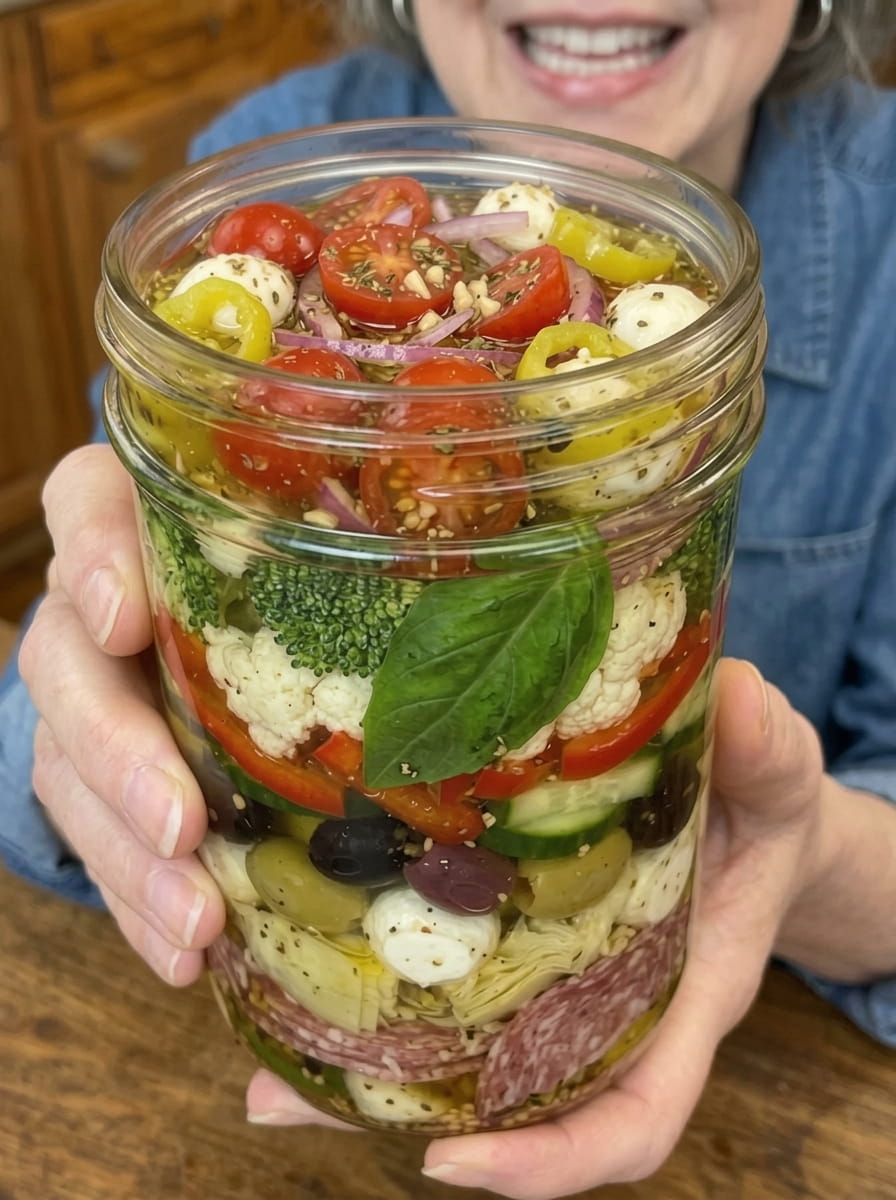
Some salads are an afterthought. This one is a showstopper. Crisp, colorful, tangy, and loaded with classic Italian flavors, this Italian garden antipasto salad is a fresh and satisfying make-ahead favorite. Crunchy broccoli, cauliflower, peppers, olives, and red onion are tossed with savory antipasto ingredients and a zesty Italian dressing for the perfect combination of fresh, briny, juicy, and tangy flavors in every bite.
It is perfect for picnics, BBQs, lunch, potlucks, appetizer boards, or an easy side dish served straight from the fridge, and it gets even more flavorful as it chills. There is no cooking involved, the dressing whisks together in a minute, and the whole thing can be made hours or even a day ahead. In this guide, you’ll find the full recipe, step-by-step instructions, ingredient notes and substitutions, tips for keeping the vegetables crisp, make-ahead advice, troubleshooting, variations, serving ideas, storage guidance, and answers to common questions.
What Is an Italian Garden Antipasto Salad?
“Antipasto” is the Italian word for the course served before a meal, traditionally a platter of cured meats, cheeses, olives, marinated vegetables, and pickled peppers. An antipasto salad takes those same flavors and tosses them together in one bowl with a bright, herby dressing. This “garden” version leans into the vegetables, with plenty of raw, crunchy broccoli and cauliflower, juicy cherry tomatoes, sweet red and yellow bell peppers, and sharp red onion, balanced by the salty, briny elements that make antipasto so memorable: green and black olives, sliced pepperoncini, and marinated artichoke hearts. Creamy mozzarella pearls add a soft, milky contrast, and fresh parsley lifts everything.
The dressing is a classic Italian-style vinaigrette made with extra virgin olive oil, red wine vinegar, fresh lemon juice, Italian seasoning, Dijon mustard, garlic, oregano, black pepper, salt, and a pinch of crushed red pepper flakes. It coats the vegetables, seasons them, and slightly softens the edges of the raw broccoli and cauliflower as the salad chills, so the texture is crisp-tender instead of harsh.
Why You’ll Love This Recipe
Packed with texture and color. Crunchy florets, juicy tomatoes, creamy cheese, and briny olives make every forkful interesting.
Make-ahead friendly. The salad improves as it sits, so you can prepare it ahead for parties and weeknight lunches.
No cooking required. Everything is raw or jarred, so there’s no stove and no oven.
Perfect for crowds. It is easy to scale up, travels well in a bowl or container, and holds up on a buffet table better than leafy salads.
Vegetable-forward. It’s a great way to eat more broccoli, cauliflower, and peppers without it tasting like “diet food.”
Big flavor from simple ingredients. The dressing uses pantry staples, and the antipasto ingredients come straight from jars and the olive bar.
Versatile. Serve it as a side, a lunch, a topping for sandwiches, or part of an appetizer spread.
Easy to customize. Swap in your favorite vegetables, cheeses, or meats to suit your taste.
Ingredients You’ll Need
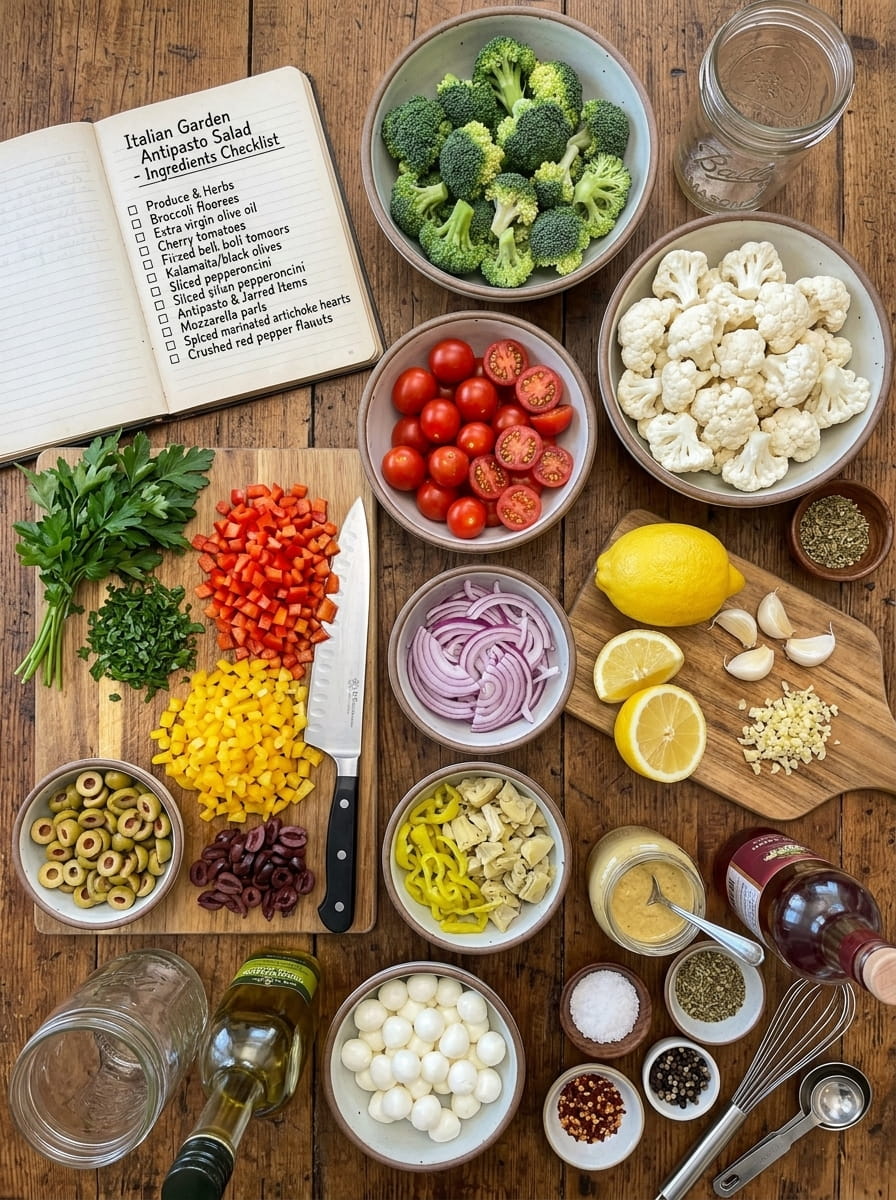
For the Salad
- 2 cups broccoli florets
- 2 cups cauliflower florets
- 1 cup cherry tomatoes, halved
- 1 cup red bell pepper, diced
- 1 cup yellow bell pepper, diced
- 1/2 cup red onion, thinly sliced
- 1/2 cup green olives, sliced
- 1/2 cup black olives, sliced
- 1/2 cup pepperoncini, sliced
- 1/2 cup marinated artichoke hearts, chopped
- 1/2 cup mozzarella pearls
- 1/4 cup fresh parsley, chopped
For the Italian Dressing
- 1/2 cup extra virgin olive oil
- 1/4 cup red wine vinegar
- 1 tablespoon fresh lemon juice
- 1 teaspoon Italian seasoning
- 1 teaspoon Dijon mustard
- 1 garlic clove, finely minced
- 1/2 teaspoon dried oregano
- 1/2 teaspoon black pepper
- 1/2 teaspoon salt
- 1/2 teaspoon crushed red pepper flakes
Ingredient Notes and Substitutions
Understanding the ingredients helps you build a balanced salad and make smart swaps.
Broccoli and Cauliflower Florets
Raw florets give the salad its signature crunch. Cut them into small, bite-sized pieces, about 1 inch or smaller, so they are easy to eat with a fork and absorb the dressing evenly. Choose firm heads with tight, compact florets and no yellowing or soft spots. The stems can be peeled and sliced thinly if you want to use them too. If you prefer a slightly softer texture, you can briefly blanch the florets in boiling water for about a minute, then plunge them into ice water, drain, and dry them completely before tossing. This step is optional, and the recipe works well with raw florets.
Cherry Tomatoes
Halved cherry tomatoes add juicy sweetness and color. Grape tomatoes work just as well. Tomatoes release juice as they sit in dressing, so for the best texture, you can add them closer to serving time if you’re making the salad far in advance.
Red and Yellow Bell Peppers
Sweet, crisp bell peppers add color and crunch. Dice them evenly so they match the size of the other vegetables. Orange bell peppers are a good substitute, and green bell peppers add a slightly more bitter, grassy note.
Red Onion
Thinly sliced red onion adds a sharp, savory bite. If raw onion is too strong for your taste, soak the slices in cold water for 10 minutes and drain before adding them to the salad, which mellows the flavor.
Green and Black Olives
Olives bring the briny, salty heart of antipasto. Use pitted olives, sliced, and drain them well. Kalamata olives are a great substitute for black olives, with a fruitier, richer flavor. Garlic-stuffed or pimento-stuffed green olives also work well.
Pepperoncini
Sliced pepperoncini add mild heat and tang. Drain them well, since their brine is very acidic and salty. Banana peppers are a good substitute.
Marinated Artichoke Hearts
Marinated artichoke hearts provide a tender, tangy, slightly nutty texture and a savory depth. Drain them well and chop them into bite-sized pieces. Because they are packed in oil or brine, they also add flavor to the salad as it chills.
Mozzarella Pearls
Mozzarella pearls are small, creamy balls of fresh mozzarella that soak up the dressing. Drain them well and pat them dry before adding. If you can only find a larger ball, cut it into small cubes. Provolone cubes, bocconcini, or feta are also good alternatives.
Fresh Parsley
Fresh flat-leaf parsley adds brightness and a clean, herbal flavor. Chop it just before using for the best flavor and color.
Extra Virgin Olive Oil
A good-quality extra virgin olive oil makes a noticeable difference, since it’s the main body of the dressing. The oil can solidify slightly when chilled, which is normal and will loosen as the salad sits at room temperature for a few minutes.
Red Wine Vinegar
Red wine vinegar gives the dressing its tangy, slightly fruity acidity and is the classic base for Italian vinaigrette. White wine vinegar is a good substitute, and balsamic vinegar will give a sweeter, darker dressing.
Fresh Lemon Juice
A tablespoon of fresh lemon juice brightens the dressing and adds a clean, citrusy note. Bottled juice works in a pinch but tastes flatter.
Italian Seasoning and Dried Oregano
Together these herbs create the unmistakable Italian flavor profile. Italian seasoning typically blends basil, oregano, thyme, and rosemary, and the extra oregano adds a pizzeria-style earthiness.
Dijon Mustard
Dijon is a natural emulsifier, helping the oil and vinegar stay blended, and it adds subtle tang and depth.
Garlic
A single finely minced clove gives the dressing savory punch without overpowering. For a milder flavor, grate the garlic on a fine grater or let it sit in the vinegar for a few minutes before whisking in the oil.
Salt, Black Pepper, and Red Pepper Flakes
Seasoning is important here, but remember that olives, pepperoncini, and artichokes are already salty. Start with the amounts in the recipe, then taste and adjust after the salad has chilled for an hour. The red pepper flakes add a gentle warmth you can increase or omit.
How to Make Italian Garden Antipasto Salad (Step by Step)
Follow these steps for a crisp, flavorful salad every time.
Step 1: Wash and Dry the Vegetables
Wash and thoroughly dry all the vegetables. Water clinging to the vegetables dilutes the dressing, so use a salad spinner or pat them dry with clean towels.
Step 2: Cut Everything to Bite Size
Cut the broccoli, cauliflower, peppers, onion, olives, pepperoncini, and artichoke hearts into bite-sized pieces. Uniform sizes make the salad easier to eat and help the dressing coat everything evenly.
Step 3: Combine the Salad Ingredients
Add the broccoli, cauliflower, cherry tomatoes, bell peppers, red onion, olives, pepperoncini, artichoke hearts, mozzarella pearls, and parsley to a large bowl.
Step 4: Whisk the Dressing
In a separate bowl or jar, whisk together the olive oil, red wine vinegar, lemon juice, Italian seasoning, Dijon mustard, garlic, oregano, black pepper, salt, and red pepper flakes. If you use a jar, close the lid tightly and shake it vigorously for 30 seconds until the dressing is creamy and emulsified.
Step 5: Dress the Salad
Pour the Italian dressing over the vegetables and antipasto ingredients.
Step 6: Toss Gently
Toss gently until everything is evenly coated with the dressing. Use a large spoon or two spatulas to avoid breaking the mozzarella pearls and artichokes.
Step 7: Chill
Cover and refrigerate for at least 1 hour to allow the flavors to develop.
Step 8: Chill Longer for Best Flavor
For the best flavor, chill for 2 to 4 hours before serving and toss once more before serving. The vegetables will soak up the dressing and the flavors will meld.
Step 9: Serve Cold
Serve cold as a side dish, lunch, picnic salad, BBQ accompaniment, or appetizer-board addition.
Tips for the Best Antipasto Salad
- Dry everything well. Wet vegetables water down the dressing.
- Cut pieces small and even. This makes the salad easier to eat and helps it marinate evenly.
- Drain the jarred ingredients. Olives, pepperoncini, and artichokes carry brine or oil that can make the salad too salty or greasy.
- Taste before serving. Chill, then taste and adjust with a splash of vinegar, a pinch of salt, or extra pepper.
- Whisk the dressing well. A properly emulsified dressing clings to the vegetables instead of pooling at the bottom.
- Add delicate ingredients late if needed. If you’re making the salad a day ahead, you can add the tomatoes, mozzarella, and parsley closer to serving for the freshest texture.
- Toss before serving. Dressing settles at the bottom, so give the salad a gentle toss each time you serve.
- Let it rest briefly at room temperature. If the oil firmed up in the fridge, let the salad sit for 10 minutes before serving.
- Use a large bowl. It makes tossing easier and prevents bruising the vegetables.
- Keep it cold at parties. Set the bowl in a larger bowl of ice for outdoor events.
Make-Ahead Tips
This is one of the best make-ahead salads you can make, because the vegetables benefit from time in the dressing.
Up to a few hours ahead. Combine everything and chill. This gives you the freshest texture, with crisp vegetables and bright flavor.
The day before. Prepare the salad and refrigerate. The vegetables will soften slightly and absorb more flavor. Toss and taste before serving.
Prep components separately. Chop the vegetables, whisk the dressing, and store them in separate containers. Combine just before serving for maximum crunch.
Keep the dressing on the side for transport. If you’re taking the salad to a picnic or potluck, pack the dressing in a jar and toss at the destination.
Since the salad contains fresh mozzarella and cut vegetables, keep it refrigerated until serving and don’t leave it at room temperature for extended periods. For outdoor events, serve it over ice or return it to a cooler between servings.
Troubleshooting Common Problems
The salad is watery. Tomatoes and wet vegetables release liquid. Dry the vegetables well, drain the jarred ingredients, and add the tomatoes closer to serving time.
The salad is too salty. Olives, pepperoncini, artichokes, and mozzarella are all salty. Rinse the jarred ingredients, reduce the salt in the dressing, and balance with a splash of lemon juice or a bit more olive oil.
The salad is too tangy. Add a little more olive oil or a pinch of sugar, or toss in extra mozzarella or vegetables.
The broccoli and cauliflower are too crunchy. Chill the salad longer, cut the florets smaller, or blanch them briefly next time.
The vegetables got soggy. The salad may have sat too long. Enjoy it within the recommended storage window and keep the dressing on the side if making it far ahead.
The dressing separated. Whisk or shake the dressing again before tossing. The mustard helps, but a quick re-emulsify keeps it creamy.
The olive oil looks solid. Olive oil firms up when cold. Let the salad sit at room temperature for 10 to 15 minutes and toss.
The onions are too strong. Soak the slices in cold water for 10 minutes before adding.
Flavor Variations to Try
Salami and Provolone Antipasto Salad. Add cubed salami, pepperoni, or soppressata and provolone for a heartier, meatier version.
Chickpea Antipasto Salad. Add a drained can of chickpeas for plant-based protein and extra substance.
Pasta Antipasto Salad. Toss with cooked and cooled rotini or penne for a more filling main dish.
Roasted Red Pepper Version. Replace some of the fresh bell pepper with sliced roasted red peppers for a smokier flavor.
Feta and Kalamata Version. Swap the mozzarella for feta and the black olives for Kalamata for a Mediterranean twist.
Zucchini and Carrot Addition. Add thinly sliced zucchini or shredded carrots for extra color and crunch.
Sun-Dried Tomato Version. Add chopped oil-packed sun-dried tomatoes for a sweet, chewy bite.
Fresh Basil Finish. Stir in torn fresh basil right before serving.
Parmesan Finish. Top with shaved or grated Parmesan.
Creamy Italian Version. Whisk a spoonful of mayonnaise or Greek yogurt into the dressing for a creamier coating.
How to Serve Italian Garden Antipasto Salad
This salad is versatile and ready for almost any occasion. Here are some of the best ways to serve it.
- As a side dish. Pair with grilled chicken, steak, burgers, or fish.
- For picnics and BBQs. It travels well and holds up better than leafy salads in warm weather.
- As a light lunch. Serve a generous scoop on its own, or with crusty bread.
- On a charcuterie or appetizer board. Spoon into a bowl alongside cured meats, cheeses, and crackers.
- At potlucks and buffets. It’s easy to serve and always colorful.
- Over greens. Spoon over arugula or romaine for a heartier green salad.
- In sandwiches and wraps. Chop finely and use as a tangy filling for subs or wraps.
- On crostini. Spoon a little onto toasted bread with a drizzle of the dressing.
- With pasta dishes. Serve alongside baked ziti, lasagna, or spaghetti and meatballs.
- For holiday gatherings. Its red, green, and white colors look festive on any table.
Storage Information
Store in an airtight container in the refrigerator for up to 4 days. Toss gently before serving to redistribute the dressing.
The texture is best in the first couple of days, when the vegetables are still crisp-tender. As time passes, the vegetables will soften slightly and the tomatoes will release more liquid. Use a clean utensil each time you serve, and keep the container sealed.
Signs of spoilage: An off or sour smell, slimy vegetables, mold, or an unusually watery or discolored salad mean it should be discarded.
Freezing: Freezing is not recommended, since the raw vegetables, tomatoes, and mozzarella lose their texture after thawing.
Nutrition Notes
This salad is vegetable-forward, with broccoli, cauliflower, peppers, and tomatoes forming most of the volume, plus olive oil, olives, and cheese for richness. It is also fairly high in sodium because of the olives, pepperoncini, artichokes, and cheese. The exact nutrition depends on the number of servings and the specific brands you use. For precise numbers, enter your ingredients and portion size into a recipe nutrition calculator.
Common Mistakes to Avoid
Skipping the drying step. Wet vegetables dilute the dressing.
Not draining jarred ingredients. Excess brine or oil can overpower the salad.
Cutting pieces too large. Large florets are hard to eat and don’t absorb the dressing well.
Over-salting the dressing. The antipasto ingredients are already salty.
Skipping the chill time. The salad needs at least an hour for the flavors to meld.
Forgetting to toss before serving. The dressing settles at the bottom of the bowl.
Leaving the salad out too long. Keep it cold, especially at outdoor events.
Storing too long. For the best texture, enjoy within the first few days.
Not tasting before serving. Adjusting the seasoning at the end makes a big difference.
Frequently Asked Questions
How long does this salad last in the fridge?
It keeps for up to 4 days in an airtight container in the refrigerator. For the best texture, enjoy it within the first couple of days.
Can I make it ahead of time?
Yes. It is an ideal make-ahead salad and gets more flavorful as it chills. Chill for at least 1 hour, and ideally 2 to 4 hours, before serving.
Do I need to cook the broccoli and cauliflower?
No. The recipe uses raw florets for a crisp, crunchy texture. If you prefer a softer bite, you can blanch them briefly, cool them in ice water, and dry them completely before adding.
Can I use bottled Italian dressing?
You can, but the homemade dressing is brighter and fresher, and it takes just a minute to whisk together.
Can I make it without cheese?
Yes. Leave out the mozzarella pearls for a dairy-free version, and consider adding extra olives or chickpeas.
Can I add meat?
Absolutely. Cubed salami, pepperoni, ham, or grilled chicken are all great additions.
Why is my salad watery?
Tomatoes and damp vegetables release liquid. Dry the vegetables well, drain the jarred items, and add the tomatoes closer to serving time.
Can I freeze it?
Freezing isn’t recommended because raw vegetables and fresh mozzarella lose their texture.
Can I make it vegan?
Yes. Omit the mozzarella or use a plant-based substitute, and double-check that your Dijon mustard and other ingredients are vegan.
What can I use instead of red wine vinegar?
White wine vinegar, apple cider vinegar, or balsamic vinegar are all good substitutes, with slightly different flavors.
Can I double the recipe?
Yes. Double all ingredients and use a very large bowl. Make the dressing in a larger jar and shake well.
What can I serve it with?
It pairs well with grilled meats, burgers, sandwiches, pasta dishes, and crusty bread, and it works beautifully on an appetizer board.
How can I make it spicier?
Add more red pepper flakes, extra pepperoncini, or sliced hot cherry peppers.
How do I keep the vegetables crisp?
Cut them small, dry them well, and don’t let the salad sit longer than recommended. For maximum crunch, add the dressing shortly before serving.
Can I use different vegetables?
Yes. Zucchini, carrots, celery, cucumbers, radishes, and green beans all work well.
Final Thoughts
This Italian garden antipasto salad delivers everything you want from a make-ahead dish: crisp, colorful vegetables, bold briny flavors, creamy mozzarella, and a bright, zesty Italian dressing that ties it all together. It’s easy to prepare, easy to scale, and even better after a few hours in the refrigerator.
Make a big bowl for your next picnic, BBQ, or potluck, give it time to chill, and watch it disappear. Once you’ve tried it, it’s likely to become your go-to salad for gatherings and weeknight lunches alike.
Did you try this recipe? Leave a comment and rating below, and tell us how you like to serve your Italian garden antipasto salad. Don’t forget to save this recipe on Pinterest for later! 🥦🫒✨
Print
Italian Garden Antipasto Salad
Ingredients
For the Salad
- 2 cups broccoli florets
- 2 cups cauliflower florets
- 1 cup cherry tomatoes, halved
- 1 cup red bell pepper, diced
- 1 cup yellow bell pepper, diced
- 1/2 cup red onion, thinly sliced
- 1/2 cup green olives, sliced
- 1/2 cup black olives, sliced
- 1/2 cup pepperoncini, sliced
- 1/2 cup marinated artichoke hearts, chopped
- 1/2 cup mozzarella pearls
- 1/4 cup fresh parsley, chopped
For the Italian Dressing
- 1/2 cup extra virgin olive oil
- 1/4 cup red wine vinegar
- 1 tablespoon fresh lemon juice
- 1 teaspoon Italian seasoning
- 1 teaspoon Dijon mustard
- 1 garlic clove, finely minced
- 1/2 teaspoon dried oregano
- 1/2 teaspoon black pepper
- 1/2 teaspoon salt
- 1/2 teaspoon crushed red pepper flakes
Instructions
Follow these steps for a crisp, flavorful salad every time.
Wash and thoroughly dry all the vegetables. Water clinging to the vegetables dilutes the dressing, so use a salad spinner or pat them dry with clean towels.
Cut the broccoli, cauliflower, peppers, onion, olives, pepperoncini, and artichoke hearts into bite-sized pieces. Uniform sizes make the salad easier to eat and help the dressing coat everything evenly.
Add the broccoli, cauliflower, cherry tomatoes, bell peppers, red onion, olives, pepperoncini, artichoke hearts, mozzarella pearls, and parsley to a large bowl.
In a separate bowl or jar, whisk together the olive oil, red wine vinegar, lemon juice, Italian seasoning, Dijon mustard, garlic, oregano, black pepper, salt, and red pepper flakes. If you use a jar, close the lid tightly and shake it vigorously for 30 seconds until the dressing is creamy and emulsified.
Pour the Italian dressing over the vegetables and antipasto ingredients.
Toss gently until everything is evenly coated with the dressing. Use a large spoon or two spatulas to avoid breaking the mozzarella pearls and artichokes.
Cover and refrigerate for at least 1 hour to allow the flavors to develop.
For the best flavor, chill for 2 to 4 hours before serving and toss once more before serving. The vegetables will soak up the dressing and the flavors will meld.
Serve cold as a side dish, lunch, picnic salad, BBQ accompaniment, or appetizer-board addition.