
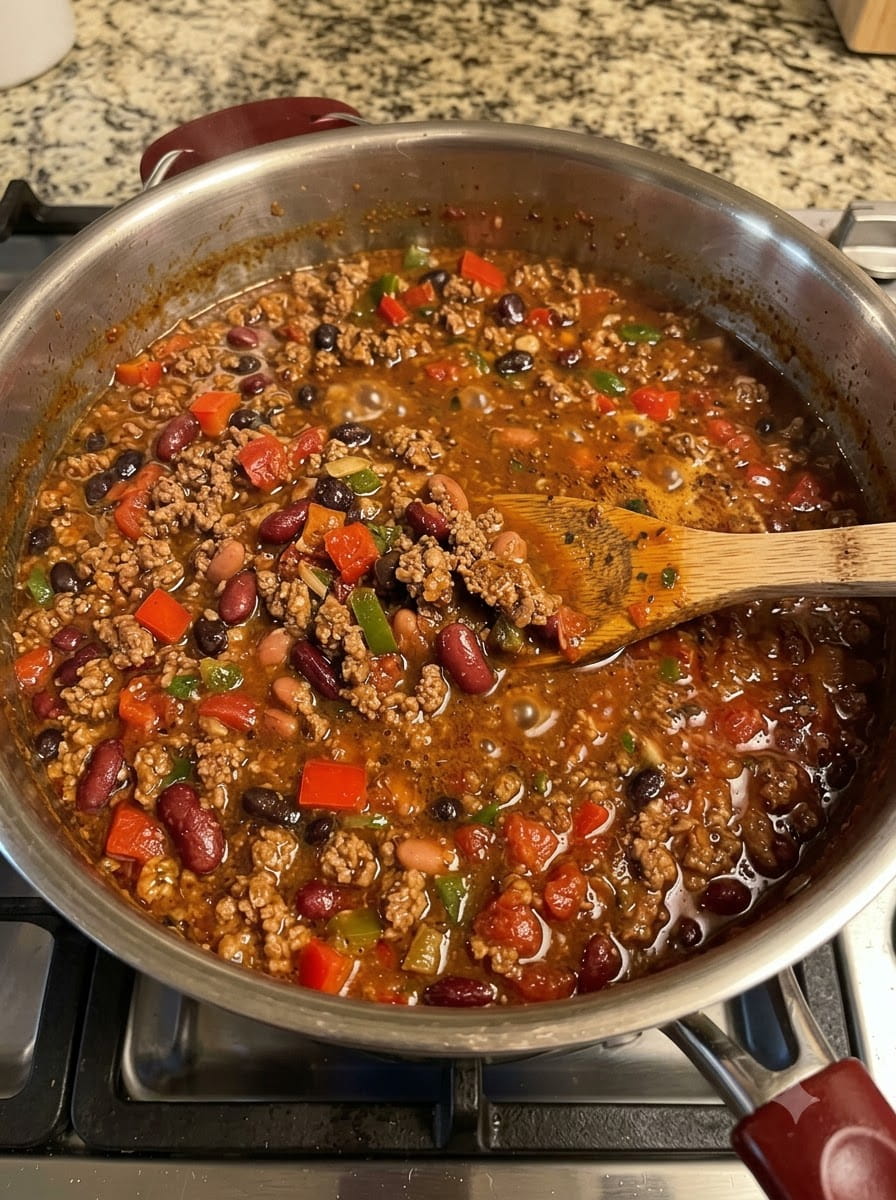
Homemade Mexican Beef Chili: Rich, Hearty, Smoky Comfort in a Bowl
When the weather cools down and the family is hungry, few meals deliver like a big pot of chili. This homemade Mexican beef chili is rich, hearty, smoky, and packed with bold, Mexican-inspired flavor. Tender ground beef simmers with tomatoes, beans, peppers, garlic, onions, and warm spices to create a thick, flavorful chili with just the right amount of heat. It is the ultimate comfort food for a cozy family dinner.
Serve it with shredded cheese, fresh cilantro, sour cream, avocado, or warm tortillas for a satisfying meal everyone will love. It is made in one pot, uses pantry-friendly ingredients, and gets better as it sits, which makes it perfect for weeknights, game days, meal prep, and feeding a crowd. In this guide, you’ll find the full recipe, a clear step-by-step walkthrough, ingredient notes and substitutions, tips for building deep flavor, how to adjust the heat and thickness, troubleshooting, variations, topping ideas, storage and freezing advice, and answers to the questions people ask most about beef chili.
What Is Mexican-Style Beef Chili?
Chili is a hearty, spiced stew, and there are as many versions as there are cooks. This one leans toward Mexican-inspired flavors, using a warm, layered spice blend of chili powder, cumin, smoked paprika, oregano, coriander, and cayenne, along with fresh jalapeño for a bright, green heat. The base is ground beef, onion, bell pepper, and garlic, simmered in crushed tomatoes, tomato paste, and beef broth with two kinds of beans: kidney beans and black beans.
Unlike some regional chilis that skip beans or tomatoes, this is a thick, saucy, bean-filled chili, the kind most families recognize as a classic weeknight pot. The tomato paste and smoked paprika add depth and a subtle smoky richness, the cumin and coriander give earthy warmth, and the cayenne pepper and jalapeño bring heat. It’s not a fiery chili, but it has a pleasant kick that you can easily dial up or down.
Why You’ll Love This Recipe
Big, bold flavor. A layered mix of chili powder, cumin, smoked paprika, oregano, coriander, and cayenne gives the chili complexity.
One-pot meal. Everything cooks in a single large pot, so cleanup is easy.
Hearty and filling. Ground beef and two kinds of beans make every bowl satisfying.
Pantry-friendly ingredients. Canned tomatoes, canned beans, broth, and dried spices keep well and are easy to stock.
Great for feeding a crowd. The recipe is easy to scale, and a pot goes a long way.
Better the next day. The flavors deepen as the chili rests, which makes it ideal for meal prep.
Customizable. You control the heat, the thickness, and the toppings.
Freezer friendly. It freezes well, so you can enjoy it again later.
Family approved. It’s comforting, familiar, and easy to personalize at the table with toppings.
Ingredients You’ll Need
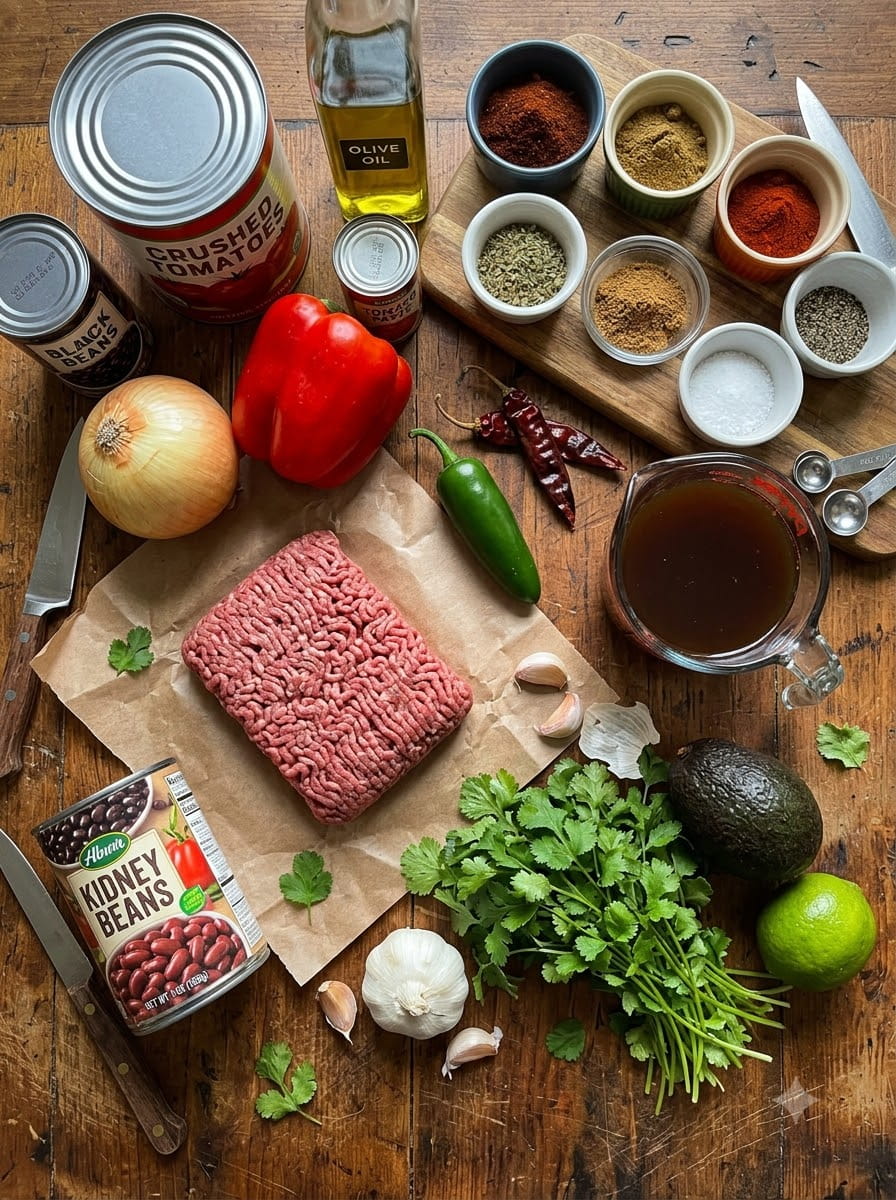
- 1 1/2 lbs ground beef
- 1 medium yellow onion, diced
- 4 cloves garlic, minced
- 1 red bell pepper, diced
- 1 jalapeño, finely chopped
- 1 can (28 oz) crushed tomatoes
- 1 can (15 oz) kidney beans, drained and rinsed
- 1 can (15 oz) black beans, drained and rinsed
- 1 cup beef broth
- 2 tablespoons tomato paste
- 2 tablespoons chili powder
- 2 teaspoons ground cumin
- 1 teaspoon smoked paprika
- 1 teaspoon dried oregano
- 1/2 teaspoon ground coriander
- 1/2 teaspoon cayenne pepper
- 1 teaspoon salt
- 1/2 teaspoon black pepper
- 1 tablespoon olive oil
You will also need a large pot or Dutch oven with a lid, and a wooden spoon.
Ingredient Notes and Substitutions
Understanding each ingredient helps you build flavor and make smart swaps.
Ground Beef
This recipe uses 1 1/2 pounds of ground beef. Ground beef with a moderate fat content, such as 85/15 or 80/20, gives the most flavor, though it will release more grease that you may want to drain. Leaner ground beef, such as 90/10, makes a lighter chili with less grease but a little less richness. Ground turkey or chicken can be substituted for a lighter version, though the flavor will be milder. For a special twist, you can use a mix of ground beef and ground chorizo.
Yellow Onion
A medium yellow onion, diced, forms the aromatic base of the chili. Yellow onions have a balanced flavor that softens and sweetens as it cooks. Dice the onion into small, even pieces so it blends into the chili as it simmers.
Garlic
Four cloves of minced garlic add depth and savory flavor. Add the garlic late in the sauté, as the recipe does, so it doesn’t burn and turn bitter.
Red Bell Pepper
Diced red bell pepper adds natural sweetness, color, and a little body. Orange or yellow bell peppers work as substitutes, and green bell pepper gives a slightly grassier, more bitter flavor.
Jalapeño
One finely chopped jalapeño adds a bright, fresh heat. For a milder chili, remove the seeds and white membranes before chopping. For more heat, leave them in or add a second jalapeño. Wear gloves when handling hot peppers, and wash your hands afterward. A serrano pepper can be substituted for extra fire.
Crushed Tomatoes
A 28-ounce can of crushed tomatoes gives the chili its thick, saucy base. Crushed tomatoes have a smoother texture than diced tomatoes, which helps the chili thicken as it simmers. Fire-roasted crushed tomatoes add a subtle smoky flavor and fit beautifully with this recipe. Tomato purée can be used in a pinch, though it will make the chili slightly smoother.
Kidney Beans and Black Beans
Two 15-ounce cans of beans, one kidney and one black, add heartiness, protein, and fiber. Drain and rinse them well to remove the canning liquid, which can taste metallic and make the chili murky. You can substitute pinto beans, cannellini beans, or a mix, or use only one kind of bean. If you prefer to cook your own beans, use about 3 cups of cooked beans in total.
Beef Broth
One cup of beef broth adds savory depth and helps the chili reach the right consistency. Low-sodium broth is a good choice, since it lets you control the salt level. Chicken broth or water can be substituted, though the flavor will be less rich.
Tomato Paste
Two tablespoons of tomato paste add concentrated tomato flavor and richness. Cooking it briefly with the other ingredients, as the recipe does, deepens its flavor. If you have extra time, you can stir the tomato paste into the pot and let it cook for a minute or two before adding the liquid for even richer flavor.
Chili Powder
Chili powder is the backbone of the spice blend, and two tablespoons give a mild to medium chili flavor. Chili powder blends vary, and some are saltier or spicier than others, so taste as you go. Ancho chili powder adds a deeper, fruitier flavor.
Ground Cumin
Cumin adds earthy, warm, slightly smoky flavor that is the signature of Mexican and Tex-Mex cooking. Use fresh ground cumin if you can, since old spices lose their potency.
Smoked Paprika
Smoked paprika adds a subtle smoky depth, as though the chili had simmered over a fire. Regular paprika is a milder substitute, but it won’t deliver the same smoky flavor.
Dried Oregano
Oregano brings an earthy, slightly floral note. Mexican oregano, which has a citrusy edge, is a wonderful choice if you can find it.
Ground Coriander
A half teaspoon of ground coriander adds a subtle citrusy, floral warmth that rounds out the spice blend. If you don’t have it, you can skip it.
Cayenne Pepper
Cayenne pepper brings the heat. Half a teaspoon gives a gentle, noticeable kick, so adjust to your taste. Reduce it or skip it for a milder chili, or increase it for more heat.
Salt and Black Pepper
Salt seasons the chili throughout. Because broth, canned tomatoes, and canned beans can vary in sodium, taste at the end and adjust. Freshly ground black pepper gives the best flavor.
Olive Oil
A tablespoon of olive oil is used to sauté the vegetables. Any neutral cooking oil works.
How to Make Homemade Mexican Beef Chili (Step by Step)
Follow these steps for a thick, flavorful pot of chili.
Step 1: Sauté the Vegetables
Heat the olive oil in a large pot over medium heat. Add the diced onion and red bell pepper. Cook for 4 to 5 minutes until softened. Stir in the garlic and jalapeño and cook for another minute, until fragrant. Stir often so the garlic doesn’t scorch.
Step 2: Brown the Beef
Add the ground beef and cook for 6 to 8 minutes, breaking it into small crumbles until browned. Use a wooden spoon or a potato masher to break up the meat as it cooks. Drain excess grease if necessary. If you use a leaner beef, you may not need to drain anything. If you use a fattier beef, spooning off some of the grease keeps the chili from tasting greasy.
Step 3: Add the Spices
Stir in the chili powder, cumin, smoked paprika, oregano, coriander, cayenne pepper, salt, and black pepper. Cook for 30 to 60 seconds until fragrant. Toasting the spices briefly in the hot pot wakes up their flavors, but don’t let them burn.
Step 4: Build the Chili
Add the tomato paste and stir well. Pour in the crushed tomatoes and beef broth, then add the kidney beans and black beans. Mix everything together. Scrape up any browned bits from the bottom of the pot, since they add flavor.
Step 5: Simmer to Perfection
Bring the chili to a gentle boil, then reduce the heat to low. Cover partially and simmer for 45 to 60 minutes, stirring occasionally, until thick and flavorful. Keeping the lid partly ajar lets some steam escape, which helps the chili thicken. Stir every 10 to 15 minutes to prevent sticking on the bottom.
Step 6: Adjust the Seasoning
Taste and adjust the seasonings as needed. If it tastes flat, add a pinch of salt. If it needs more heat, add a little more cayenne. Simmer uncovered for a few additional minutes if you prefer a thicker consistency.
Step 7: Serve and Enjoy
Ladle the hot chili into bowls and garnish with shredded cheese, sour cream, fresh cilantro, sliced avocado, or diced red onion. Serve with warm tortillas or cornbread for the ultimate comfort-food dinner.
Tips for the Best Chili
- Brown the beef well. Good browning builds flavor, so don’t rush it.
- Toast the spices briefly. Thirty to sixty seconds in the hot pot makes their flavor more vivid.
- Cook the tomato paste. A minute or two of stirring deepens its flavor.
- Simmer low and slow. A gentle simmer lets the flavors meld and the chili thicken.
- Stir occasionally. This prevents sticking and scorching on the bottom.
- Taste at the end. Seasoning needs vary, so adjust the salt, heat, and spices once the chili is cooked.
- Rinse the beans. It removes the canning liquid and keeps the chili tasting clean.
- Let it rest. Chili tastes even better after sitting for a while, and best the next day.
- Add toppings at the table. Letting everyone customize their own bowl keeps everyone happy.
- Use a large pot. A roomy pot prevents boil-overs and makes stirring easier.
How to Adjust the Heat
This chili has a medium kick, which you can easily adjust.
To make it milder. Remove the seeds and membranes from the jalapeño, reduce or skip the cayenne, and serve with cooling toppings like sour cream and avocado.
To make it hotter. Leave the jalapeño seeds in, add a second jalapeño or a serrano, increase the cayenne, or add a pinch of crushed red pepper flakes. A chopped chipotle pepper in adobo adds both heat and smoke.
To balance a too-spicy pot. Stir in a little more crushed tomatoes or broth to dilute, add a pinch of sugar, or serve with sour cream, cheese, and rice, which help temper heat.
Remember that the heat of the chili tends to build as it sits, so taste again after reheating leftovers.
How to Thicken or Thin Chili
To thicken. Simmer uncovered for 10 to 15 more minutes, which allows excess liquid to evaporate. You can also mash a few of the beans against the side of the pot and stir them in, which thickens the chili naturally. Another option is to stir in a slurry of 1 tablespoon cornmeal or masa harina mixed with a little water.
To thin. Stir in a splash of beef broth or water until the chili reaches your preferred consistency.
Troubleshooting Common Problems
The chili is too thin. Simmer uncovered for longer, mash some beans, or add a cornmeal or masa harina slurry.
The chili is too thick. Add a splash of broth or water and stir.
The chili tastes flat. It likely needs more salt, a pinch more spice, or a touch of acidity. A squeeze of lime juice at the end brightens the flavors.
The chili tastes greasy. Drain excess fat after browning the beef, or skim the surface with a spoon after simmering.
The chili is too spicy. Add more tomatoes or broth, a pinch of sugar, or serve with sour cream, cheese, and avocado.
The chili isn’t spicy enough. Add more cayenne, a second jalapeño, or hot sauce at the table.
The chili tastes bitter. The spices or garlic may have scorched. Cook spices only briefly and keep the heat moderate. A pinch of sugar can help balance a slight bitterness.
The chili tastes too acidic. Canned tomatoes can vary. A pinch of sugar or a little more simmering time can mellow the acidity.
The beans are mushy. Don’t overcook, and add the beans toward the end if you prefer them firmer, though this goes beyond the base recipe.
The chili stuck to the bottom of the pot. The heat may have been too high. Keep it at a gentle simmer and stir occasionally.
Variations to Try
Smoky Chipotle Chili. Add 1 to 2 chopped chipotle peppers in adobo and a spoonful of the adobo sauce.
Three-Bean Chili. Add a can of pinto beans or cannellini beans.
Turkey Chili. Replace the beef with ground turkey or chicken.
Chorizo Beef Chili. Replace some of the beef with Mexican chorizo for extra smoky, spicy flavor.
Sweet Potato Chili. Add diced sweet potato in the last 30 minutes of simmering.
Corn Chili. Stir in a cup of frozen or canned corn for a touch of sweetness.
Beer Chili. Replace some of the broth with a Mexican lager or dark beer.
Chocolate Chili. Stir in a tablespoon of unsweetened cocoa powder or a square of dark chocolate for a subtle depth, as in a mole.
Slow Cooker Chili. Brown the beef and sauté the vegetables in a skillet, then transfer everything to a slow cooker and cook on low for 6 to 8 hours or on high for 3 to 4 hours.
Instant Pot Chili. Use the sauté function to brown the beef and vegetables, then pressure cook for a shorter time. Adjust the liquid as needed.
Best Toppings and Sides
Part of the fun of chili is customizing each bowl. Here are some favorite toppings and sides.
Toppings:
- Shredded cheddar, Monterey Jack, or pepper jack cheese
- Sour cream or Mexican crema
- Fresh cilantro
- Sliced avocado or guacamole
- Diced red onion or sliced green onions
- Sliced jalapeños or pickled jalapeños
- Crushed tortilla chips or Fritos
- A squeeze of fresh lime juice
- Hot sauce
Sides:
- Warm flour or corn tortillas
- Cornbread or jalapeño cornbread
- Tortilla chips and guacamole
- Rice, either plain or cilantro-lime
- A crisp green salad
- Baked potatoes or sweet potatoes, topped with chili
- Quesadillas
Other Ways to Use Leftover Chili
Chili is incredibly versatile as a leftover. Here are some ideas.
- Chili-topped baked potatoes. Spoon over baked potatoes and add cheese and sour cream.
- Chili dogs. Pile onto hot dogs or sausages.
- Chili nachos. Spoon over tortilla chips with melted cheese.
- Chili mac. Stir into cooked macaroni and cheese.
- Stuffed peppers. Fill halved bell peppers with chili and cheese and bake.
- Tacos and burritos. Use as a filling with rice and cheese.
- Chili cheese fries. Serve over fries with melted cheese.
- Breakfast. Serve over eggs for a hearty brunch.
- Frito pie. Spoon into a bag of corn chips and top with cheese.
Storage and Reheating
This recipe doesn’t specify storage, so here are general guidelines. Let the chili cool slightly, then transfer it to airtight containers and refrigerate within 2 hours of cooking. Chili keeps in the refrigerator for about 3 to 4 days.
Reheating: Reheat on the stovetop over medium-low heat, stirring occasionally, until piping hot, adding a splash of broth or water if it has thickened. You can also reheat individual portions in the microwave. Reheat to an internal temperature of 165°F (74°C).
Freezing: Cool the chili completely, then freeze it in airtight freezer containers or heavy-duty freezer bags, leaving a little room for expansion, for up to about 3 months. Thaw overnight in the refrigerator before reheating. Freezing flat in bags saves space and thaws faster.
Don’t leave it out. Don’t leave cooked chili at room temperature for more than 2 hours.
Nutrition Notes
This chili is filling and protein-rich, thanks to the beef and beans, and it provides fiber from the beans and vegetables. The exact calories and nutrients depend on the fat content of your beef, your serving size, and your toppings. Sodium can also vary depending on your broth, canned tomatoes, and beans. For precise numbers, enter your ingredients and portion size into a recipe nutrition calculator. Using low-sodium broth and no-salt-added canned goods can help lower the sodium.
Common Mistakes to Avoid
Rushing the browning. Properly browned beef adds a lot of flavor.
Burning the garlic or spices. Add garlic late and toast spices only briefly.
Skipping the simmer. The long, gentle simmer is what makes the chili thick and flavorful.
Not rinsing the beans. The canning liquid can taste metallic and cloud the chili.
Over-salting early. Salt canned ingredients vary, so taste at the end.
Cooking at too high a heat. It can scorch the bottom and reduce the liquid too quickly.
Forgetting to stir. Occasional stirring prevents sticking.
Not tasting before serving. Adjusting the seasoning at the end makes a big difference.
Leaving chili out too long. Refrigerate within 2 hours.
Frequently Asked Questions
How long does chili need to simmer?
Simmer partially covered for 45 to 60 minutes, stirring occasionally, until thick and flavorful. The longer it simmers, the more the flavors meld.
Can I make this chili in a slow cooker?
Yes. Brown the beef and sauté the vegetables first, then transfer everything to a slow cooker and cook on low for 6 to 8 hours or on high for 3 to 4 hours. This goes beyond the base recipe, so adjust the thickness at the end.
Can I make it in an Instant Pot?
Yes. Use the sauté function for the first steps, then pressure cook for a shorter time. Adjust the liquid as needed, since pressure cooking releases less evaporation.
How spicy is this chili?
It has a medium kick, from the jalapeño and cayenne pepper. Reduce or remove the seeds and cayenne for a milder chili, or add more for a spicier one.
Do I have to drain the beef?
Only if there is excess grease. With leaner beef, you may not need to drain anything.
Can I use different beans?
Yes. Pinto, cannellini, or a mix of beans all work well. You can also use one type of bean or leave them out.
Can I use ground turkey instead of beef?
Yes. Ground turkey or chicken makes a lighter chili, though the flavor will be milder.
Can I leave out the beans?
Yes. If you prefer a meat-heavy chili, skip the beans, though you may want to reduce the broth slightly.
How do I thicken my chili?
Simmer uncovered, mash some of the beans, or stir in a small slurry of masa harina or cornmeal and water.
How do I make it less greasy?
Use leaner beef, drain the fat after browning, and skim the surface after simmering.
Can I make it ahead of time?
Yes. Chili tastes even better the next day. Refrigerate it in an airtight container and reheat gently.
How do I freeze chili?
Cool it completely and freeze it in airtight containers or freezer bags for up to about 3 months. Thaw in the refrigerator before reheating.
Can I double the recipe?
Yes. Double all the ingredients and use a very large pot, such as a stockpot. The simmering time may need to be slightly longer.
What should I serve with chili?
Shredded cheese, sour cream, cilantro, avocado, and warm tortillas or cornbread are classic choices.
Is chili gluten-free?
The ingredients are naturally gluten-free, but always check labels on packaged ingredients like broth and spices, and be careful with toppings and sides like cornbread.
Final Thoughts
This homemade Mexican beef chili is everything a pot of chili should be: rich, hearty, smoky, and full of bold flavor. It starts with simple ingredients, comes together in one pot, and simmers into a thick, satisfying meal that feeds a family and keeps well for leftovers.
Make a pot this weekend, serve it with your favorite toppings and a side of warm tortillas or cornbread, and save the leftovers for the next day, when the flavors are even better. Once you’ve tried it, you’ll want to keep this recipe on repeat all season long.
Print
Homemade Mexican Beef Chili
Ingredients
- 1 1/2 lbs ground beef
- 1 medium yellow onion, diced
- 4 cloves garlic, minced
- 1 red bell pepper, diced
- 1 jalapeño, finely chopped
- 1 can (28 oz) crushed tomatoes
- 1 can (15 oz) kidney beans, drained and rinsed
- 1 can (15 oz) black beans, drained and rinsed
- 1 cup beef broth
- 2 tablespoons tomato paste
- 2 tablespoons chili powder
- 2 teaspoons ground cumin
- 1 teaspoon smoked paprika
- 1 teaspoon dried oregano
- 1/2 teaspoon ground coriander
- 1/2 teaspoon cayenne pepper
- 1 teaspoon salt
- 1/2 teaspoon black pepper
- 1 tablespoon olive oil
You will also need a large pot or Dutch oven with a lid, and a wooden spoon.
Instructions
Follow these steps for a thick, flavorful pot of chili.
Heat the olive oil in a large pot over medium heat. Add the diced onion and red bell pepper. Cook for 4 to 5 minutes until softened. Stir in the garlic and jalapeño and cook for another minute, until fragrant. Stir often so the garlic doesn’t scorch.
Add the ground beef and cook for 6 to 8 minutes, breaking it into small crumbles until browned. Use a wooden spoon or a potato masher to break up the meat as it cooks. Drain excess grease if necessary. If you use a leaner beef, you may not need to drain anything. If you use a fattier beef, spooning off some of the grease keeps the chili from tasting greasy.
Stir in the chili powder, cumin, smoked paprika, oregano, coriander, cayenne pepper, salt, and black pepper. Cook for 30 to 60 seconds until fragrant. Toasting the spices briefly in the hot pot wakes up their flavors, but don’t let them burn.
Add the tomato paste and stir well. Pour in the crushed tomatoes and beef broth, then add the kidney beans and black beans. Mix everything together. Scrape up any browned bits from the bottom of the pot, since they add flavor.
Bring the chili to a gentle boil, then reduce the heat to low. Cover partially and simmer for 45 to 60 minutes, stirring occasionally, until thick and flavorful. Keeping the lid partly ajar lets some steam escape, which helps the chili thicken. Stir every 10 to 15 minutes to prevent sticking on the bottom.
Taste and adjust the seasonings as needed. If it tastes flat, add a pinch of salt. If it needs more heat, add a little more cayenne. Simmer uncovered for a few additional minutes if you prefer a thicker consistency.
Ladle the hot chili into bowls and garnish with shredded cheese, sour cream, fresh cilantro, sliced avocado, or diced red onion. Serve with warm tortillas or cornbread for the ultimate comfort-food dinner.