
Red Lentil Quinoa Bread: A Soft, Hearty, Naturally Gluten-Free Loaf ❤️🌾🍞✨
If you’ve been looking for a nourishing homemade loaf that skips the wheat flour entirely, this red lentil quinoa bread is worth a try. It is soft, hearty, and wholesome, packed with plant-based goodness from red lentils and quinoa. Instead of traditional flour, the grains and legumes are soaked and blended into a thick batter, which bakes into a loaf with a tender, moist crumb and a deliciously nutty flavor.
It is perfect for breakfast, sandwiches, toast, or enjoying warm with your favorite spread. There is no kneading, no yeast, and no rising time. You soak, blend, pour, and bake. In this guide, you’ll find the full recipe, a clear step-by-step walkthrough, ingredient notes and substitutions, tips for the best texture, troubleshooting, variations, serving ideas, storage and freezing advice, and answers to the questions people ask most about lentil and quinoa bread.
What Is Red Lentil Quinoa Bread?
Red lentil quinoa bread is a grain-free-style, flour-free loaf made by blending soaked red lentils and quinoa with water, olive oil, apple cider vinegar, salt, baking powder, and chia seeds. Instead of wheat flour providing the structure, the blended lentils and quinoa form a thick batter that sets as it bakes. The chia seeds absorb moisture and help bind the loaf, and the baking powder, activated by the apple cider vinegar, gives it a little lift.
Red lentils are a good choice for this kind of recipe because they are small, split, and soften quickly, so they blend into a smooth, creamy base. Quinoa adds a light, slightly nutty flavor and a tender texture. Together they create a loaf that is naturally gluten-free in its ingredients, rich in plant-based protein and fiber, and surprisingly satisfying. It will not taste like a fluffy white sandwich loaf, and that’s part of its appeal: it’s a hearty, earthy bread that works well toasted and topped.
Why You’ll Love This Recipe
No wheat flour. The loaf is built from lentils and quinoa, so there is no wheat flour involved.
Naturally gluten-free ingredients. Red lentils, quinoa, olive oil, chia seeds, and the other ingredients are naturally free of gluten, though you should check labels for cross-contamination if you need to avoid gluten.
No kneading and no yeast. There’s no proofing and no rising. The batter goes straight from the blender to the pan.
Plant-based goodness. Lentils, quinoa, and chia seeds provide protein, fiber, and a wide range of nutrients.
Soft, moist crumb. Soaking and blending produce a tender, moist loaf.
Nutty, wholesome flavor. The quinoa and chia give the bread an earthy, slightly nutty taste.
Simple ingredients. Most items are pantry staples, and you don’t need any special flours.
Easy to make. The blender does most of the work.
Versatile. Enjoy it for breakfast, in sandwiches, toasted with toppings, or alongside soup.
Ingredients You’ll Need
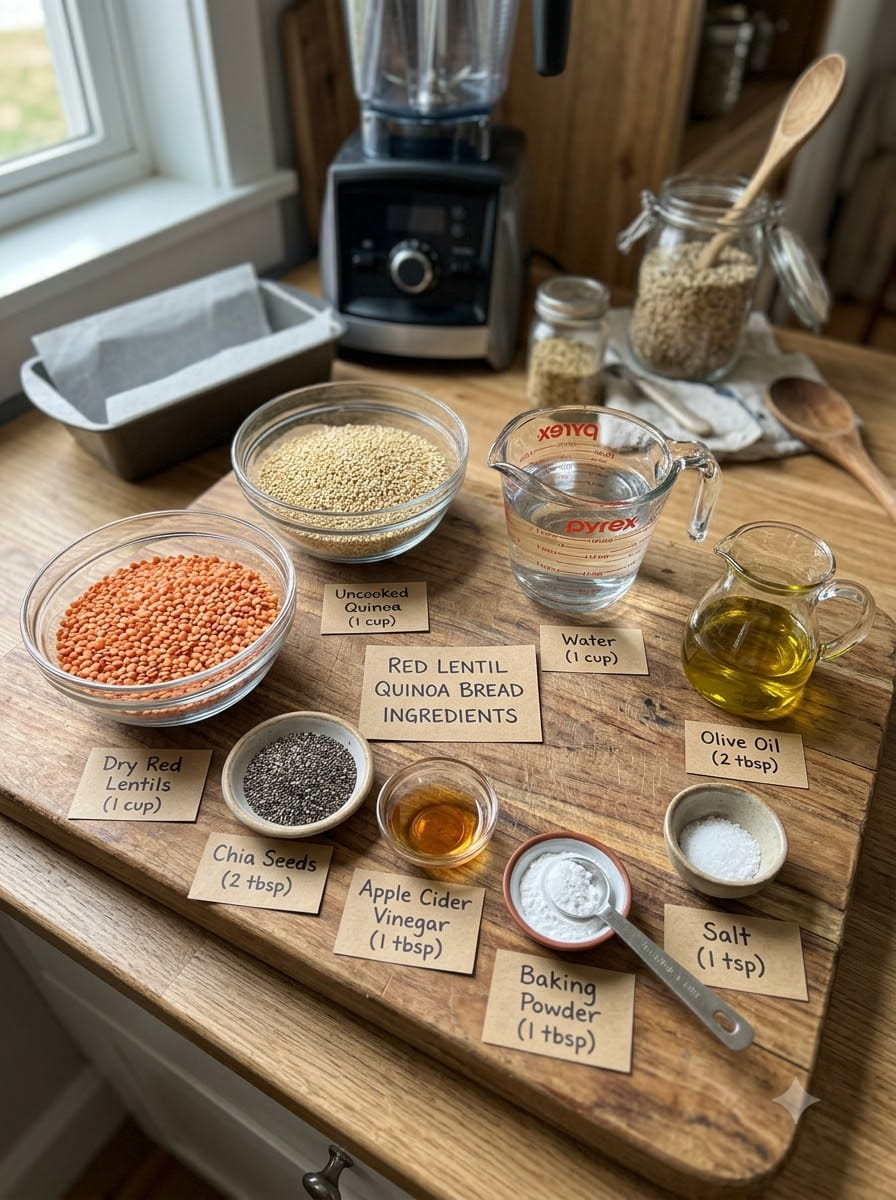
- 1 cup dry red lentils
- 1 cup uncooked quinoa
- 1 cup water, plus more for soaking
- 2 tablespoons olive oil
- 1 tablespoon baking powder
- 1 teaspoon salt
- 1 tablespoon apple cider vinegar
- 2 tablespoons chia seeds
You will also need a high-powered blender or food processor, a loaf pan, and parchment paper. Extra seeds for sprinkling on top are optional.
Ingredient Notes and Substitutions
Understanding each ingredient helps you get the best texture and make smart swaps.
Dry Red Lentils
Red lentils are split lentils that have had their skins removed, which is why they cook quickly and blend smoothly. Use dry red lentils, not canned or cooked ones. The recipe calls for 1 cup, which you’ll soak before blending. Because red lentils are already small and soft, they break down easily into a creamy base. Other split lentils, such as yellow or orange split lentils, are the closest substitutes. Whole brown or green lentils are firmer and don’t blend as smoothly, so they aren’t recommended here.
Always rinse lentils before using them, and pick through them for any small stones or debris.
Uncooked Quinoa
One cup of uncooked quinoa adds body, a slight nuttiness, and a light texture. White, red, or tricolor quinoa all work, though white quinoa gives the lightest color. Quinoa is naturally coated with saponins, a bitter-tasting compound, so rinsing it thoroughly under cold running water in a fine-mesh sieve is an important step. Many packages are pre-rinsed, but rinsing again is still recommended. Skipping this can leave the bread tasting bitter or soapy.
Water
The recipe uses 1 cup of water in the blender, plus more for soaking the lentils and quinoa. Use cool or room-temperature water for soaking. Drain the soaked lentils and quinoa well before blending, and don’t use the soaking water in the batter. The soaking water can contain compounds you’ll want to discard.
Olive Oil
Two tablespoons of olive oil add richness and moisture, and help the crumb stay tender. A mild extra virgin olive oil works best. You can substitute avocado oil or another neutral oil.
Baking Powder
A tablespoon of baking powder is the leavening agent, giving the loaf a little lift. That is a fairly generous amount, so make sure your baking powder is fresh and not expired. Old baking powder won’t lift the loaf, and the result may be dense. Measure carefully, since too much baking powder can leave a bitter or metallic aftertaste.
Salt
A teaspoon of salt brings out the nutty flavors of the lentils and quinoa. Don’t skip it, since bean and grain-based breads can taste flat without enough salt. Fine sea salt blends easily.
Apple Cider Vinegar
A tablespoon of apple cider vinegar reacts with the baking powder to help create lift, and it brightens the flavor and balances the earthiness of the lentils. Lemon juice is the closest substitute, and white vinegar will also work in a pinch.
Chia Seeds
Two tablespoons of chia seeds help bind the batter. Chia seeds absorb liquid and form a gel, which gives the loaf structure and helps it hold together. They also add fiber and healthy fats, and tiny dark flecks throughout. Ground flaxseed is the closest substitute, though the texture will be slightly different.
How to Make Red Lentil Quinoa Bread (Step by Step)
Follow these steps for a tender, flavorful loaf.
Step 1: Rinse and Soak
Rinse the red lentils and quinoa thoroughly. Soak them separately in water for 3 to 4 hours, then drain well. Place each in its own bowl and cover with plenty of cool water, since both will absorb water and swell. Rinsing the quinoa removes its bitter coating, and soaking softens both ingredients so they blend into a smooth batter. After soaking, drain them in a fine-mesh sieve and shake off as much water as possible, since extra water can make the batter too thin.
Step 2: Preheat and Prepare the Pan
Preheat the oven to 350°F (175°C). Line a loaf pan with parchment paper, leaving a little overhang on the long sides so you can lift the loaf out easily after baking.
Step 3: Blend the Batter
Add the soaked lentils, quinoa, water, olive oil, apple cider vinegar, and salt to a blender. Blend until you have a thick, mostly smooth batter. A high-powered blender works best. If you use a regular blender or a food processor, you may need to stop and scrape down the sides a few times. The batter doesn’t need to be perfectly smooth, and a little texture from the quinoa is fine.
Step 4: Add the Baking Powder and Chia
Add the baking powder and chia seeds. Blend briefly until everything is evenly combined. Don’t over-blend at this stage, so the baking powder isn’t overworked.
Step 5: Pour and Smooth
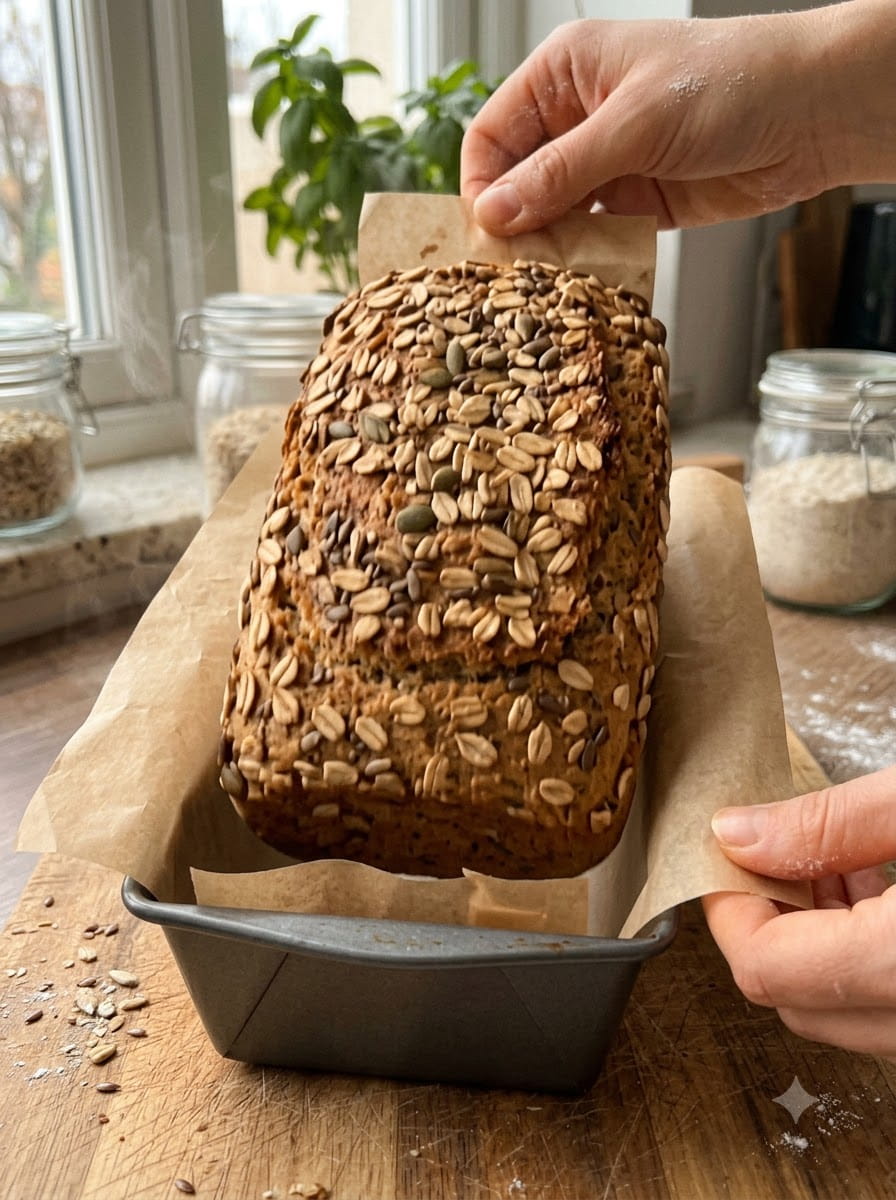
Pour the batter into the prepared loaf pan and smooth the top with a spatula. Sprinkle extra seeds on top if desired, such as sesame, sunflower, or pumpkin seeds, or more chia seeds.
Step 6: Bake
Bake for 50 to 60 minutes, or until the loaf is firm and a toothpick inserted into the center comes out mostly clean. The top should be set and lightly golden, and the loaf should feel firm when pressed. If the top is browning too quickly, tent it loosely with foil for the last 15 minutes.
Step 7: Cool and Slice
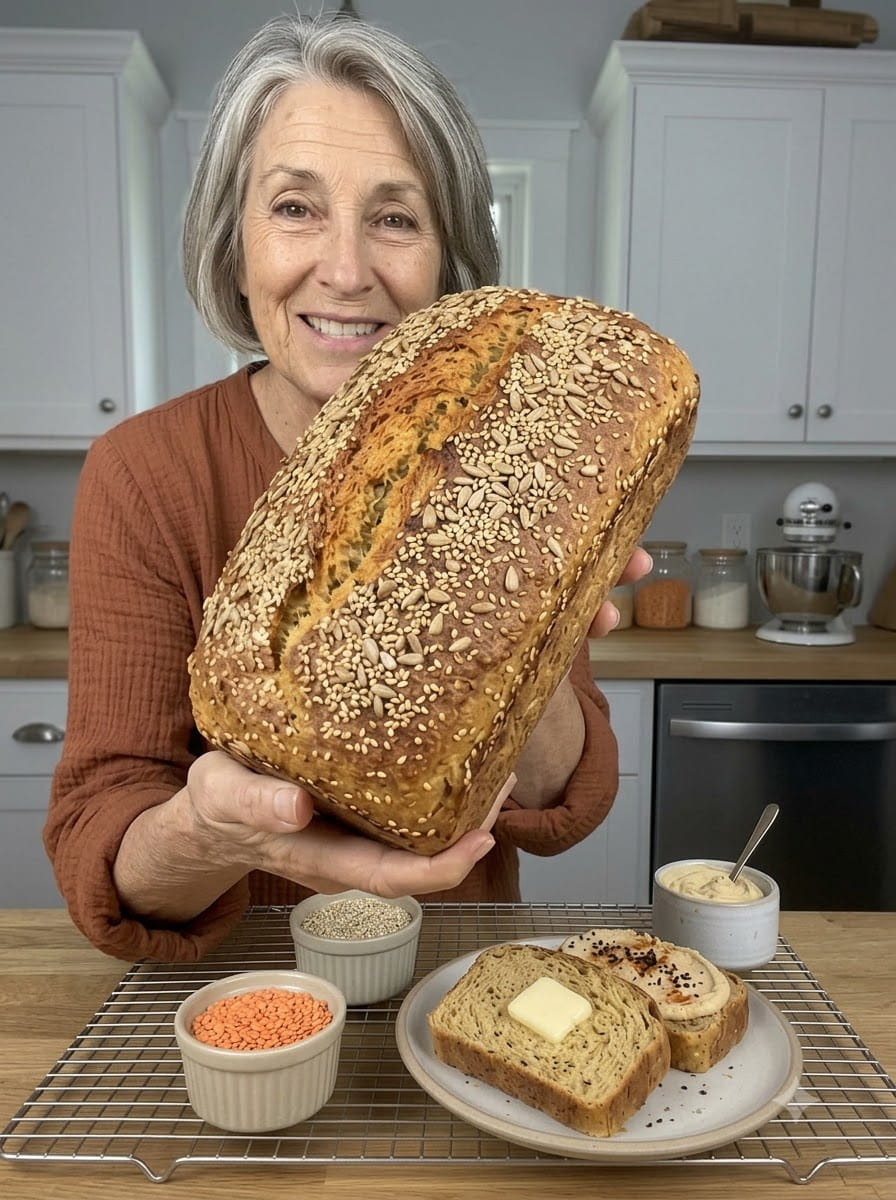
Let the bread cool completely before slicing. This is an important step, since lentil-based breads continue to set as they cool, and slicing too soon can leave the center soft and sticky. Once cool, slice with a serrated knife and enjoy it toasted, with avocado, or alongside your favorite soup.
Tips for the Best Lentil Quinoa Bread
- Rinse the quinoa well. This removes the bitter coating and gives the bread a clean, nutty flavor.
- Don’t skip the soaking. Soaking softens the lentils and quinoa, producing a smoother batter and a more tender loaf.
- Drain thoroughly. Excess water can make the batter too runny and the loaf gummy.
- Use a good blender. A high-powered blender creates the smoothest batter, though a food processor can work with patience.
- Use fresh baking powder. It’s the main leavening, so freshness matters.
- Line the pan. Parchment keeps the loaf from sticking and makes it easy to lift out.
- Check for doneness. A toothpick should come out mostly clean, and the loaf should feel firm.
- Cool completely. Allow the loaf to set before slicing for the best texture.
- Use a serrated knife. It cuts cleanly without crushing the crumb.
- Toast the slices. Toasting improves the texture and brings out the nutty flavor.
What Texture Should You Expect?
Because this bread is made without wheat flour, gluten, or yeast, the texture is different from a classic loaf. Here’s what to expect.
Moist and tender. The crumb is soft and moist, with a texture closer to a dense, moist quick bread than a chewy artisan loaf.
Fairly dense. The loaf is hearty and filling, and it won’t be as airy as a yeast bread.
Mild, nutty, earthy flavor. The lentils and quinoa give the bread a gentle, savory taste that works with both sweet and savory toppings.
Best toasted. A toasted slice gains a crisp edge and a firmer, more bread-like texture.
Slices well once cooled. After it has fully cooled and set, the loaf slices neatly, especially with a serrated knife.
Troubleshooting Common Problems
The loaf is gummy in the center. It may be underbaked or sliced too soon. Bake a little longer, check with a toothpick, and always let the loaf cool completely before slicing.
The bread is too dense. Old baking powder, too little vinegar, or too much water can contribute. Use fresh baking powder, measure carefully, and drain the soaked ingredients well.
The batter is too thin. The lentils and quinoa may not have been drained well. Drain thoroughly next time. If the batter seems very runny, you can blend in a tablespoon of extra chia seeds, though this goes beyond the base recipe.
The batter is too thick. Make sure you used the full cup of water. If your blender struggles, add a tablespoon or two of water, a little at a time.
The bread tastes bitter. Unrinsed quinoa is the most common cause. Rinse it thoroughly. Too much baking powder can also leave a bitter or metallic aftertaste, so measure carefully.
The bread tastes bland. Make sure you included the salt, and try toasting the slices and using flavorful toppings.
The top cracked. Small cracks are normal in a loaf with no gluten. They don’t affect flavor or texture.
The bread stuck to the pan. Always use parchment paper, and let the loaf cool before removing it.
The top browned too quickly. Tent with foil, and check that the rack is in the center of the oven.
The loaf crumbled when sliced. Cool completely, chill it briefly if needed, and slice with a sharp serrated knife.
Variations to Try
The base recipe works as written. If you’d like to experiment, here are a few optional ideas that go beyond the original recipe, so results may vary slightly.
Seeded Loaf. Fold in a tablespoon or two of sunflower, pumpkin, or sesame seeds, and sprinkle more on top.
Herb and Garlic Loaf. Add a teaspoon of dried Italian seasoning and a pinch of garlic powder to the blender.
Spiced Loaf. Add 1/2 teaspoon of cumin or turmeric for a warm, earthy flavor.
Everything Loaf. Sprinkle everything bagel seasoning on top before baking.
Cheesy Loaf. Fold in a few tablespoons of shredded cheese or nutritional yeast.
Sun-Dried Tomato Loaf. Fold in chopped sun-dried tomatoes for a sweet, tangy note.
Olive Loaf. Add chopped olives for a briny, Mediterranean flavor.
Sweeter Loaf. A small drizzle of honey or maple syrup and a pinch of cinnamon makes a lightly sweet breakfast loaf.
Mini Loaves or Muffins. Divide the batter among a muffin tin and bake, checking for doneness earlier, at around 25 to 30 minutes.
How to Serve Red Lentil Quinoa Bread
This loaf is versatile and pairs well with many toppings. Here are some ideas.
- Avocado toast. Top toasted slices with mashed avocado, lemon, salt, and chili flakes.
- Nut butter. Spread peanut butter or almond butter and add banana slices.
- Eggs. Serve with a fried, poached, or scrambled egg.
- Hummus and veggies. Spread hummus and top with cucumber, tomato, and sprouts.
- Sandwiches. Use as the base for turkey, cheese, veggie, or egg salad sandwiches.
- Alongside soup. Serve warm slices with lentil soup, tomato soup, or vegetable soup.
- With cheese. Top with cream cheese, goat cheese, or ricotta.
- Smoked salmon. Pair with smoked salmon, capers, and dill.
- Jam or honey. A simple topping for a lightly sweet snack.
- Croutons. Cube and toast leftover slices for salads and soups.
- Open-faced toasts. Top with roasted vegetables, a drizzle of olive oil, and herbs.
Storage Information
Let the bread cool completely before storing it. This recipe doesn’t specify storage, so here are general guidelines. Because the loaf is moist and made from soaked legumes and grains, it’s best stored in the refrigerator. Keep it in an airtight container for up to about 5 days.
Freezing: Slice the cooled loaf, place parchment between the slices, and freeze in an airtight bag for up to about 3 months. Toast slices straight from the freezer, or thaw them at room temperature.
Reheating: Toasting is the best way to refresh a slice, giving it a crisp edge and warm center.
Signs of spoilage: An off or sour smell, mold, or a slimy texture mean the loaf should be discarded.
Nutrition Notes
Red lentils, quinoa, and chia seeds are all sources of plant-based protein and fiber, which makes this loaf filling and nourishing. The exact calories and nutrients per slice depend on your pan size and how many slices you cut. For precise numbers, enter your ingredients and slice count into a recipe nutrition calculator. If you manage a medical condition or follow a specific diet, check labels and talk with a healthcare professional about whether this recipe fits your needs.
A Note on Gluten-Free Baking
The ingredients in this recipe are naturally gluten-free, so there is no wheat flour. However, if you need to avoid gluten for medical reasons, such as celiac disease, check the labels on your lentils, quinoa, baking powder, seeds, and any add-ins. Lentils, quinoa, and seeds can be processed in facilities that also handle wheat, so look for products labeled gluten-free to reduce the risk of cross-contamination.
Common Mistakes to Avoid
Skipping the quinoa rinse. It can leave a bitter taste.
Skipping the soak. The batter will be gritty and the loaf less tender.
Not draining well. Excess water makes the loaf gummy.
Using expired baking powder. The loaf won’t lift properly.
Using too much baking powder. It can leave a bitter aftertaste, so measure carefully.
Slicing while warm. The loaf needs to cool and set.
Underbaking. Check with a toothpick and make sure the center is firm.
Skipping the parchment. The loaf can stick.
Expecting a fluffy wheat bread. This is a dense, hearty, moist loaf by design.
Frequently Asked Questions
Is red lentil quinoa bread gluten-free?
The ingredients are naturally gluten-free. If you need to avoid gluten for medical reasons, look for products labeled gluten-free to reduce the risk of cross-contamination.
Do I have to soak the lentils and quinoa?
Yes. The recipe calls for soaking for 3 to 4 hours, which softens them so they blend into a smooth batter.
Why do I need to rinse the quinoa?
Quinoa has a natural coating called saponin that can taste bitter or soapy. Rinsing it thoroughly removes it.
Can I use cooked lentils or quinoa?
The recipe was developed with dry, soaked lentils and uncooked, soaked quinoa, so it is best to follow it as written. Cooked ingredients would add much more moisture and change the result.
Can I use green or brown lentils?
Red or other split lentils are recommended, since they blend into a smooth batter. Whole green or brown lentils are firmer and don’t blend as smoothly.
Can I make it without a high-powered blender?
You can use a regular blender or a food processor, but the batter may be less smooth, and you may need to stop and scrape the sides often. Soaking well helps.
Why is my loaf gummy?
It may have been underbaked, sliced too soon, or made with too much water. Drain the soaked ingredients well, bake until a toothpick comes out mostly clean, and cool completely.
Can I use something other than chia seeds?
Ground flaxseed is the closest substitute, though it may change the texture slightly.
Can I leave out the apple cider vinegar?
The vinegar reacts with the baking powder and balances the flavor. Lemon juice is a good substitute.
How do I know when it’s done?
The loaf should be firm, lightly golden, and a toothpick inserted in the center should come out mostly clean.
How long does it keep?
Store it in an airtight container in the refrigerator for up to about 5 days, or freeze slices for up to about 3 months.
Can I make it sweet?
Yes. Add a little honey or maple syrup and a pinch of cinnamon, though this goes beyond the base recipe.
Can I double the recipe?
Yes. Double the ingredients and use a larger pan or two loaf pans, adjusting the bake time as needed.
Can I bake it as muffins?
You can try portioning the batter into a lined muffin tin and baking until firm, checking at about 25 to 30 minutes. Treat this as an experiment, since the recipe was written for a loaf.
What is the best way to eat it?
Toasted, with toppings like avocado, nut butter, eggs, or hummus.
Final Thoughts
This red lentil quinoa bread is a soft, hearty, wholesome loaf that proves you don’t need wheat flour to make good homemade bread. With soaked red lentils and quinoa, a handful of simple pantry ingredients, and a blender, you can bake a tender, moist, nutty loaf that is packed with plant-based goodness.
Soak the lentils and quinoa, blend the batter, bake until firm, and let it cool completely before slicing. Then toast a slice, pile on your favorite toppings, and enjoy a nourishing, satisfying homemade bread any time of day.
Print
Red Lentil Quinoa Bread
Ingredients
- 1 cup dry red lentils
- 1 cup uncooked quinoa
- 1 cup water, plus more for soaking
- 2 tablespoons olive oil
- 1 tablespoon baking powder
- 1 teaspoon salt
- 1 tablespoon apple cider vinegar
- 2 tablespoons chia seeds
You will also need a high-powered blender or food processor, a loaf pan, and parchment paper. Extra seeds for sprinkling on top are optional.
Instructions
Follow these steps for a tender, flavorful loaf.
Rinse the red lentils and quinoa thoroughly. Soak them separately in water for 3 to 4 hours, then drain well. Place each in its own bowl and cover with plenty of cool water, since both will absorb water and swell. Rinsing the quinoa removes its bitter coating, and soaking softens both ingredients so they blend into a smooth batter. After soaking, drain them in a fine-mesh sieve and shake off as much water as possible, since extra water can make the batter too thin.
Preheat the oven to 350°F (175°C). Line a loaf pan with parchment paper, leaving a little overhang on the long sides so you can lift the loaf out easily after baking.
Add the soaked lentils, quinoa, water, olive oil, apple cider vinegar, and salt to a blender. Blend until you have a thick, mostly smooth batter. A high-powered blender works best. If you use a regular blender or a food processor, you may need to stop and scrape down the sides a few times. The batter doesn’t need to be perfectly smooth, and a little texture from the quinoa is fine.
Add the baking powder and chia seeds. Blend briefly until everything is evenly combined. Don’t over-blend at this stage, so the baking powder isn’t overworked.
Pour the batter into the prepared loaf pan and smooth the top with a spatula. Sprinkle extra seeds on top if desired, such as sesame, sunflower, or pumpkin seeds, or more chia seeds.
Bake for 50 to 60 minutes, or until the loaf is firm and a toothpick inserted into the center comes out mostly clean. The top should be set and lightly golden, and the loaf should feel firm when pressed. If the top is browning too quickly, tent it loosely with foil for the last 15 minutes.
Let the bread cool completely before slicing. This is an important step, since lentil-based breads continue to set as they cool, and slicing too soon can leave the center soft and sticky. Once cool, slice with a serrated knife and enjoy it toasted, with avocado, or alongside your favorite soup.