
Sunflower Seed Protein Bread: The Easy, Flourless, High-Protein Loaf
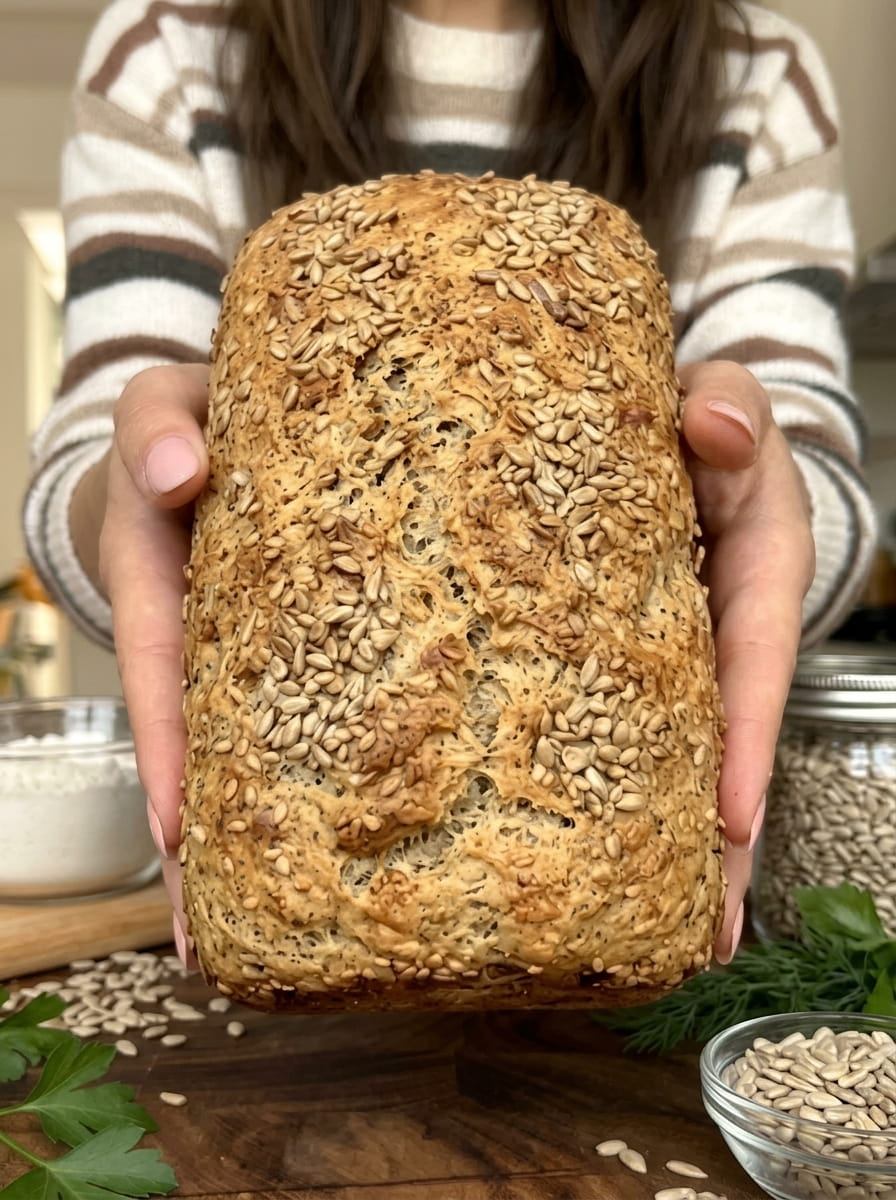
If you’ve been searching for a bread that is filling, simple, and doesn’t rely on wheat flour, sunflower seed protein bread deserves a spot in your kitchen. It uses ground sunflower seeds, Greek yogurt, and eggs, with no flour, no yeast, no kneading, and no proofing. You mix, pour, and bake.
The result is a dense, moist, slightly nutty loaf that works for breakfast toast, sandwiches, and snacks. In this guide you’ll get the full recipe, the reasons it works, practical tips to avoid common mistakes, variations, storage advice, and answers to the questions people ask most.
What Is Sunflower Seed Protein Bread?
Sunflower seed protein bread is a flourless quick bread. Instead of wheat flour, it uses finely ground sunflower seeds as its base. The structure comes from eggs and Greek yogurt, and baking powder gives it a little lift.
Because it contains no wheat flour, the loaf is naturally lower in carbohydrates than traditional bread, and it’s higher in protein and healthy fats. It’s popular with people who follow low-carb, high-protein, or gluten-free eating patterns, and with anyone who simply wants a more filling slice.
One note for anyone avoiding gluten: the ingredients here are naturally gluten-free, but always check labels. Sunflower seeds and baking powder are sometimes processed in facilities that also handle wheat.
Why You’ll Love This Recipe
- Only a handful of ingredients. Sunflower seeds, Greek yogurt, eggs, baking powder, and salt. Olive oil is optional.
- No flour required. It’s a good option when you’re out of flour or avoiding it.
- No yeast, no waiting. There’s no rising time, so you can go from pantry to oven in about 10 minutes.
- High in protein. Eggs and Greek yogurt both contribute substantial protein, and sunflower seeds add more.
- Satisfying and filling. The protein, fat, and fiber help a slice keep you full longer than a typical slice of white bread.
- Budget friendly. Sunflower seeds are one of the more affordable seeds, especially compared with almond flour.
- Easy to customize. Sweet or savory, it adapts well.
Ingredients
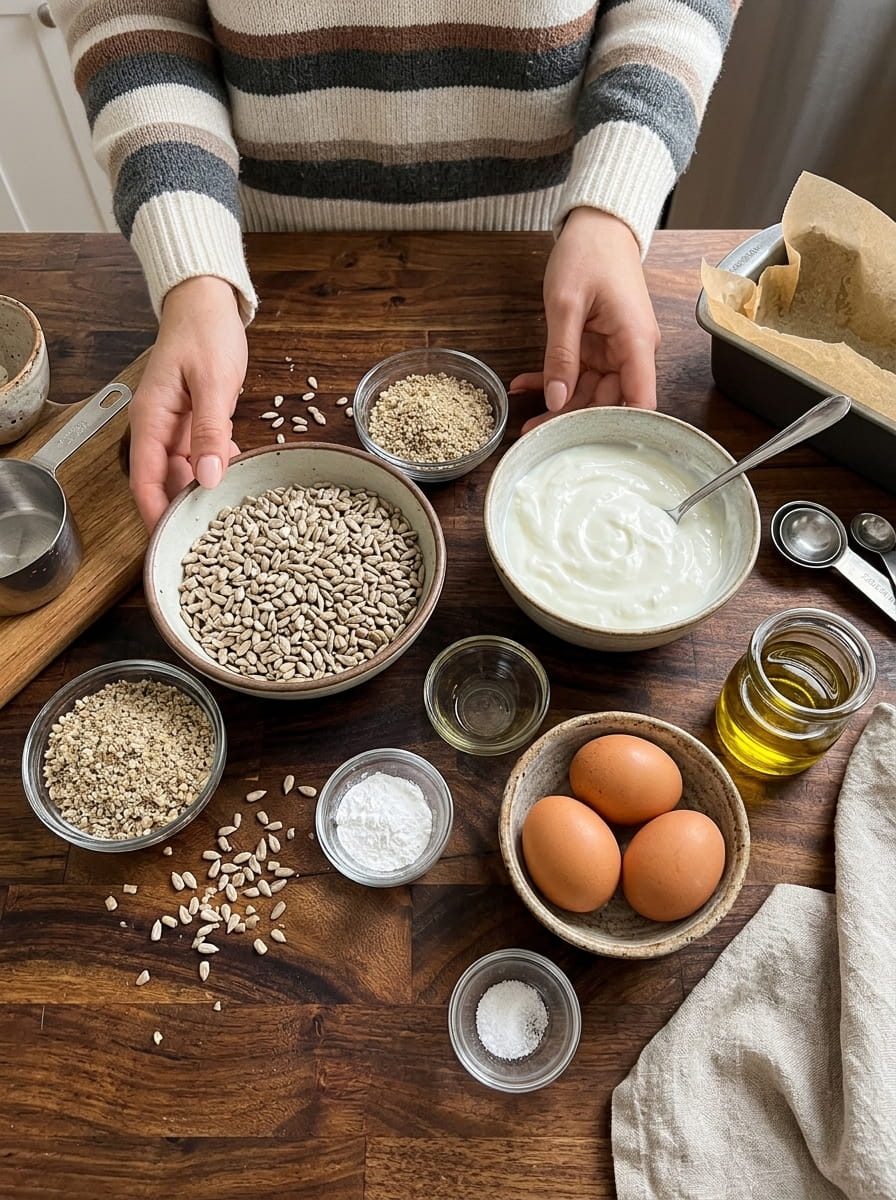
Here’s everything you need for one small loaf:
- 1½ cups (150 g) sunflower seeds, finely ground
- 1 cup (225 g) plain Greek yogurt
- 3 large eggs
- 1 teaspoon baking powder
- ¼ teaspoon salt
- 1 tablespoon olive oil (optional)
A Closer Look at the Key Ingredients
Sunflower seeds. These are the foundation. Use raw, hulled sunflower seeds. Roasted and salted seeds work, but you’ll want to reduce or skip the added salt. Raw seeds give a milder, slightly sweeter flavor, while roasted seeds give a deeper nutty taste.
Plain Greek yogurt. Greek yogurt adds moisture, tang, and protein. Choose plain and unsweetened. Full-fat yogurt gives a richer, softer crumb, while low-fat works but produces a slightly drier loaf. Avoid flavored yogurts, which add sugar and alter the taste.
Eggs. Eggs bind the loaf and give it structure. With no gluten to hold things together, they do a lot of the work. Use large eggs at room temperature if you can, since they blend more smoothly into the yogurt.
Baking powder. This provides lift. Make sure yours is fresh. Old baking powder is one of the most common reasons quick breads turn out flat and dense.
Salt. A small amount sharpens the flavor of the seeds and balances the tang of the yogurt.
Olive oil (optional). A tablespoon adds a little richness and helps keep the crumb tender. If you’re keeping the recipe as lean as possible, you can leave it out.
How to Make Sunflower Seed Protein Bread (Step by Step)
Step 1: Prepare the Oven
Preheat your oven to 350°F (175°C). Line a small loaf pan with parchment paper, leaving a little overhang on the sides so you can lift the finished loaf out easily. Parchment is helpful here because a flourless loaf can stick to the pan.
Step 2: Grind the Seeds
Add the sunflower seeds to a food processor or high-speed blender. Pulse in short bursts until they look like a fine flour. Stop as soon as you reach that stage.
This is the step where most people go wrong. Sunflower seeds are rich in natural oils, and if you blend too long, the friction and heat will turn them into sunflower seed butter. Short pulses and an occasional scrape down the sides will keep you in flour territory.
Step 3: Mix the Wet Ingredients
In a large bowl, whisk the Greek yogurt and eggs together until completely smooth. If you’re using olive oil, add it now. Take a minute here, because smooth wet ingredients make a more even loaf.
Step 4: Combine Everything
Add the ground sunflower seeds, baking powder, and salt to the wet mixture. Stir until you have a thick, evenly combined batter. It will be much thicker than a cake batter, closer to a dense, scoopable paste. Don’t overmix. You only need everything fully combined.
Step 5: Fill the Pan
Transfer the batter into your prepared loaf pan. Use a spatula to smooth the top so it bakes evenly.
Step 6: Bake
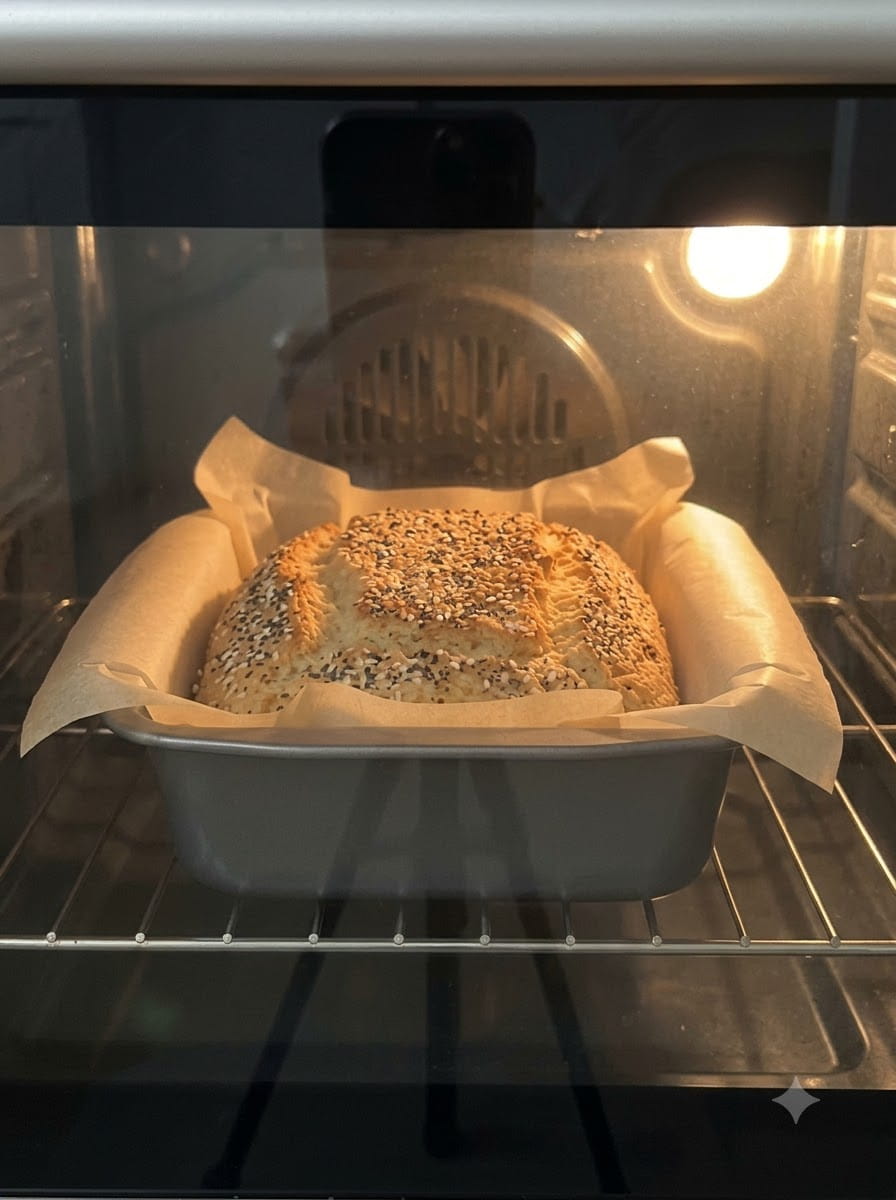
Bake for 40 to 50 minutes. The loaf is ready when it’s firm to the touch, golden on top, and a toothpick inserted in the center comes out clean. Ovens vary, so begin checking around the 40-minute mark.
Step 7: Cool and Slice
Let the bread cool in the pan for about 10 minutes, then lift it onto a wire rack. Wait until it’s completely cool before slicing. Flourless breads continue to set as they cool, and slicing too early can make the center seem gummy. Patience gives you a cleaner slice and a better texture.
Why Is My Sunflower Seed Bread Turning Green?
If you slice the loaf and notice a green or blue-green tint inside, don’t worry. It’s a well-known harmless reaction. Sunflower seeds contain a compound called chlorogenic acid, which can react with baking soda or baking powder in a baked, slightly alkaline environment and turn greenish.
It doesn’t affect safety, and it doesn’t change the flavor much. If you’d like to reduce the effect, you can try these tips:
- Use slightly less baking powder (while keeping enough for lift).
- Add a small splash of lemon juice or apple cider vinegar to the batter to balance the acidity.
- Avoid over-grinding the seeds, which can release more of the compound.
Plenty of people actually find the tint charming, and it’s a good conversation starter at the table.
Tips for the Best Texture and Flavor
Measure the seeds by weight if possible. A kitchen scale gives you 150 g exactly, and that consistency matters in a flourless recipe. Cup measurements of ground seeds can vary quite a bit depending on how finely they’re ground.
Grind in pulses. Short bursts of 5 to 10 seconds, with pauses in between, keep the seeds from heating up and turning oily.
Sift out large chunks. If some seeds remain coarse after grinding, pass the mixture through a sieve and re-grind the bigger pieces. A finer grind gives a more bread-like crumb.
Use room-temperature ingredients. Cold yogurt and eggs can cause an uneven mix. Letting them sit out for 20 minutes helps.
Don’t skip the cooling time. It’s tempting to slice warm bread, but this loaf is best once it has fully cooled.
Tent with foil if it browns too fast. If the top is getting dark before the center is cooked through, loosely cover the pan with foil for the last 10 to 15 minutes.
Easy Variations to Try
One of the best things about this recipe is how easily it adapts. Here are some ideas.
Savory Variations
- Garlic and herb: Add ½ teaspoon garlic powder and 1 teaspoon dried Italian herbs or rosemary.
- Cheddar and chive: Fold in ¼ cup shredded cheddar and a tablespoon of chopped chives.
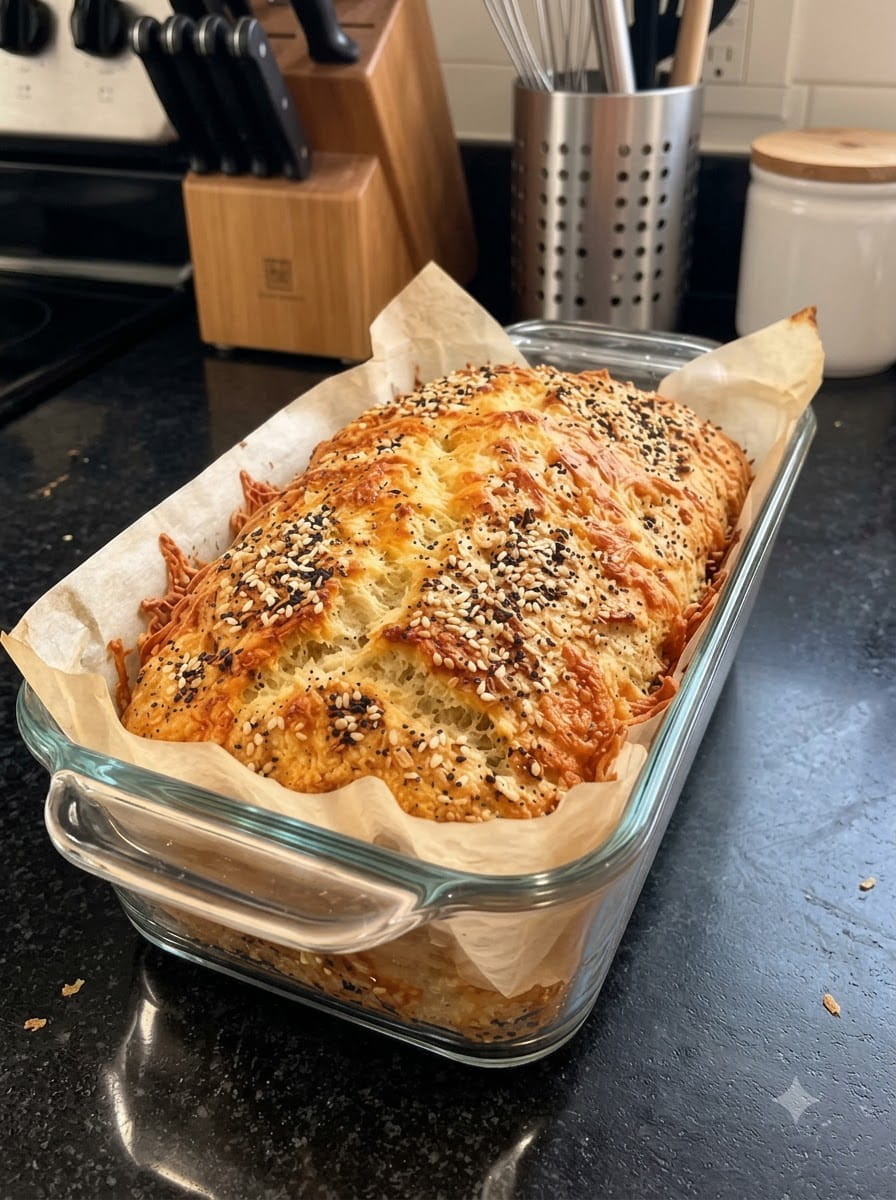
- Everything bagel: Sprinkle everything bagel seasoning on top before baking.
- Sun-dried tomato and basil: Add a few chopped sun-dried tomatoes and dried basil.
Sweet Variations
- Cinnamon swirl feel: Mix in 1 teaspoon cinnamon and a small drizzle of honey or maple syrup.
- Banana-style loaf: Add half a mashed ripe banana for natural sweetness.
- Blueberry: Fold in a handful of fresh or frozen blueberries.
- Vanilla and orange zest: A little of each turns it into a lightly sweet breakfast loaf.
Texture Boosters
- Seed topping: Press pumpkin seeds, sesame seeds, or extra sunflower seeds onto the top before baking.
- Chia or flax: Stir in a tablespoon of chia seeds or ground flaxseed for extra fiber.
How to Serve Sunflower Seed Protein Bread
This loaf is versatile enough for any meal.
Breakfast: Toast a slice and top it with avocado and a soft egg, almond butter and sliced banana, or cream cheese and smoked salmon.
Lunch: Use it for open-faced sandwiches. Because the bread is dense and moist, it holds up well to toppings like tuna salad, chicken salad, or hummus and vegetables.
Snack: Spread on a little nut butter, or serve with sliced cheese and fruit.
Dinner side: Serve it alongside soups, stews, or salads. It’s especially good with tomato soup.
For the best texture, toast your slices. A few minutes in a toaster or a hot skillet crisps the outside and brings out the nuttiness of the seeds.
Nutrition Overview
Exact nutrition depends on the brands you use and how many slices you cut, but here is what you can generally expect from this loaf:
- Protein: Contributed by the eggs, Greek yogurt, and the sunflower seeds themselves.
- Healthy fats: Sunflower seeds are rich in unsaturated fats and also provide vitamin E.
- Fiber: Sunflower seeds contribute dietary fiber that supports fullness and digestion.
- Carbohydrates: Considerably lower than a traditional wheat loaf, since there’s no flour.
- Minerals: Sunflower seeds provide magnesium, selenium, and other minerals.
For precise numbers, enter your exact ingredients into a nutrition calculator and divide by the number of slices. If you track macros or have specific dietary needs, that will be more accurate than a general estimate.
Is Sunflower Seed Bread Healthy?
For many people, yes. This loaf is made from whole-food ingredients, with no refined flour and no added sugar. It offers protein, fiber, and healthy fats, which together help with satiety.
A few things to keep in mind:
- It’s calorie-dense. Seeds are naturally energy-rich, so slices are more filling but also higher in calories than they might look.
- Portion size matters. One or two slices is usually satisfying.
- Allergies. The recipe contains eggs and dairy. Anyone with a sunflower seed allergy should avoid it.
- Individual needs vary. If you manage a medical condition or follow a specific diet plan, check with a doctor or registered dietitian.
Can You Make It Dairy-Free?
Yes, with some adjustments. You can replace the Greek yogurt with a thick, unsweetened dairy-free yogurt such as coconut or almond yogurt. Choose a thick variety, since thin yogurts will make the batter too wet. The flavor and texture will change slightly, and the loaf may be a little softer, but it works well.
Can You Make It Egg-Free?
This is harder. Eggs provide the main structure in the recipe, so removing them changes the result significantly. Flax eggs (1 tablespoon ground flaxseed mixed with 3 tablespoons water per egg) may work for binding, but expect a denser, more crumbly loaf. This recipe is really designed around eggs, so for the most reliable result, keep them in.
How to Store Sunflower Seed Protein Bread
Refrigerator: Store the cooled loaf in an airtight container or wrapped tightly in parchment and foil. It keeps for about 4 to 5 days. Because it contains eggs and yogurt, refrigeration is the safest choice rather than leaving it on the counter.
Freezer: For longer storage, slice the loaf first, then freeze the slices with a small sheet of parchment between them. Place them in a freezer bag, and they keep well for up to 3 months. Toast slices straight from frozen.
Reheating: A toaster, toaster oven, or dry skillet brings the slices back to life. Microwaving works in a pinch but won’t give you any crispness.
Troubleshooting Common Problems
The loaf is too dense or heavy. This can happen if the baking powder is old, the seeds were ground unevenly, or the batter was overmixed. Check that your baking powder is fresh, and grind the seeds more finely.
The center is gummy. Usually the loaf was underbaked or sliced too soon. Bake until a toothpick comes out clean, and let it cool completely before cutting.
The bread tastes bitter. Seeds that are old or stored poorly can go rancid and taste bitter. Always taste a few seeds before using them. They should taste fresh and mild, not sharp or stale.
The batter is too wet. If your yogurt was thinner than Greek-style, the batter can end up loose. Use a thick Greek yogurt, or add a tablespoon or two more ground seeds.
The loaf sticks to the pan. Make sure you’ve lined the pan with parchment. Lightly greasing the pan under the parchment can help too.
The top browns too quickly. Cover loosely with foil for the remainder of baking.
Frequently Asked Questions
Can I use roasted sunflower seeds?
Yes. Roasted seeds give a deeper, toastier flavor. If they’re salted, reduce the added salt to avoid an overly salty loaf.
Can I use sunflower seed flour instead of grinding my own?
Yes, if you can find it. Use the same weight (150 g) for the best results. Grinding your own is usually cheaper and fresher.
Do I need a food processor?
A food processor or blender works best. A strong blender can handle it too, but work in short pulses and be careful not to overheat the seeds. A clean coffee or spice grinder can also grind small batches.
Is this bread keto-friendly?
It is lower in carbohydrates than regular bread, which many people on low-carb diets appreciate. Whether it fits your plan depends on your personal carb target, so calculate the numbers for your own ingredients.
Can I double the recipe?
Yes. Use a standard-size loaf pan and expect to add some baking time. Start checking at around 50 minutes and bake until the center is set.
Why does the bread have such a dense texture?
Without gluten, the loaf can’t trap air the way wheat bread does. That means a denser, moister crumb, which is normal for flourless breads. It’s closer to a hearty seeded loaf than to a fluffy sandwich bread.
Can I add sweeteners?
You can add a teaspoon or two of honey or maple syrup for a lightly sweet loaf. Keep in mind that this changes the nutrition and may brown the crust faster.
Final Thoughts
Sunflower seed protein bread is one of those recipes that proves simple can be satisfying. With only a few ingredients, no flour, and no rising time, you get a hearty, nutritious loaf that works for toast, sandwiches, and snacks. The keys are simple: grind the seeds in short pulses, use thick Greek yogurt, bake until set, and let the bread cool completely before slicing.
Once you’ve mastered the base recipe, experiment with herbs, cheese, fruit, or spices to make it your own. Bake a loaf at the start of the week, slice and freeze it, and you’ll have a quick, protein-rich bread ready whenever you need it.
Have you tried making this bread? Share your favorite variation in the comments, and don’t forget to save the recipe for your next bake.
Print
Sunflower Seed Protein Bread
Ingredients
Here’s everything you need for one small loaf:
- 1½ cups (150 g) sunflower seeds, finely ground
- 1 cup (225 g) plain Greek yogurt
- 3 large eggs
- 1 teaspoon baking powder
- ¼ teaspoon salt
- 1 tablespoon olive oil (optional)
Instructions
Preheat your oven to 350°F (175°C). Line a small loaf pan with parchment paper, leaving a little overhang on the sides so you can lift the finished loaf out easily. Parchment is helpful here because a flourless loaf can stick to the pan.
Add the sunflower seeds to a food processor or high-speed blender. Pulse in short bursts until they look like a fine flour. Stop as soon as you reach that stage.
This is the step where most people go wrong. Sunflower seeds are rich in natural oils, and if you blend too long, the friction and heat will turn them into sunflower seed butter. Short pulses and an occasional scrape down the sides will keep you in flour territory.
In a large bowl, whisk the Greek yogurt and eggs together until completely smooth. If you’re using olive oil, add it now. Take a minute here, because smooth wet ingredients make a more even loaf.
Add the ground sunflower seeds, baking powder, and salt to the wet mixture. Stir until you have a thick, evenly combined batter. It will be much thicker than a cake batter, closer to a dense, scoopable paste. Don’t overmix. You only need everything fully combined.
Transfer the batter into your prepared loaf pan. Use a spatula to smooth the top so it bakes evenly.
Bake for 40 to 50 minutes. The loaf is ready when it’s firm to the touch, golden on top, and a toothpick inserted in the center comes out clean. Ovens vary, so begin checking around the 40-minute mark.
Let the bread cool in the pan for about 10 minutes, then lift it onto a wire rack. Wait until it’s completely cool before slicing. Flourless breads continue to set as they cool, and slicing too early can make the center seem gummy. Patience gives you a cleaner slice and a better texture.