
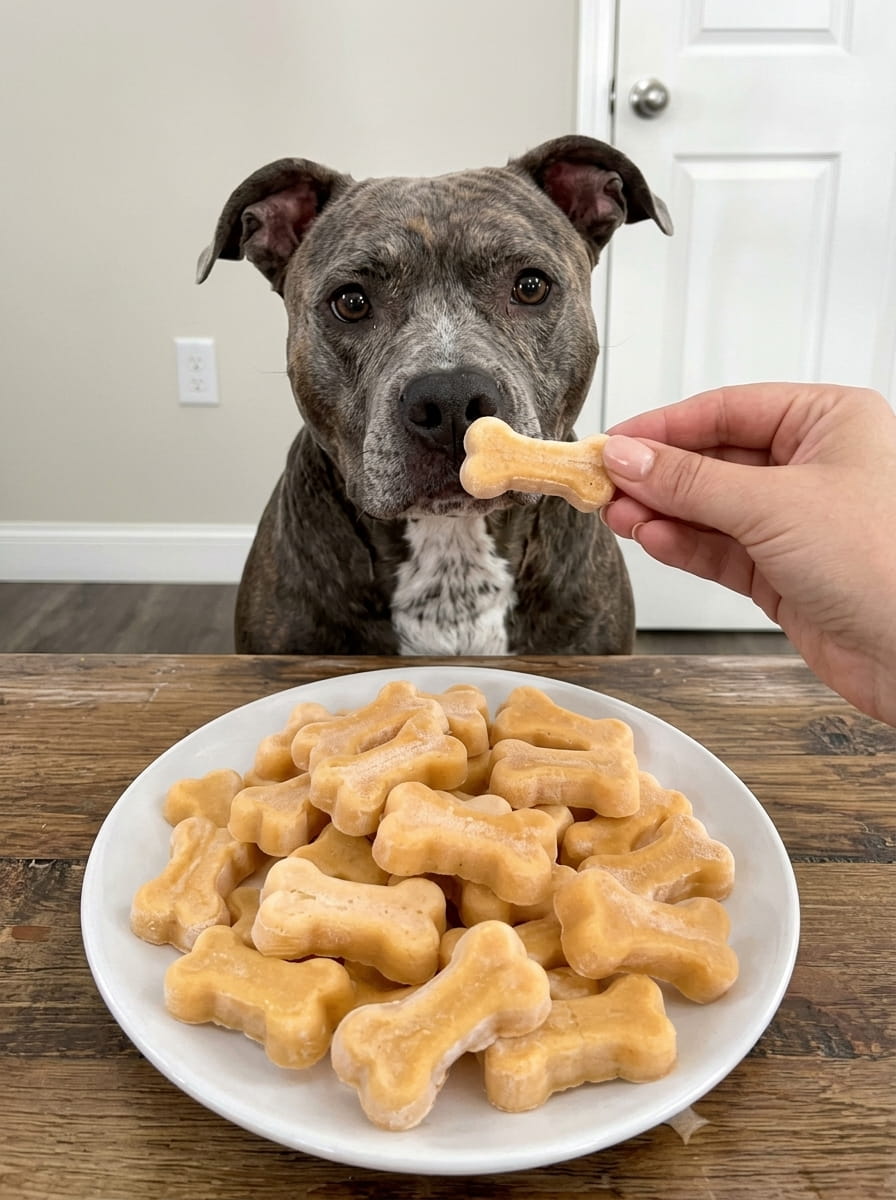
Banana Pumpkin Yogurt Bones: Homemade Frozen Dog Treats 🍌🎃🦴🐶
If your dog comes running the moment the freezer door opens, these frozen dog treats are for you. They’re made from just three simple ingredients: ripe banana, plain pumpkin puree, and plain Greek yogurt. Blended until creamy and frozen into little bone shapes, they’re naturally sweet, refreshing, and easy to make.
There’s no oven, no dough, and no special equipment beyond a blender and a silicone mold. You also know exactly what goes into them, with no added sugar, artificial sweeteners, or ingredients you can’t pronounce. Many dogs also love the cold, creamy texture, which makes these a nice cool-down snack after a walk or a game of fetch.
This guide covers the full recipe, step-by-step instructions, and tips for smooth, easy-to-unmold treats. It also covers the safety points that matter when making food for dogs, including which ingredients to check on the label, how much to feed, and when to skip a recipe or ask your vet first. You’ll also find variations, storage advice, and answers to common questions.
Why You’ll Love These Banana Pumpkin Yogurt Bones
Only three ingredients. Banana, pumpkin, and yogurt are easy to find and easy to keep on hand.
No baking required. Blend, pour, freeze. There’s no oven to heat and no rolling or cutting.
Naturally sweet and creamy. The ripe banana gives natural sweetness, the pumpkin adds body, and the yogurt makes the texture smooth and creamy.
No added sugar or artificial sweeteners. You control the ingredients, which is a big reason many owners choose homemade treats.
Pumpkin adds fiber. Plain pumpkin is a popular ingredient in dog treats because it’s a good source of fiber and is generally gentle on most dogs’ stomachs.
Refreshing in warm weather. Frozen treats are a nice way to help your dog cool off on a hot day.
Fun and cute. Bone-shaped treats make great gifts for dog-loving friends, party favors for a “gotcha day,” or a special reward for training.
Easy to portion. Silicone molds make small, consistent pieces, so it’s simple to size the treat to your dog.
Ingredients for Banana Pumpkin Yogurt Dog Treats
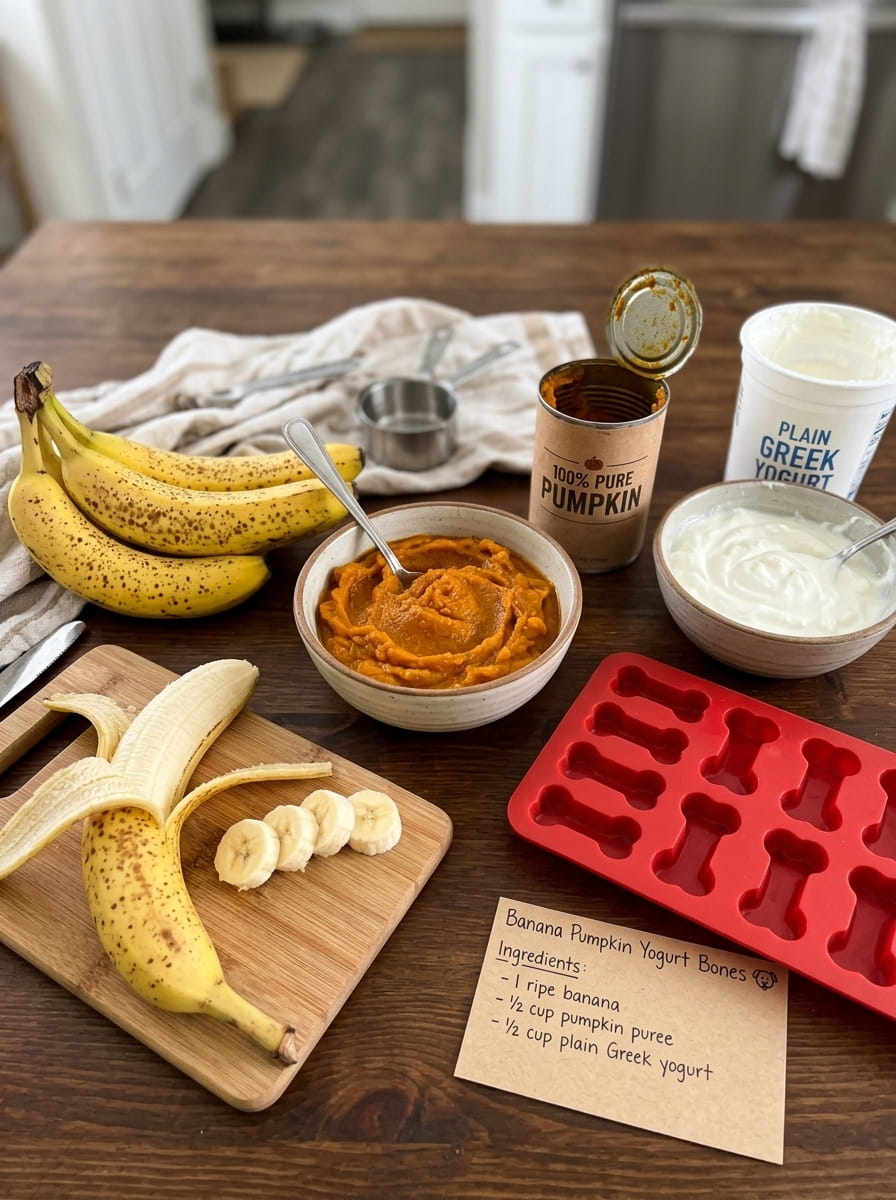
For the Frozen Dog Treats
- 1 ripe banana, peeled
- ½ cup (120 g) plain pumpkin puree (100% pumpkin, not pumpkin pie filling)
- ½ cup (120 g) plain, unsweetened Greek yogurt
This makes roughly 1½ cups of mixture. Depending on your mold size, that’s about 15 to 25 small treats.
Ingredient Notes and Safety Tips
Ripe banana. A ripe banana blends more smoothly and tastes sweeter, so you don’t need to add anything else. Bananas are safe for most dogs in small amounts, but they contain natural sugar, so they should be a minor part of the diet. If your dog is overweight, diabetic, or on a special diet, ask your vet before offering sweet fruit treats.
Plain pumpkin puree. Check the label carefully. You want 100% pumpkin with no other ingredients. Pumpkin pie filling is not the same thing. It usually contains sugar and spices such as nutmeg, and some products may include other additives. Look for a can that lists only pumpkin. Fresh cooked pumpkin that has been steamed or roasted without seasoning and mashed until smooth also works.
Plain, unsweetened Greek yogurt. This is the ingredient to read most carefully:
- Choose plain and unsweetened yogurt with no flavorings.
- Check the label for xylitol. Xylitol is an artificial sweetener that is highly toxic to dogs, even in small amounts. It’s more common in “sugar-free” or “light” products, so avoid those.
- Avoid yogurts with added sugar, fruit syrups, or artificial flavors.
- Greek yogurt is strained and generally lower in lactose than regular yogurt. Many dogs tolerate small amounts, but some dogs are lactose intolerant or have dairy sensitivities. If your dog gets gas, loose stools, or an upset stomach from dairy, skip this recipe or ask your vet about a dairy-free option.
A note about “dog-safe” food. Every dog is different. Allergies, sensitive stomachs, weight concerns, and medical conditions can change which foods are appropriate. If you’re unsure, a quick conversation with your vet can save you worry.
Equipment You’ll Need
- A blender or food processor
- Bone-shaped silicone molds (or small silicone ice cube trays)
- A spatula or spoon for filling the molds
- A baking sheet or tray to hold the molds flat (optional but helpful)
- An airtight freezer container or bag for storing the finished treats
Silicone molds make unmolding easy. You can find bone-shaped, paw-shaped, and mini ice cube styles. Smaller molds are best for small dogs and for training rewards.
How to Make Banana Pumpkin Yogurt Frozen Dog Treats (Step by Step)
Step 1: Prepare the Banana
Peel the ripe banana and break it into small pieces. Smaller pieces blend faster and give you a smoother mixture. Banana with brown spots is ideal because it’s sweeter and softer.
Step 2: Add the Pumpkin
Place the banana pieces and the pumpkin puree in a blender or food processor. Double-check that the can says 100% pumpkin and not pie filling.
Step 3: Add the Yogurt
Add the plain Greek yogurt to the mixture. Confirm one more time that the yogurt is unsweetened and contains no xylitol or other artificial sweeteners.
Step 4: Blend Until Creamy
Blend until the mixture is smooth and thick with a consistent creamy texture. Stop and scrape down the sides if needed. There should be no banana lumps left, since lumps freeze into uneven bits that can be harder to unmold.
Step 5: Fill the Molds
Spoon or pour the mixture into bone-shaped silicone molds or small ice cube trays. A small spoon works well for tiny molds. For a neater result, transfer the mixture to a zip-top bag, snip off one corner, and pipe it into the molds.
Step 6: Remove Air Bubbles
Gently tap the molds against the counter to release trapped air and smooth the tops. This helps the treats freeze with clean shapes and prevents hollow spots.
Step 7: Freeze
Place the molds flat in the freezer for 3 to 4 hours, or until completely solid. A baking sheet underneath makes it easier to carry the filled molds without spilling. If you’re using larger molds, they may need a little longer.
Step 8: Unmold
Carefully remove the frozen treats by gently flexing the silicone and pushing them out from the bottom. If they stick, let the mold sit at room temperature for a minute or two and try again.
Step 9: Serve
Offer your dog one appropriately sized treat at a time as an occasional snack. Supervise while your dog enjoys it, and put the rest back in the freezer right away.
Expert Tips for the Best Frozen Dog Treats
1. Use a really ripe banana. Ripe bananas blend smoothly and bring natural sweetness, so the treats taste good without any added sugar.
2. Read every label. Check the pumpkin for pie filling and check the yogurt for sweeteners, especially xylitol. This is the single most important safety step.
3. Blend thoroughly. A smooth mixture fills the molds cleanly and freezes evenly.
4. Choose the right mold size. Match the treat to your dog. Tiny molds suit small dogs, puppies, and training rewards, while larger bones suit big dogs.
5. Fill the molds on a flat tray. It prevents spills and makes it easy to slide everything into the freezer.
6. Let the treats sit for a moment before serving. Very hard, frozen-solid treats straight from the freezer can be tough on small mouths. A minute or two at room temperature softens the surface slightly.
7. Store them properly. Once frozen, move the treats to an airtight container so they don’t absorb freezer odors or get freezer burn.
8. Serve with supervision. Always watch your dog while they eat, especially if they tend to gulp food or have dental problems.
How Much Should You Feed?
Treats should be just that, treats. A commonly used guideline from veterinarians is that treats should make up no more than about 10% of a dog’s daily calories, with the rest coming from a complete and balanced dog food.
In practice:
- Small dogs and puppies: Offer a small piece or a mini bone, not the whole thing at once.
- Medium and large dogs: One bone-sized treat is usually plenty for an occasional snack.
- Start small the first time. Offer a little and watch for any signs of an upset stomach before giving more.
- Don’t overdo it. Too much pumpkin can cause loose stools or, in some dogs, constipation, and too much fruit adds sugar.
If your dog has health conditions, is on a prescription diet, is overweight, or is very young or senior, check with your veterinarian about how often these treats are appropriate.
Recipe Variations and Add-Ins
These variations stay in dog-friendly territory, but remember to introduce new ingredients one at a time and check with your vet if your dog has special dietary needs.
Add a little plain, unsweetened peanut butter. A teaspoon swirled in adds flavor and protein. Check the label for xylitol. Choose a peanut butter with only peanuts, and perhaps salt, on the ingredient list.
Add blueberries. A few blueberries blended in or dropped into each mold add color and antioxidants. Dogs generally enjoy them frozen.
Add a dash of cinnamon. Some owners add a tiny pinch of plain ground cinnamon. Keep it minimal, and skip it if your dog has a sensitive stomach. Never use nutmeg, which is toxic to dogs in larger amounts.
Make “pupsicles” in a larger mold. Use bigger silicone molds for a longer-lasting treat for large dogs on hot days.
Use a dairy-free base. If your dog doesn’t tolerate dairy, you can try replacing the yogurt with an unsweetened, xylitol-free dairy-free yogurt alternative, or use extra pumpkin and a little water or low-sodium, onion-free and garlic-free broth. Check ingredient lists carefully.
Make a stuffed toy treat. Spoon the mixture into a rubber, freezer-safe chew toy, such as a KONG, and freeze. It keeps your dog busy for a while.
Layer the treats. Freeze a layer of yogurt, then add a layer of banana-pumpkin mixture for a pretty two-tone effect.
Ingredients to Avoid in Homemade Dog Treats
When you start making your own dog treats, it’s worth knowing which common foods can be harmful. Never add:
- Xylitol (found in some peanut butters, yogurts, gums, and baked goods)
- Chocolate and cocoa
- Grapes and raisins
- Onions, garlic, chives, and leeks
- Macadamia nuts
- Nutmeg and large amounts of other strong spices
- Alcohol and caffeine
- Excess salt or sugar
If your dog eats something toxic, contact your veterinarian or a pet poison helpline right away rather than waiting for symptoms.
How to Store Frozen Dog Treats
Freezer: Once the treats are solid, transfer them to an airtight freezer-safe container or zip-top freezer bag. Store them for up to about 2 to 3 months for the best quality. Layer them with parchment paper if you want to keep them from sticking together.
Serving from frozen: Take out one treat at a time, and put the rest back in the freezer promptly.
Do not refreeze melted treats. If the treats have melted into a puddle, discard them. Melted dairy-based mixtures shouldn’t be left out and refrozen.
Refrigerator: These treats are meant to be kept frozen. If left in the fridge, they’ll soften and should be eaten within a day or two.
Making a big batch: The recipe doubles or triples easily. Just keep the ratio of banana, pumpkin, and yogurt the same.
Why Pumpkin and Banana Are Popular in Dog Treats
Pumpkin is widely used in dog treats and dog food because it’s rich in fiber and is generally easy on the stomach. Plain pumpkin is also low in calories compared with many store-bought treats, so it makes a good base for homemade recipes.
Banana adds natural sweetness and a creamy texture, along with potassium and some vitamins. It’s best offered in small amounts because of its sugar content.
Plain Greek yogurt adds creaminess and a bit of protein. Because it’s strained, it tends to have less lactose than regular yogurt, which many dogs handle better. Still, not every dog does well with dairy, so watch how your dog responds.
Together, these three ingredients make a simple, palatable treat without relying on added sugars, flavorings, or fillers.
Frequently Asked Questions
Can dogs eat bananas?
Yes, most dogs can eat bananas in moderation. They’re sweet and contain natural sugar, so keep portions small. Never feed the peel, which is hard to digest.
Is pumpkin good for dogs?
Plain, cooked pumpkin is generally safe and is often used to add fiber to a dog’s diet. Avoid pumpkin pie filling, which contains sugar and spices.
Is Greek yogurt safe for dogs?
Plain, unsweetened Greek yogurt is safe for many dogs in small amounts, but you must make sure it contains no xylitol or other artificial sweeteners. Dogs that are lactose intolerant or have dairy allergies should avoid it.
What is xylitol and why does it matter?
Xylitol is an artificial sweetener found in some sugar-free foods and products. It is highly toxic to dogs, even in small amounts. Always read ingredient labels on yogurt, peanut butter, and any other product you use.
Can puppies eat these treats?
Many puppies can enjoy small portions, but puppies have sensitive stomachs and specific nutritional needs. Check with your vet first, and offer only a very small piece at first.
How long do the treats take to freeze?
Typically 3 to 4 hours for small molds. Larger molds can take longer. They’re ready when completely solid all the way through.
Can I use frozen banana?
Yes. Thaw it slightly so it blends smoothly. A frozen banana can also help make the mixture thicker and colder.
Can I use regular yogurt instead of Greek yogurt?
You can use plain, unsweetened regular yogurt, but Greek yogurt is thicker and usually lower in lactose, which gives a creamier result and tends to be easier on dogs’ stomachs.
Can I make these without dairy?
Yes. Use an unsweetened, xylitol-free dairy-free yogurt alternative, or replace the yogurt with extra pumpkin and a small amount of plain water.
How many treats can my dog have per day?
Treats should make up only a small portion of your dog’s diet, generally no more than about 10% of daily calories. For most dogs, one small treat as an occasional snack is plenty.
What if my dog has diarrhea or an upset stomach after eating them?
Stop feeding the treat and talk to your veterinarian, especially if symptoms continue. Your dog may be sensitive to dairy, banana, or a change in diet.
Can I use fresh pumpkin?
Yes. Steam or roast plain pumpkin until soft, mash or puree it until smooth, and let it cool. Don’t add salt, sugar, butter, or spices.
Are these treats good for hot weather?
They’re a nice cooling snack on warm days. Always provide plenty of fresh water too, and watch for signs of overheating in hot weather.
Can these treats help with an upset stomach?
Pumpkin is often mentioned as a gentle fiber source, but these treats are not medicine. If your dog has ongoing digestive problems, see your vet for proper advice.
Do these treats replace a meal?
No. They’re an occasional snack and are not nutritionally complete. Your dog should still eat a complete and balanced diet.
Final Thoughts
These banana pumpkin yogurt frozen dog treats show that making something special for your pup doesn’t need to be complicated. With three simple ingredients, a blender, and a silicone mold, you can make creamy, naturally sweet, bone-shaped snacks that dogs love.
Read your labels, especially the yogurt, keep portions small, and introduce the treats gradually. Do that, and you’ll have a cool, wholesome way to reward your best friend, whether it’s a hot afternoon, a training session, or just because. ❤️🐾
If you make these treats, leave a comment and a star rating, and tell us how your dog liked them. Share the recipe with a fellow dog lover. 🍌🎃🦴
Print
Banana Pumpkin Yogurt Bones – Homemade Frozen Dog Treats
Ingredients
For the Frozen Dog Treats
- 1 ripe banana, peeled
- ½ cup (120 g) plain pumpkin puree (100% pumpkin, not pumpkin pie filling)
- ½ cup (120 g) plain, unsweetened Greek yogurt
This makes roughly 1½ cups of mixture. Depending on your mold size, that’s about 15 to 25 small treats.
Instructions
Peel the ripe banana and break it into small pieces. Smaller pieces blend faster and give you a smoother mixture. Banana with brown spots is ideal because it’s sweeter and softer.
Place the banana pieces and the pumpkin puree in a blender or food processor. Double-check that the can says 100% pumpkin and not pie filling.
Add the plain Greek yogurt to the mixture. Confirm one more time that the yogurt is unsweetened and contains no xylitol or other artificial sweeteners.
Blend until the mixture is smooth and thick with a consistent creamy texture. Stop and scrape down the sides if needed. There should be no banana lumps left, since lumps freeze into uneven bits that can be harder to unmold.
Spoon or pour the mixture into bone-shaped silicone molds or small ice cube trays. A small spoon works well for tiny molds. For a neater result, transfer the mixture to a zip-top bag, snip off one corner, and pipe it into the molds.
Gently tap the molds against the counter to release trapped air and smooth the tops. This helps the treats freeze with clean shapes and prevents hollow spots.
Place the molds flat in the freezer for 3 to 4 hours, or until completely solid. A baking sheet underneath makes it easier to carry the filled molds without spilling. If you’re using larger molds, they may need a little longer.
Carefully remove the frozen treats by gently flexing the silicone and pushing them out from the bottom. If they stick, let the mold sit at room temperature for a minute or two and try again.
Offer your dog one appropriately sized treat at a time as an occasional snack. Supervise while your dog enjoys it, and put the rest back in the freezer right away.