
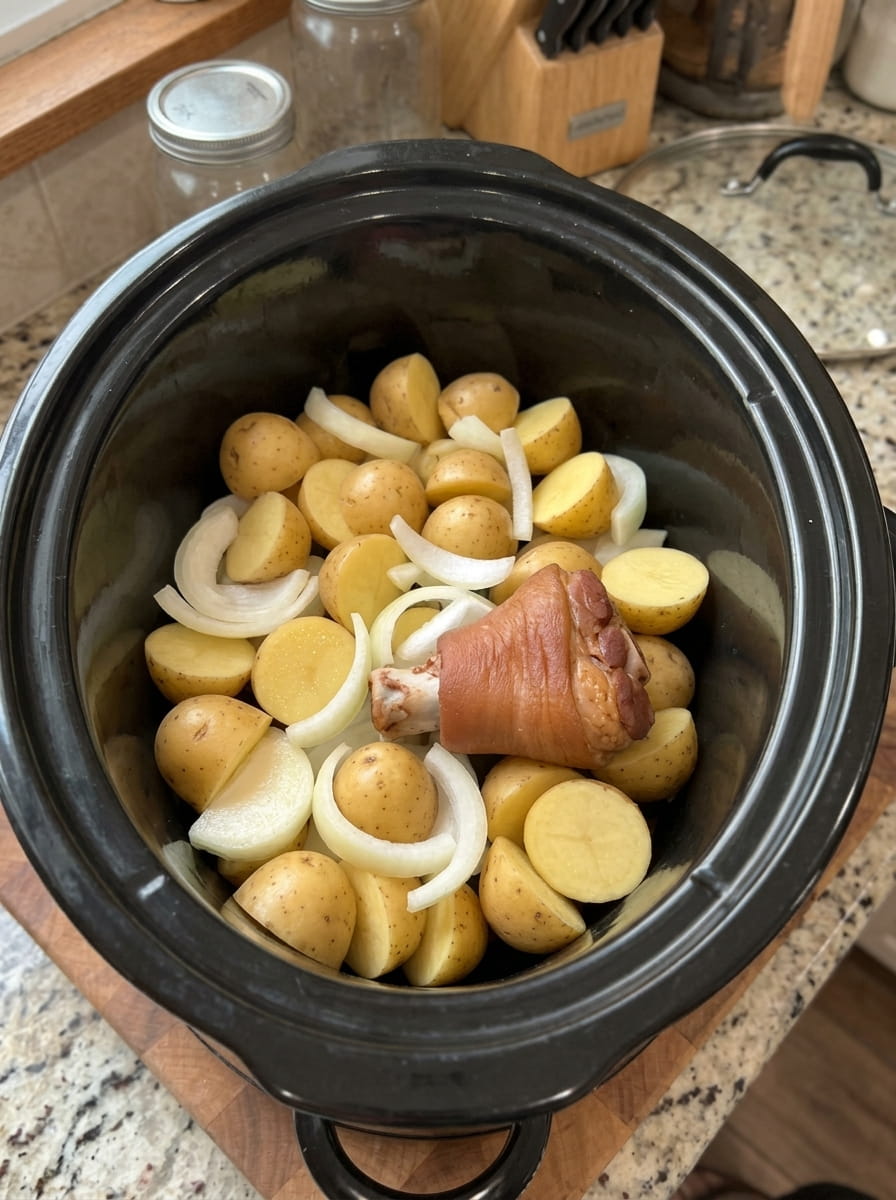
Slow-Simmered Pork Hocks with Potatoes & Cabbage: Easy Country Comfort Food
Introduction: The Cozy Dinner Your Grandmother Would Approve Of
There are meals you cook because you are hungry, and there are meals you cook because you want the whole house to smell like home. Slow-simmered pork hocks with potatoes and cabbage belongs firmly in the second category. It is the kind of dish that bubbles quietly on the stove while the windows fog up, while the dog wanders into the kitchen hoping for a dropped scrap, and while everyone in the family keeps asking, “Is it ready yet?”
This recipe is old-fashioned country cooking at its best. Smoky pork hocks release their deep, savory flavor into the broth as they simmer. Baby gold potatoes soak up every drop of that flavor and turn creamy and tender. Wedges of green cabbage soften into something silky and almost buttery. Everything cooks together in a single pot, which means very little hands-on work and almost no cleanup.
Best of all, you only need five main ingredients. No complicated techniques, no special equipment, and no trip to a specialty store. If you can chop an onion and turn on a burner, you can make this dish. It is perfect for chilly evenings, relaxed Sunday family dinners, or any day you are craving real homemade comfort food without spending hours fussing in the kitchen.
In this guide you will find the full ingredient list, step-by-step instructions, helpful tips for the most tender results, ingredient swaps, serving ideas, storage and reheating advice, and answers to the most common questions about cooking pork hocks. Let’s get started.
What Are Pork Hocks, and Why Are They So Good?
If you have never cooked with pork hocks before, a quick introduction helps. A pork hock (sometimes called a ham hock or pork knuckle) is the joint section of the pig’s leg, located between the foot and the meat of the ham or shoulder. It is a tough, hard-working cut that contains a lot of connective tissue, skin, bone, and a modest amount of meat.
That might not sound glamorous, but those exact qualities are what make pork hocks so valuable in the kitchen:
- Collagen creates body. When simmered low and slow, the collagen in the skin and connective tissue breaks down into gelatin. This gives your broth a rich, slightly silky texture that you simply cannot get from plain stock.
- Bones add depth. The bones contribute savory, meaty flavor to the cooking liquid, so the broth tastes like it has been simmering all day.
- Smoke adds character. Smoked pork hocks are cured and smoked before they ever reach your kitchen. That smokiness seasons everything in the pot, from the potatoes to the cabbage, with a deep, campfire-like warmth.
- They are budget friendly. Pork hocks are one of the more affordable cuts of pork, which makes this dish a smart choice for feeding a family without overspending.
The key to success is patience. Pork hocks are not meant to be rushed. Given enough time at a gentle simmer, the tough meat relaxes completely and pulls away from the bone in tender, juicy strands.
Why You’ll Love This Recipe
Here is why this dish earns a regular spot in the dinner rotation:
- Just five main ingredients. Pork hocks, potatoes, cabbage, onion, and broth are all you need. The optional seasonings simply give you room to adjust to your taste.
- One pot, minimal cleanup. Everything cooks together, so you only wash a single pot at the end of the night.
- Hands-off cooking. After a few minutes of chopping, the stove does the work. You are free to relax, set the table, or tackle other tasks.
- Layers of flavor from simple ingredients. The smoky pork, sweet onion, and savory broth combine into something far greater than the sum of its parts.
- Truly satisfying. You get protein, hearty vegetables, and a flavorful broth all in one bowl, so no side dishes are required.
- Even better the next day. Like many slow-cooked meals, the flavors continue to deepen overnight, making leftovers a treat.
Ingredients
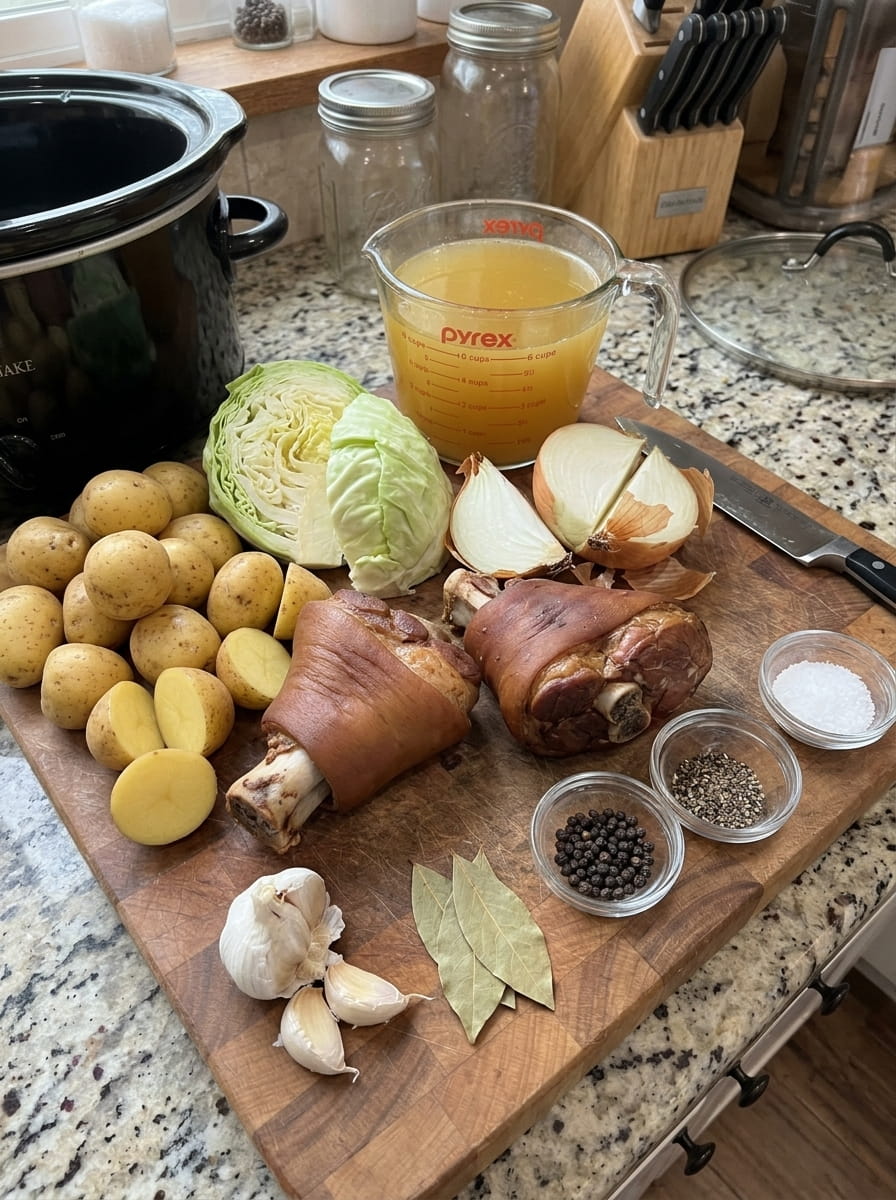
Main Ingredients
- 2 smoked pork hocks (about 2 to 2½ pounds total)
- 1½ pounds baby gold potatoes, halved
- ½ medium green cabbage, cut into wedges
- 1 medium yellow onion, quartered
- 6 cups chicken broth or water
Optional Seasonings
- 2 garlic cloves, crushed
- ½ teaspoon black pepper
- 1 bay leaf
- Salt, to taste, if needed
A Quick Note on Salt
Smoked pork hocks are cured, which means they are already quite salty. Many commercial chicken broths also contain a good amount of sodium. For these reasons, taste the broth near the end of cooking before you add any salt. In most cases, you will not need any at all. If you are sensitive to sodium, use water or low-sodium broth and rinse the hocks briefly before cooking.
Ingredient Tips for the Best Flavor
Choosing pork hocks. Look for hocks that feel heavy for their size and have a good amount of meat on them. Smoked hocks are usually sold in the refrigerated meat section, often near the bacon and ham. They may come individually wrapped or in packs of two. Fresh (unsmoked) hocks can also work, but they will give you a milder broth and you will need to add extra seasoning.
Choosing potatoes. Baby gold potatoes are ideal because their thin skins do not need peeling and their naturally creamy, buttery flesh holds its shape during long simmering. Yukon Gold potatoes cut into chunks are an excellent substitute. Russet potatoes tend to break down and cloud the broth, so they are less suitable here.
Choosing cabbage. Fresh green cabbage with tight, heavy heads and crisp outer leaves works best. When you cut it into wedges, leave a bit of the core attached to each piece. The core acts like a little anchor that keeps the leaves together during cooking, so your wedges stay intact instead of falling apart.
Choosing broth. Chicken broth makes the final dish richer and more savory, but plain water works well too because the pork hocks create so much flavor on their own. If you use water, consider adding the optional garlic, pepper, and bay leaf to make up for the difference.
Equipment You’ll Need
You do not need anything fancy for this recipe:
- A large, heavy-bottomed pot or Dutch oven (6 to 8 quarts) with a lid
- A cutting board and sharp knife
- A ladle and slotted spoon
- Tongs for lifting the hocks
A Dutch oven is especially nice because it holds steady, even heat, but any large stockpot will do the job.
Step-by-Step Instructions
Step 1: Prepare Your Vegetables
Halve the baby gold potatoes. Quarter the yellow onion. Cut the half head of cabbage into wedges, keeping a little of the core on each wedge so the leaves hold together. Crush the garlic cloves if you are using them. This whole step should take about ten minutes.
Step 2: Start the Pork Hocks
Place the smoked pork hocks in the bottom of your large pot. Add the quartered onion, and the garlic, bay leaf, and black pepper if you are using them. Pour in the chicken broth or water. The liquid should cover the hocks about three quarters of the way, and the rest will be covered by the time the vegetables settle in.
Step 3: Bring to a Gentle Simmer
Set the pot over medium-high heat and bring the liquid to a boil. As soon as it boils, reduce the heat to low so the surface is barely bubbling. Skim off any foam that rises to the top with a spoon. Cover the pot with the lid, leaving it slightly ajar if the simmer seems too vigorous.
Step 4: Simmer the Pork Low and Slow
Let the hocks simmer gently for about 1½ hours. This is where the magic happens. The skin softens, the collagen melts into the broth, and the meat begins to loosen from the bone. Check the pot occasionally and add a splash of hot water if the liquid has reduced too much.
Step 5: Add the Potatoes
After the first 1½ hours, nestle the halved potatoes into the broth around the hocks. Cover again and continue simmering for about 20 minutes, until the potatoes are just starting to soften.
Step 6: Add the Cabbage
Lay the cabbage wedges on top of the potatoes and pork. Gently press them down so they are partly submerged in the liquid. Cover and simmer for another 25 to 30 minutes, until the cabbage is silky and tender and a fork slides easily into the potatoes.
Step 7: Taste and Adjust
Remove the bay leaf. Taste the broth. If it needs a boost, add salt a pinch at a time, or a little more black pepper. Most of the time the smoky hocks provide plenty of seasoning.
Step 8: Shred and Serve
Lift the hocks onto a cutting board with tongs. Pull the tender meat from the bones, discarding the bones, excess fat, and any tough skin you prefer not to eat. Return the shredded meat to the pot, or arrange it on top of the vegetables in each bowl. Ladle everything into warm bowls with plenty of broth.
Pro Tips for Fall-Apart Tender Pork
- Never boil hard. A rolling boil makes the meat tough and stringy. A gentle simmer, where only a few lazy bubbles break the surface, produces the most tender results.
- Be patient with the hocks. If the meat does not slide easily off the bone after 1½ hours, give it another 20 to 30 minutes. Hocks vary in size and toughness.
- Add vegetables in stages. Potatoes and cabbage cook much faster than pork hocks, so adding them later keeps them from turning to mush.
- Skim for a cleaner broth. Removing the foam in the first few minutes gives you a clearer, better-tasting liquid.
- Do not skip the rest. After turning off the heat, let the pot sit with the lid on for 5 to 10 minutes. The vegetables finish absorbing flavor and the broth settles slightly.
- Season at the end. Because the pork and broth already contain salt, wait until the very end to judge whether you need more.
Easy Variations and Substitutions
One of the best things about this country-style dish is how flexible it is. Try these ideas to make it your own:
- Add carrots. Thick coin-cut carrots add natural sweetness and extra color. Add them with the potatoes.
- Try other greens. Collard greens, kale, or Savoy cabbage all work beautifully if you want a different texture.
- Use ham hocks instead of pork hocks. Ham hocks are smaller and meatier in some markets. Adjust the simmering time slightly, usually checking for tenderness at about 1 to 1¼ hours.
- Add a splash of vinegar. A teaspoon or two of apple cider vinegar stirred in at the end brightens the rich broth.
- Make it spicy. A pinch of red pepper flakes or a few drops of hot sauce in your bowl adds a gentle kick.
- Add herbs. A sprig of thyme or a few parsley stems tucked into the pot adds fresh, earthy notes. Garnish with chopped fresh parsley at the end.
- Swap the potatoes. Small red potatoes or even sweet potatoes can work, though sweet potatoes will bring a sweeter flavor and softer texture.
Slow Cooker and Pressure Cooker Methods
Slow Cooker
Place the hocks, onion, and optional seasonings in the slow cooker and add the broth. Cook on low for 6 to 7 hours, until the meat is very tender. Add the potatoes and cabbage, then cook for another 1½ to 2 hours on low, until the vegetables are soft. Shred the meat and serve.
Pressure Cooker or Instant Pot
Add the hocks, onion, seasonings, and broth to the pot. Cook on high pressure for about 45 minutes, then let the pressure release naturally for 15 minutes. Add the potatoes and cabbage, and cook on high pressure for 5 to 6 minutes with a quick release. This is a great option when you want the same flavor in far less time.
What to Serve with Pork Hocks, Potatoes & Cabbage
Because this is a complete one-pot meal, you do not need much on the side, but a few simple accompaniments make the table feel even more special:
- Cornbread. Warm, crumbly cornbread is the classic partner for soaking up the savory broth.
- Crusty bread or dinner rolls. Ideal for dunking into every last drop.
- Pickled onions or pickled peppers. Their bright acidity cuts through the richness beautifully.
- Mustard. A spoonful of whole-grain or Dijon mustard on the side pairs wonderfully with smoked pork.
- Simple green salad. A crisp, lightly dressed salad adds freshness and balance.
- Applesauce. The gentle sweetness is a traditional match for pork.
Storing and Reheating Leftovers
Refrigerating
Let the dish cool slightly, then transfer leftovers to airtight containers with plenty of broth. Store in the refrigerator for up to 4 days. The broth keeps the meat and vegetables moist.
Freezing
Freeze the pork and broth in freezer-safe containers for up to 3 months. Potatoes can become slightly grainy after freezing, so if you plan to freeze the dish, you may prefer to freeze the shredded pork and broth on their own and cook fresh potatoes and cabbage when you reheat.
Reheating
Warm leftovers gently in a pot over medium-low heat, adding a splash of water or broth if needed. You can also microwave individual portions in a covered bowl until hot throughout. For safety, reheat until steaming hot, and do not reheat more than once.
Turn Leftovers into Something New
- Shred the leftover pork and stir it into a pot of beans or lentil soup.
- Chop the vegetables and pork, then pan-fry them together for a crispy hash.
- Use the extra broth as a flavorful base for rice or other soups.
Make-Ahead and Meal Prep Advice
This recipe is wonderfully friendly to planning ahead. You can simmer the hocks a day in advance, refrigerate them in their broth, and add the potatoes and cabbage the next day. As the broth chills, you can lift off any solidified fat from the surface for a lighter result. Prepping the vegetables the morning of cooking also saves time at dinner. Cut the potatoes and keep them submerged in cold water until needed so they do not darken.
Frequently Asked Questions
How long does it take to cook pork hocks until tender?
On the stovetop, smoked pork hocks generally need about 1½ to 2 hours of gentle simmering. In a slow cooker, plan on 6 to 8 hours on low. In a pressure cooker, around 45 to 60 minutes usually does it. The meat is ready when it pulls easily away from the bone with a fork.
Do I need to soak smoked pork hocks before cooking?
Soaking is usually not necessary. If you are concerned about saltiness, you can briefly rinse the hocks under cool water, or blanch them in boiling water for 10 minutes, discard that water, and start fresh with new broth.
Are pork hocks and ham hocks the same thing?
They are very similar, and the terms are often used interchangeably. Both come from the lower leg of the pig. Ham hocks are typically cured and smoked, while “pork hocks” may be fresh or smoked depending on where you shop. Check the label to see whether the hock is smoked or unsmoked.
Can I use fresh, unsmoked pork hocks?
Yes. Expect a milder flavor, and add more seasoning, such as extra garlic, black pepper, a bay leaf, and salt, to compensate. You may also want a teaspoon of smoked paprika to mimic the smokiness.
Why is my cabbage mushy?
Cabbage is delicate and cooks quickly. If it turns mushy, it was added too early or cooked too long. Add it during the last 25 to 30 minutes and check it for tenderness so it stays silky rather than falling apart.
Why is my pork still tough?
Tough pork usually means it needs more time or the heat was too high. Reduce the heat to a gentle simmer and keep cooking, checking every 20 minutes until the meat is tender.
Can I make this dish without chicken broth?
Absolutely. Water works well, since the hocks create their own flavorful broth. Add the garlic, bay leaf, and pepper for extra depth.
Is this recipe gluten-free?
The base ingredients are naturally gluten-free. Double-check the label on your chicken broth and the smoked pork hocks, since some products may contain additives. Serve with gluten-free bread if you have dietary restrictions.
What can I do with the leftover broth?
Use it as a base for soups, cook rice or beans in it, or drink it as a warming cup of savory broth. It is rich in flavor and body.
How many people does this recipe serve?
It serves about 4 to 6 people, depending on appetites and how much bread or side dishes you serve alongside.
Final Thoughts: Simple Ingredients, Big Comfort
Great comfort food does not need to be complicated. This slow-simmered pork hock dish proves that a few humble ingredients, a big pot, and a little patience can create a meal that feels generous and deeply satisfying. The smoky pork perfumes the broth, the potatoes turn creamy and flavorful, and the cabbage softens into a silky, buttery bite.
Make it on a cold weekend afternoon, set the table with warm cornbread, and let the whole family gather around steaming bowls. It is the kind of meal that tastes like tradition, and the kind that people ask for again and again. If you give this recipe a try, leave a comment with your favorite variation, and share it with someone who loves old-fashioned country cooking. Happy simmering! ❤️
Print
Slow-Simmered Pork Hocks with Potatoes & Cabbage
Ingredients
Main Ingredients
- 2 smoked pork hocks (about 2 to 2½ pounds total)
- 1½ pounds baby gold potatoes, halved
- ½ medium green cabbage, cut into wedges
- 1 medium yellow onion, quartered
- 6 cups chicken broth or water
Optional Seasonings
- 2 garlic cloves, crushed
- ½ teaspoon black pepper
- 1 bay leaf
- Salt, to taste, if needed
Instructions
Halve the baby gold potatoes. Quarter the yellow onion. Cut the half head of cabbage into wedges, keeping a little of the core on each wedge so the leaves hold together. Crush the garlic cloves if you are using them. This whole step should take about ten minutes.
Place the smoked pork hocks in the bottom of your large pot. Add the quartered onion, and the garlic, bay leaf, and black pepper if you are using them. Pour in the chicken broth or water. The liquid should cover the hocks about three quarters of the way, and the rest will be covered by the time the vegetables settle in.
Set the pot over medium-high heat and bring the liquid to a boil. As soon as it boils, reduce the heat to low so the surface is barely bubbling. Skim off any foam that rises to the top with a spoon. Cover the pot with the lid, leaving it slightly ajar if the simmer seems too vigorous.
Let the hocks simmer gently for about 1½ hours. This is where the magic happens. The skin softens, the collagen melts into the broth, and the meat begins to loosen from the bone. Check the pot occasionally and add a splash of hot water if the liquid has reduced too much.
After the first 1½ hours, nestle the halved potatoes into the broth around the hocks. Cover again and continue simmering for about 20 minutes, until the potatoes are just starting to soften.
Lay the cabbage wedges on top of the potatoes and pork. Gently press them down so they are partly submerged in the liquid. Cover and simmer for another 25 to 30 minutes, until the cabbage is silky and tender and a fork slides easily into the potatoes.
Remove the bay leaf. Taste the broth. If it needs a boost, add salt a pinch at a time, or a little more black pepper. Most of the time the smoky hocks provide plenty of seasoning.
Lift the hocks onto a cutting board with tongs. Pull the tender meat from the bones, discarding the bones, excess fat, and any tough skin you prefer not to eat. Return the shredded meat to the pot, or arrange it on top of the vegetables in each bowl. Ladle everything into warm bowls with plenty of broth.