
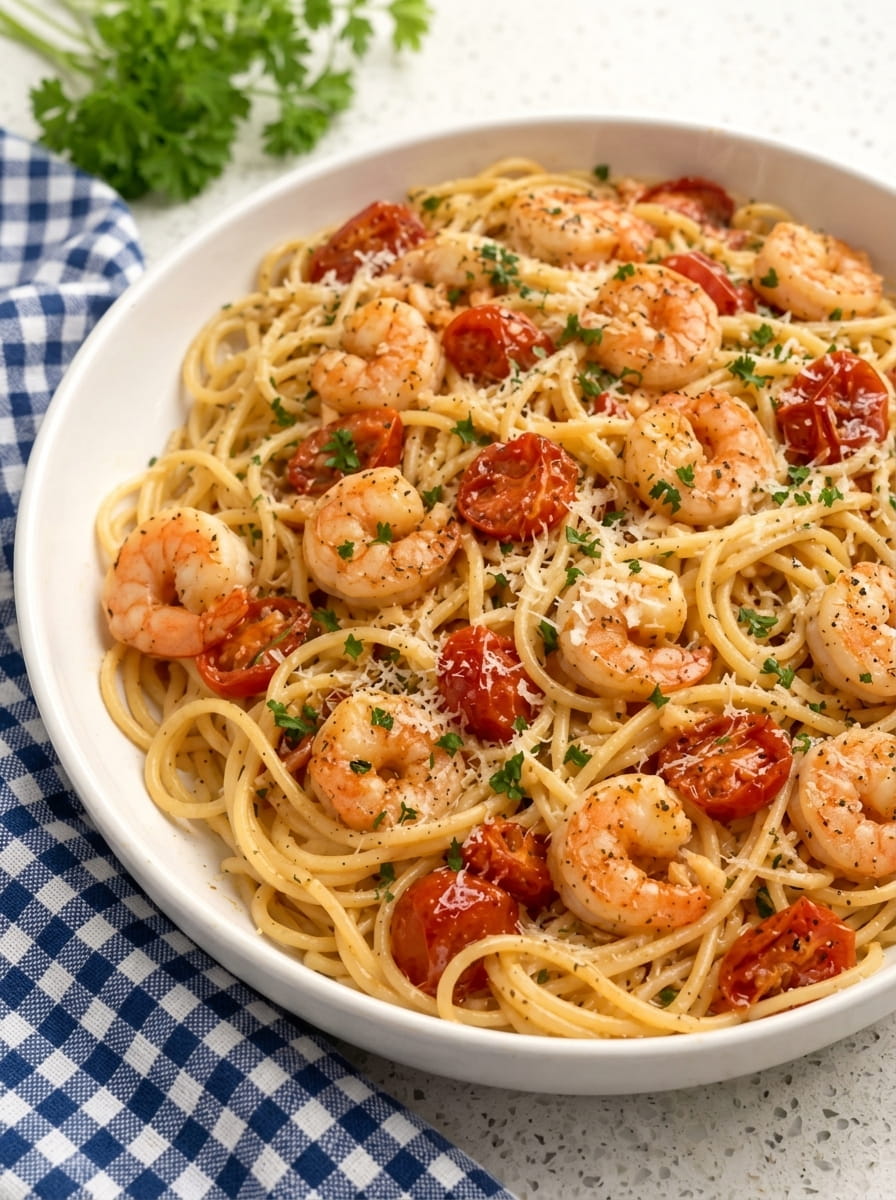
Garlic Butter Shrimp Pasta with Cherry Tomatoes & Parmesan 🍤🍝
Some dinners earn a permanent place in your rotation, and this garlic butter shrimp pasta is one of them. Juicy shrimp, sweet cherry tomatoes that burst into a light sauce, and tender spaghetti all come together in a silky garlic butter Parmesan sauce. A squeeze of lemon and a handful of fresh parsley finish the dish.
It has savory garlic, buttery richness, a little heat from red pepper flakes, and brightness from lemon. It takes about 30 minutes from start to finish, so it works for a busy weeknight, a cozy family dinner, or a date night at home. Best of all, it uses one pot for the pasta and one skillet for everything else, so cleanup is easy.
In this guide you’ll find the full recipe, step-by-step instructions, and the tips that keep the shrimp tender and the sauce creamy instead of greasy. You’ll also find substitutions, serving ideas, storage and reheating advice, and answers to common questions.
Why You’ll Love This Shrimp Spaghetti Recipe
It’s fast. Shrimp cooks in just a few minutes, so the pasta water is your main wait. From boiling water to the table, you’re looking at roughly 30 minutes.
It tastes special without the effort. Garlic, butter, Parmesan, and lemon are simple ingredients, but together they taste like something from an Italian-American restaurant.
The sauce makes itself. There’s no cream and no flour. Butter, olive oil, tomato juices, Parmesan, and starchy pasta water combine into a glossy sauce that clings to every strand of spaghetti.
It’s balanced. The tomatoes bring sweetness, the lemon brings acidity, the red pepper flakes bring warmth, and the Parmesan brings salty, nutty depth.
It’s flexible. You can adjust the heat, swap the pasta shape, add vegetables, or lighten it up, and it works every time.
Ingredients for Garlic Butter Shrimp Pasta
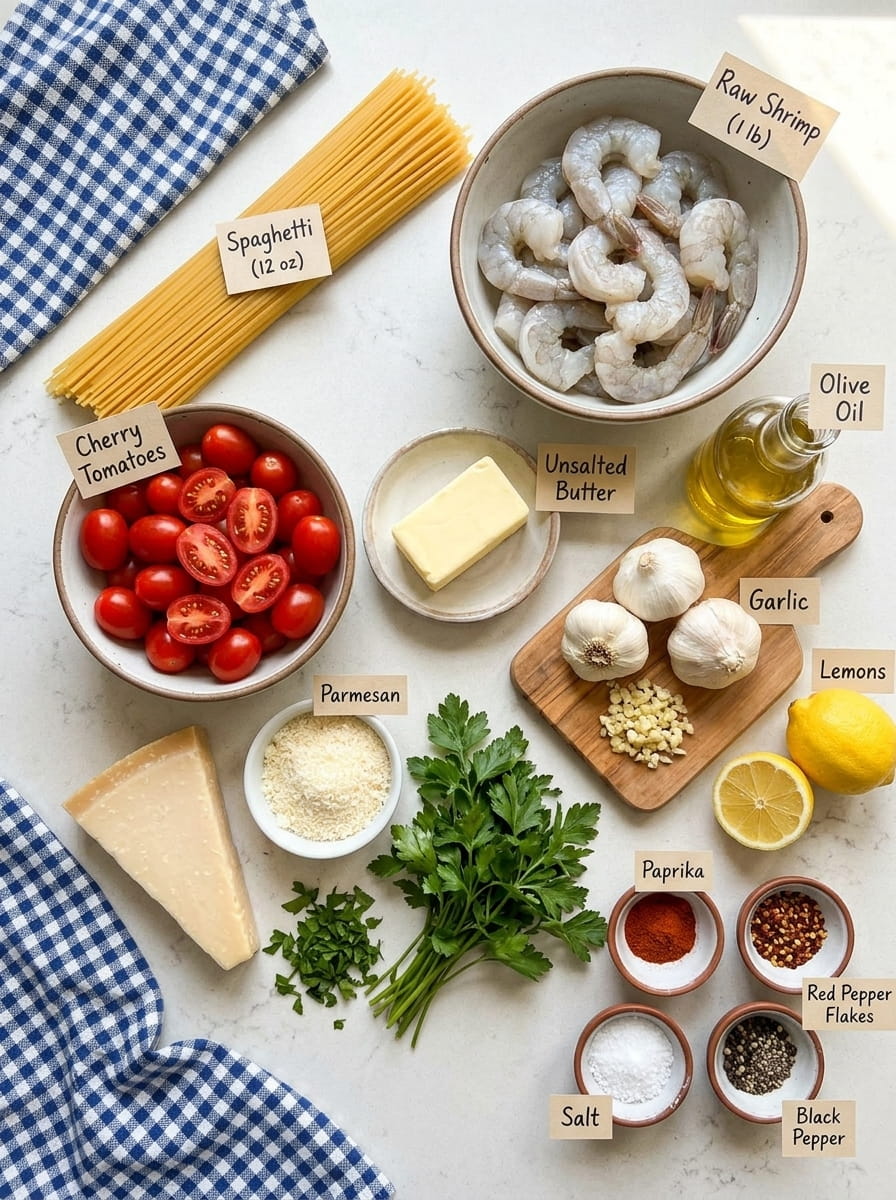
Here’s everything you need to serve about 4 people.
For the Pasta
- 12 oz (340 g) spaghetti
- 1 pound (450 g) large shrimp, peeled and deveined
- 2 tablespoons olive oil
- 3 tablespoons unsalted butter
- 5 garlic cloves, minced
- 2 cups (300 g) cherry tomatoes, halved
- ½ teaspoon red pepper flakes (optional)
- ½ teaspoon paprika
- Salt and black pepper, to taste
- ½ cup (50 g) freshly grated Parmesan cheese
- ½ cup reserved pasta water, as needed
- 2 tablespoons fresh lemon juice
- ¼ cup fresh parsley, chopped
Ingredient Notes and Tips
Shrimp. Large shrimp (21–25 count per pound, or 26–30) are ideal. They’re big enough to stay juicy and small enough to eat easily with pasta. Fresh or frozen both work. If you’re using frozen, thaw them overnight in the refrigerator, or place them in a colander under cold running water for 5–10 minutes. Always pat them completely dry, because dry shrimp sear instead of steam.
Spaghetti. Spaghetti is classic here, but linguine, fettuccine, angel hair, or bucatini all work. Long strands are best at carrying the garlic butter sauce.
Butter and olive oil. Using both gives you the best result. Olive oil has a higher smoke point, which helps you sear the shrimp without burning anything, and butter gives the sauce its rich, rounded flavor. Unsalted butter lets you control the seasoning.
Garlic. Fresh garlic is essential. Jarred garlic tastes harsh and slightly sour by comparison. Mince it finely so it melts into the sauce, and keep a close eye on it in the pan, since garlic goes from golden to bitter quickly.
Cherry tomatoes. Any variety works, whether red, yellow, or a mix. They soften quickly and release sweet juices that become part of the sauce. Grape tomatoes are a good substitute.
Parmesan. Use a freshly grated block of Parmigiano-Reggiano if you can. Pre-grated Parmesan often contains anti-caking agents that keep it from melting smoothly, which can make the sauce grainy.
Pasta water. This is the secret ingredient. The starch in the cooking water helps the butter, oil, tomato juices, and cheese emulsify into a silky sauce that coats the noodles.
Lemon juice. Fresh lemon juice brightens the whole dish and balances the richness. Bottled juice won’t give you the same fresh flavor.
How to Make Garlic Butter Shrimp Pasta (Step by Step)
Step 1: Cook the Spaghetti
Bring a large pot of generously salted water to a boil. The water should taste lightly salty, like the sea, because this is your only chance to season the pasta itself. Add the spaghetti and cook according to the package directions until al dente, meaning tender with a slight bite in the center.
Before draining, scoop out and reserve ½ cup of pasta water. Don’t skip this step. Drain the pasta, but don’t rinse it, since rinsing washes away the surface starch that helps the sauce cling.
Step 2: Season the Shrimp
Pat the shrimp dry with paper towels. Excess moisture is the main enemy of well-cooked shrimp. Season them with paprika, salt, and black pepper, tossing so they’re evenly coated. The paprika adds a mild smokiness and a warm color.
Step 3: Cook the Shrimp
Heat the olive oil and 1 tablespoon of the butter in a large skillet over medium-high heat. When the butter is melted and foaming, add the shrimp in a single layer. Don’t crowd the pan. Work in two batches if you need to.
Cook for about 1–2 minutes per side, until the shrimp turn pink and opaque. They should curl into a loose “C” shape. A tight “O” shape means they’re overcooked and will be rubbery. Remove the shrimp to a plate and set aside. They’ll finish cooking when you return them to the sauce.
Step 4: Prepare the Garlic Butter
Reduce the heat to medium. Add the remaining 2 tablespoons of butter to the same skillet, scraping up any browned bits from the shrimp, which are packed with flavor. Stir in the minced garlic and red pepper flakes. Cook for about 30 seconds, just until fragrant. Don’t let the garlic brown.
Step 5: Cook the Cherry Tomatoes
Add the halved cherry tomatoes. Cook for 4–5 minutes, stirring occasionally, until they soften and begin releasing their juices. You can gently press a few with the back of a spoon to help them break down. Those juices mingle with the garlic butter and become the base of your sauce.
Step 6: Make the Parmesan Sauce
Add a splash of the reserved pasta water and stir to combine. Reduce the heat to low, then gradually add the grated Parmesan, stirring constantly until a silky sauce forms. Adding the cheese slowly over low heat keeps it from clumping. If the sauce looks too thick, add more pasta water a tablespoon or two at a time until it reaches the consistency you like.
Step 7: Combine Everything
Add the cooked spaghetti to the skillet and toss with tongs until every strand is evenly coated in the garlic butter Parmesan sauce. If the pasta looks dry, loosen it with another splash of pasta water.
Step 8: Add the Shrimp
Return the shrimp to the skillet along with any juices that collected on the plate. Add the fresh lemon juice and half of the chopped parsley. Toss gently until everything is heated through, about 1 minute.
Step 9: Garnish and Serve
Remove from the heat. Sprinkle with the remaining parsley and some extra freshly grated Parmesan. Serve immediately while warm, with lemon wedges on the side if you like.
Expert Tips for the Best Shrimp Pasta
1. Don’t overcook the shrimp. This is the most common mistake. Shrimp need only 2–4 minutes total. Since they return to the hot pasta at the end, slightly undercooking them in step 3 is fine.
2. Dry shrimp = better flavor. Patting the shrimp dry gives you a light golden sear instead of a pale, watery surface.
3. Control the garlic. Burnt garlic turns bitter and can ruin the sauce. Lower the heat before adding it, and add the tomatoes as soon as the garlic smells fragrant.
4. Use the pasta water. Starchy water is what turns separate ingredients into a cohesive, glossy sauce. Add it gradually and stop when the sauce coats the back of a spoon.
5. Grate your own Parmesan. Freshly grated cheese melts into the sauce smoothly. Use a fine grater or a microplane for the best results.
6. Add the cheese off the heat or on low. High heat can make Parmesan seize and turn grainy. Low and slow keeps it silky.
7. Finish with lemon at the end. Adding lemon juice just before serving keeps its flavor bright and fresh.
8. Serve right away. Pasta continues to absorb sauce as it sits. For the creamiest texture, bring it to the table straight from the skillet.
Recipe Variations and Substitutions
Make it spicier. Increase the red pepper flakes to 1 teaspoon, or add a sliced fresh chili with the garlic.
Add white wine. After the garlic, pour in ¼ cup of dry white wine such as Pinot Grigio and let it simmer for a minute or two before adding the tomatoes. It adds acidity and depth.
Sneak in greens. Stir in a few handfuls of baby spinach or arugula at the end and let them wilt in the warm pasta. Sautéed zucchini, asparagus tips, or broccolini also work well.
Make it creamier. For a richer sauce, stir in 2–3 tablespoons of heavy cream or mascarpone with the Parmesan. The recipe is silky enough without it, but this makes it more indulgent.
Swap the pasta. Linguine and fettuccine are great alternatives. For a lighter option, try whole wheat pasta, or use zucchini noodles for a low-carb version, adding them at the end so they don’t turn mushy.
Gluten-free option. Use your favorite gluten-free spaghetti and follow the same steps. Save a little extra pasta water, since gluten-free pasta can absorb more liquid.
Use a different protein. Sliced chicken breast or seared scallops work in place of shrimp, though cooking times will vary. Scallops need about 2 minutes per side. Chicken needs longer, until cooked through.
Dairy-free version. Replace the butter with extra olive oil or a plant-based butter, and use a dairy-free Parmesan alternative or a little nutritional yeast.
What to Serve with Shrimp Pasta
This dish is a complete meal on its own, but a few sides round it out nicely:
- Crusty garlic bread or warm focaccia to mop up the sauce
- A simple arugula salad with lemon vinaigrette, which cuts through the richness
- Caesar salad for a classic Italian-American pairing
- Roasted asparagus or green beans for a vegetable side
- A crisp white wine like Pinot Grigio, Sauvignon Blanc, or Vermentino
How to Store and Reheat Leftovers
Refrigerator: Store leftovers in an airtight container for up to 2 days. Shrimp is best eaten fresh, so the sooner you finish it, the better.
Reheating: Warm gently in a skillet over low heat with a splash of water, broth, or milk to loosen the sauce. Stir often and heat just until warm. High heat or a long time in the microwave will make the shrimp tough. If using a microwave, heat in 30-second bursts at reduced power.
Freezing: I don’t recommend freezing this dish. Cooked shrimp can turn rubbery when thawed, and the cheese sauce may separate. If you want to prep ahead, freeze raw peeled shrimp separately and cook the pasta fresh.
Make-ahead tips: You can mince the garlic, halve the tomatoes, grate the Parmesan, and chop the parsley up to a day ahead. Keep each in its own container in the fridge so dinner comes together in minutes.
Nutrition Overview
A serving of this shrimp pasta provides a good balance of lean protein from the shrimp, carbohydrates from the pasta, and healthy fats from olive oil and butter. Shrimp is low in calories and high in protein, and tomatoes add vitamins and antioxidants. Exact nutrition varies by brand and portion size. For lighter results, reduce the butter slightly, use whole wheat pasta, or add extra vegetables.
Frequently Asked Questions
Can I use frozen shrimp for garlic butter shrimp pasta?
Yes. Thaw them completely in the refrigerator overnight, or under cold running water for a few minutes. Drain well and pat very dry before seasoning and cooking.
How do I know when shrimp is cooked?
Shrimp turn pink and opaque and form a loose “C” shape. A tight, closed “O” shape means they’ve been overcooked. Most large shrimp need only 1–2 minutes per side.
Why did my Parmesan sauce turn clumpy?
The heat was likely too high, or pre-shredded cheese was used. Lower the heat, add freshly grated Parmesan gradually, and use pasta water to smooth the sauce.
Can I make this without wine or cream?
Absolutely. This recipe contains neither. The creaminess comes from butter, cheese, and starchy pasta water.
What if I don’t have cherry tomatoes?
Grape tomatoes work equally well. You can also use diced Roma tomatoes or a drained can of diced tomatoes, though fresh cherry tomatoes give the best sweet, juicy result.
Can I leave out the red pepper flakes?
Yes, they’re optional. The dish is delicious and mild without them. Add a pinch more for extra heat.
What’s the best pasta for shrimp?
Long pastas such as spaghetti, linguine, and fettuccine are ideal because they hold the sauce well. Short shapes like penne or rotini also work.
Is this recipe good for meal prep?
Seafood pasta is best fresh. If you’d like to prep ahead, prepare the ingredients in advance and cook everything together just before serving.
How can I make this recipe lighter?
Use less butter, choose whole wheat or legume-based pasta, and add more vegetables like spinach or zucchini. A little extra lemon juice keeps the flavor bright.
What can I use instead of Parmesan?
Pecorino Romano is a good substitute with a sharper, saltier flavor, so use a little less salt. Grana Padano also works well.
Final Thoughts
This garlic butter shrimp pasta with cherry tomatoes and Parmesan shows that a great dinner doesn’t need to be complicated. With a handful of simple ingredients and about half an hour, you get juicy shrimp, sweet tomatoes, and spaghetti in a silky, savory sauce. It’s quick enough for a busy weeknight and impressive enough for company.
Make it your own with a splash of wine, extra greens, or more heat. However you serve it, the garlic, butter, lemon, and Parmesan will make it a repeat request at your table. ❤️
If you try it, leave a comment and a star rating, and share it with a friend who loves an easy pasta dinner. Enjoy! 🍤🍝
Print
Garlic Butter Shrimp Pasta with Cherry Tomatoes & Parmesan
Ingredients
Here’s everything you need to serve about 4 people.
For the Pasta
- 12 oz (340 g) spaghetti
- 1 pound (450 g) large shrimp, peeled and deveined
- 2 tablespoons olive oil
- 3 tablespoons unsalted butter
- 5 garlic cloves, minced
- 2 cups (300 g) cherry tomatoes, halved
- ½ teaspoon red pepper flakes (optional)
- ½ teaspoon paprika
- Salt and black pepper, to taste
- ½ cup (50 g) freshly grated Parmesan cheese
- ½ cup reserved pasta water, as needed
- 2 tablespoons fresh lemon juice
- ¼ cup fresh parsley, chopped
Instructions
Bring a large pot of generously salted water to a boil. The water should taste lightly salty, like the sea, because this is your only chance to season the pasta itself. Add the spaghetti and cook according to the package directions until al dente, meaning tender with a slight bite in the center.
Before draining, scoop out and reserve ½ cup of pasta water. Don’t skip this step. Drain the pasta, but don’t rinse it, since rinsing washes away the surface starch that helps the sauce cling.
Pat the shrimp dry with paper towels. Excess moisture is the main enemy of well-cooked shrimp. Season them with paprika, salt, and black pepper, tossing so they’re evenly coated. The paprika adds a mild smokiness and a warm color.
Heat the olive oil and 1 tablespoon of the butter in a large skillet over medium-high heat. When the butter is melted and foaming, add the shrimp in a single layer. Don’t crowd the pan. Work in two batches if you need to.
Cook for about 1–2 minutes per side, until the shrimp turn pink and opaque. They should curl into a loose “C” shape. A tight “O” shape means they’re overcooked and will be rubbery. Remove the shrimp to a plate and set aside. They’ll finish cooking when you return them to the sauce.
Reduce the heat to medium. Add the remaining 2 tablespoons of butter to the same skillet, scraping up any browned bits from the shrimp, which are packed with flavor. Stir in the minced garlic and red pepper flakes. Cook for about 30 seconds, just until fragrant. Don’t let the garlic brown.
Add the halved cherry tomatoes. Cook for 4–5 minutes, stirring occasionally, until they soften and begin releasing their juices. You can gently press a few with the back of a spoon to help them break down. Those juices mingle with the garlic butter and become the base of your sauce.
Add a splash of the reserved pasta water and stir to combine. Reduce the heat to low, then gradually add the grated Parmesan, stirring constantly until a silky sauce forms. Adding the cheese slowly over low heat keeps it from clumping. If the sauce looks too thick, add more pasta water a tablespoon or two at a time until it reaches the consistency you like.
Add the cooked spaghetti to the skillet and toss with tongs until every strand is evenly coated in the garlic butter Parmesan sauce. If the pasta looks dry, loosen it with another splash of pasta water.
Return the shrimp to the skillet along with any juices that collected on the plate. Add the fresh lemon juice and half of the chopped parsley. Toss gently until everything is heated through, about 1 minute.
Remove from the heat. Sprinkle with the remaining parsley and some extra freshly grated Parmesan. Serve immediately while warm, with lemon wedges on the side if you like.