
Cucumber Cooling Dog Treats: Easy Frozen Snacks Your Dog Will Love
When the weather warms up, your dog feels it too. Dogs can’t sweat the way people do, so a cool, crunchy snack on a hot afternoon is a welcome treat. These cucumber cooling dog treats are a simple homemade frozen snack made with just two main ingredients: fresh cucumber and plain Greek yogurt.
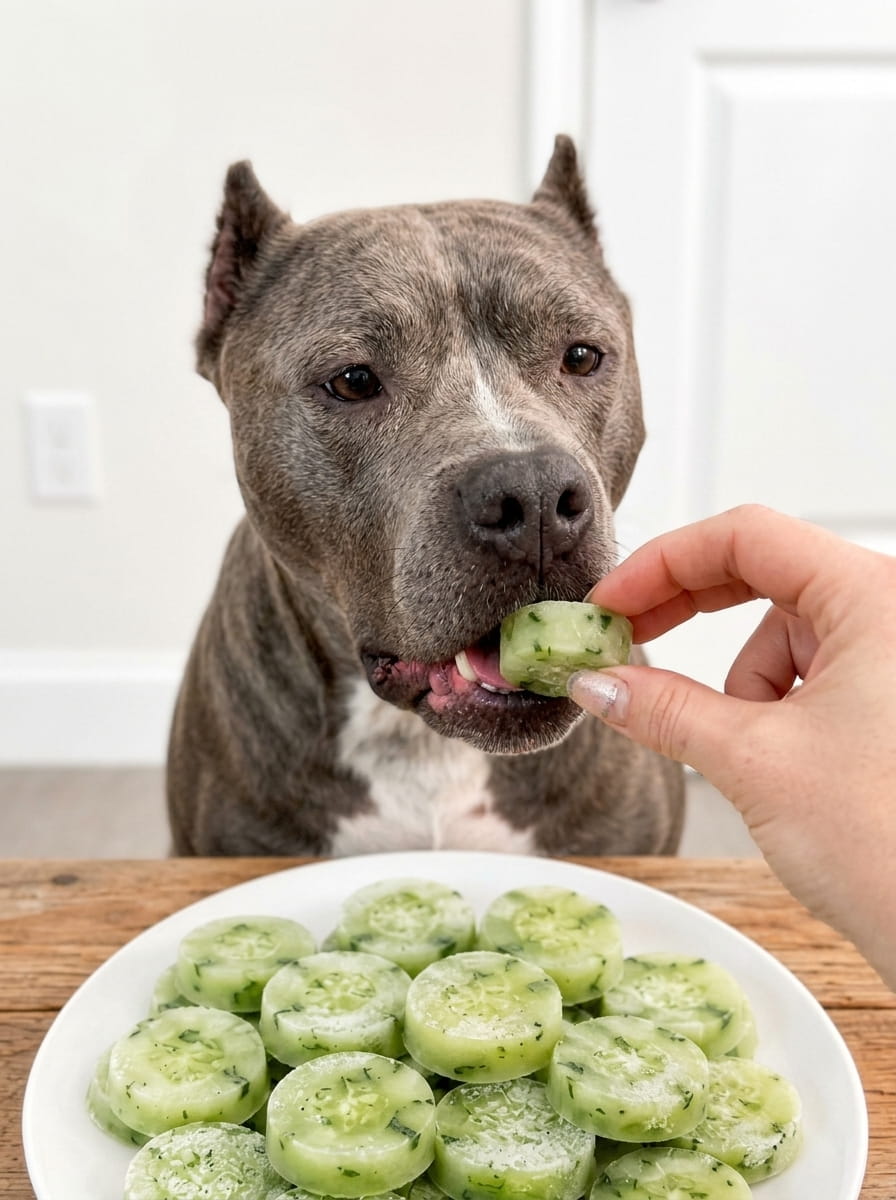
They’re pale green, lightly frosted, and dotted with tiny cucumber flecks. There’s no baking, no special equipment beyond a blender and a mold, and no long ingredient list full of things you can’t pronounce. You know exactly what goes into every bite.
This guide gives you the full recipe, a closer look at why each ingredient works, safety guidelines every dog owner should know, serving tips, variations, storage advice, and answers to common questions.
Why You’ll Love These Cucumber Dog Treats
- Only two main ingredients. Cucumber and plain Greek yogurt do all the work. Water is optional, only if your blender needs it.
- No baking required. Blend, pour, and freeze. That’s the whole process.
- Refreshing on warm days. The frozen texture gives your dog a cool, crunchy snack.
- Low in calories. Cucumber is mostly water, so these treats are light compared to many store-bought biscuits.
- Easy to portion. Small silicone molds or an ice cube tray make it simple to give one small treat at a time.
- Budget-friendly. A single cucumber and a small tub of yogurt make a whole batch.
- Ingredient control. Many commercial treats contain fillers, artificial colors, and preservatives. Making your own means you decide what your dog eats.
Recipe Overview
- Prep Time: 10 minutes
- Freeze Time: 3 to 4 hours
- Total Time: About 4 hours
- Yield: About 10 to 20 small treats, depending on mold size
- Course: Dog treat, occasional snack
- Method: No-bake, frozen
Ingredients
For the Frozen Treats
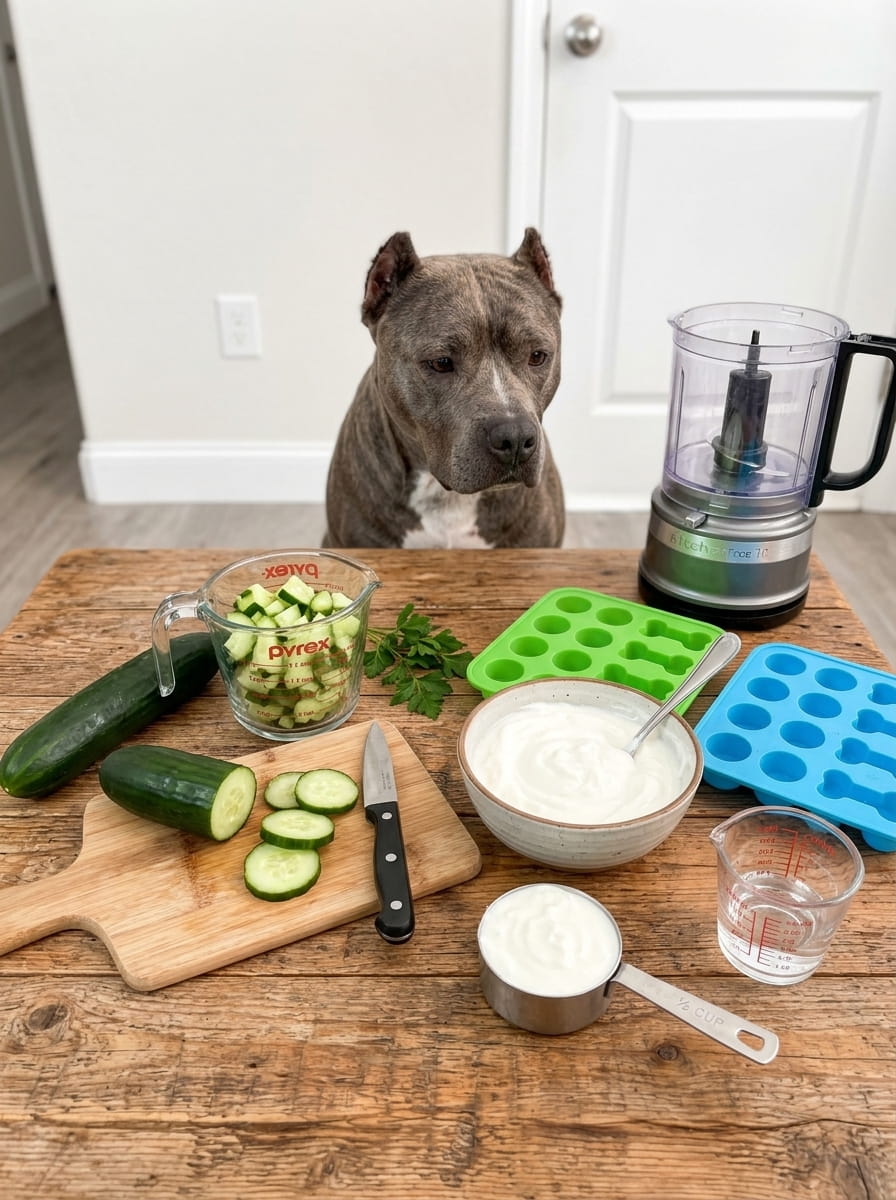
- 1 cup (150 g) fresh cucumber, washed and chopped
- ½ cup (120 g) plain, unsweetened Greek yogurt
- 1 tablespoon water, if needed for blending
Equipment
- Blender or food processor
- Small silicone molds or an ice cube tray
- Spatula or spoon
- Freezer-safe container or bag for storage
A Critical Ingredient Note
Check the yogurt label carefully. It must be plain and unsweetened, with no added sugar, no flavorings, and above all no xylitol. Xylitol is a sweetener found in some sugar-free products and it is highly toxic to dogs. Look for a short ingredient list, ideally just milk and live cultures.
Instructions
Step 1: Prepare the Cucumber
Wash the cucumber thoroughly under running water. Remove the ends and chop it into small pieces. If the skin is tough or waxed, peel it first. The skin is safe for most dogs, but a waxy coating or thick skin can be harder to blend and digest.
Step 2: Blend the Ingredients
Add the chopped cucumber and the Greek yogurt to a blender or food processor.
Step 3: Make the Mixture
Blend until smooth, leaving a few tiny cucumber flecks for texture. If the mixture is too thick for your blender to move, add a little water, starting with 1 tablespoon. Cucumber releases a lot of liquid, so you may not need any.
Step 4: Fill the Molds
Pour the pale green mixture into small silicone molds or an ice cube tray. Smaller molds are better for small dogs, while larger molds suit bigger breeds. Tap the tray gently on the counter to settle the mixture and release any air bubbles.
Step 5: Freeze
Place the molds in the freezer for 3 to 4 hours, or until completely solid. For a thick or deep mold, leave them overnight to be safe.
Step 6: Remove the Treats
Pop the frozen bites out of the molds. Silicone molds make this easy. If a treat sticks, let the mold sit at room temperature for a minute before pressing it out.
Step 7: Serve
Offer your dog one small treat at a time as an occasional refreshing snack. Watch your dog while they enjoy it, especially the first few times.
Why These Ingredients Work for Dogs
Cucumber
Cucumber is a widely recommended snack for dogs. It is made up of about 96 percent water, which makes it hydrating and very low in calories. It also contains small amounts of vitamins and minerals, along with some fiber. Because it is so light, it can be a good option for dogs who need a lower-calorie reward.
Cucumber is not a complete food, and it won’t replace a balanced diet. Think of it as a refreshing extra rather than a source of important nutrition.
Plain Greek Yogurt
Greek yogurt adds creaminess, which helps the treats freeze into a smooth texture rather than a hard block of ice. Plain Greek yogurt is strained, so it is generally lower in lactose than regular milk. Many dogs tolerate small amounts well, and yogurt also contains protein and live cultures.
Still, some dogs are lactose intolerant or have sensitive stomachs. Dairy is a common cause of digestive upset in dogs, so start with a very small portion and see how your dog reacts. If your dog has trouble with dairy, skip this recipe or ask your veterinarian about alternatives.
Safety Guidelines for Homemade Frozen Dog Treats
Homemade treats are a fun way to bond with your dog, but safety always comes first. Keep these guidelines in mind.
Treats Should Be Occasional
A common veterinary guideline is that treats and extras should make up no more than about 10 percent of a dog’s daily calories. Their main meals should provide the rest. These cucumber treats are light, but they are still an extra.
Start Small
Introduce any new food gradually. Give a tiny portion first and wait 24 hours to see if your dog develops stomach upset, vomiting, loose stools, gas, or itching. If anything seems off, stop feeding the treat and talk to your veterinarian.
Match the Size to Your Dog
A small piece for a tiny dog could be a fraction of one cube, while a large dog may enjoy a full cube. Always size treats so that they can’t become a choking hazard. For very small dogs or strong chewers, you can let the treat soften for a minute before serving, or crush it slightly.
Supervise Your Dog
Frozen treats can be hard. Watch your dog while they eat and take the treat away if they try to swallow it whole.
Avoid Harmful Add-Ins
Never add ingredients that are dangerous for dogs, including xylitol, chocolate, grapes, raisins, onion, garlic, macadamia nuts, or artificially sweetened products. If you want to customize the recipe, stick to ingredients that you have confirmed are dog-safe.
Frozen Treats Aren’t a Cure for Overheating
A cool treat is a nice way to help your dog feel comfortable, but it is not a treatment for heatstroke. Signs of overheating include heavy panting, drooling, weakness, vomiting, collapse, or very red gums. If you see these signs, move your dog to a cool place and contact a veterinarian immediately.
Talk to Your Vet When in Doubt
If your dog has allergies, diabetes, pancreatitis, kidney disease, a sensitive stomach, or is on a prescription diet, ask your veterinarian before introducing new foods.
Tips for the Best Cucumber Dog Treats
Choose Fresh, Firm Cucumbers
Fresh cucumbers blend smoothly and have the best flavor. Avoid soft or slimy ones. Organic cucumbers are a good choice if you want to avoid wax and pesticide residue, but washing and peeling a conventional cucumber works too.
Remove Seeds if Needed
Cucumber seeds are generally safe, but removing them from very large or mature cucumbers can give a smoother blend.
Don’t Over-Dilute
Too much water makes icy treats that are harder to chew and melt quickly. Add water only if you need it for blending.
Use Silicone Molds
Silicone molds release frozen treats easily and are available in fun shapes like bones and paws. Make sure any mold you use is food-grade.
Make Them the Right Size
Bigger isn’t always better. Smaller portions help you control how much your dog eats and make the batch last longer.
Blend a Little Rougher for Texture
Leaving tiny flecks of cucumber gives the treats a nice appearance and a hint of crunch. If your dog prefers a smoother treat, blend until completely creamy.
Fun Variations to Try
Once your dog enjoys the basic recipe, you can make small changes. Always confirm that every ingredient is safe for dogs and introduce new foods one at a time.
- Cucumber and Mint Treats. Blend in 1 teaspoon of fresh mint leaves for a cooling twist. Use plain spearmint or peppermint in tiny amounts, and avoid pennyroyal or any mint essential oil, which can be harmful.
- Cucumber and Blueberry Treats. Add a small handful of blueberries for a fruity, antioxidant-rich version.
- Cucumber and Watermelon Treats. Replace half the cucumber with seedless watermelon with the rind removed.
- Cucumber and Carrot Treats. Blend in a small amount of cooked, cooled carrot for a slightly sweet flavor.
- Peanut Butter Swirl Treats. Swirl a teaspoon of xylitol-free peanut butter into the mixture. Check the label carefully, because some brands contain xylitol.
- Dairy-Free Version. Replace the yogurt with a dairy-free option that contains no xylitol, added sugar, or flavorings, or use a little unsalted bone broth. Check with your vet if you’re unsure.
- Layered Treats. Pour half the mixture, freeze for an hour, then add a second layer of another dog-safe puree for a two-tone treat.
How to Serve Cucumber Dog Treats
- As a hot-day snack. Offer one treat outdoors in the shade or after a walk, once your dog has cooled down a bit.
- As a training reward. Break a small treat into tiny pieces for short training sessions.
- In a puzzle toy. Press the mixture into a lick mat or a treat-dispensing toy and freeze it for a longer-lasting activity.
- On top of regular meals. Crumble a small piece onto your dog’s food for a cooling topper, if their diet allows.
- For a calming lick activity. Spread the mixture on a silicone lick mat and freeze it. Licking can be a soothing activity for many dogs.
Serve outside or on an easy-to-clean surface. As the treat melts, it can drip, and a light green puddle on the carpet is no fun.
Storage Tips
Freezer Storage
Once the treats are solid, transfer them to an airtight freezer-safe container or freezer bag. Layer parchment paper between treats if they might stick together. Stored this way, the treats keep their best quality for up to 2 to 3 months.
Refrigerator Storage
Because these treats contain dairy, don’t leave them at room temperature. If a treat thaws, don’t refreeze it. Keep any softened treat in the refrigerator and use it within a day.
Labeling
Label your container with the date and a clear note that these are dog treats, especially if you have children or share a household. You don’t want anyone mistaking them for a human snack.
Troubleshooting
The Treats Are Too Icy
The mixture likely had too much water. Next time, skip the added water or use a little more yogurt.
The Treats Won’t Come Out of the Mold
Let the mold sit at room temperature for a minute, then twist or press from the back. Silicone molds work much better than hard plastic trays.
The Mixture Is Separating
Cucumber contains a lot of water, which can separate as it sits. Give the mixture a quick stir right before you pour it into the molds.
My Dog Won’t Eat Them
Not every dog likes cucumber. Try a different flavor, such as a little blueberry or a swirl of dog-safe peanut butter, or serve a slightly softened treat.
My Dog Had an Upset Stomach
Stop serving the treat and contact your veterinarian if symptoms continue. Your dog may be sensitive to dairy, or the portion may have been too large.
Frequently Asked Questions
Can dogs eat cucumber?
Yes. Cucumber is generally considered safe for dogs when served in moderation. It is low in calories and high in water. Cut it into appropriate sizes to prevent choking.
Is Greek yogurt safe for dogs?
Plain, unsweetened Greek yogurt is generally safe for most dogs in small amounts. Avoid flavored, sweetened, or sugar-free yogurts, which may contain xylitol or other harmful ingredients. Some dogs are lactose intolerant and may need to avoid dairy.
How many cucumber treats can my dog have?
Offer one small treat at a time as an occasional snack. The right amount depends on your dog’s size, diet, and health. Ask your veterinarian for guidance specific to your dog.
Can puppies eat these treats?
Puppies have sensitive digestive systems and specific nutritional needs. Check with your veterinarian before giving a puppy any new food, including frozen treats.
Should I peel the cucumber?
Peeling is optional. Peel it if the skin is tough or waxed. Otherwise, washing it well is usually enough.
Can I use regular yogurt instead of Greek yogurt?
Plain, unsweetened regular yogurt works too, but it is thinner, so the treats may freeze icier. Greek yogurt gives a creamier texture and contains less lactose.
Can I use an ice cube tray?
Yes. An ordinary ice cube tray works well. Silicone trays make removal easier.
Are these treats good for dogs with sensitive stomachs?
It depends on the dog. Dairy can upset some dogs’ stomachs. If your dog has a sensitive digestive system, ask your veterinarian before trying this recipe.
Can I give these to overweight dogs?
Cucumber is low in calories, so these treats can be a lighter alternative to many biscuits. They still count toward your dog’s daily intake, and you should ask your veterinarian for advice on your dog’s weight plan.
How long do these treats last in the freezer?
For the best quality, use them within 2 to 3 months.
Can I feed these to my cat?
This recipe was created with dogs in mind. Cats have different dietary needs, so check with your veterinarian before sharing any treat.
Do frozen treats help my dog cool down?
They can help your dog feel more comfortable on a warm day, but they are not a substitute for shade, fresh water, and a cool environment. If you suspect your dog is overheating, seek veterinary help right away.
Final Thoughts
These Cucumber Cooling Dog Treats are a simple, refreshing way to treat your dog on a warm day. With just fresh cucumber and plain Greek yogurt, a blender, and a freezer, you can make a batch of crunchy, lightly frosted bites in minutes and have them ready for whenever your dog deserves a little something special.
Remember the basics: choose plain, unsweetened yogurt with no xylitol, start with small portions, supervise your dog, and keep treats occasional. With those habits, homemade frozen snacks can be a fun and safe part of your dog’s routine.
Try the recipe, experiment with dog-safe variations, and let us know how your furry friend likes it. Happy treat making! 🐶💚
Print
Cucumber Cooling Dog Treats
Ingredients
For the Frozen Treats
- 1 cup (150 g) fresh cucumber, washed and chopped
- ½ cup (120 g) plain, unsweetened Greek yogurt
- 1 tablespoon water, if needed for blending
Equipment
- Blender or food processor
- Small silicone molds or an ice cube tray
- Spatula or spoon
- Freezer-safe container or bag for storage
Instructions
Wash the cucumber thoroughly under running water. Remove the ends and chop it into small pieces. If the skin is tough or waxed, peel it first. The skin is safe for most dogs, but a waxy coating or thick skin can be harder to blend and digest.
Add the chopped cucumber and the Greek yogurt to a blender or food processor.
Blend until smooth, leaving a few tiny cucumber flecks for texture. If the mixture is too thick for your blender to move, add a little water, starting with 1 tablespoon. Cucumber releases a lot of liquid, so you may not need any.
Pour the pale green mixture into small silicone molds or an ice cube tray. Smaller molds are better for small dogs, while larger molds suit bigger breeds. Tap the tray gently on the counter to settle the mixture and release any air bubbles.
Place the molds in the freezer for 3 to 4 hours, or until completely solid. For a thick or deep mold, leave them overnight to be safe.
Pop the frozen bites out of the molds. Silicone molds make this easy. If a treat sticks, let the mold sit at room temperature for a minute before pressing it out.
Offer your dog one small treat at a time as an occasional refreshing snack. Watch your dog while they enjoy it, especially the first few times