
Easy Gluten-Free Rice Bread: A Soft, Wholesome Homemade Loaf Made With Soaked Rice 🌾🍞
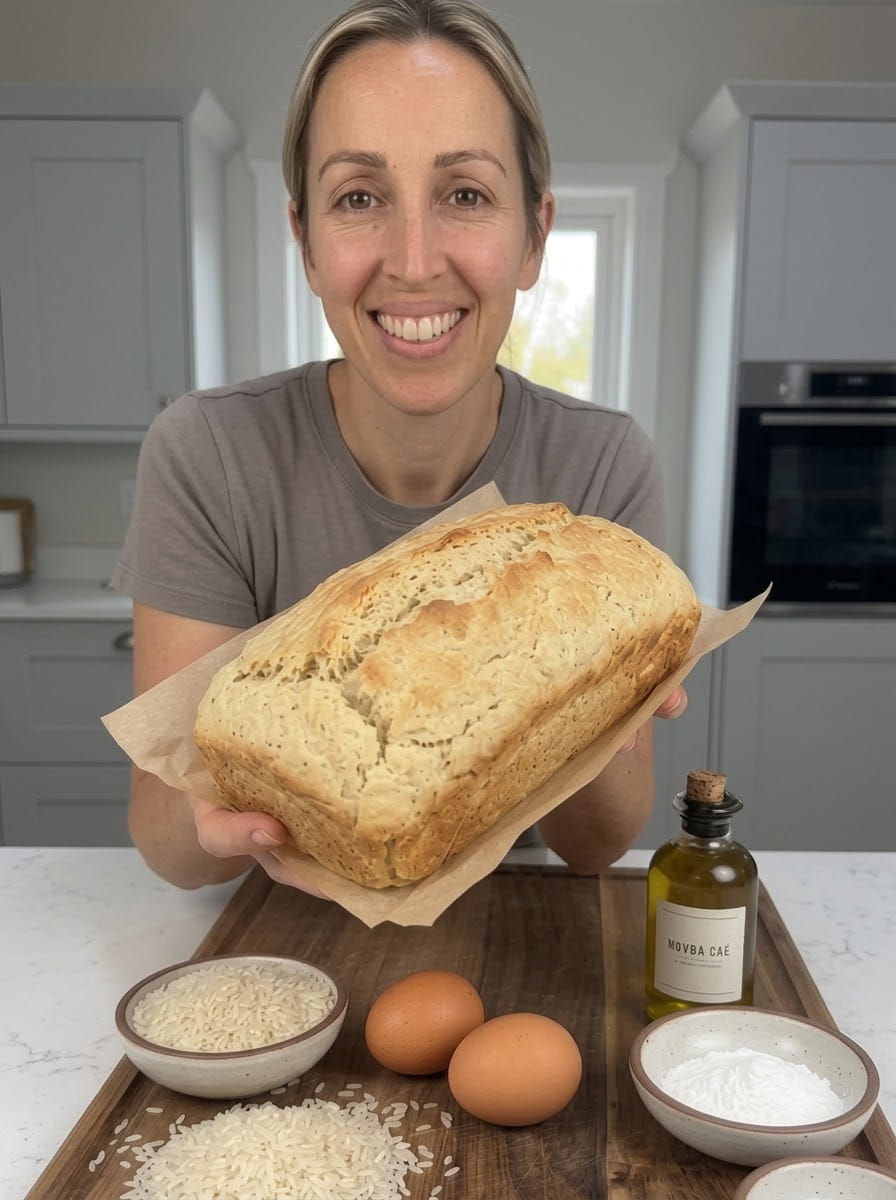
Soft, wholesome, and easy to prepare, this Easy Gluten-Free Rice Bread is a delicious homemade alternative to traditional wheat bread. Made with simple ingredients and naturally gluten-free rice, this loaf is perfect for breakfast, sandwiches, or a satisfying snack. Enjoy it toasted with butter, topped with avocado, or served warm with your favorite spreads.
Most gluten-free breads rely on a long list of specialty flours and starches, such as xanthan gum, tapioca starch, and potato starch. This recipe takes a different approach. It starts with plain, uncooked white rice, which you soak and then blend into a smooth batter with eggs, olive oil, honey, and a little yeast and baking powder. The blender turns the soaked rice into a creamy batter that bakes into a tender, delicate loaf. There is no flour blend to buy, no kneading, and no dough to shape.
It is worth setting expectations from the start. Rice-batter bread is not the same as a fluffy wheat sandwich loaf. It is denser, more delicate, and has a soft, slightly moist crumb with a mild, subtly sweet flavor. It is at its best toasted. If you enjoy experimenting with pantry-based baking, this loaf is a fun and satisfying recipe to try.
In this guide, you will find the full recipe, a step-by-step walkthrough, tips for a smoother texture, troubleshooting help, serving ideas, variations, storage and freezing advice, gluten-free safety notes, and answers to frequently asked questions about rice bread.
Why You’ll Love This Rice Bread
It starts with plain white rice. There is no need to hunt for specialty gluten-free flours. Uncooked white rice is inexpensive and easy to find.
It is naturally made without wheat. The recipe contains no wheat flour, so it is a good option for anyone looking for gluten-free bread, as long as the packaged ingredients are labeled gluten-free.
It is made in a blender. The soaked rice, eggs, water, oil, and honey blend into a smooth batter in just a couple of minutes.
There is no kneading or shaping. You simply pour the batter into a pan, let it rest briefly, and bake.
It is soft and moist. The eggs and olive oil keep the crumb tender, and the honey adds a hint of sweetness.
It is versatile. Toast a slice for breakfast, build a sandwich, or serve it with soup.
It uses simple, affordable ingredients. Rice, eggs, olive oil, honey, baking powder, salt, and yeast are staples in many kitchens.
It is a fun kitchen experiment. If you like trying new bread methods, this one is a creative twist on a pantry staple.
What Is Rice Bread?
Rice bread is a loaf made from rice rather than wheat. There are several kinds. Some are made with rice flour combined with starches and gums. Others, like this one, are made from whole rice that is soaked and blended into a batter. The soaking step softens the rice grains so that they blend smoothly, and the blending breaks them down into a fine, creamy mixture. The natural starch in the rice helps the batter hold together as it bakes, and the eggs provide binding and structure.
Because rice contains no gluten, there is no stretchy gluten network to trap air the way there is in wheat bread. Yeast and baking powder still create some lift, but the rise is modest. The result is a denser, more delicate loaf. It has a soft, moist interior and a lightly golden crust, and it is best enjoyed toasted or the day it is baked.
Ingredients for Easy Gluten-Free Rice Bread
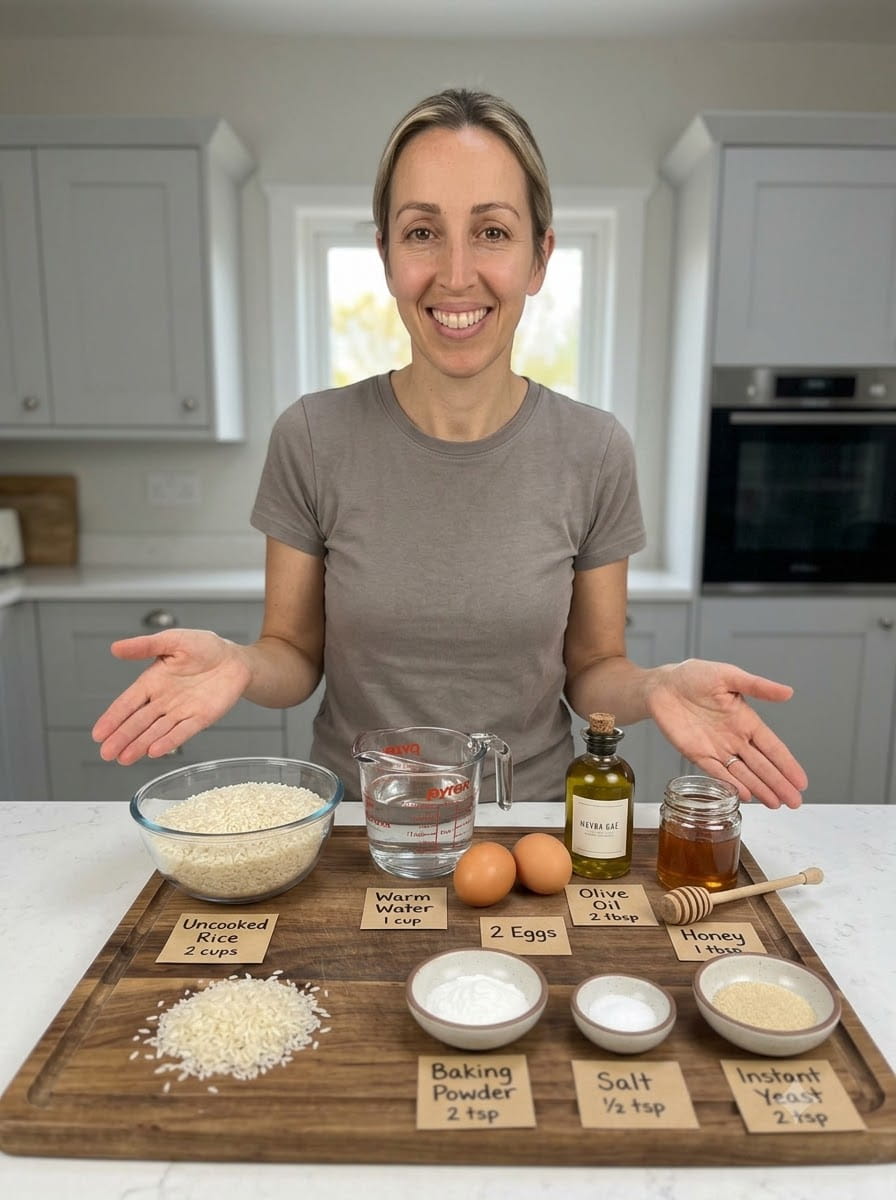
- 2 cups uncooked white rice, 370 g
- 1 cup warm water, plus extra for soaking
- 2 large eggs
- 2 tablespoons olive oil
- 1 tablespoon honey
- 2 teaspoons baking powder
- ½ teaspoon salt
- 2 teaspoons instant yeast
A Closer Look at the Ingredients
Uncooked white rice. Use regular long-grain or medium-grain white rice. Do not use cooked rice, since the recipe depends on the soaked, raw rice for its texture. Rinse the rice thoroughly before soaking to remove surface starch and any debris. Different types of rice can behave differently, so use plain white rice for the most predictable results. Jasmine and basmati rice work too, though they may give a slightly different flavor.
Warm water. One cup of warm water helps the blender work and gives the yeast a gentle start. The water should feel comfortably warm, about 100°F to 110°F (38°C to 43°C). Extra water is needed for soaking the rice.
Large eggs. The eggs bind the batter, add structure, and contribute moisture and richness. They are essential in this recipe, since there is no gluten to hold the loaf together.
Olive oil. Olive oil keeps the crumb soft and moist, and adds a subtle flavor. A mild olive oil works best.
Honey. One tablespoon of honey feeds the yeast, adds a touch of sweetness, and helps the crust brown. Maple syrup can be used as a substitute.
Baking powder. Baking powder gives additional lift, which is especially helpful in a gluten-free batter. Make sure it is fresh, and check that it is labeled gluten-free if you are avoiding gluten.
Salt. Salt brings out the flavor of the rice and balances the sweetness.
Instant yeast. Two teaspoons of instant yeast add a mild lift and a subtle bread-like flavor. Since the batter is so wet and the rise is short, the yeast mainly contributes flavor and gentle leavening.
How to Make Easy Gluten-Free Rice Bread: Step-by-Step Instructions
Step 1: Soak the Rice
Rinse the uncooked rice thoroughly. Place it in a bowl, cover with plenty of water, and soak for 4 to 6 hours or overnight. Drain well. Soaking is the most important step in this recipe. It softens the rice so that it blends smoothly. Rice that has not soaked long enough can leave the batter gritty. Rinse the rice under cold water until the water runs mostly clear, then cover it with at least two inches of water, since the rice will absorb liquid as it soaks. After soaking, drain the rice in a fine-mesh sieve and shake off as much excess water as possible.
Step 2: Blend the Ingredients
Add the drained rice, warm water, eggs, olive oil, and honey to a blender. Blend until as smooth as possible. This can take 2 to 3 minutes in a powerful blender. Stop to scrape down the sides and blend again. The batter should look creamy, like a thick pancake batter, with no visible whole grains. A smoother batter gives a finer, more even crumb. If your blender is not very powerful, blend in stages, or pause to let the motor rest.
Step 3: Add the Remaining Ingredients
Add the baking powder, salt, and instant yeast. Blend briefly until everything is evenly combined. Blend only for a few seconds. You do not need to keep blending, since the dry ingredients only need to be distributed.
Step 4: Prepare the Pan
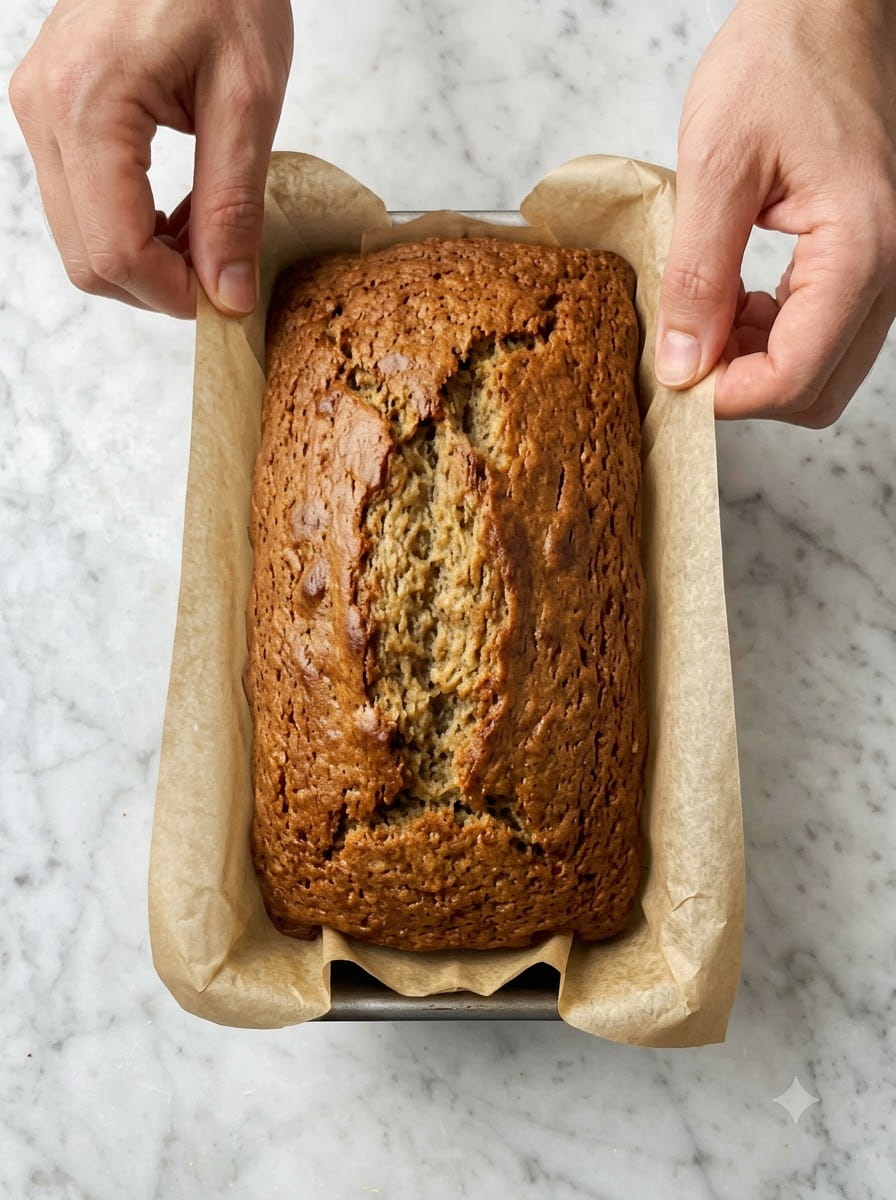
Grease a small loaf pan and line it with parchment paper. Pour in the rice batter. A small loaf pan, about 8 x 4 inches, helps the loaf rise higher and bake evenly. Because the batter is wet, a lined pan makes it much easier to remove the loaf later.
Step 5: Let It Rise
Cover loosely and leave in a warm place for approximately 30 to 45 minutes. The batter may rise only slightly. You may see small bubbles on the surface, which is a good sign. Do not expect it to double in size, since this is a batter bread rather than a traditional dough.
Step 6: Preheat the Oven
Preheat the oven to 350°F (175°C). Time this so the oven is hot as the batter finishes resting.
Step 7: Bake
Bake for 45 to 60 minutes, until the loaf is set, lightly golden, and cooked through in the center. The top should feel firm to the touch, and a toothpick inserted into the center should come out clean. Because the batter contains eggs and a lot of moisture, make sure the center is fully cooked. If the top is browning too quickly, loosely tent it with foil. The internal temperature should reach at least 200°F (93°C) for a fully set center.
Step 8: Cool Completely
Let the bread rest in the pan for 10 minutes, then transfer it to a wire rack. Allow it to cool fully before slicing. Gluten-free breads continue to set as they cool, and slicing a warm loaf can make it gummy or cause it to crumble. A cooled loaf slices much more cleanly. Use a serrated knife and a gentle sawing motion.
Helpful Tips for the Best Rice Bread
Soak the rice thoroughly. Soaking for at least 4 hours is key to a smooth texture. Overnight is ideal.
Blend until as smooth as possible. The finer the batter, the better the texture. Take the time to blend and scrape.
Use a powerful blender. A high-speed blender gives the smoothest results. If you have a standard blender, blend in stages and expect a slightly more rustic texture.
Drain the rice well. Extra water from soaking can make the batter too thin.
Check the batter consistency. It should be creamy and pourable, like a thick pancake batter. If it seems too thick to blend, add water a tablespoon at a time.
Use fresh baking powder and yeast. Both contribute lift, and old leaveners can leave the loaf flat.
Line the pan. Rice batter can stick. Parchment paper makes release easy.
Check the center. This bread contains eggs and is very moist, so confirm the middle is fully cooked.
Cool completely before slicing. The wait is important for structure.
Toast it. Toasting improves the texture and brings out the flavor.
Troubleshooting Common Problems
The bread is gritty. The rice was not soaked long enough, or it was not blended finely enough. Soak for the full 4 to 6 hours or overnight, and blend longer next time.
The bread is gummy in the center. It may be underbaked, or it may have been sliced while warm. Bake until the center reaches about 200°F (93°C), and cool completely.
The bread is very dense. Rice bread is naturally denser than wheat bread. For the best rise, use fresh yeast and baking powder, blend the batter smooth, and use a small loaf pan.
The loaf did not rise. The yeast may be old, or the water may have been too hot or too cold. Check the expiration dates and use warm, not hot, water. Remember that only a modest rise is expected.
The bread crumbles when sliced. It may not have cooled long enough. Let it cool completely, and use a sharp serrated knife.
The bread sank in the middle. It may have been underbaked or the oven door may have been opened too early. Bake until fully set, and avoid opening the oven in the first 30 minutes.
The top is too dark. Tent the loaf with foil for the remaining baking time.
The bread is too wet or pale. The rice may not have been drained well enough, or the oven may not have been hot enough. Drain thoroughly and make sure the oven is fully preheated.
The bread tastes bland. Rice has a very mild flavor. A touch more salt, or toppings such as butter, avocado, or savory spreads, help balance it.
The bread sticks to the pan. Use parchment paper, and let the loaf cool before removing it.
Optional Add-Ins and Tweaks
The base recipe is simple. If you want to experiment, consider these optional ideas, keeping in mind that they go beyond the original recipe and have not been tested.
- Seeds. A tablespoon of chia, flax, or sesame seeds adds texture and fiber.
- Herbs. A teaspoon of dried herbs, such as rosemary or Italian seasoning, gives a savory loaf.
- Garlic or onion powder. A pinch adds savory flavor.
- Seeded topping. Sprinkle sesame or sunflower seeds on top before baking.
- Brown rice. Replacing part of the white rice with brown rice gives a nuttier flavor, though it may require a longer soak and will make the texture a bit coarser.
- Cinnamon. A half teaspoon of cinnamon and a little extra honey makes a lightly sweet loaf.
Any changes can affect moisture and baking time, so check the center carefully.
Delicious Ways to Serve Rice Bread
Toasted with butter. A toasted slice with melted butter is simple and comforting.
Avocado toast. Top with mashed avocado, salt, pepper, and a squeeze of lemon.
With eggs. Serve toasted slices with scrambled, fried, or poached eggs.
Sandwiches. Toasted slices hold up well to fillings such as turkey, chicken salad, or tomato and cheese.
With nut butter. Spread peanut or almond butter and top with sliced banana.
With hummus and vegetables. Spread hummus and layer sliced cucumber, tomato, or roasted peppers.
With cream cheese. Add cream cheese and smoked salmon, or cream cheese and jam.
With soup. Serve a toasted slice alongside a bowl of soup.
With jam or honey. A drizzle of honey or a spoonful of jam makes a quick breakfast.
As a snack. A toasted slice with a little olive oil and salt is a satisfying snack.
Variations to Try
- Savory herb loaf. Add dried herbs and garlic powder for a savory bread.
- Seeded loaf. Add seeds into the batter and on top.
- Cheese loaf. Fold in a little shredded cheese before baking.
- Mini loaves or muffins. Pour the batter into mini loaf pans or a muffin tin and reduce the baking time, checking for doneness with a toothpick.
- Flatbread style. Spread the batter thinly on a lined baking sheet and bake until set for a rice-based flatbread. Reduce the baking time.
- Sweeter breakfast loaf. Add extra honey and cinnamon for a lightly sweet version.
Because the batter is delicate, test variations in small batches first.
How to Store Rice Bread
At room temperature. Once completely cooled, store the loaf wrapped or in an airtight container for about a day. Gluten-free breads tend to stale faster than wheat breads.
In the refrigerator. Because the loaf is moist and contains eggs, refrigeration is the safer option for longer storage. Keep it in an airtight container for up to about 4 days. Toast slices to refresh the texture.
In the freezer. Slice the cooled loaf, place parchment between slices, and freeze in an airtight bag for up to 2 to 3 months. Toast slices straight from the freezer.
Reheating. Toast slices or warm them in a skillet with a little butter. This restores the crisp edges and soft interior.
Using leftovers. Turn stale rice bread into croutons or breadcrumbs, or toast it and top it with something savory.
Is Rice Bread Healthy?
Rice bread made from soaked white rice, eggs, and olive oil is a simple, whole-ingredient loaf with no preservatives or additives. The eggs add protein, the olive oil adds healthy fat, and the rice provides carbohydrates for energy.
White rice is a refined grain and is lower in fiber than whole grains, so this bread is not especially high in fiber. Nutritional values depend on your slice size and the exact ingredients you use. If you track nutrition closely, calculate it using your own products. If you have a medical condition, such as diabetes, or specific dietary needs, check with a healthcare professional about how the bread fits into your meals.
If you have food allergies, check your ingredients. This bread contains eggs.
Is This Bread Truly Gluten-Free?
Rice itself is naturally free of gluten, and this recipe has no wheat flour. However, whether a finished loaf is safe for someone who must avoid gluten depends on the packaged ingredients and your kitchen.
Check the labels. Baking powder, instant yeast, and even rice can occasionally contain gluten-containing additives or be exposed to gluten during processing. Choose products labeled gluten-free.
Watch for cross-contact. If you or others in your household also cook with wheat, use clean equipment, a clean blender jar, and a clean pan so that no gluten-containing crumbs or flour residue contaminate the bread.
Consider celiac disease. If you have celiac disease or a serious gluten sensitivity, take extra care and consult your healthcare provider about the safest ingredients and practices.
Frequently Asked Questions
Do I have to soak the rice?
Yes. Soaking softens the rice so that it blends smoothly. Without soaking, the batter would be gritty, and the bread may not cook evenly.
Can I use cooked rice?
This recipe is written for uncooked rice that has been soaked. Cooked rice has a different moisture content, so the batter and texture would differ, and this recipe has not been tested with it.
What type of rice should I use?
Plain white rice, such as long-grain or medium-grain, is best. Other types may change the texture and flavor.
Can I use brown rice?
Brown rice can work, but it needs a longer soak and gives a coarser, nuttier loaf. This recipe was written for white rice.
Can I make this bread without eggs?
The eggs provide binding and structure in a gluten-free batter. Egg replacements may change the texture, and this recipe has not been tested without eggs.
Why is my rice bread dense?
Rice bread has no gluten, so it is naturally denser than wheat bread. Fresh leavening, a smooth batter, and a small loaf pan help give the best possible lift.
Why is my rice bread gummy?
It is likely underbaked or was sliced while warm. Bake until the center is fully set and cool the loaf completely.
Can I skip the yeast?
The yeast adds a mild lift and a bread-like flavor. You could try omitting it, but the texture and flavor will change, and this recipe has not been tested without it.
Do I need a high-powered blender?
A powerful blender gives the smoothest results, but a standard blender can work if you soak the rice well and blend in stages.
How do I know when the bread is done?
The loaf should be set and lightly golden, feel firm to the touch, and a toothpick inserted into the center should come out clean. The internal temperature should be about 200°F (93°C).
Can I freeze rice bread?
Yes. Slice and freeze the cooled loaf with parchment between slices, then toast straight from the freezer.
Can I double the recipe?
Yes, but use a larger pan or two loaf pans, and check for doneness carefully, since the baking time may change.
Final Thoughts
This Easy Gluten-Free Rice Bread shows how a humble pantry staple can become a soft, wholesome loaf. With soaked white rice, eggs, olive oil, honey, baking powder, salt, and yeast, a blender, and a loaf pan, you can make a tender, lightly golden bread without wheat flour or a complicated flour blend.
The process is straightforward: soak, blend, pour, rest, bake, and cool. A few simple tips, such as soaking the rice thoroughly, blending until smooth, and cooling the loaf completely, will help you get the best texture.
If you are looking for a gluten-free bread you can make from simple ingredients, give this recipe a try. Toast a slice, top it with avocado, eggs, or butter, and enjoy a soft, homemade loaf. Just keep in mind that it is denser and more delicate than wheat bread, and be sure the center is fully cooked before you slice. 🌾🍞
Print
Easy Gluten-Free Rice Bread
Ingredients
- 2 cups uncooked white rice, 370 g
- 1 cup warm water, plus extra for soaking
- 2 large eggs
- 2 tablespoons olive oil
- 1 tablespoon honey
- 2 teaspoons baking powder
- ½ teaspoon salt
- 2 teaspoons instant yeast
Instructions
Rinse the uncooked rice thoroughly. Place it in a bowl, cover with plenty of water, and soak for 4 to 6 hours or overnight. Drain well. Soaking is the most important step in this recipe. It softens the rice so that it blends smoothly. Rice that has not soaked long enough can leave the batter gritty. Rinse the rice under cold water until the water runs mostly clear, then cover it with at least two inches of water, since the rice will absorb liquid as it soaks. After soaking, drain the rice in a fine-mesh sieve and shake off as much excess water as possible.
Add the drained rice, warm water, eggs, olive oil, and honey to a blender. Blend until as smooth as possible. This can take 2 to 3 minutes in a powerful blender. Stop to scrape down the sides and blend again. The batter should look creamy, like a thick pancake batter, with no visible whole grains. A smoother batter gives a finer, more even crumb. If your blender is not very powerful, blend in stages, or pause to let the motor rest.
Add the baking powder, salt, and instant yeast. Blend briefly until everything is evenly combined. Blend only for a few seconds. You do not need to keep blending, since the dry ingredients only need to be distributed.
Grease a small loaf pan and line it with parchment paper. Pour in the rice batter. A small loaf pan, about 8 x 4 inches, helps the loaf rise higher and bake evenly. Because the batter is wet, a lined pan makes it much easier to remove the loaf later.
Cover loosely and leave in a warm place for approximately 30 to 45 minutes. The batter may rise only slightly. You may see small bubbles on the surface, which is a good sign. Do not expect it to double in size, since this is a batter bread rather than a traditional dough.
Preheat the oven to 350°F (175°C). Time this so the oven is hot as the batter finishes resting.
Bake for 45 to 60 minutes, until the loaf is set, lightly golden, and cooked through in the center. The top should feel firm to the touch, and a toothpick inserted into the center should come out clean. Because the batter contains eggs and a lot of moisture, make sure the center is fully cooked. If the top is browning too quickly, loosely tent it with foil. The internal temperature should reach at least 200°F (93°C) for a fully set center.
Let the bread rest in the pan for 10 minutes, then transfer it to a wire rack. Allow it to cool fully before slicing. Gluten-free breads continue to set as they cool, and slicing a warm loaf can make it gummy or cause it to crumble. A cooled loaf slices much more cleanly. Use a serrated knife and a gentle sawing motion.