
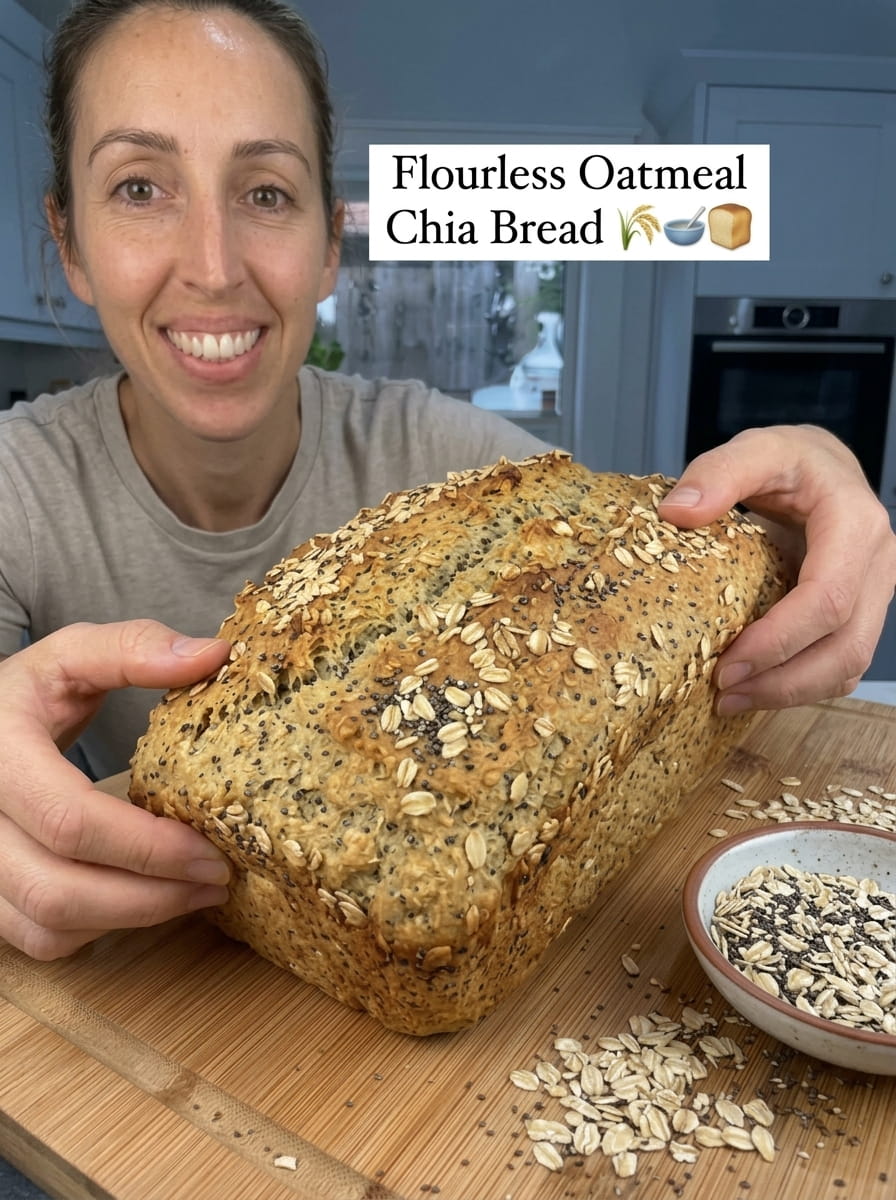
Flourless Oatmeal Chia Bread: Soft, Fluffy, and Wonderfully Hearty Without Traditional Flour
If you want a simple homemade loaf that feels wholesome, tastes comforting, and doesn’t rely on traditional flour, this flourless oatmeal chia bread is about to become a staple in your kitchen. It is soft, light, and surprisingly satisfying, with a tender crumb and a deliciously hearty, nutty flavor. The recipe uses just seven everyday ingredients, including rolled oats and chia seeds, and everything comes together in a blender and one bowl.
There is no yeast, no kneading, no proofing, and no waiting around for dough to rise. You blend the oats and chia seeds into a flour-like texture, stir in the eggs, warm water, olive oil, baking powder, and salt, let the batter rest for a few minutes, and bake. The result is an easy everyday bread that’s perfect for breakfast, sandwiches, toast, or enjoying warm with your favorite spread. In this guide, you’ll find the full recipe, detailed step-by-step instructions, ingredient notes and substitutions, troubleshooting tips, flavor variations, serving ideas, storage advice, and answers to the questions people ask most about oat-based breads.
What Is Flourless Oatmeal Chia Bread?
Flourless oatmeal chia bread is a quick bread made without wheat flour or any other store-bought flour. Instead, rolled oats are blended into a fine, flour-like powder right in your blender or food processor. Chia seeds are blended in with the oats, and they play a special role. When chia seeds meet liquid, they absorb water and form a gel-like coating, which thickens the batter and helps bind everything together. Eggs add structure and richness, olive oil keeps the crumb moist, and baking powder gives the loaf a gentle lift.
Because the bread is made from whole oats and chia seeds, it has a heartier, more rustic character than a white sandwich loaf. The texture is tender and slightly dense in a pleasant way, similar to a moist quick bread, rather than airy and chewy like a yeast bread. It slices well, toasts beautifully, and holds up to spreads and toppings.
Why You’ll Love This Recipe
No flour required. The “flour” is simply rolled oats blended in seconds, so you don’t need to buy any special flours or baking blends.
Only seven ingredients. Rolled oats, chia seeds, warm water, eggs, olive oil, baking powder, and salt are likely already in your pantry.
No yeast and no rising time. There is no proofing, no rising, and no kneading. The batter only needs a short 10 to 15 minute rest before it goes into the oven.
Simple, one-bowl method. A blender and a large bowl are all you need, which means easy cleanup.
Soft, fluffy, and hearty. The loaf is tender and light with a satisfying, wholesome flavor that keeps you full.
Versatile. Use it for toast, sandwiches, breakfast, snacks, or alongside soups and salads.
Easy to customize. Add herbs, seeds, cheese, or a touch of cinnamon to create sweet or savory versions.
Beginner friendly. If you can blend and stir, you can make this bread.
Naturally dairy-free. The recipe contains no milk or butter, so it works for many dairy-free diets.
Ingredients You’ll Need
Here is everything you need to make one small loaf:
- 2 cups rolled oats
- 3 tablespoons chia seeds
- 1 cup warm water
- 2 large eggs
- 1 tablespoon olive oil
- 1 teaspoon baking powder
- 1/2 teaspoon salt
You will also need parchment paper to line the pan.
Ingredient Notes and Substitutions
Knowing what each ingredient does helps you get consistent results and make smart swaps.
Rolled Oats
Rolled oats, also called old-fashioned oats, are the base of this bread. When blended, they break down into a soft, fine oat flour that gives the loaf its tender texture and mild, nutty flavor. Use regular rolled oats for the best results. Quick oats can work in a pinch, though they are cut finer and may absorb liquid a little differently, so the batter could be slightly thicker. Steel-cut oats are too hard and dense for this recipe.
Oats are naturally gluten-free, but they are often processed alongside wheat, barley, or rye, which can cause cross-contamination. If you need to avoid gluten for medical reasons, such as celiac disease, look for oats that are labeled certified gluten-free, and check that the other ingredients you use are as well.
Chia Seeds
Chia seeds are the secret binder in this recipe. They absorb liquid and form a gel, helping thicken the batter and hold the loaf together without flour. They also add a mild flavor and tiny, pleasant flecks. Chia seeds are a source of fiber and plant-based omega-3 fats. Blending them with the oats helps them disperse evenly, though you can also stir whole chia seeds into the batter for a more visible, slightly crunchy texture. If you don’t have chia seeds, ground flaxseed is the closest substitute, though the flavor and texture will be slightly different.
Warm Water
Warm water helps the chia seeds and oat flour absorb moisture quickly, which thickens the batter within minutes. Use water that is comfortably warm to the touch, not hot, so it doesn’t cook the eggs when you stir everything together.
Eggs
Eggs provide structure, lift, and richness. Because there is no gluten network in this bread, the eggs do a lot of the work holding the loaf together. Use large eggs, and let them come to room temperature if possible so they blend smoothly. Egg replacers can work in some oat-based recipes, but they change the texture, so results will vary if you try a flax or chia egg substitute.
Olive Oil
A tablespoon of olive oil keeps the crumb tender and adds a light, subtle flavor. You can substitute melted butter, melted coconut oil, avocado oil, or any neutral oil. Extra virgin olive oil adds a more noticeable flavor, which works well in savory versions.
Baking Powder
Baking powder creates the gentle lift that makes the loaf soft instead of heavy. Make sure yours is fresh. Baking powder that is more than six months to a year old, or that has been exposed to moisture, may not rise properly. To test it, stir a half teaspoon into a little hot water. It should fizz vigorously.
Salt
Salt brings out the nutty flavor of the oats. Don’t skip it, or the bread will taste flat. Fine sea salt or table salt both work.
How to Make Flourless Oatmeal Chia Bread (Step by Step)
Follow these simple steps for a soft, tender loaf every time.
Step 1: Blend the Oats and Chia Seeds
Add the rolled oats and chia seeds to a blender or food processor. Blend until the oats turn into a fine, flour-like texture. This usually takes 30 to 60 seconds. Stop and scrape down the sides if needed. A few tiny flecks of oats or chia are perfectly fine.
Step 2: Combine the Dry Ingredients
Transfer the oat and chia mixture to a large bowl. Add the baking powder and salt, and stir to combine.
Step 3: Add the Wet Ingredients
Add the eggs, warm water, and olive oil to the bowl. Stir until a thick, smooth batter forms. The batter will be thicker than a pancake batter but still spoonable.
Step 4: Let the Batter Rest
Let the mixture rest for 10 to 15 minutes. This pause allows the chia seeds to absorb liquid and thicken the batter, and it gives the oat flour time to hydrate. Skipping this step can lead to a looser batter and a gummier loaf.
Step 5: Preheat the Oven
While the batter rests, preheat your oven to 350°F (175°C), with the rack in the center position.
Step 6: Prepare the Pan
Line a small loaf pan with parchment paper, leaving a bit of overhang on the long sides so you can lift the finished bread out easily. Transfer the thickened batter into the pan.
Step 7: Smooth the Top
Use a spatula to smooth the surface so it bakes evenly. You can sprinkle a few extra oats or chia seeds on top for a rustic look.
Step 8: Bake
Bake for 35 to 45 minutes, until the loaf is firm and lightly golden on top. A toothpick inserted into the center should come out clean or with just a few moist crumbs. If the top browns too quickly, tent the pan loosely with aluminum foil for the last 10 minutes.
Step 9: Cool Completely
Remove the pan from the oven and let the loaf cool completely before slicing. This step matters more than usual for this bread. Oat-based loaves continue to set as they cool, and slicing too soon can leave the center gummy and make the slices crumble.
Step 10: Slice and Serve
Slice and serve with your favorite toppings, spreads, or alongside breakfast. Use a sharp serrated knife and a gentle sawing motion for clean slices.
Tips for the Best Texture and Flavor
A few small habits make a big difference with oat-based bread.
- Blend the oats well. Fine oat flour gives a smoother, more tender crumb. Coarsely blended oats create a chewier, more rustic texture.
- Don’t skip the rest. The 10 to 15 minute rest lets the chia seeds work their magic and thickens the batter.
- Use the right pan size. A small loaf pan, such as a 8.5×4.5-inch pan, gives a taller loaf. A larger pan will produce a flatter, thinner loaf that bakes faster.
- Use fresh baking powder. Old baking powder won’t give enough lift.
- Measure carefully. Too much water makes the loaf gummy, and too little makes it dry. Level your measuring cups and spoons.
- Check doneness carefully. Oven temperatures vary. The loaf should be firm to the touch and lightly golden, and a toothpick should come out clean.
- Cool completely. Patience gives you clean slices and the best texture.
- Toast the slices. Toasting brings out the nutty flavor and gives the bread a pleasantly crisp edge.
- Line the pan. Parchment paper prevents sticking, which is important with a flourless batter.
Troubleshooting Common Problems
The loaf is gummy in the center. It may be underbaked, or it was sliced before cooling. Bake a few minutes longer, and let the loaf cool completely before cutting.
The bread is too dense. Old baking powder, too much water, or oats that weren’t blended finely enough can cause density. Check your baking powder and measure the liquid accurately.
The loaf crumbles when sliced. This usually means it wasn’t cooled enough or was cut too thick. Cool completely, chill it briefly if needed, and slice with a serrated knife.
The top browned too fast. Tent the loaf with foil for the last 10 to 15 minutes, and make sure the rack is in the center of the oven.
The bread didn’t rise much. Flourless oat bread rises less than yeast bread. Make sure your baking powder is fresh and avoid overmixing, but expect a moist, tender loaf rather than a tall, airy one.
The batter seems too thin. Let it rest the full 10 to 15 minutes. The chia seeds need time to absorb the water. If it still seems very loose, stir in a teaspoon or two of extra oat flour or chia seeds.
The batter seems too thick. Add a tablespoon of warm water and stir gently. The consistency should be thick but still spreadable.
Flavor Variations to Try
Once you’ve mastered the basic loaf, you can customize it to suit your cravings.
Savory Herb Oat Bread. Stir in 1 teaspoon of dried Italian seasoning or rosemary and 1/2 teaspoon of garlic powder for a loaf that pairs well with soup and sandwiches.
Cheesy Oat Bread. Fold in 1/2 cup of shredded cheddar or Parmesan for a rich, savory slice.
Seeded Oat Bread. Add 2 tablespoons of sunflower seeds, pumpkin seeds, or sesame seeds to the batter and sprinkle more on top.
Cinnamon Oat Bread. Add 1 teaspoon of cinnamon and 1 tablespoon of honey or maple syrup for a lightly sweet breakfast loaf.
Banana Oat Bread. Mash half a ripe banana into the batter for natural sweetness and extra moisture. You may need slightly less water.
Everything Bagel Style. Sprinkle the top with everything bagel seasoning before baking.
Fruit and Nut Loaf. Fold in a handful of raisins, chopped walnuts, or dried cranberries.
How to Serve Flourless Oatmeal Chia Bread
This loaf is a flexible, everyday bread that fits almost any meal.
- Toast with butter or jam. A warm slice with butter, jam, or honey makes a satisfying breakfast.
- Avocado toast. The hearty texture holds up well to mashed avocado, a sprinkle of salt, chili flakes, and a squeeze of lemon.
- Nut butter and fruit. Spread with peanut butter or almond butter and top with banana slices or berries.
- Breakfast sandwiches. Layer with a fried egg, cheese, and greens.
- Sandwiches. Use it for turkey and cheese, chicken salad, tuna salad, or veggie sandwiches.
- With soup or salad. Serve a slice alongside tomato soup, lentil soup, or a big green salad.
- With cream cheese or hummus. Top with sliced cucumber, tomato, or smoked salmon.
- As a snack. A plain slice with a smear of butter is simple and filling.
- French toast. Slightly stale slices work for a heartier take on French toast.
Storage Information
Let the bread cool completely before storing.
Room temperature: Keep it in an airtight container or wrapped well at room temperature for up to 2 days.
Refrigerator: For longer storage, keep the sliced loaf in an airtight container in the refrigerator for up to 5 to 7 days. Toasting the slices brings back their texture and flavor.
Freezer: Slice the cooled loaf, place parchment between the slices, and freeze in an airtight bag for up to 3 months. Toast slices straight from the freezer or thaw them at room temperature.
Because this bread has no preservatives and a high moisture content from the chia gel and eggs, it’s best kept chilled if you don’t plan to eat it within a couple of days. Discard any bread that smells off or shows signs of mold.
Nutrition Notes
This bread is made from whole rolled oats and chia seeds, so it provides fiber, plant-based omega-3 fats, and some protein from the eggs. The exact calories and nutrients per slice depend on the pan size, how many slices you cut, and the specific brands you use. For precise numbers, enter your ingredients and slice count into a recipe nutrition calculator. If you manage a medical condition or follow a specific diet, check labels and talk with a healthcare professional about whether this recipe fits your needs.
Common Mistakes to Avoid
Skipping the rest time. The batter needs 10 to 15 minutes for the chia seeds to absorb liquid. Without it, the loaf can turn out gummy.
Slicing the bread while it’s warm. Oat bread sets as it cools. Cutting too soon leads to crumbly, damp slices.
Using steel-cut oats. These won’t blend into a soft flour or bake into a tender crumb. Stick with rolled oats.
Using hot water. Water that is too hot can partially cook the eggs. Use warm water.
Overbaking. An overbaked loaf turns dry. Check for doneness at 35 minutes.
Using the wrong pan size. A pan that is too large produces a thin, flat loaf. Use a small loaf pan.
Using expired baking powder. Check the date, or test it in hot water.
Not lining the pan. Flourless batters can stick. Parchment makes removal easy.
Frequently Asked Questions
Is flourless oatmeal chia bread really flourless?
It contains no wheat flour or other store-bought flour. The oats are blended into a fine, flour-like texture, so you are effectively making your own oat flour in the blender.
Is this bread gluten-free?
Oats are naturally gluten-free, but they are frequently cross-contaminated with gluten-containing grains during processing. If you need a gluten-free bread, use oats labeled certified gluten-free and check the labels on your other ingredients.
Does this bread taste like oatmeal?
It has a mild, nutty, wholesome oat flavor, but it tastes like bread, not like a bowl of oatmeal. Toasting enhances the nutty flavor.
Can I use quick oats?
Yes, though old-fashioned rolled oats are preferred. Quick oats are finer and may absorb liquid slightly differently, so the batter could be a bit thicker. Add a splash of water if needed.
Can I make this without eggs?
Eggs provide structure in this recipe, so substituting them changes the texture. Some bakers try flax eggs or other binders with oat-based breads, but results vary, and the loaf may be denser or more fragile.
Can I use ground chia or flax instead of whole chia seeds?
Yes. Blending the chia seeds with the oats already breaks many of them down. Ground flaxseed can substitute for chia, though the flavor and gel texture will differ slightly.
Why is my bread gummy?
Gummy bread is usually underbaked, sliced too soon, or made with too much liquid. Bake until firm and golden, and let it cool completely before cutting.
Can I double the recipe?
Yes. Double all the ingredients and use a larger 9×5-inch loaf pan, or bake two small loaves. A larger loaf may need extra baking time, so check for doneness with a toothpick.
Can I add sweetener?
For a lightly sweet loaf, stir in 1 to 2 tablespoons of honey or maple syrup. Reduce the water slightly to keep the batter thick.
Can I make muffins instead of a loaf?
Yes. Divide the batter into a lined muffin tin and bake at 350°F (175°C) for about 20 to 25 minutes, until firm and lightly golden.
What is the best way to slice it?
Use a sharp serrated knife and cut after the loaf has cooled completely. Chilling it for 30 minutes first can make slicing even cleaner.
Can I toast it?
Yes, and it is highly recommended. Toasting adds a crisp edge and brings out the nutty oat flavor.
How long does it last?
It keeps for up to 2 days at room temperature, 5 to 7 days in the refrigerator, and up to 3 months in the freezer when sliced and stored in an airtight bag.
Can I make it dairy-free?
It is naturally dairy-free as written, since it uses olive oil and water. Always check the labels on your ingredients if you have an allergy.
Final Thoughts
This flourless oatmeal chia bread is proof that you don’t need traditional flour, yeast, or fancy ingredients to make a loaf that’s soft, light, and deeply satisfying. With rolled oats, chia seeds, eggs, and a few pantry staples, you can blend, stir, rest, and bake your way to a hearty homemade bread that works for breakfast, sandwiches, toast, and snacks.
Make a loaf this weekend, let it cool completely, and slice it up for the week ahead. Whether you enjoy it warm with butter, toasted with avocado, or piled with your favorite sandwich fillings, it’s an easy, wholesome recipe you’ll want to keep on repeat.
Did you try this recipe? Leave a comment and rating below, and tell us how you like to enjoy your flourless oatmeal chia bread. Don’t forget to save this recipe on Pinterest for later!
Print
Flourless Oatmeal Chia Bread
Ingredients
Here is everything you need to make one small loaf:
- 2 cups rolled oats
- 3 tablespoons chia seeds
- 1 cup warm water
- 2 large eggs
- 1 tablespoon olive oil
- 1 teaspoon baking powder
- 1/2 teaspoon salt
You will also need parchment paper to line the pan.
Instructions
Follow these simple steps for a soft, tender loaf every time.
Add the rolled oats and chia seeds to a blender or food processor. Blend until the oats turn into a fine, flour-like texture. This usually takes 30 to 60 seconds. Stop and scrape down the sides if needed. A few tiny flecks of oats or chia are perfectly fine.
Transfer the oat and chia mixture to a large bowl. Add the baking powder and salt, and stir to combine.
Add the eggs, warm water, and olive oil to the bowl. Stir until a thick, smooth batter forms. The batter will be thicker than a pancake batter but still spoonable.
Let the mixture rest for 10 to 15 minutes. This pause allows the chia seeds to absorb liquid and thicken the batter, and it gives the oat flour time to hydrate. Skipping this step can lead to a looser batter and a gummier loaf.
While the batter rests, preheat your oven to 350°F (175°C), with the rack in the center position.
Line a small loaf pan with parchment paper, leaving a bit of overhang on the long sides so you can lift the finished bread out easily. Transfer the thickened batter into the pan.
Use a spatula to smooth the surface so it bakes evenly. You can sprinkle a few extra oats or chia seeds on top for a rustic look.
Bake for 35 to 45 minutes, until the loaf is firm and lightly golden on top. A toothpick inserted into the center should come out clean or with just a few moist crumbs. If the top browns too quickly, tent the pan loosely with aluminum foil for the last 10 minutes.
Remove the pan from the oven and let the loaf cool completely before slicing. This step matters more than usual for this bread. Oat-based loaves continue to set as they cool, and slicing too soon can leave the center gummy and make the slices crumble.
Slice and serve with your favorite toppings, spreads, or alongside breakfast. Use a sharp serrated knife and a gentle sawing motion for clean slices.