
Ghost Pepper Pickled Garden Veggies: The Ultimate Spicy Pickle Lover’s Dream
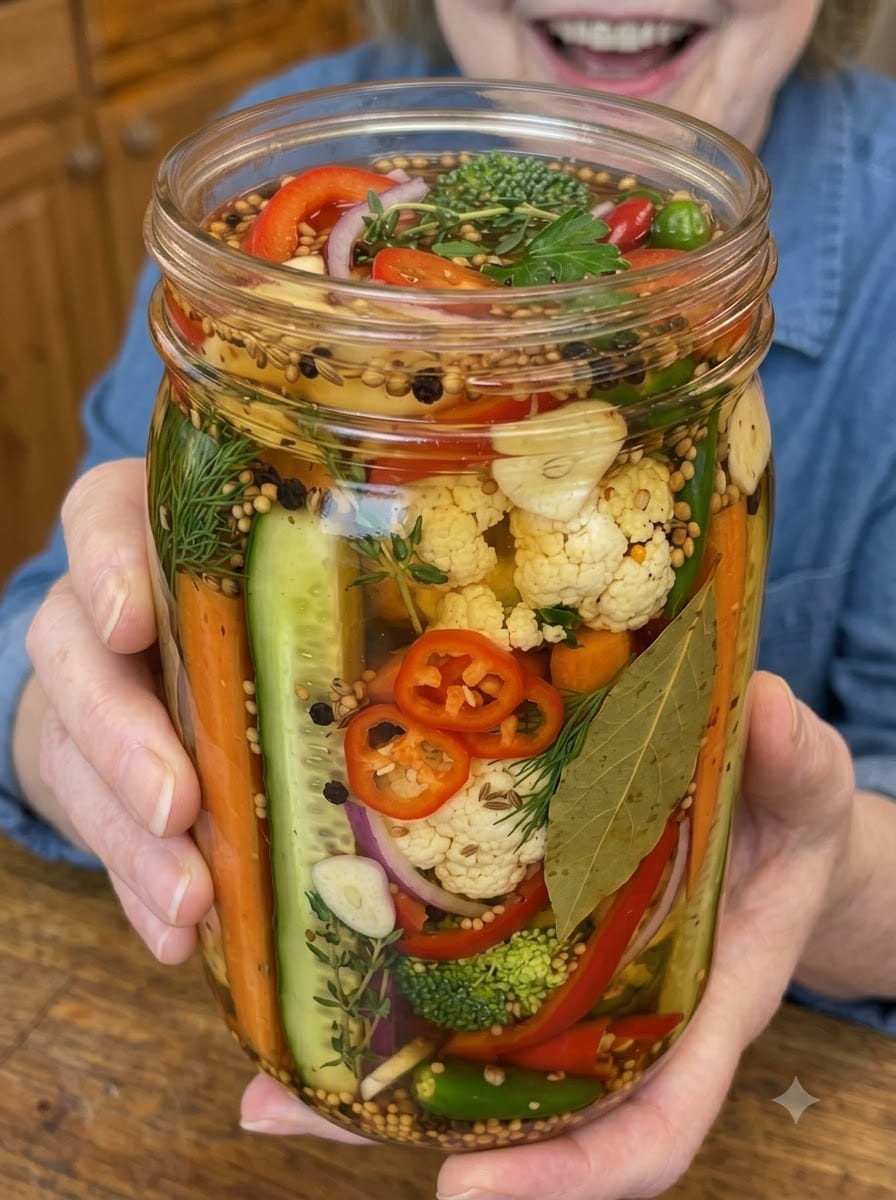
If you consider yourself a true heat seeker, these Ghost Pepper Pickled Garden Veggies are about to become your new obsession. A vibrant, garden-fresh mix of cauliflower, carrots, cucumber, bell peppers, and red onion is packed with bold garlic, fresh dill, and thinly sliced ghost peppers — one of the hottest peppers in the world — then submerged in a tangy vinegar brine that delivers explosive, unforgettable heat in every single bite.
This recipe is not for the faint of heart, but for those who genuinely crave serious spice, it’s an absolute must-try. Below, you’ll find a complete breakdown of this recipe, including ingredient details, step-by-step instructions, essential safety tips for handling ghost peppers, storage guidance, and answers to frequently asked questions.
Why These Ghost Pepper Pickled Veggies Are the Ultimate Spicy Challenge
Ghost peppers, also known as bhut jolokia, are among the world’s hottest chili peppers, and this recipe puts their intense heat front and center. Here’s what makes this recipe stand out:
- Extreme, authentic heat. Unlike recipes that rely on red pepper flakes for a mild kick, this one uses real ghost pepper slices, delivering genuine, serious spice.
- A colorful garden vegetable mix. Cauliflower, carrots, cucumber, bell peppers, and red onion create a visually stunning and texturally varied pickled vegetable medley.
- A proper blanch for the right texture. Briefly blanching the cauliflower and carrots ensures they soften just enough while retaining their signature crunch.
- Bold garlic and herb flavor. Fresh garlic and dill add aromatic depth that balances the intense heat of the ghost peppers.
- No canning equipment required. This is a refrigerator pickle recipe, meaning there’s no need for a water bath canner or specialized sealing equipment.
- Endlessly versatile for spice lovers. These fiery pickled vegetables work as a topping, a snack, or a bold addition to virtually any dish that could use an intense kick.
If you’re someone who seeks out the world’s hottest peppers and genuinely enjoys pushing your spice tolerance to the limit, these Ghost Pepper Pickled Garden Veggies deliver an experience that few other homemade pickles can match.
A Critical Note on Ghost Pepper Safety
Before diving into this recipe, it’s essential to understand just how intense ghost peppers really are. Ghost peppers rank among the hottest peppers in the world, with a heat level dramatically higher than jalapeños, serranos, or even habaneros. When working with this recipe, always:
- Wear disposable gloves when handling, slicing, or packing the ghost peppers.
- Avoid touching your face, eyes, or any sensitive skin while working with the peppers, even with gloves on.
- Wash your hands, cutting board, and knife thoroughly with soap and water after handling ghost peppers.
- Work in a well-ventilated area, as the fumes released while cutting ghost peppers can be irritating to the eyes and respiratory system.
- Warn anyone who will be eating these pickles about their extreme heat level, especially if they’re unfamiliar with ghost peppers.
Understanding the Key Ingredients
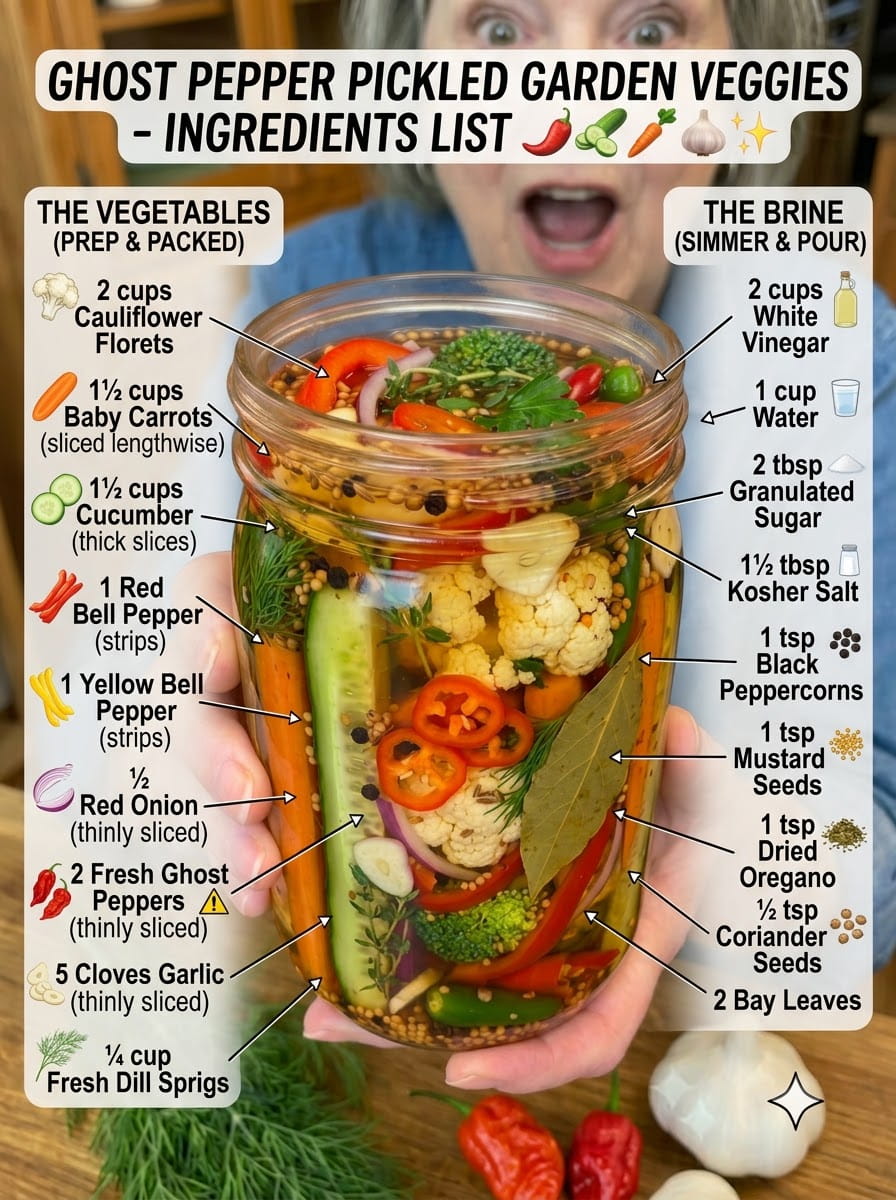
Let’s take a closer look at what goes into this recipe and why each ingredient matters.
The Vegetables
- 2 cups cauliflower florets – Offer a mild flavor that absorbs the spicy, tangy brine beautifully.
- 1½ cups baby carrots, sliced lengthwise – Add natural sweetness and vibrant color that helps balance the intense heat of the ghost peppers.
- 1½ cups cucumber, cut into thick slices – Contribute a cool, crisp crunch that offers some textural relief alongside the fiery peppers.
- 1 red bell pepper and 1 yellow bell pepper, sliced into strips – Add sweetness and eye-catching color contrast.
- ½ red onion, thinly sliced – Provides a sharp bite that mellows slightly as it pickles.
- 2 fresh ghost peppers, thinly sliced – The defining ingredient of this recipe, delivering intense, authentic heat throughout the jar.
- 5 cloves garlic, thinly sliced – Infuse the brine with bold, aromatic flavor that complements the peppers’ heat.
- ¼ cup fresh dill sprigs – Add a classic pickling flavor that provides an herbaceous contrast to the spice.
The Brine
- 2 cups white vinegar – Forms the tangy, acidic base of the brine, essential for both flavor and preservation.
- 1 cup water – Balances the acidity of the vinegar, preventing the brine from becoming overly sharp.
- 2 tbsp granulated sugar – Adds a touch of sweetness that helps balance the vinegar’s acidity and the ghost pepper’s intense heat.
- 1½ tbsp kosher salt – Essential for seasoning the brine and helping to preserve the vegetables’ texture as they pickle.
- 1 tsp black peppercorns – Add a mild, peppery bite that complements the ghost pepper’s heat.
- 1 tsp mustard seeds – Contribute a subtle tang and pleasant textural pop throughout the brine.
- 1 tsp dried oregano – Reinforces the herbal notes alongside the fresh dill.
- ½ tsp coriander seeds – Add a warm, slightly citrusy note that rounds out the spice blend.
- 2 bay leaves – Contribute a subtle herbal note that develops as the vegetables sit in the brine.
Step-by-Step Instructions
Step 1: Prepare the Vegetables Safely
Wash all the vegetables thoroughly and cut them into evenly sized pieces. Wear disposable gloves when handling the ghost peppers and avoid touching your face or eyes throughout the entire process.
Step 2: Blanch the Cauliflower and Carrots
Bring a large pot of water to a gentle boil. Add the cauliflower and carrots and blanch for 2–3 minutes, just until slightly tender while maintaining their crisp texture.
Step 3: Cool Immediately
Drain the cauliflower and carrots immediately and rinse them under cold water to stop the cooking process and help preserve their color and crunch.
Step 4: Pack the Jars
Pack the cauliflower, carrots, cucumber, bell peppers, red onion, ghost peppers, garlic, and fresh dill into clean glass jars, layering the vegetables evenly for a colorful, well-distributed mix.
Step 5: Make the Brine
In a medium saucepan, combine the white vinegar, water, sugar, kosher salt, black peppercorns, mustard seeds, oregano, coriander seeds, and bay leaves.
Step 6: Boil the Brine
Bring the pickling brine to a gentle boil over medium heat, stirring until the sugar and salt have completely dissolved.
Step 7: Cool Slightly
Remove the brine from the heat and allow it to cool slightly before pouring it over the vegetables.
Step 8: Pour Over the Vegetables
Carefully pour the warm brine over the vegetables until everything is completely submerged.
Step 9: Release Air Bubbles
Gently press the vegetables down with a clean spoon to release trapped air bubbles and ensure the brine reaches every part of the jar.
Step 10: Cool and Seal
Allow the jars to cool to room temperature before sealing tightly.
Step 11: Refrigerate
Refrigerate for at least 24 hours before serving. For the best flavor and deeper heat, let the vegetables pickle for 3–5 days.
Step 12: Serve Carefully
Serve chilled or slightly brought to room temperature with burgers, sandwiches, tacos, grilled meats, barbecue, charcuterie boards, rice bowls, or any meal that needs a fiery kick. Always handle the finished pickles with care given their extreme heat.
Tips for the Best Ghost Pepper Pickled Veggies
A few small techniques can make a significant difference in both safety and flavor:
- Always wear gloves. This cannot be overstated — ghost peppers are extremely potent, and even brief skin contact can cause significant, lasting irritation.
- Start with fewer ghost peppers if you’re unsure of your tolerance. You can always increase the amount in future batches once you understand how spicy these pickles truly are.
- Don’t over-blanch the cauliflower and carrots. A quick 2–3 minute blanch is all you need to soften them slightly while preserving their satisfying crunch.
- Rinse immediately under cold water. This step helps stop the cooking process and preserves the vegetables’ vibrant color.
- Be patient. While these pickles are technically ready after 24 hours, letting them sit for 3–5 days results in significantly more heat and a much more developed flavor.
- Taste with extreme caution. Given the intensity of ghost peppers, start with the smallest possible bite when first sampling these pickles.
Ingredient Substitutions and Variations
This recipe is easy to adapt based on your spice tolerance or what you have available:
- Adjust the heat level. For a still-spicy but slightly more approachable version, use just 1 ghost pepper instead of 2; for those who want maximum heat, additional ghost peppers can be added, though extreme caution is advised.
- Swap the pepper variety. Habanero peppers can be used in place of ghost peppers for a still-intense but somewhat more moderate level of heat.
- Change the vegetable mix. Green beans or celery can be added or substituted based on availability and personal preference.
- Adjust the sweetness. Honey can be used in place of granulated sugar for a more natural sweetness that helps balance the heat.
- Add extra aromatics. A few slices of fresh ginger can be added to the jars for an extra layer of warmth and complexity.
How to Use Ghost Pepper Pickled Garden Veggies
Part of what makes this recipe appealing to spice lovers is its versatility. Here are just a few ways to enjoy these fiery pickled vegetables:
- On burgers – Add a few pieces for those who want a truly unforgettable spicy upgrade.
- On sandwiches – Layer them onto sandwiches for serious heat that cuts through rich fillings.
- In tacos – Use as a fiery topping for those who love intense spice in every bite.
- On barbecue platters – Serve alongside smoky, rich meats for a spicy contrast that only true heat lovers will appreciate.
- On charcuterie boards – Include a small jar for guests who specifically seek out extreme heat.
- In rice bowls – Add a small amount as a spicy, tangy topping to balance rich or mild grain-based dishes.
How to Store Ghost Pepper Pickled Veggies
These fiery pickled vegetables store well in the refrigerator, making them a convenient, long-lasting condiment for dedicated spice lovers.
- Store in airtight glass jars in the refrigerator for up to 3–4 weeks.
- Keep the vegetables fully submerged in the brine to maintain their flavor, heat, and crunch over time.
- Always use a clean utensil when serving to help prevent contamination and extend their shelf life.
- Handle the finished pickles carefully, being mindful of their extreme heat level even after weeks in the refrigerator.
Frequently Asked Questions
How hot are ghost peppers compared to other chili peppers? Ghost peppers are significantly hotter than common peppers like jalapeños, serranos, and even habaneros, ranking among the hottest peppers in the world. This recipe is intended specifically for those who genuinely enjoy extreme heat.
Do I need to wear gloves when handling ghost peppers? Yes, absolutely. Ghost peppers are extremely potent, and their oils can cause significant skin irritation on contact. Always wear disposable gloves and avoid touching your face or eyes while handling them.
Can I reduce the number of ghost peppers for a milder version? Yes, using just 1 ghost pepper instead of 2 will still produce a very spicy result, but slightly more approachable than the full recipe. Keep in mind that even a small amount of ghost pepper delivers substantial heat.
Do I need special canning equipment for this recipe? No, this is a refrigerator pickle recipe, meaning there’s no need for a water bath canner or specialized sealing equipment. Simply use clean glass jars with tight-fitting lids.
How long do these pickled vegetables last? When stored in airtight jars in the refrigerator, these vegetables will keep well for up to 3–4 weeks, with the heat and flavor continuing to intensify over the first several days.
What should I do if I experience skin irritation from handling ghost peppers? If skin irritation occurs, wash the affected area thoroughly with soap and water. Avoid touching your eyes or face, and if irritation is severe or persistent, seek medical advice.
Can I use frozen vegetables for this recipe? Fresh vegetables are strongly recommended for the best texture, as frozen vegetables tend to become softer and slightly watery once thawed, which can negatively affect the overall crunch of the finished pickles.
Is this recipe suitable for people who don’t enjoy very spicy food? No, this recipe is specifically designed for serious heat lovers. If you’re new to spicy food or have a low spice tolerance, this particular recipe is likely too intense, and a milder pickled vegetable recipe would be a better starting point.
Final Thoughts
These Ghost Pepper Pickled Garden Veggies are the ultimate challenge for true spice enthusiasts, combining a colorful, crunchy mix of garden vegetables with the intense, authentic heat of ghost peppers. With proper handling and a bit of patience, this recipe delivers an unforgettable, fiery pickled vegetable medley that’s unlike anything you’ll find at the grocery store.
Make a batch, handle it with care, and keep it on hand for those moments when only genuine, serious heat will do — these Ghost Pepper Pickled Garden Veggies are destined to become a badge of honor for the spiciest corner of your refrigerator.
Print
Ghost Pepper Pickled Garden Veggies
Ingredients
Let’s take a closer look at what goes into this recipe and why each ingredient matters.
The Vegetables
- 2 cups cauliflower florets – Offer a mild flavor that absorbs the spicy, tangy brine beautifully.
- 1½ cups baby carrots, sliced lengthwise – Add natural sweetness and vibrant color that helps balance the intense heat of the ghost peppers.
- 1½ cups cucumber, cut into thick slices – Contribute a cool, crisp crunch that offers some textural relief alongside the fiery peppers.
- 1 red bell pepper and 1 yellow bell pepper, sliced into strips – Add sweetness and eye-catching color contrast.
- ½ red onion, thinly sliced – Provides a sharp bite that mellows slightly as it pickles.
- 2 fresh ghost peppers, thinly sliced – The defining ingredient of this recipe, delivering intense, authentic heat throughout the jar.
- 5 cloves garlic, thinly sliced – Infuse the brine with bold, aromatic flavor that complements the peppers’ heat.
- ¼ cup fresh dill sprigs – Add a classic pickling flavor that provides an herbaceous contrast to the spice.
The Brine
- 2 cups white vinegar – Forms the tangy, acidic base of the brine, essential for both flavor and preservation.
- 1 cup water – Balances the acidity of the vinegar, preventing the brine from becoming overly sharp.
- 2 tbsp granulated sugar – Adds a touch of sweetness that helps balance the vinegar’s acidity and the ghost pepper’s intense heat.
- 1½ tbsp kosher salt – Essential for seasoning the brine and helping to preserve the vegetables’ texture as they pickle.
- 1 tsp black peppercorns – Add a mild, peppery bite that complements the ghost pepper’s heat.
- 1 tsp mustard seeds – Contribute a subtle tang and pleasant textural pop throughout the brine.
- 1 tsp dried oregano – Reinforces the herbal notes alongside the fresh dill.
- ½ tsp coriander seeds – Add a warm, slightly citrusy note that rounds out the spice blend.
- 2 bay leaves – Contribute a subtle herbal note that develops as the vegetables sit in the brine.
Instructions
Step 1: Prepare the Vegetables Safely
Wash all the vegetables thoroughly and cut them into evenly sized pieces. Wear disposable gloves when handling the ghost peppers and avoid touching your face or eyes throughout the entire process.
Step 2: Blanch the Cauliflower and Carrots
Bring a large pot of water to a gentle boil. Add the cauliflower and carrots and blanch for 2–3 minutes, just until slightly tender while maintaining their crisp texture.
Step 3: Cool Immediately
Drain the cauliflower and carrots immediately and rinse them under cold water to stop the cooking process and help preserve their color and crunch.
Step 4: Pack the Jars
Pack the cauliflower, carrots, cucumber, bell peppers, red onion, ghost peppers, garlic, and fresh dill into clean glass jars, layering the vegetables evenly for a colorful, well-distributed mix.
Step 5: Make the Brine
In a medium saucepan, combine the white vinegar, water, sugar, kosher salt, black peppercorns, mustard seeds, oregano, coriander seeds, and bay leaves.
Step 6: Boil the Brine
Bring the pickling brine to a gentle boil over medium heat, stirring until the sugar and salt have completely dissolved.
Step 7: Cool Slightly
Remove the brine from the heat and allow it to cool slightly before pouring it over the vegetables.
Step 8: Pour Over the Vegetables
Carefully pour the warm brine over the vegetables until everything is completely submerged.
Step 9: Release Air Bubbles
Gently press the vegetables down with a clean spoon to release trapped air bubbles and ensure the brine reaches every part of the jar.
Step 10: Cool and Seal
Allow the jars to cool to room temperature before sealing tightly.
Step 11: Refrigerate
Refrigerate for at least 24 hours before serving. For the best flavor and deeper heat, let the vegetables pickle for 3–5 days.
Step 12: Serve Carefully
Serve chilled or slightly brought to room temperature with burgers, sandwiches, tacos, grilled meats, barbecue, charcuterie boards, rice bowls, or any meal that needs a fiery kick. Always handle the finished pickles with care given their extreme heat.
Tips for the Best Ghost Pepper Pickled Veggies
A few small techniques can make a significant difference in both safety and flavor:
- Always wear gloves. This cannot be overstated — ghost peppers are extremely potent, and even brief skin contact can cause significant, lasting irritation.
- Start with fewer ghost peppers if you’re unsure of your tolerance. You can always increase the amount in future batches once you understand how spicy these pickles truly are.
- Don’t over-blanch the cauliflower and carrots. A quick 2–3 minute blanch is all you need to soften them slightly while preserving their satisfying crunch.
- Rinse immediately under cold water. This step helps stop the cooking process and preserves the vegetables’ vibrant color.
- Be patient. While these pickles are technically ready after 24 hours, letting them sit for 3–5 days results in significantly more heat and a much more developed flavor.
- Taste with extreme caution. Given the intensity of ghost peppers, start with the smallest possible bite when first sampling these pickles.