
Homemade Seed Bread: A Healthy, Nutritious Low-Carb Loaf
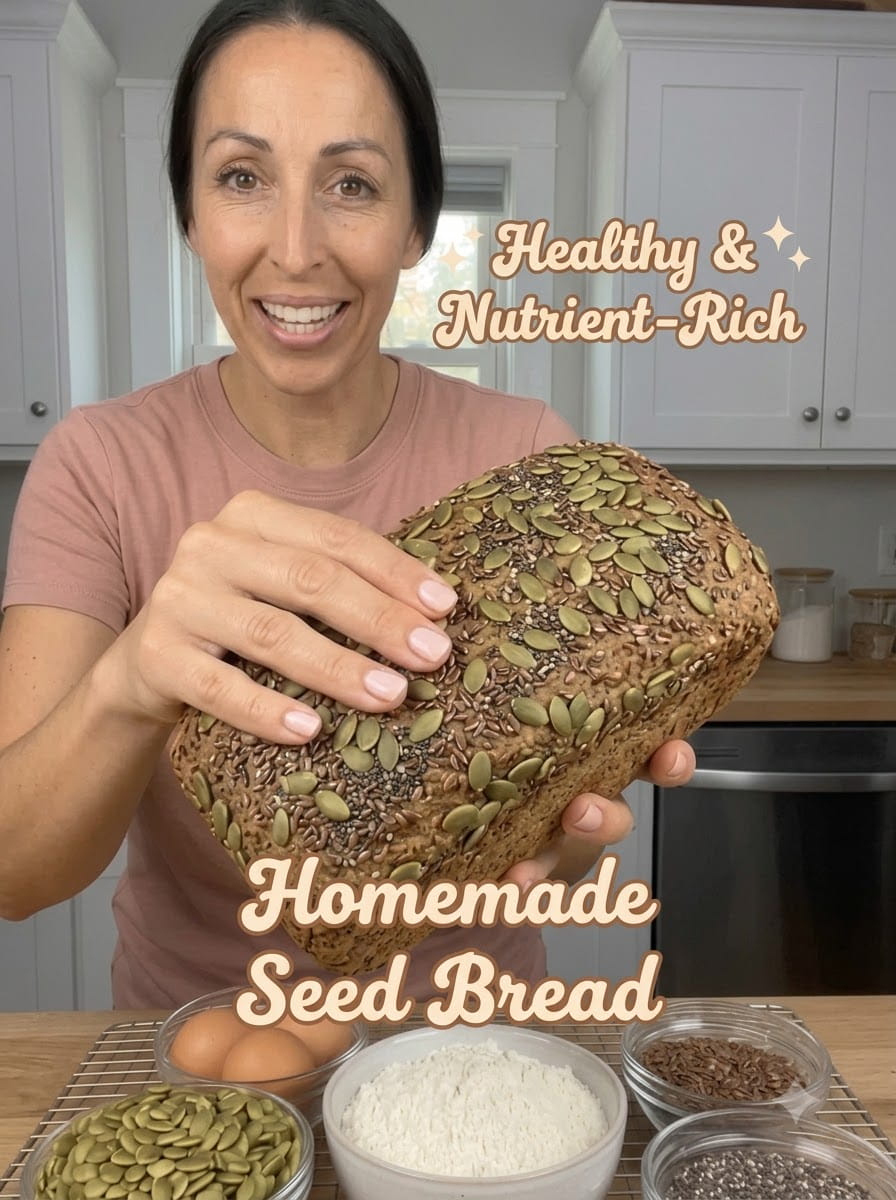
This homemade seed bread is a wholesome, hearty alternative to traditional wheat bread, combining almond flour, chia seeds, ground flaxseeds, pumpkin seeds, and eggs into a flavorful loaf with a satisfying texture. Every slice delivers a delicious blend of nutty flavor, tender crumb, and crunchy seeds, making it an excellent choice for breakfast, lunch, or a quick snack. Whether you enjoy it toasted with creamy avocado, topped with scrambled eggs, or spread with hummus, this easy homemade bread brings variety to your everyday meals.
One of the best things about this healthy seed bread recipe is its simplicity. You do not need yeast, wheat flour, kneading, or a long rising time. Instead, a handful of everyday ingredients comes together in one bowl to create a compact, nourishing loaf. The chia seeds and flaxseeds help bind the batter, while the almond flour provides a rich, nutty base. Pumpkin seeds add a pleasant crunch and make every slice look as appealing as it tastes.
If you are looking for a grain-free-style bread that is easy to prepare at home, this recipe is worth adding to your regular baking routine. It is especially useful for people who enjoy experimenting with alternative flours and seed-based recipes. Keep reading to discover the ingredients, baking method, helpful tips, serving suggestions, variations, and answers to common questions about making homemade seed bread.
Why You Will Love This Homemade Seed Bread
There are plenty of reasons to make this simple almond flour seed bread. Its ingredients are straightforward, the preparation is beginner-friendly, and the finished loaf is versatile enough to enjoy in many different ways.
1. Made with Simple Ingredients
You only need almond flour, chia seeds, ground flaxseeds, eggs, pumpkin seeds, baking powder, salt, olive oil, and water. These ingredients are easy to combine without special equipment or complicated techniques.
Because the recipe does not rely on yeast, there is no need to wait for dough to rise. Once the batter is mixed and rested briefly, it is ready for the oven.
2. A Naturally Grain-Free-Style Recipe
This loaf uses almond flour instead of conventional wheat flour. That makes it suitable for people who prefer grain-free-style baking, provided all ingredients meet their individual dietary needs.
Almond flour behaves differently from wheat flour. It does not develop the same gluten structure, so the finished bread is denser and more delicate than a traditional sandwich loaf. The result is a hearty bread that works particularly well when sliced carefully and lightly toasted.
3. Packed with Seeds
Chia seeds, flaxseeds, and pumpkin seeds each contribute their own texture and flavor. Chia and flax absorb moisture, helping the loaf hold together, while pumpkin seeds add crunch.
These seeds also provide nutrients, including fiber, unsaturated fats, and minerals. Almond flour and eggs contribute additional protein and fat, making the bread satisfying when paired with other nutritious foods.
4. No Yeast or Kneading Required
Traditional homemade bread often requires kneading, proofing, and several hours of preparation. This recipe skips those steps entirely.
The batter is mixed by hand, rested for a few minutes, transferred to a loaf pan, and baked. Baking powder provides some lift, while eggs help the loaf set as it cooks.
5. Perfect for Toast and Savory Toppings
This bread has a mild, nutty flavor that pairs well with both savory and lightly sweet toppings. It is especially delicious toasted because the edges become firmer and the pumpkin seeds develop a deeper roasted flavor.
Try it with avocado, eggs, hummus, cottage cheese, or a thin layer of nut butter. The dense texture also makes it a satisfying base for an open-faced sandwich.
Ingredients for Homemade Seed Bread
Each ingredient has an important role in the structure, flavor, or texture of this loaf. For the best results, measure the ingredients carefully and use the recommended forms.
Almond Flour
You will need 1 cup of almond flour. Almond flour forms the main base of the bread, providing a soft, slightly moist crumb and a delicate nutty flavor.
Use finely ground almond flour rather than coarse almond meal when possible. Finely ground flour usually produces a more uniform texture and helps the slices hold together.
Almond flour does not absorb liquid in the same way as wheat flour, so avoid adding extra flour without a clear reason. Too much can make the loaf dry and crumbly.
Chia Seeds
Add 2 tablespoons of chia seeds. Chia seeds absorb liquid and develop a gel-like coating, helping bind the batter and support the loaf’s structure.
Black or white chia seeds both work well. Their color may slightly affect the appearance of the finished bread, but the texture should remain similar.
Ground Flaxseeds
Use 2 tablespoons of ground flaxseeds. Ground flaxseeds contribute a mild, earthy flavor and help the bread retain moisture.
Ground flax is preferable to whole flaxseeds for this recipe because the smaller particles distribute more evenly throughout the batter. Whole seeds may add crunch, but they will not provide the same binding effect.
Eggs
Three large eggs help hold the ingredients together and provide structure as the loaf bakes.
Because this recipe does not contain wheat gluten, the eggs are particularly important. They help the bread set and make it easier to slice after cooling.
For consistent results, use large eggs and bring them close to room temperature before mixing if convenient.
Pumpkin Seeds
Use ¼ cup of pumpkin seeds, also known as pepitas when sold without their shells. They add crunch, color, and a pleasantly nutty taste.
You can mix the seeds directly into the batter and sprinkle a few additional seeds over the top before baking. If you prefer a softer texture, lightly chop the pumpkin seeds before adding them.
Baking Powder
One teaspoon of baking powder helps the loaf rise slightly. It does not produce the airy structure of yeast bread, but it helps prevent the loaf from becoming unnecessarily compact.
Check that your baking powder is fresh. Old baking powder may not provide enough lift.
Salt
Add ¼ teaspoon of salt to balance the nutty flavors and bring out the taste of the seeds.
If you use salted pumpkin seeds, you may want to reduce the added salt slightly.
Olive Oil
Two tablespoons of olive oil contribute moisture and a smooth texture. The oil also helps prevent the loaf from tasting dry.
A mild olive oil works particularly well because it does not overpower the almond flour or seeds.
Water
You will need ¼ cup of water. Water hydrates the chia seeds and flaxseeds and helps the ingredients combine into a thick batter.
Allowing the batter to rest before baking gives these seeds time to absorb some of the moisture, improving the consistency.
Complete Recipe: Homemade Seed Bread
Preparation time: About 15 minutes, including the resting period
Baking time: 30–40 minutes
Oven temperature: 350°F (175°C)
Texture: Dense, tender, nutty, and seed-filled
Ingredients
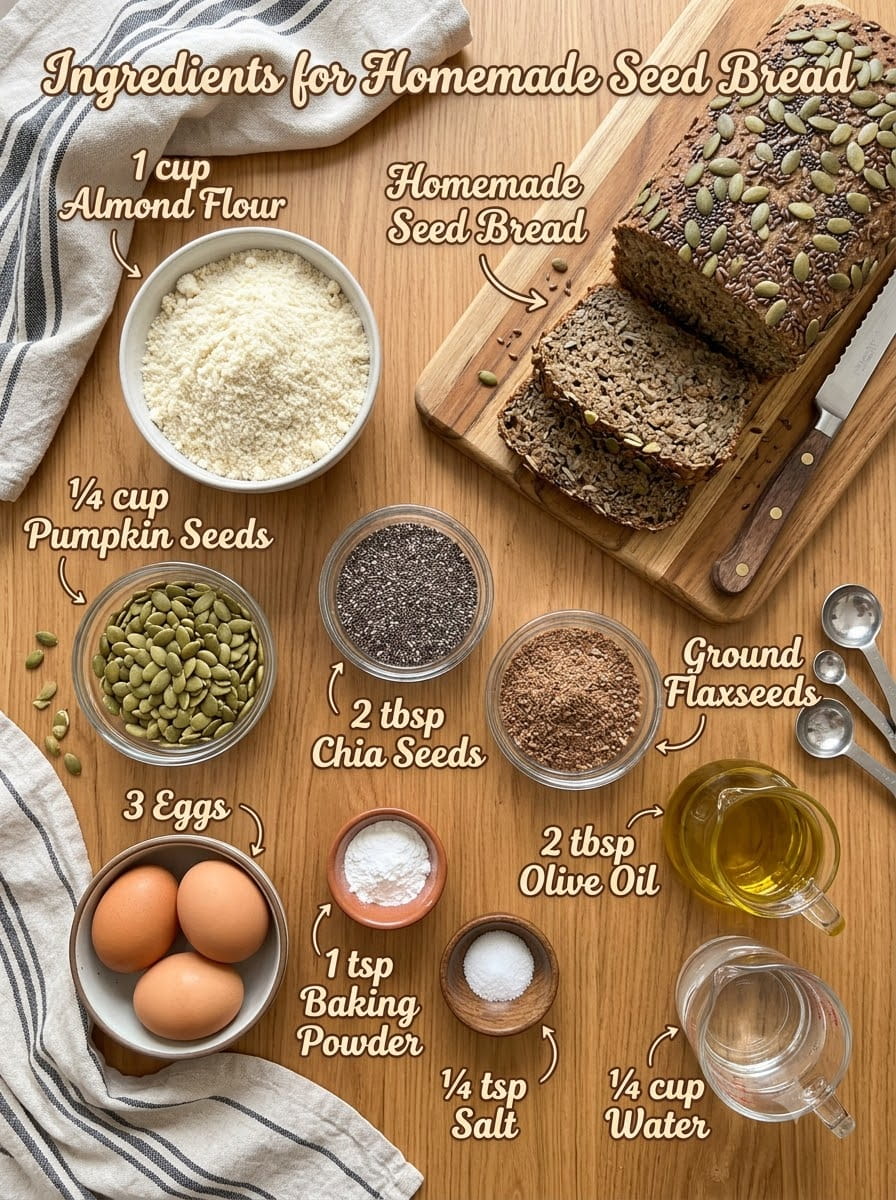
- 1 cup almond flour
- 2 tablespoons chia seeds
- 2 tablespoons ground flaxseeds
- 3 large eggs
- ¼ cup pumpkin seeds
- 1 teaspoon baking powder
- ¼ teaspoon salt
- 2 tablespoons olive oil
- ¼ cup water
Instructions
Step 1: Preheat the Oven
Preheat your oven to 350°F (175°C). Prepare a small loaf pan by lining it with parchment paper.
Leave enough parchment paper extending over the sides to help lift the baked loaf out of the pan. This is especially useful because seed-based breads can be more delicate than conventional wheat bread.
If you do not have parchment paper, grease the pan thoroughly with oil, paying particular attention to the corners.
Step 2: Combine the Dry Ingredients
In a large mixing bowl, add the almond flour, chia seeds, ground flaxseeds, pumpkin seeds, baking powder, and salt.
Stir until everything is evenly distributed. Break up any noticeable lumps in the almond flour so the batter will have a consistent texture.
Mixing the dry ingredients first helps prevent the baking powder and seeds from gathering in one area of the loaf.
Step 3: Whisk the Wet Ingredients
In a separate bowl, whisk the three eggs until the yolks and whites are fully combined.
Add the olive oil and water, then whisk again until the mixture looks uniform.
Pour the wet mixture into the bowl containing the dry ingredients. Stir with a spatula or wooden spoon until no dry pockets remain.
The batter should be thick and spoonable rather than runny. Almond flour, chia seeds, and flaxseeds create a different consistency from a traditional wheat bread dough.
Step 4: Let the Batter Rest
Allow the batter to rest for 5–10 minutes before transferring it to the pan.
This short resting period gives the chia seeds and ground flaxseeds time to absorb moisture. The batter may become slightly thicker as it sits.
Avoid letting it rest for an excessively long time before baking, particularly if the mixture becomes so thick that it is difficult to spread evenly.
Step 5: Transfer the Batter to the Loaf Pan
Spoon the batter into the prepared pan. Use the back of a spoon or a spatula to smooth the surface.
Distribute the batter evenly so the loaf bakes at a consistent rate. Sprinkle additional pumpkin seeds over the top if you want a more decorative finish.
Gently press the topping seeds into the surface so they are less likely to fall off after baking.
Step 6: Bake Until Firm
Place the loaf pan in the preheated oven and bake for 30–40 minutes.
The bread is ready when the surface looks set and lightly golden, the center feels firm, and a toothpick inserted into the middle comes out without wet batter.
Ovens and loaf pans vary, so begin checking toward the earlier end of the baking range. If the top browns before the center is set, loosely cover it with foil and continue baking.
For additional confidence, the center should reach at least 160°F (71°C) because the recipe contains eggs. Avoid relying on color alone to determine doneness.
Step 7: Cool Before Slicing
Remove the pan from the oven and let the loaf rest in the pan for about 10 minutes.
Carefully lift the bread out using the parchment paper and transfer it to a wire rack. Allow it to cool completely before slicing.
This step is essential. The interior continues to set as the loaf cools, and cutting it too early can cause the slices to crumble or appear gummy.
Once completely cool, use a sharp serrated knife to cut even slices. For especially neat slices, use a gentle sawing motion rather than pressing straight down.
Tips for the Best Homemade Seed Bread
A few simple techniques can make a noticeable difference in the texture and appearance of your loaf.
Measure the Ingredients Accurately
Alternative-flour baking is sensitive to changes in ingredient proportions. Too much almond flour can make the bread dry, while too much liquid may leave the center overly moist.
Use measuring cups and spoons carefully. If you bake frequently, weighing ingredients with a kitchen scale can improve consistency.
Use Finely Ground Almond Flour
Finely ground almond flour creates a more even crumb than a coarse meal. Coarse almond meal may result in a heavier texture and can make the loaf more difficult to slice cleanly.
Do not substitute coconut flour in the same quantity. Coconut flour absorbs much more liquid and would significantly change the recipe.
Do Not Skip the Resting Period
Chia seeds and ground flaxseeds need time to absorb moisture. Resting the batter for 5–10 minutes helps it thicken before baking.
This also makes the mixture easier to transfer to the loaf pan and can improve the bread’s ability to hold together.
Check the Center Carefully
A golden top does not necessarily mean the middle is fully baked. If the center is still soft or wet, return the loaf to the oven for a few additional minutes.
The toothpick test is useful, but because seed breads are naturally moist and dense, also check that the center feels set. A food thermometer can provide an additional check.
Cool the Loaf Completely
Patience is important when making grain-free-style bread. The structure is more delicate than a loaf made with wheat flour, and slicing too soon can damage the crumb.
For the cleanest slices, cool the loaf fully and use a sharp serrated knife.
Choose the Right Loaf Pan
A small loaf pan helps create a loaf with enough height for slicing. A very wide pan spreads the batter too thinly, which may shorten the baking time and produce flatter slices.
If your pan is a different size from the one intended, watch the bread closely because the baking time may change.
How to Serve Homemade Seed Bread
One of the greatest advantages of this recipe is its versatility. The mild flavor and dense texture work well with a wide variety of toppings and meals.
Avocado Toast
Toast a slice until the edges become lightly crisp. Spread ripe avocado over the surface and finish with black pepper, lemon juice, and a pinch of salt.
You can add sliced tomatoes, cucumber, or sesame seeds for extra flavor and texture.
Eggs for Breakfast
Serve the bread with scrambled eggs, a fried egg, or sliced hard-boiled eggs. The bread’s nutty flavor complements the richness of eggs, while the seeds add texture.
For a more substantial breakfast, add sautéed spinach or roasted tomatoes.
Hummus and Vegetables
Spread hummus over a toasted slice and top with cucumber, shredded carrots, roasted peppers, or fresh herbs.
This combination makes a convenient lunch or afternoon snack and works well for anyone who enjoys savory plant-forward toppings.
Cottage Cheese and Herbs
Top the bread with cottage cheese, cracked black pepper, and chopped chives. Add sliced cucumber or radishes for freshness.
The creamy topping contrasts nicely with the crunchy seeds.
Nut Butter and Fruit
For a sweeter option, spread almond butter or peanut butter over a slice. Add thinly sliced banana, strawberries, or a light drizzle of honey.
This combination makes a satisfying breakfast or snack without requiring a complicated preparation.
Open-Faced Sandwiches
Use the bread as a base for turkey, sliced chicken, cheese, lettuce, tomato, or tuna salad.
Because the loaf is dense and may be more delicate than wheat bread, open-faced sandwiches are often easier to manage than heavily filled sandwiches. Lightly toasting the bread can make it sturdier.
Soup and Salad
Serve a slice alongside vegetable soup, tomato soup, lentil soup, or a fresh green salad. Toasted seed bread is especially enjoyable with warm soups because it adds crunch and a nutty flavor to the meal.
Easy Variations to Try
Once you are comfortable with the basic recipe, you can experiment with different seasonings and seeds. Keep changes modest at first so you can see how each adjustment affects the texture.
Everything-Style Seed Bread
Add a small amount of dried garlic, dried onion, sesame seeds, and poppy seeds to the batter. These ingredients create a savory flavor inspired by everything-seasoned bagels.
Keep the total amount of additional dry ingredients modest so the loaf does not become too dry.
Herb and Garlic Seed Bread
Mix in dried rosemary, thyme, or oregano along with a little garlic powder. These flavors pair particularly well with olive oil, hummus, soups, and roasted vegetables.
If you use fresh herbs, chop them finely and avoid adding large amounts of extra moisture.
Sesame and Sunflower Seed Bread
Replace some of the pumpkin seeds with sunflower seeds and sesame seeds. This creates a slightly different crunch and a more complex seed flavor.
Try to keep the total quantity of added seeds close to the original ¼ cup unless you are comfortable adjusting the batter.
Spiced Seed Bread
Add a pinch of ground cumin, smoked paprika, or black pepper for a savory loaf. These spices work well when the bread will be served with eggs, cheese, soups, or roasted vegetables.
Start with small amounts because strong seasonings can easily dominate the almond and seed flavors.
Cheese and Herb Bread
For a richer variation, mix a small amount of finely grated hard cheese into the batter along with dried herbs. Parmesan-style cheese adds a savory, salty note.
Cheese introduces additional fat and moisture, so the texture may differ from the original recipe. Watch the loaf carefully during baking and allow it to cool fully.
Nutty Breakfast Bread
Add a small amount of chopped walnuts or pecans for extra crunch. This variation pairs well with almond butter, plain yogurt on the side, or lightly sweet toppings.
Keep in mind that additional nuts increase the overall fat and calorie content.
Is Homemade Seed Bread Healthy?
This bread contains several nutrient-rich ingredients, including almonds, chia seeds, flaxseeds, pumpkin seeds, and eggs. These ingredients provide a combination of protein, fats, fiber, vitamins, and minerals.
Almond flour contains unsaturated fats and vitamin E. Chia seeds and flaxseeds provide fiber and plant-based omega-3 fatty acid called alpha-linolenic acid. Pumpkin seeds contribute protein and minerals such as magnesium and zinc. Eggs provide protein and several essential nutrients.
However, the nutritional profile of the finished loaf depends on the exact ingredients, their brands, the size of the loaf, and how many slices you cut. Almond flour and seeds are energy-dense, so this bread may contain more calories per slice than some conventional breads.
The best way to evaluate it is to consider how it fits into your overall eating pattern. Pairing a slice with vegetables, eggs, hummus, or another protein-rich food can help create a balanced meal.
Is It Low in Carbohydrates?
Almond flour generally contains fewer total carbohydrates per serving than conventional wheat flour, while chia seeds and flaxseeds contribute fiber. As a result, this loaf may fit into some lower-carbohydrate eating plans.
However, the exact carbohydrate content depends on ingredient brands and slice size. Do not assume that every seed bread is automatically low-carb simply because it contains nuts and seeds.
If you track carbohydrates for a specific dietary purpose, calculate the nutrition information from the products you actually use.
Is It Gluten-Free?
The listed ingredients do not naturally contain wheat, barley, or rye. Nevertheless, cross-contact can occur during manufacturing or packaging.
If you need to avoid gluten for medical reasons, choose ingredients that are certified gluten-free when appropriate and check their labels. Also ensure that your utensils, loaf pan, and work surfaces have not been contaminated with gluten-containing ingredients.
Is It Suitable for Meal Preparation?
Yes. This bread can be baked ahead of time and sliced for quick breakfasts and lunches. Once cooled, portion it into slices and refrigerate or freeze it according to your needs.
Having slices ready makes it easy to prepare avocado toast, egg sandwiches, or a simple snack without baking a fresh loaf each morning.
How to Store Homemade Seed Bread Safely
Because this bread contains eggs and moisture, it should not be treated as a shelf-stable commercial loaf.
Allow it to cool completely, then place it in a clean, airtight container and refrigerate it promptly. For the best quality, use it within about 3–4 days. Discard it sooner if you notice mold, an unusual smell, or other signs of spoilage.
Avoid leaving the bread at room temperature for extended periods. If it has been left out for more than two hours, refrigeration is no longer a reliable way to make it safe; follow established food-safety guidance and discard it when appropriate.
Can You Freeze Seed Bread?
Yes. Freezing is a convenient way to keep the loaf for longer.
Let the bread cool completely, then slice it. Place small pieces of parchment paper between the slices if you want to separate them easily later. Transfer the slices to a freezer-safe bag or airtight container, remove excess air, and label the package with the date.
For best quality, use frozen slices within about 2–3 months. They may remain safe for longer when continuously frozen at 0°F (-18°C), but flavor and texture can gradually decline.
How Do You Reheat Frozen Slices?
You can place frozen slices directly in a toaster if your appliance allows it. Otherwise, let a slice thaw in the refrigerator and toast it before serving.
A toaster oven also works well. Heat until the bread is warmed through and the edges are lightly crisp.
To preserve texture, avoid repeatedly thawing and refreezing the entire loaf. Freeze individual portions so you can remove only what you need.
Common Mistakes to Avoid
Cutting the Bread While It Is Hot
Hot seed bread may appear soft or undercooked in the middle even when it has finished baking. Cutting too early can compress the crumb and cause the slices to fall apart.
Let the loaf cool completely before cutting.
Adding Too Much Liquid
The chia seeds and flaxseeds absorb water, but the batter should not be watery. Adding extra water without checking the consistency may create a loaf that takes longer to bake and remains too moist in the center.
Follow the listed measurements first. If you make changes, adjust gradually.
Using Whole Flaxseeds Instead of Ground Flaxseeds
Whole flaxseeds do not behave exactly like ground flaxseeds. They absorb moisture differently and may not help bind the loaf to the same degree.
For the most reliable results, use ground flaxseeds as written.
Expecting a Light, Airy Wheat-Bread Texture
This recipe does not use yeast or gluten-forming wheat flour. It produces a compact, hearty loaf rather than a fluffy sandwich bread.
The dense texture is normal. Toasting the slices can make them feel lighter and crisper when served.
Removing the Bread Before It Is Fully Set
If the middle is still wet, the loaf may collapse or become gummy after cooling. Check the center with a toothpick and, when possible, a food thermometer.
If necessary, extend the baking time in short increments.
Frequently Asked Questions
Can I Make Homemade Seed Bread Without Almond Flour?
Almond flour is a major part of this recipe’s structure, so replacing it with another flour will change the result. Coconut flour, oat flour, and wheat flour absorb liquid differently and are not direct one-to-one substitutes.
For the most predictable outcome, follow the recipe as written. If you need an alternative because of allergies or dietary preferences, use a recipe developed specifically for that flour.
Can I Make This Bread Without Eggs?
Eggs provide important structure and help the loaf hold together. Replacing them may require a different ratio of liquid and binding ingredients.
Chia or flax eggs are common in vegan baking, but they do not behave exactly like chicken eggs in this particular recipe. A successful egg-free version would need testing rather than a simple substitution.
Why Is My Seed Bread Crumbly?
The loaf may crumble if it is sliced before cooling, if the flour-to-liquid ratio is incorrect, or if the ingredients are not properly combined. Coarse almond meal and whole flaxseeds can also affect the texture.
Make sure you use finely ground almond flour and ground flaxseeds, allow the batter to rest, and cool the bread completely before slicing.
Why Is the Middle Still Moist?
The loaf may need more baking time, particularly if the pan is deep or the oven runs cool. The batter may also contain too much liquid if the ingredients were not measured accurately.
Continue baking in short increments until the center is set. If the surface is already sufficiently browned, cover it loosely with foil.
Can I Toast This Bread?
Absolutely. Toasting is one of the best ways to serve it. The edges become crisp, the pumpkin seeds taste more pronounced, and the dense interior provides a sturdy base for toppings.
You can toast individual slices in a toaster or toaster oven.
Can I Make the Batter Ahead of Time?
It is best to bake the batter soon after mixing and resting. Because the recipe uses baking powder, eggs, and moisture-absorbing seeds, leaving the mixed batter for a long time may change its texture and reduce the effectiveness of the leavening.
For meal preparation, bake the loaf ahead of time, cool it, slice it, and refrigerate or freeze the finished bread.
Is This Bread Suitable for Sandwiches?
Yes, especially for open-faced sandwiches or lightly filled sandwiches. The loaf is denser and more delicate than conventional wheat bread, so thin slices may break under heavy fillings.
Let it cool completely, slice it with a serrated knife, and toast it lightly if you want extra firmness.
How Can I Make the Top More Attractive?
Before baking, sprinkle a few extra pumpkin seeds over the surface and gently press them into the batter. You can also reserve a small portion of the seeds to arrange in a simple pattern.
Avoid adding too many toppings, as a heavy layer may fall off when the loaf is sliced.
Can I Use Roasted Pumpkin Seeds?
Yes, provided they are suitable for baking and are not heavily salted or seasoned. Roasted pumpkin seeds may have a stronger flavor and slightly different texture.
If they are salted, reduce the salt in the batter as needed.
How Do I Know When the Bread Is Done?
The top should be set, the center should feel firm, and a toothpick inserted into the middle should come out without wet batter. Since the recipe contains eggs, a center temperature of at least 160°F (71°C) is a useful additional check.
Allow the loaf to cool completely before evaluating its final texture.
What to Serve with Homemade Seed Bread
For breakfast, pair a toasted slice with scrambled eggs, avocado, or a bowl of plain yogurt and fresh fruit. These combinations offer a mix of flavors and textures without requiring much preparation.
At lunchtime, serve the bread with a green salad, vegetable soup, hummus, or a simple plate of cheese and sliced vegetables. Its nutty taste complements roasted vegetables, leafy greens, and creamy spreads.
For an afternoon snack, try a slice with peanut butter, almond butter, or cottage cheese. If you prefer something savory, add cucumber, black pepper, and fresh herbs.
This bread can also be part of a weekend brunch spread. Serve toasted slices with boiled eggs, smoked fish, tomatoes, olives, and a selection of spreads. Because it has a hearty texture, a small slice can add satisfying crunch and flavor to a larger meal.
Final Thoughts
Homemade Seed Bread is an easy, flavorful alternative to traditional wheat bread. Made with almond flour, chia seeds, ground flaxseeds, eggs, pumpkin seeds, olive oil, and a few pantry staples, it delivers a nutty taste and a dense texture that works beautifully with a wide range of toppings.
The recipe is especially appealing because it does not require yeast, kneading, or a long rising period. Mix the ingredients, allow the batter to rest briefly, bake until the center is set, and cool completely before slicing. With a little attention to ingredient measurements and baking time, you can create a loaf that is ideal for breakfast toast, open-faced sandwiches, snacks, and meal preparation.
Try it with avocado, scrambled eggs, hummus, cottage cheese, or your favorite spread. You can also experiment with herbs, garlic, sesame seeds, or sunflower seeds to create your own variation.
If you enjoy simple homemade recipes made with nuts and seeds, this wholesome loaf is a useful addition to your baking collection. Keep a few slices refrigerated for the next several days, or freeze individual portions so you can enjoy homemade seed bread whenever you need a quick, satisfying base for a meal.
Print
Homemade Seed Bread | Healthy & Nutritious Recipe
Ingredients
- 1 cup almond flour
- 2 tablespoons chia seeds
- 2 tablespoons ground flaxseeds
- 3 large eggs
- ¼ cup pumpkin seeds
- 1 teaspoon baking powder
- ¼ teaspoon salt
- 2 tablespoons olive oil
- ¼ cup water
Instructions
Preheat your oven to 350°F (175°C). Prepare a small loaf pan by lining it with parchment paper.
Leave enough parchment paper extending over the sides to help lift the baked loaf out of the pan. This is especially useful because seed-based breads can be more delicate than conventional wheat bread.
If you do not have parchment paper, grease the pan thoroughly with oil, paying particular attention to the corners.
Step 2: Combine the Dry Ingredients
In a large mixing bowl, add the almond flour, chia seeds, ground flaxseeds, pumpkin seeds, baking powder, and salt.
Stir until everything is evenly distributed. Break up any noticeable lumps in the almond flour so the batter will have a consistent texture.
Mixing the dry ingredients first helps prevent the baking powder and seeds from gathering in one area of the loaf.
Step 3: Whisk the Wet Ingredients
In a separate bowl, whisk the three eggs until the yolks and whites are fully combined.
Add the olive oil and water, then whisk again until the mixture looks uniform.
Pour the wet mixture into the bowl containing the dry ingredients. Stir with a spatula or wooden spoon until no dry pockets remain.
The batter should be thick and spoonable rather than runny. Almond flour, chia seeds, and flaxseeds create a different consistency from a traditional wheat bread dough.
Step 4: Let the Batter Rest
Allow the batter to rest for 5–10 minutes before transferring it to the pan.
This short resting period gives the chia seeds and ground flaxseeds time to absorb moisture. The batter may become slightly thicker as it sits.
Avoid letting it rest for an excessively long time before baking, particularly if the mixture becomes so thick that it is difficult to spread evenly.
Step 5: Transfer the Batter to the Loaf Pan
Spoon the batter into the prepared pan. Use the back of a spoon or a spatula to smooth the surface.
Distribute the batter evenly so the loaf bakes at a consistent rate. Sprinkle additional pumpkin seeds over the top if you want a more decorative finish.
Gently press the topping seeds into the surface so they are less likely to fall off after baking.
Step 6: Bake Until Firm
Place the loaf pan in the preheated oven and bake for 30–40 minutes.
The bread is ready when the surface looks set and lightly golden, the center feels firm, and a toothpick inserted into the middle comes out without wet batter.
Ovens and loaf pans vary, so begin checking toward the earlier end of the baking range. If the top browns before the center is set, loosely cover it with foil and continue baking.
For additional confidence, the center should reach at least 160°F (71°C) because the recipe contains eggs. Avoid relying on color alone to determine doneness.
Step 7: Cool Before Slicing
Remove the pan from the oven and let the loaf rest in the pan for about 10 minutes.
Carefully lift the bread out using the parchment paper and transfer it to a wire rack. Allow it to cool completely before slicing.