
Menudo Rojo con Pata de Res: A Traditional Northern Mexican Comfort Classic
Meta Description: Make authentic Menudo Rojo con Pata de Res with tender beef tripe, beef feet, and a smoky guajillo chile broth. A traditional, deeply comforting Mexican weekend classic.
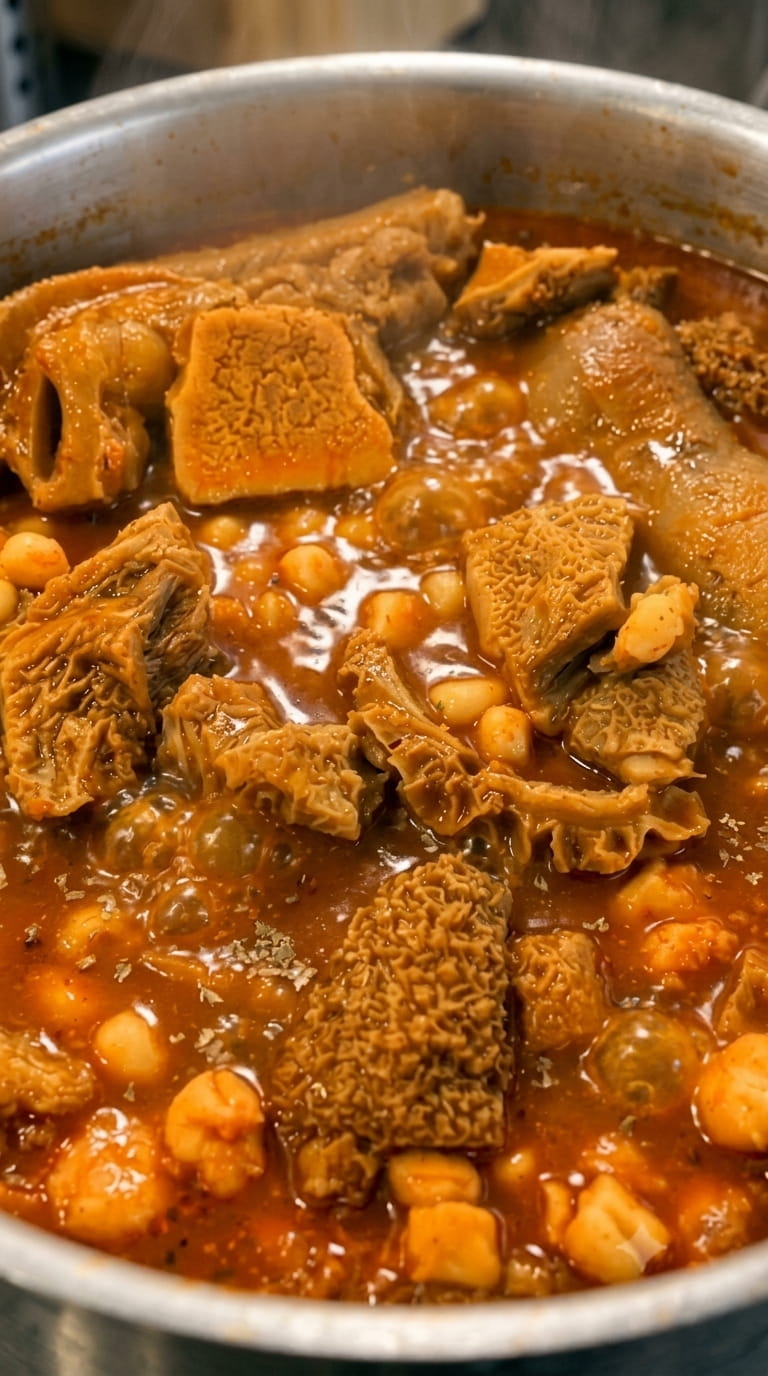
Few dishes carry the same weekend tradition and comforting reputation as Menudo Rojo con Pata de Res. This rich, deeply flavorful beef tripe soup is simmered low and slow with tender beef feet, aromatic herbs, and a smoky red chile sauce built from dried guajillo and chile de árbol peppers. The result is a hearty, satisfying broth that’s been a staple of Northern Mexican family gatherings, holidays, and weekend traditions for generations.
Menudo is beloved not just for its rich, warming flavor, but for the sense of tradition and gathering it represents — it’s a dish that takes time, care, and patience, often prepared for large family gatherings or as a beloved weekend ritual. The combination of tender, slow-cooked tripe, gelatinous beef feet, and a smoky, deeply spiced chile broth creates a dish that’s far more than the sum of its parts, delivering layers of flavor that only develop through hours of careful, low-and-slow cooking.
Below, you’ll find the complete recipe along with ingredient breakdowns, step-by-step instructions, tips for success, flavor variations, and serving suggestions to help you make an authentic, deeply satisfying pot of menudo at home.
What Is Menudo Rojo?
Menudo Rojo is a traditional Mexican soup made from beef tripe (the lining of a cow’s stomach) simmered in a rich, red chile-based broth. The “rojo” (red) designation refers to the color of the broth, which comes from a blend of dried guajillo and chile de árbol peppers, distinguishing it from lighter, less spiced versions of menudo found in some regions. The addition of beef feet, or “pata de res,” in this recipe adds extra richness and a naturally gelatinous texture to the broth, deepening its body and flavor even further.
This dish holds deep cultural significance across Mexico, particularly in Northern regions, where it’s traditionally served on weekends and is especially popular as a hearty, restorative meal. The slow cooking process — often taking several hours — allows the tripe and beef feet to become tender while the broth develops its signature rich, smoky, deeply savory character.
Why You’ll Love This Recipe
- Deeply authentic flavor. A homemade guajillo and chile de árbol sauce delivers rich, smoky, traditional menudo flavor.
- Incredibly rich, gelatinous broth. The addition of beef feet gives the broth extra body and richness that’s characteristic of a truly great menudo.
- Perfect for gatherings. This recipe yields a large batch, making it ideal for family gatherings, holidays, or weekend traditions.
- Deeply comforting. The rich, warming broth and tender tripe make this a truly satisfying, restorative meal.
- Customizable heat level. Adjust the ratio of chile de árbol to guajillo to control how spicy the finished broth is.
- A dish steeped in tradition. Menudo carries deep cultural significance and is a wonderful way to connect with authentic Mexican culinary tradition.
Ingredients You’ll Need
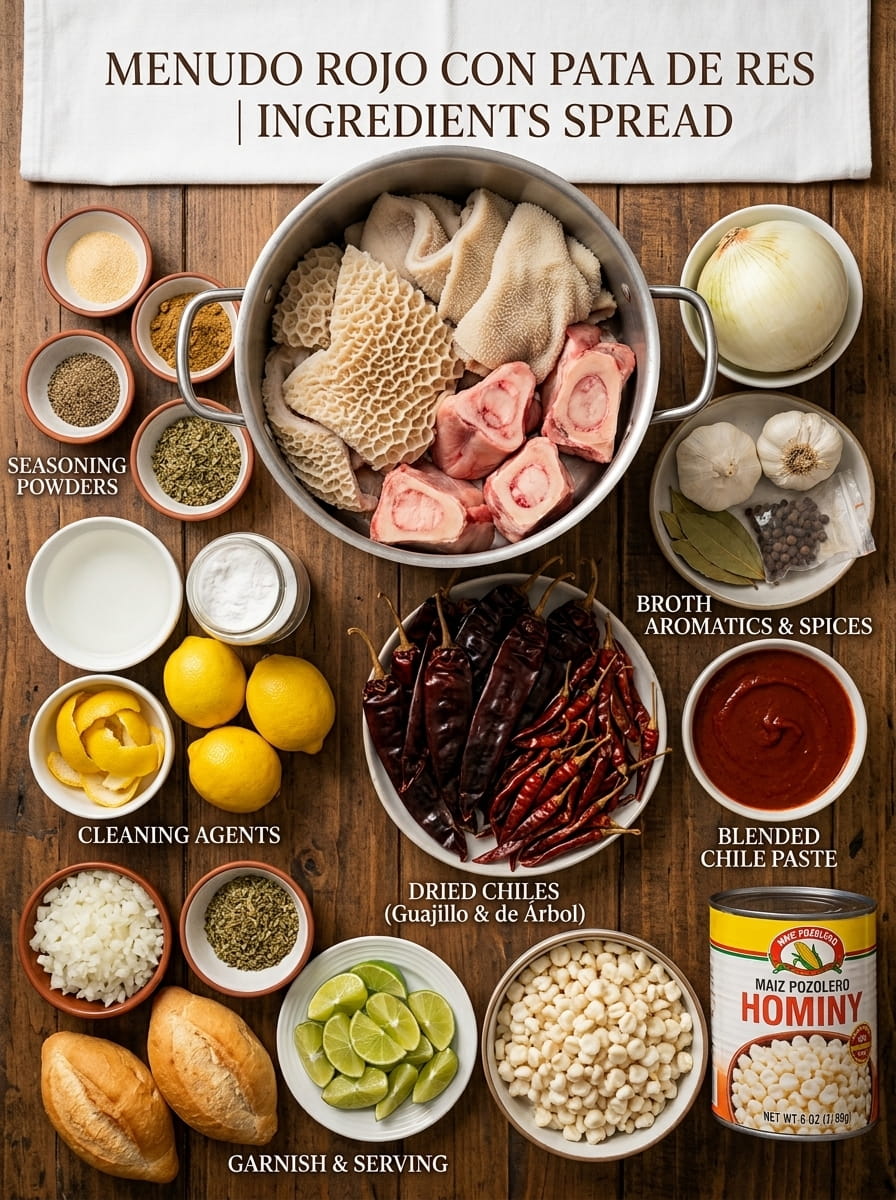
This recipe comes together in several stages: cleaning and simmering the tripe and beef feet, preparing the chile sauce, and combining everything into the final broth.
For the Menudo
- 2½ kg (5½ lbs) beef tripe (a combination of honeycomb tripe and regular tripe), cleaned and cut into large pieces
- 1 beef foot, cleaned and cut into sections (optional)
- 1 onion
- 2 heads garlic
- 6 bay leaves
- About 10–12 liters water
- 1 tablespoon salt, plus more to taste
For Cleaning the Tripe
- 4 tablespoons white vinegar
- 1 tablespoon baking soda
- Juice of 2 lemons
- Lemon peels
For the Chile Sauce
- 12–15 dried guajillo chiles, seeded
- 6–10 dried chile de árbol peppers
- 1 cooked onion (from the broth)
- 1 cooked head of garlic (from the broth)
- About 2 cups hot broth
Seasonings
- 1 tablespoon whole allspice
- 1 tablespoon whole black peppercorns
- 1 tablespoon dried oregano
- 1 teaspoon dried thyme
- 1 teaspoon dried marjoram
- 2 tablespoons garlic powder
- ½ tablespoon ground cumin
- 1 tablespoon ground black pepper
Additional
- 1 can hominy, drained
- Chopped white onion, for serving
- Mexican oregano, for serving
- Lime wedges
- Bolillo or crusty bread
Understanding Each Ingredient’s Role
- Beef tripe is the star of the dish, offering a unique, chewy texture that becomes tender after hours of slow simmering.
- Beef foot adds richness and natural gelatin to the broth, giving it that signature thick, silky body characteristic of a well-made menudo.
- Onion and garlic (used both in the initial simmer and later blended into the sauce) build deep, savory, aromatic flavor throughout the dish.
- Bay leaves add subtle herbal depth to the simmering broth.
- Vinegar, baking soda, lemon juice, and lemon peels are used to thoroughly clean the tripe, helping remove any residual odor and ensuring the final dish tastes clean and fresh.
- Dried guajillo chiles form the base of the red chile sauce, offering mild heat and deep, fruity, earthy flavor.
- Dried chile de árbol peppers add significant heat to the sauce, allowing you to control the spice level based on how many you use.
- Whole allspice, black peppercorns, oregano, thyme, and marjoram (simmered in a spice bag) infuse the broth with warm, aromatic, herbal complexity.
- Garlic powder, ground cumin, and ground black pepper season the finished broth with additional warmth and depth.
- Hominy adds a classic, hearty, slightly chewy texture that’s traditional in menudo.
- Chopped onion, Mexican oregano, and lime wedges are classic garnishes that brighten and balance the rich, savory broth.
- Bolillo or crusty bread is traditionally served alongside menudo for dipping into the flavorful broth.
Step-by-Step Instructions
This recipe involves several key stages: cleaning the tripe, simmering the broth, preparing the chile sauce, and combining everything for a final simmer.
Step 1: Clean the Tripe
Clean the tripe thoroughly and cut it into large bite-sized pieces.
Step 2: Deep-Clean with Vinegar and Lemon
Rub the tripe with the white vinegar, baking soda, lemon juice, and lemon peels. Let it rest for 30 to 60 minutes, then rinse very well. This step is essential for removing any residual odor and ensuring the tripe tastes clean and fresh once cooked.
Step 3: Clean the Beef Feet
If using beef feet, clean them thoroughly before cooking, following a similar process to ensure they’re free of any impurities.
Step 4: Start the Broth
Fill a large stockpot with 10 to 12 liters of water and bring it to a boil. Add the onion, one whole head of garlic, bay leaves, and salt.
Step 5: Add the Spice Bag
Place the whole allspice, black peppercorns, thyme, marjoram, and oregano into a spice bag or cheesecloth and add it to the pot. Using a spice bag makes it easy to remove these whole spices later without straining the entire broth.
Step 6: Add the Tripe
Add the cleaned tripe and simmer over medium-low heat.
Step 7: Add the Beef Feet
After about 30 to 40 minutes, add the beef feet to the pot.
Step 8: Simmer Until Tender
Continue simmering for about 3 hours, or until the tripe is tender. This long, slow simmer is essential for developing the deep, rich flavor and tender texture that defines a great menudo.
Step 9: Remove the Onion and Garlic
Remove the cooked onion and whole head of garlic from the broth and reserve them for the chile sauce.
Step 10: Soften the Chiles
Soften the guajillo and chile de árbol peppers in hot broth for several minutes, allowing them to become pliable and easy to blend.
Step 11: Blend the Chile Sauce
Blend the softened chiles with the cooked onion, cooked garlic, and about 2 cups of the broth until completely smooth.
Step 12: Add the Sauce to the Pot
Pour the chile sauce back into the pot with the simmering tripe and beef feet.
Step 13: Season the Broth
Stir in the garlic powder, ground cumin, ground black pepper, and dried oregano.
Step 14: Add the Hominy
Add the hominy and continue simmering for another 30 minutes, allowing all the flavors to meld together.
Step 15: Taste and Adjust
Taste the broth and adjust the salt as needed.
Step 16: Remove the Spice Bag and Serve
Remove the spice bag before serving. Serve the menudo hot, garnished with chopped white onion, Mexican oregano, and lime wedges, alongside warm bolillo or crusty bread.
Tips for the Best Menudo Rojo
- Don’t rush the tripe-cleaning process. Thoroughly cleaning the tripe with vinegar, baking soda, and lemon is essential for achieving a clean, pleasant final flavor.
- Use a spice bag for the whole spices. This makes it easy to remove the allspice, peppercorns, thyme, and marjoram later without needing to strain the entire pot.
- Adjust the chile de árbol quantity to your heat preference. Guajillo chiles are relatively mild, so the chile de árbol peppers are your primary tool for controlling the overall spice level.
- Be patient with the simmering time. A full 3 hours (or more) of simmering is essential for achieving tender tripe and beef feet, along with a deeply developed broth.
- Skim the broth as needed. Removing excess fat or foam that rises to the surface during the initial simmer helps achieve a cleaner, more refined final broth.
- Serve with all the classic garnishes. Fresh onion, oregano, lime, and warm bread aren’t just garnishes — they’re essential to the full, authentic menudo experience.
Flavor Variations to Try
Once you’ve made the classic version, try these variations to switch things up:
- Extra Spicy Version: Increase the chile de árbol peppers for a significantly spicier broth.
- Pancita Style: Add extra tripe and reduce or omit the beef feet for a version that leans more heavily on the classic tripe texture.
- Extra Hominy: Add a second can of hominy for an even heartier, more filling bowl.
- Pork Menudo Variation: Some regional variations substitute pork for beef; while not traditional to this Northern Mexican style, it’s worth exploring if you enjoy experimenting with regional differences.
- Extra Herbaceous: Add a bit of fresh epazote to the broth during the final simmer for a more traditional, deeply herbal note.
What to Serve With Menudo Rojo
Menudo is traditionally served with a handful of classic accompaniments that round out the meal. Here are some ideas:
- Warm Bolillo or Crusty Bread – Perfect for dipping into the rich, flavorful broth.
- Corn Tortillas – A classic pairing that complements the broth beautifully.
- Lime Wedges – A fresh squeeze of lime brightens every spoonful.
- Chopped White Onion and Mexican Oregano – Classic garnishes that add freshness and traditional flavor.
- Sliced Jalapeños or Serranos – For those who want an extra kick of heat.
- Crushed Red Pepper or Hot Sauce – Serve on the side for guests to customize their own spice level.
Frequently Asked Questions
What is the difference between honeycomb tripe and regular tripe? Honeycomb tripe comes from a specific part of the cow’s stomach and has a distinctive honeycomb-like texture, often preferred for its tenderness once cooked. Regular tripe, from other parts of the stomach, has a slightly different texture. Using a combination of both, as this recipe suggests, provides a variety of textures in the finished dish.
Can I make this recipe without beef feet? Yes, the beef feet are noted as optional in this recipe. While they add extra richness and a naturally gelatinous body to the broth, the menudo will still be flavorful and satisfying without them.
How long does it take to properly clean tripe? The vinegar, baking soda, and lemon cleaning process typically takes 30 to 60 minutes of resting time, followed by a thorough rinse. This step is important for ensuring the tripe tastes clean and doesn’t carry an unpleasant odor.
Can I make this recipe in a slow cooker or pressure cooker? Yes, though this recipe as written uses a traditional stovetop method. A pressure cooker can significantly reduce the cooking time for the tripe and beef feet, while a slow cooker can be used for a longer, more hands-off approach, though cooking times will need to be adjusted accordingly.
How do I store and reheat leftovers? Store leftover menudo in an airtight container in the refrigerator for up to 4 days. Reheat gently on the stovetop until warmed through.
Can I freeze menudo? Yes, menudo freezes well. Store in an airtight, freezer-safe container for up to 3 months, then thaw in the refrigerator and reheat on the stovetop.
Is this recipe very spicy? The heat level depends on the ratio of chile de árbol to guajillo chiles used. For a milder broth, reduce the chile de árbol; for a spicier version, increase it.
Final Thoughts
Menudo Rojo con Pata de Res is a deeply traditional, richly flavorful dish that represents generations of Mexican culinary heritage. With tender tripe, richly gelatinous beef feet, and a smoky, homemade guajillo and chile de árbol sauce, this recipe delivers the kind of deep, comforting flavor that only comes from hours of careful, slow cooking.
Whether you’re preparing it for a weekend family gathering, a holiday tradition, or simply craving a truly authentic bowl of menudo, this recipe delivers all the rich, satisfying flavor of the classic dish. Take your time with each step, gather your favorite garnishes, and enjoy a truly comforting taste of Northern Mexican tradition.
Print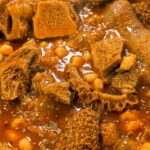
Menudo Rojo con Pata de Res
Ingredients
This recipe comes together in several stages: cleaning and simmering the tripe and beef feet, preparing the chile sauce, and combining everything into the final broth.
For the Menudo
- 2½ kg (5½ lbs) beef tripe (a combination of honeycomb tripe and regular tripe), cleaned and cut into large pieces
- 1 beef foot, cleaned and cut into sections (optional)
- 1 onion
- 2 heads garlic
- 6 bay leaves
- About 10–12 liters water
- 1 tablespoon salt, plus more to taste
For Cleaning the Tripe
- 4 tablespoons white vinegar
- 1 tablespoon baking soda
- Juice of 2 lemons
- Lemon peels
For the Chile Sauce
- 12–15 dried guajillo chiles, seeded
- 6–10 dried chile de árbol peppers
- 1 cooked onion (from the broth)
- 1 cooked head of garlic (from the broth)
- About 2 cups hot broth
Seasonings
- 1 tablespoon whole allspice
- 1 tablespoon whole black peppercorns
- 1 tablespoon dried oregano
- 1 teaspoon dried thyme
- 1 teaspoon dried marjoram
- 2 tablespoons garlic powder
- ½ tablespoon ground cumin
- 1 tablespoon ground black pepper
Additional
- 1 can hominy, drained
- Chopped white onion, for serving
- Mexican oregano, for serving
- Lime wedges
- Bolillo or crusty bread
Instructions
This recipe involves several key stages: cleaning the tripe, simmering the broth, preparing the chile sauce, and combining everything for a final simmer.
Clean the tripe thoroughly and cut it into large bite-sized pieces.
Rub the tripe with the white vinegar, baking soda, lemon juice, and lemon peels. Let it rest for 30 to 60 minutes, then rinse very well. This step is essential for removing any residual odor and ensuring the tripe tastes clean and fresh once cooked.
If using beef feet, clean them thoroughly before cooking, following a similar process to ensure they’re free of any impurities.
Fill a large stockpot with 10 to 12 liters of water and bring it to a boil. Add the onion, one whole head of garlic, bay leaves, and salt.
Place the whole allspice, black peppercorns, thyme, marjoram, and oregano into a spice bag or cheesecloth and add it to the pot. Using a spice bag makes it easy to remove these whole spices later without straining the entire broth.
Add the cleaned tripe and simmer over medium-low heat.
After about 30 to 40 minutes, add the beef feet to the pot.
Continue simmering for about 3 hours, or until the tripe is tender. This long, slow simmer is essential for developing the deep, rich flavor and tender texture that defines a great menudo.
Remove the cooked onion and whole head of garlic from the broth and reserve them for the chile sauce.
Soften the guajillo and chile de árbol peppers in hot broth for several minutes, allowing them to become pliable and easy to blend.
Blend the softened chiles with the cooked onion, cooked garlic, and about 2 cups of the broth until completely smooth.
Pour the chile sauce back into the pot with the simmering tripe and beef feet.
Stir in the garlic powder, ground cumin, ground black pepper, and dried oregano.
Add the hominy and continue simmering for another 30 minutes, allowing all the flavors to meld together.
Taste the broth and adjust the salt as needed.
Remove the spice bag before serving. Serve the menudo hot, garnished with chopped white onion, Mexican oregano, and lime wedges, alongside warm bolillo or crusty bread.