
Mexican Pork Pozole Rojo: An Authentic, Comforting Recipe You’ll Make Again and Again
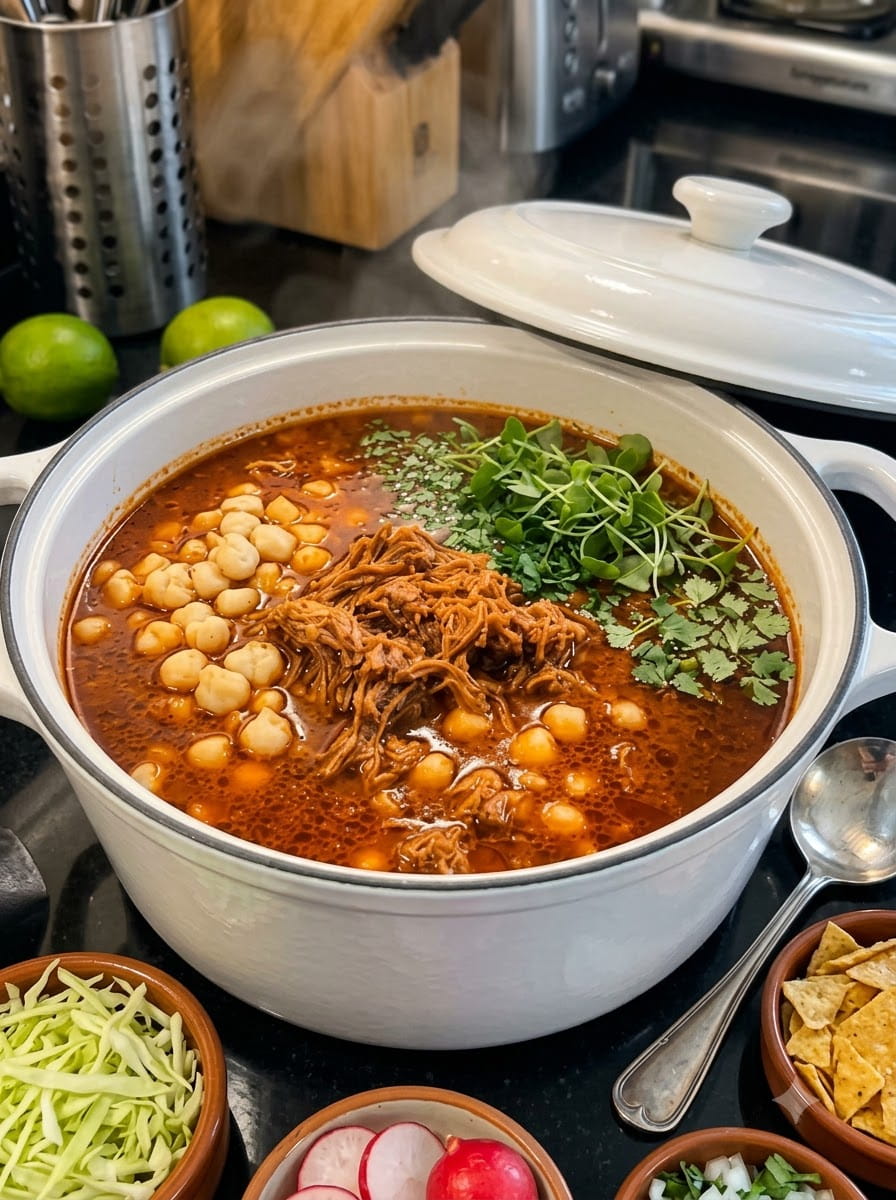
Few dishes capture the heart of Mexican home cooking quite like Pozole Rojo. This traditional soup-stew combines tender, slow-simmered pork with a rich, smoky red chile broth and hearty hominy, all topped with a vibrant mix of fresh garnishes that add crunch, brightness, and a final burst of flavor to every bowl. It’s the kind of dish that’s equally at home on a family dinner table on a chilly evening or as the centerpiece of a festive celebration.
This guide walks you through everything you need to make an authentic, flavorful Pozole Rojo from scratch — from building a deeply flavored red chile sauce to achieving perfectly tender, shreddable pork. Along the way, you’ll find ingredient breakdowns, expert tips, ingredient substitutions, storage guidance, and answers to the most common questions about this beloved Mexican classic.
What Is Pozole Rojo?
Pozole is a traditional Mexican soup made with hominy — dried corn kernels that have been treated with an alkali solution, giving them a chewy, slightly nutty texture and a distinctive puffed appearance. The dish dates back centuries and holds deep cultural significance in Mexican cuisine, often served during celebrations, holidays, and family gatherings.
There are several regional variations of pozole, distinguished primarily by the color of the broth:
- Pozole Rojo (red) – Made with a broth built from dried red chiles, typically guajillo, ancho, or pasilla varieties, giving it a deep red color and smoky, moderately spicy flavor.
- Pozole Verde (green) – Made with a green broth built from tomatillos, green chiles, and fresh herbs like cilantro.
- Pozole Blanco (white) – A simpler version made without any chile-based sauce, allowing the flavor of the meat and hominy to shine through.
This recipe focuses on Pozole Rojo, widely considered the most classic and popular version, known for its rich, smoky depth of flavor and beautiful reddish-brown broth.
Why This Pozole Rojo Recipe Works
There are countless variations of pozole, but this recipe focuses on building deep, authentic flavor through a few key techniques:
- Slow-simmered pork. Cooking the pork low and slow in seasoned water creates both tender, shreddable meat and a flavorful broth base simultaneously.
- Toasted dried chiles. Briefly toasting the guajillo, ancho, and pasilla chiles before blending intensifies their natural smokiness and depth of flavor.
- A strained, silky-smooth sauce. Passing the blended chile sauce through a fine-mesh strainer removes any tough skins or seeds, resulting in a broth that’s rich but never gritty.
- Fresh, crunchy garnishes. The final toppings — shredded cabbage, radishes, onion, cilantro, and lime — aren’t just decorative. They add essential texture and brightness that balance the rich, savory broth.
- A naturally gluten-free, hearty meal. Between the tender pork and hominy, this dish is filling enough to serve as a complete meal on its own.
Ingredients You’ll Need
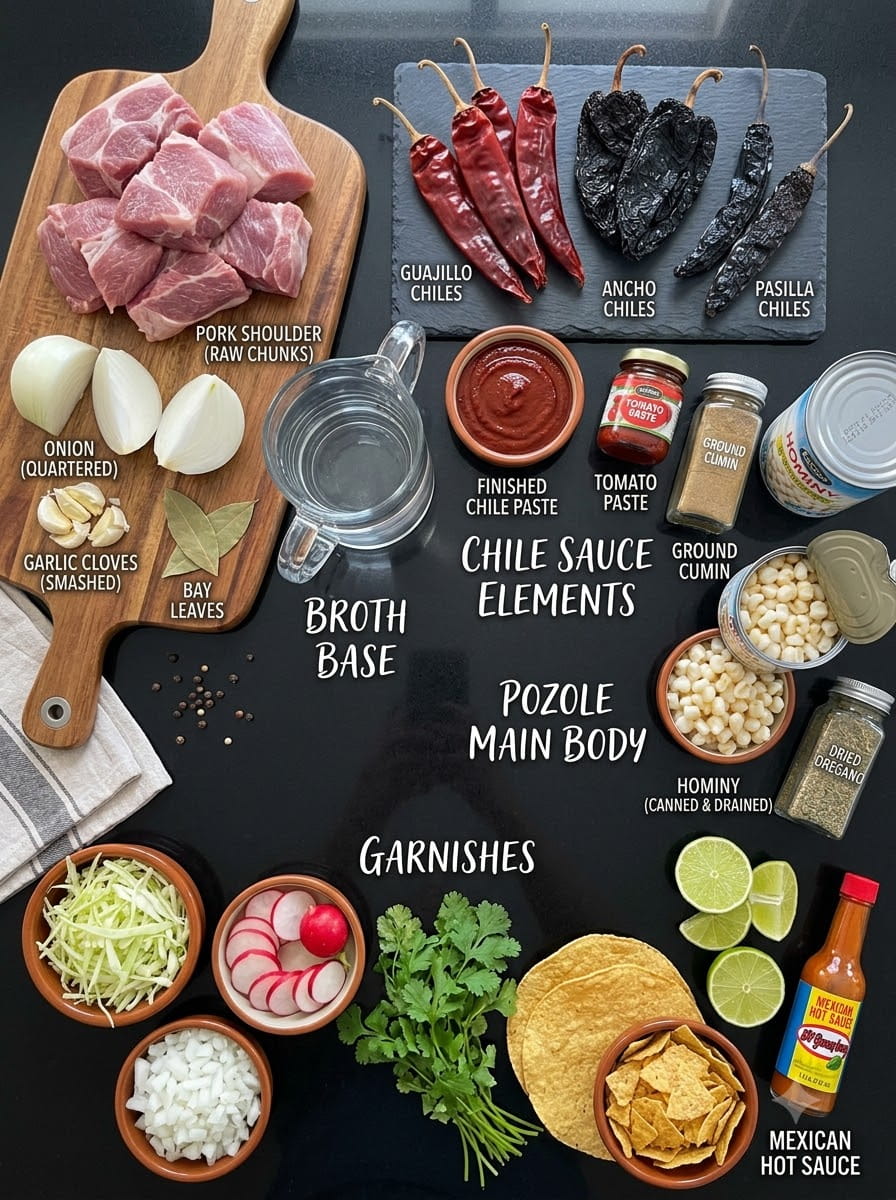
Let’s break this recipe down into its three main components: the broth, the red chile sauce, and the finishing garnishes.
For the Broth
- 2 pounds pork shoulder or pork loin, cut into large chunks – Pork shoulder is generally preferred for its higher fat content, which results in more tender, flavorful shredded meat, though pork loin can be used for a leaner option.
- 10 cups water – Enough to fully cover the meat and create a generous amount of broth as the pork simmers.
- 1 onion, quartered – Infuses the broth with a mild, sweet aromatic base.
- 4 garlic cloves, smashed – Adds depth and savory warmth to the simmering broth.
- 2 bay leaves – Contribute a subtle herbal note that develops over the long simmer.
- Salt and black pepper, to taste – Essential for seasoning both the broth and the pork itself as it cooks.
For the Red Chile Sauce
- 4 dried guajillo chiles, stems and seeds removed – The backbone of the sauce, offering a mild heat and deep, fruity flavor.
- 2 dried ancho chiles, stems and seeds removed – Adds a rich, slightly sweet, raisin-like depth.
- 2 dried pasilla chiles, stems and seeds removed (optional) – Contributes additional smokiness and complexity, though the sauce is still delicious without them.
- ½ cup water, for soaking the chiles – Used to soften the toasted chiles before blending.
- ½ teaspoon ground cumin – Adds warm, earthy undertones.
- ½ teaspoon dried oregano – Mexican oregano is traditional here, offering a slightly citrusy, herbal note distinct from Mediterranean oregano.
- 1 tablespoon tomato paste (optional) – Adds a touch of richness and helps deepen the color of the sauce.
For the Pozole
- 3 cans (15 ounces each) hominy, drained and rinsed – The defining ingredient of pozole, offering a chewy texture and mild corn flavor that soaks up the surrounding broth.
- 1 teaspoon ground cumin (optional) – Reinforces the warmth of the broth if desired.
- 1 teaspoon dried oregano (optional) – Adds an extra layer of herbal flavor to the finished dish.
Garnishes
The garnishes are just as important as the soup itself, adding contrasting textures and fresh flavors to each bowl:
- Shredded lettuce or cabbage – Adds a cool, crisp crunch.
- Thinly sliced radishes – Contribute a peppery bite and vibrant color.
- Chopped white onion – Adds a sharp, fresh contrast to the rich broth.
- Fresh cilantro – Brings herbal brightness to every bite.
- Lime wedges – A squeeze of fresh lime juice cuts through the richness of the broth beautifully.
- Tostadas or crushed tortilla chips – Add crunch and a traditional accompaniment for scooping or crumbling into the soup.
- Hot sauce (optional) – For those who want to add an extra kick of heat.
Step-by-Step Instructions
Step 1: Simmer the Pork
Place the pork, water, quartered onion, smashed garlic, bay leaves, salt, and pepper in a large stockpot. Bring the mixture to a boil, then reduce the heat to low. Cover and simmer for 1½ to 2 hours, or until the pork is completely fork-tender and easily shreds apart.
Step 2: Shred the Pork and Strain the Broth
Remove the pork from the pot and set it aside to cool slightly before shredding it into bite-sized pieces using two forks. Discard the onion, garlic, and bay leaves from the pot, but reserve the flavorful broth — this will form the base of your pozole.
Step 3: Toast the Chiles
While the pork simmers, heat a dry skillet over medium heat. Add the guajillo, ancho, and optional pasilla chiles, toasting them for about 1 to 2 minutes, turning occasionally, until fragrant. Watch closely during this step, as dried chiles can burn quickly, which would introduce a bitter flavor into the sauce.
Step 4: Soften the Chiles
Transfer the toasted chiles to a small saucepan along with the ½ cup of water. Simmer for about 5 minutes, or until the chiles have softened and become pliable.
Step 5: Blend the Chile Sauce
Add the softened chiles and their soaking liquid to a blender, along with the cumin, oregano, and optional tomato paste. Blend until the mixture is completely smooth.
Step 6: Strain the Sauce
Pour the blended chile sauce through a fine-mesh strainer directly into the reserved pork broth, pressing with a spoon or spatula to extract as much liquid as possible while leaving behind any tough skins or seeds. This step is key to achieving a smooth, silky broth rather than a gritty one.
Step 7: Combine and Simmer
Stir the shredded pork and drained hominy into the chile-infused broth. Add the optional cumin and oregano if you’d like an extra layer of flavor. Simmer the pozole uncovered for 30 to 45 minutes, allowing all the flavors to meld together and the broth to reduce slightly.
Step 8: Season and Serve
Taste the pozole and adjust the seasoning with additional salt and black pepper as needed. Ladle the hot pozole into bowls and set out the garnishes — shredded lettuce or cabbage, radishes, onion, cilantro, lime wedges, tostadas, and hot sauce — so everyone can customize their own bowl.
Tips for the Best Pozole Rojo
A few key techniques can make a noticeable difference in the final result:
- Don’t skip toasting the chiles. This step is essential for unlocking the full smoky, complex flavor of dried chiles — just be careful not to let them burn.
- Strain the sauce thoroughly. Even after blending, dried chile skins can remain slightly tough. Straining ensures a smooth, restaurant-quality broth.
- Use pork shoulder for maximum tenderness. While pork loin works, pork shoulder’s higher fat content results in richer, more tender shredded meat.
- Simmer low and slow. Rushing the pork-cooking process will result in tougher meat. Low heat over a longer period is key to that perfect fork-tender texture.
- Load up on garnishes. The fresh toppings aren’t optional extras — they’re what balances the rich, deep flavor of the broth and gives pozole its signature textural contrast.
- Adjust the heat level to taste. Using more or fewer pasilla chiles, or adding hot sauce at the table, allows each person to customize their own spice level.
Ingredient Substitutions and Variations
Pozole is a wonderfully adaptable dish. Here are a few ways to make it your own:
- Swap the protein. Chicken thighs or a combination of pork and chicken can be used in place of pork shoulder for a different flavor profile.
- Use dried hominy instead of canned. If you prefer, dried hominy can be soaked and cooked according to package instructions before adding it to the broth, though this requires additional time.
- Adjust the chile blend. If guajillo, ancho, or pasilla chiles aren’t available, other dried red chiles like New Mexico chiles can be used as substitutes, though the flavor will vary slightly.
- Make it spicier. Add a dried chile de árbol or two to the chile sauce for extra heat.
- Try a vegetarian version. Replace the pork with mushrooms or jackfruit and use vegetable broth in place of the pork-based broth for a plant-based take on the dish.
What to Serve with Pozole Rojo
Pozole is traditionally a complete meal on its own, thanks to the hearty combination of meat, hominy, and fresh toppings. That said, a few accompaniments can round out the meal:
- Warm corn tortillas on the side for scooping or wrapping.
- Mexican rice or beans for an even heartier spread, especially for larger gatherings.
- A light beer or agua fresca to complement the smoky, rich flavors of the broth.
- Extra lime wedges and hot sauce on the table so everyone can adjust the flavor to their liking.
How to Store and Reheat Leftovers
Pozole is a fantastic make-ahead dish, and many people believe the flavor actually improves after a day or two in the refrigerator as the broth continues to develop.
Refrigerating
Store the pozole (without garnishes) in an airtight container in the refrigerator for up to 4 days. Keep garnishes stored separately, as they’re best added fresh right before serving.
Reheating
Reheat pozole gently on the stovetop over medium-low heat, stirring occasionally, until warmed through. If the broth has thickened in the refrigerator, add a splash of water or broth to loosen it back to your desired consistency.
Freezing
Pozole freezes very well, making it an excellent option for meal prep. Allow the soup to cool completely, then transfer it to freezer-safe containers, leaving a little room at the top for expansion. Store in the freezer for up to 3 months. Thaw overnight in the refrigerator before reheating on the stovetop. As always, add fresh garnishes only after reheating.
Frequently Asked Questions
What is hominy, and can I substitute something else? Hominy is dried corn that has been treated with an alkali solution, giving it a distinctive chewy texture and slightly nutty flavor. It’s a defining ingredient in pozole and doesn’t have a true substitute, though canned hominy is widely available and convenient to use.
What’s the difference between pozole rojo, verde, and blanco? The main difference lies in the broth. Pozole rojo uses a red chile sauce made from dried chiles like guajillo and ancho, pozole verde uses a green sauce made from tomatillos and green chiles, and pozole blanco is made without any chile-based sauce, relying on the flavor of the meat and broth alone.
Can I make pozole in a slow cooker or Instant Pot? Yes. For a slow cooker, cook the pork on low for 6–8 hours until tender, then proceed with making the chile sauce and combining everything as directed. For an Instant Pot, pressure cook the pork for about 45 minutes with a natural release, which significantly cuts down the cooking time.
How spicy is pozole rojo? The heat level is generally mild to moderate, largely depending on the specific chiles used. Guajillo and ancho chiles are relatively mild, while adding pasilla chiles or a dried chile de árbol will increase the heat.
Can I make the red chile sauce ahead of time? Yes, the chile sauce can be made up to 3 days in advance and stored in the refrigerator, making the final assembly of the pozole even quicker on the day you plan to serve it.
Is pozole gluten-free? Yes, this recipe is naturally gluten-free, as it relies on hominy rather than any wheat-based ingredients. Just be sure to check that any store-bought broth or seasoning blends you use don’t contain hidden gluten.
What’s the best way to remove the seeds from dried chiles? After removing the stems, simply tear the chiles open and shake out or scrape the seeds with your fingers or a small knife. Wearing gloves can help avoid any lingering heat from the chiles transferring to your hands.
Final Thoughts
Mexican Pork Pozole Rojo is more than just a soup — it’s a celebration in a bowl, rich with tradition, deep smoky flavor, and comforting warmth. From the slow-simmered, tender pork to the vibrant, freshly prepared garnishes, every element of this dish comes together to create something truly special. While it takes a bit of time to prepare, the process is straightforward, and the result is well worth the effort.
Whether you’re making this for a family gathering, a holiday celebration, or simply because you’re craving a deeply satisfying bowl of Mexican comfort food, this Pozole Rojo recipe is one you’ll find yourself returning to again and again.
Print
Mexican Pork Pozole Rojo
Ingredients
Let’s break this recipe down into its three main components: the broth, the red chile sauce, and the finishing garnishes.
For the Broth
- 2 pounds pork shoulder or pork loin, cut into large chunks – Pork shoulder is generally preferred for its higher fat content, which results in more tender, flavorful shredded meat, though pork loin can be used for a leaner option.
- 10 cups water – Enough to fully cover the meat and create a generous amount of broth as the pork simmers.
- 1 onion, quartered – Infuses the broth with a mild, sweet aromatic base.
- 4 garlic cloves, smashed – Adds depth and savory warmth to the simmering broth.
- 2 bay leaves – Contribute a subtle herbal note that develops over the long simmer.
- Salt and black pepper, to taste – Essential for seasoning both the broth and the pork itself as it cooks.
For the Red Chile Sauce
- 4 dried guajillo chiles, stems and seeds removed – The backbone of the sauce, offering a mild heat and deep, fruity flavor.
- 2 dried ancho chiles, stems and seeds removed – Adds a rich, slightly sweet, raisin-like depth.
- 2 dried pasilla chiles, stems and seeds removed (optional) – Contributes additional smokiness and complexity, though the sauce is still delicious without them.
- ½ cup water, for soaking the chiles – Used to soften the toasted chiles before blending.
- ½ teaspoon ground cumin – Adds warm, earthy undertones.
- ½ teaspoon dried oregano – Mexican oregano is traditional here, offering a slightly citrusy, herbal note distinct from Mediterranean oregano.
- 1 tablespoon tomato paste (optional) – Adds a touch of richness and helps deepen the color of the sauce.
For the Pozole
- 3 cans (15 ounces each) hominy, drained and rinsed – The defining ingredient of pozole, offering a chewy texture and mild corn flavor that soaks up the surrounding broth.
- 1 teaspoon ground cumin (optional) – Reinforces the warmth of the broth if desired.
- 1 teaspoon dried oregano (optional) – Adds an extra layer of herbal flavor to the finished dish.
Garnishes
The garnishes are just as important as the soup itself, adding contrasting textures and fresh flavors to each bowl:
- Shredded lettuce or cabbage – Adds a cool, crisp crunch.
- Thinly sliced radishes – Contribute a peppery bite and vibrant color.
- Chopped white onion – Adds a sharp, fresh contrast to the rich broth.
- Fresh cilantro – Brings herbal brightness to every bite.
- Lime wedges – A squeeze of fresh lime juice cuts through the richness of the broth beautifully.
- Tostadas or crushed tortilla chips – Add crunch and a traditional accompaniment for scooping or crumbling into the soup.
- Hot sauce (optional) – For those who want to add an extra kick of heat.
Instructions
Place the pork, water, quartered onion, smashed garlic, bay leaves, salt, and pepper in a large stockpot. Bring the mixture to a boil, then reduce the heat to low. Cover and simmer for 1½ to 2 hours, or until the pork is completely fork-tender and easily shreds apart.
Remove the pork from the pot and set it aside to cool slightly before shredding it into bite-sized pieces using two forks. Discard the onion, garlic, and bay leaves from the pot, but reserve the flavorful broth — this will form the base of your pozole.
While the pork simmers, heat a dry skillet over medium heat. Add the guajillo, ancho, and optional pasilla chiles, toasting them for about 1 to 2 minutes, turning occasionally, until fragrant. Watch closely during this step, as dried chiles can burn quickly, which would introduce a bitter flavor into the sauce.
Transfer the toasted chiles to a small saucepan along with the ½ cup of water. Simmer for about 5 minutes, or until the chiles have softened and become pliable.
Add the softened chiles and their soaking liquid to a blender, along with the cumin, oregano, and optional tomato paste. Blend until the mixture is completely smooth.
Pour the blended chile sauce through a fine-mesh strainer directly into the reserved pork broth, pressing with a spoon or spatula to extract as much liquid as possible while leaving behind any tough skins or seeds. This step is key to achieving a smooth, silky broth rather than a gritty one.
Stir the shredded pork and drained hominy into the chile-infused broth. Add the optional cumin and oregano if you’d like an extra layer of flavor. Simmer the pozole uncovered for 30 to 45 minutes, allowing all the flavors to meld together and the broth to reduce slightly.
Taste the pozole and adjust the seasoning with additional salt and black pepper as needed. Ladle the hot pozole into bowls and set out the garnishes — shredded lettuce or cabbage, radishes, onion, cilantro, lime wedges, tostadas, and hot sauce — so everyone can customize their own bowl.