
Old Fashioned Caldo de Res: The Rich, Hearty Beef Soup That Tastes Like Grandma’s Kitchen 🍲🥩🥕🌽✨
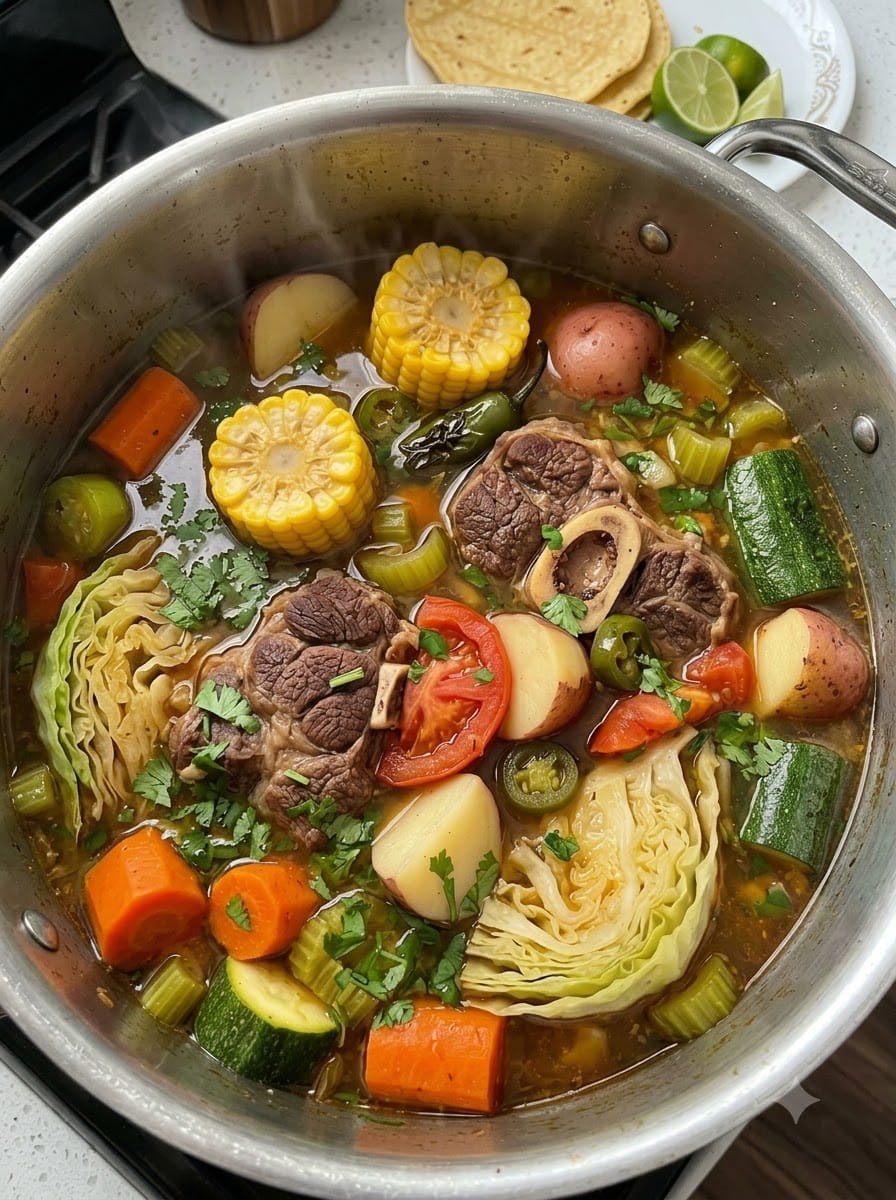
There are certain dishes that don’t just fill your stomach — they transport you back in time. Old Fashioned Caldo de Res is exactly that kind of recipe. Rich, hearty, and deeply comforting, this beloved Mexican beef and vegetable soup is packed with tender beef, sweet corn, potatoes, carrots, cabbage, and a colorful mix of fresh vegetables, all simmered together low and slow in a flavorful homemade broth. One warm, steaming bowl, and you’re right back at the family table, watching grandma stir the pot on a Sunday afternoon.
Caldo de Res, sometimes called Mexican beef soup or beef and vegetable soup, is a dish built on patience and simplicity rather than complicated technique. There’s no fancy roux, no long list of exotic spices, and no complicated layering of flavors — just quality beef, plenty of vegetables, and time, which together create a broth so rich and satisfying that it needs almost nothing else to shine. It’s the kind of soup that fills the whole house with the smell of a home-cooked meal long before it ever hits the table.
In this guide, we’ll walk through everything you need to know to make an authentic, soul-warming batch of Caldo de Res: a full ingredient breakdown, step-by-step instructions, tips for getting the richest broth and most tender beef, variations to try, the best way to serve it, storage guidance, and answers to the most frequently asked questions about this classic comfort food. Whether this is your first time making Caldo de Res or you grew up eating it every Sunday, this recipe is designed to deliver that same nostalgic, deeply comforting flavor every single time.
What Is Caldo de Res?
Caldo de Res translates directly to “beef broth” or “beef soup,” and it’s one of the most cherished comfort foods across Mexico and Mexican-American households. At its heart, it’s a simple, rustic soup built around slow-simmered beef — often bone-in cuts like shank, which contribute rich collagen and deep flavor to the broth — combined with a generous mix of hearty vegetables like carrots, potatoes, corn, cabbage, and zucchini.
What makes Caldo de Res so special isn’t complexity; it’s the way a handful of humble ingredients transform into something greater than the sum of their parts after hours of gentle simmering. The bones and connective tissue in the beef slowly release collagen into the broth, creating a rich, slightly gelatinous body that coats the spoon and makes every sip feel deeply satisfying. Meanwhile, the vegetables added later in the cooking process soak up all that beefy flavor while still holding onto their own distinct character.
This is a dish that has been passed down through generations of Mexican families, often served on weekends or during colder months as a way to bring everyone together around the table. It’s also a wonderfully practical dish — a single pot can feed a large family, it reheats beautifully, and it only gets better as the flavors continue to meld over the following days.
Why This Recipe Delivers That Authentic, Homemade Flavor
Bone-in beef makes all the difference. Using beef shank or bone-in stew meat rather than boneless cuts allows the marrow and connective tissue to slowly break down during the long simmer, enriching the broth with deep, rounded flavor and natural body that boneless beef simply can’t replicate.
Low and slow simmering builds real depth. This isn’t a quick 30-minute soup, and that’s exactly the point. Simmering the beef gently for 1½ to 2 hours allows the flavors to fully develop and the meat to become truly fork-tender, rather than tough and chewy.
The vegetables are added in stages. Rather than dumping everything into the pot at once, this recipe adds heartier vegetables like carrots, potatoes, and corn first, followed by more delicate vegetables like zucchini, tomatoes, and cabbage later on. This staggered approach ensures every vegetable is cooked to the right texture — tender, but still holding its shape rather than turning to mush.
Fresh, bright finishing touches balance the richness. A hit of fresh cilantro stirred in just before serving, along with lime wedges served on the side, adds brightness and acidity that cuts through the richness of the broth, keeping every bowl feeling balanced rather than heavy.
It’s a one-pot meal that feeds a crowd. With hearty portions of beef, potatoes, corn, and cabbage in every bowl, this soup is a complete meal on its own, making it an easy, satisfying option for busy weeknights or big Sunday family dinners alike.
Ingredients You’ll Need
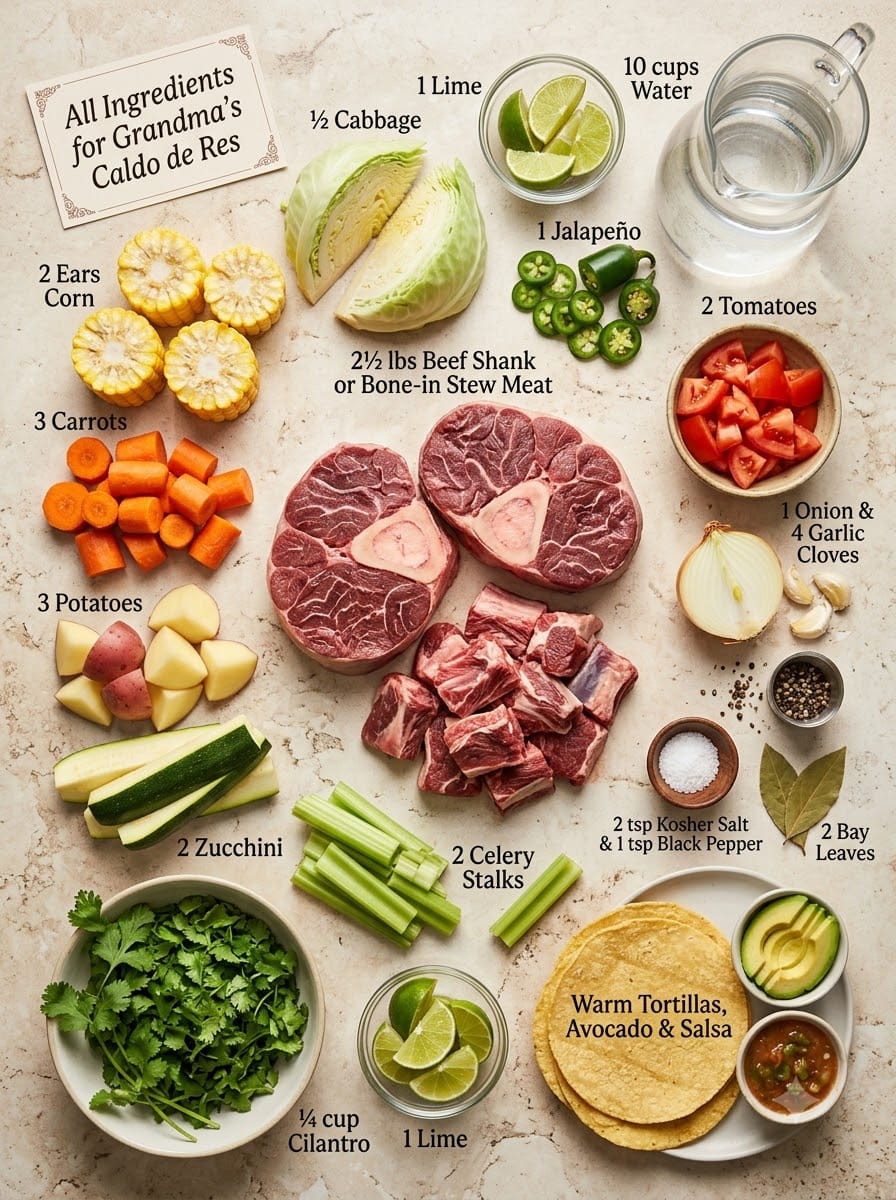
For the Broth
- 2½ lbs beef shank or bone-in beef stew meat
- 10 cups water
- 1 large yellow onion, quartered
- 4 cloves garlic, smashed
- 2 teaspoons kosher salt
- 1 teaspoon freshly ground black pepper
- 2 bay leaves
For the Vegetables
- 3 medium carrots, cut into chunks
- 3 medium potatoes, peeled and cut into chunks
- 2 ears corn, cut into thick rounds
- 2 medium zucchini, cut into thick pieces
- 2 celery stalks, sliced
- ½ small head cabbage, cut into wedges
- 2 medium tomatoes, chopped
- 1 jalapeño, sliced, optional
- ¼ cup fresh cilantro, chopped
- 1 lime, cut into wedges
A few notes on ingredient choices: beef shank is the traditional cut for Caldo de Res because of its rich marrow and connective tissue, which slowly melt into the broth over hours of simmering, creating that signature deep flavor and slightly rich mouthfeel. If beef shank isn’t available, bone-in short ribs or a combination of stew meat and marrow bones can achieve a similar effect. Quartering the onion and smashing the garlic, rather than chopping them finely, makes it easy to remove them from the broth later, leaving behind their flavor without leaving stray pieces throughout the finished soup.
Step-by-Step Directions
Step 1: Start the Broth
Place the beef shank or stew meat in a large stockpot and add the water, onion, garlic, salt, black pepper, and bay leaves. Using a large enough pot matters here — you want plenty of room for the beef, vegetables, and broth to come together without overcrowding.
Step 2: Bring to a Boil and Skim
Bring the mixture to a boil over medium-high heat. As it comes to a boil, foam and impurities will rise to the surface — skim these off with a spoon or fine-mesh skimmer. This step is important for achieving a clear, clean-tasting broth rather than one that’s cloudy or has an off flavor.
Step 3: Simmer the Beef
Reduce the heat to low, partially cover the pot, and simmer for 1½ to 2 hours, or until the beef is tender and the broth is rich and flavorful. This slow simmer is where the magic happens — the connective tissue in the beef breaks down gradually, tenderizing the meat while enriching the broth with deep, savory flavor.
Step 4: Remove the Aromatics
Remove the onion, garlic, and bay leaves from the broth. By this point, they’ve fully released their flavor into the broth, and removing them keeps the final soup clean and focused on the beef and fresh vegetables you’re about to add.
Step 5: Add the Hearty Vegetables
Add the carrots, celery, potatoes, and corn to the pot. These heartier vegetables need a bit more time to become tender, so they go in first.
Step 6: Simmer to Begin Softening the Vegetables
Simmer for 15 minutes, allowing the vegetables to begin cooking while the beef continues to tenderize further in the flavorful broth.
Step 7: Add the Remaining Vegetables
Add the zucchini, tomatoes, cabbage, and jalapeño, if using. These more delicate vegetables cook faster than the carrots and potatoes, so adding them later prevents them from turning mushy or falling apart.
Step 8: Continue Simmering
Continue simmering for 15 to 20 minutes, or until the vegetables are tender but still hold their shape. You want every vegetable to be easy to bite into without being overcooked or losing its distinct texture.
Step 9: Adjust the Seasoning
Taste the broth and adjust the salt and black pepper as needed. Since the broth has been building flavor for hours at this point, this is the moment to fine-tune the seasoning to your taste before serving.
Step 10: Stir in Fresh Cilantro
Stir in the fresh cilantro just before serving. Adding it at the very end preserves its bright, fresh flavor and vibrant color, rather than letting it wilt and lose its punch from extended cooking.
Step 11: Ladle and Serve
Ladle the hot Caldo de Res into large bowls, making sure each serving gets plenty of tender beef, vegetables, and flavorful broth. Serve with fresh lime wedges, warm corn tortillas, chopped cilantro, sliced avocado, or your favorite salsa.
Tips for the Best Caldo de Res
Choose the right cut of beef. Bone-in beef shank is the classic choice for a reason — the marrow and connective tissue are essential for building a rich, flavorful broth. If shank isn’t available, look for other bone-in cuts like short ribs, or add a few marrow bones to a batch of boneless stew meat.
Don’t rush the simmer. The long, slow simmering time is what transforms tough beef into fork-tender meat and builds the deep flavor this soup is known for. Resist the urge to turn up the heat to speed things along — low and slow is the way to go.
Skim the foam for a cleaner broth. Taking the time to skim off the foam that rises during the initial boil results in a noticeably clearer, cleaner-tasting broth compared to skipping this step.
Add vegetables in stages. Adding heartier vegetables like carrots and potatoes first, followed by more delicate ones like zucchini and cabbage later, ensures every vegetable ends up perfectly tender rather than either underdone or falling apart.
Season gradually. Because the broth continues to concentrate in flavor as it simmers for hours, it’s best to do a final taste and adjust the salt and pepper near the end of cooking rather than trying to get it perfect from the start.
Finish with fresh, bright ingredients. A squeeze of fresh lime juice and a sprinkle of chopped cilantro right before serving adds brightness that balances the rich, hearty broth beautifully.
Make it ahead when possible. Like many soups and stews, Caldo de Res often tastes even better the next day, once the flavors have had extra time to meld together in the refrigerator.
Flavor Variations to Try
While the classic version of this recipe is beloved for good reason, here are a few ways to make it your own:
- Extra spicy: Add an additional jalapeño or a serrano pepper to the pot for more heat, or serve with a spicy salsa on the side.
- Rice-based twist: Serve the Caldo de Res ladled over a scoop of cooked white rice for a heartier, more filling meal, a popular variation in many households.
- Chayote addition: Add cubed chayote squash along with the zucchini for an extra layer of mild, tender vegetable texture.
- Extra vegetables: Add green beans, chunks of squash, or even sweet plantains for additional heartiness and variety.
- Bone broth boost: Add a few extra beef bones or a splash of store-bought beef bone broth to the pot for an even richer, more gelatinous broth.
- Herb variations: Add a sprig of fresh epazote to the pot while it simmers for a more traditional, earthy Mexican flavor.
How to Serve Caldo de Res
Caldo de Res is traditionally served as a complete, satisfying meal on its own, but there are plenty of classic accompaniments that make it even better:
- Fresh lime wedges for squeezing over each bowl right before eating
- Warm corn tortillas for scooping up beef and vegetables or enjoying on the side
- Chopped fresh cilantro for an extra pop of herbal brightness
- Sliced avocado for creamy richness
- Your favorite salsa or a few slices of pickled jalapeño for extra heat
- Finely diced white onion for a sharp, fresh bite
- A side of Mexican rice for an even heartier meal
This soup is especially popular on cold days, during family gatherings, or as a comforting weekend meal that brings everyone to the table for a slow, unhurried dinner.
Storage Information
Store leftover Caldo de Res in an airtight container in the refrigerator for up to 4 days. The soup can also be frozen for up to 3 months, making it a great option for meal prepping or saving a batch for a busy week ahead. When reheating, warm the soup gently on the stovetop until piping hot, stirring occasionally to ensure even heating throughout.
If you plan to freeze a batch, keep in mind that potatoes can sometimes change texture slightly after freezing and reheating. If texture is a priority, you can leave the potatoes slightly firmer during the initial cooking process, or add fresh potatoes when reheating a frozen batch instead.
Recipe Quick Facts
- Prep Time: 25 minutes
- Cook Time: 2 hours 15 minutes
- Total Time: 2 hours 40 minutes
- Servings: 8
- Calories: Approximately 425 per serving
Frequently Asked Questions
What is the best cut of beef for Caldo de Res? Beef shank is the traditional and most recommended cut because its marrow and connective tissue break down during the long simmer, enriching the broth with deep flavor and a satisfying, slightly rich body. Bone-in short ribs or a mix of stew meat and marrow bones can also work well.
Why does my broth need to simmer for so long? The extended simmering time allows the tough connective tissue in the beef to slowly break down into tender, fork-friendly meat while simultaneously enriching the broth with rich, savory flavor. Shortening the cooking time typically results in tougher meat and a thinner, less flavorful broth.
Can I make this soup in a slow cooker or Instant Pot? Yes. For a slow cooker, follow the same steps but let the beef simmer on low for 6 to 8 hours before adding the vegetables in the same staggered order. For a pressure cooker or Instant Pot, the beef can typically be cooked in about 45 minutes to an hour under pressure before adding the vegetables and finishing with a shorter simmer.
Is Caldo de Res the same as Mexican beef stew? While similar, Caldo de Res is generally more broth-forward than a thick beef stew. It’s meant to be a soup with a light, flavorful broth studded with tender beef and vegetables, rather than a thick, gravy-like stew.
Can I leave out the jalapeño if I don’t want any spice? Absolutely. The jalapeño is listed as optional in this recipe, and the soup is still deeply flavorful without it. You can also serve it on the side as a garnish so everyone can adjust the heat to their own preference.
How do I know when the beef is fully tender? The beef should be fork-tender and easily pull apart with minimal resistance. If it still feels tough or chewy after the recommended simmering time, continue cooking in 15-minute increments until it reaches the right texture.
Can I use a different type of squash instead of zucchini? Yes. Chayote squash and yellow summer squash are both great substitutes or additions that fit naturally into the flavor and texture profile of this soup.
Final Thoughts
Old Fashioned Caldo de Res is the kind of recipe that reminds you why simple, slow-cooked food is so special. With tender, bone-in beef, a rainbow of hearty vegetables, and a rich, deeply flavorful broth built entirely from patience and quality ingredients, this soup delivers pure comfort in every bowl. It’s a dish meant to be shared — ladled generously into bowls, topped with fresh lime and cilantro, and served alongside warm tortillas for a meal that brings everyone back to the table.
Whether you grew up eating Caldo de Res on Sunday afternoons or you’re making it for the very first time, this recipe is designed to deliver that same warm, nostalgic feeling in every spoonful. Make a big pot, let it simmer low and slow, and get ready for a meal that tastes just like home.
Print
Old Fashioned Caldo de Res
Ingredients
For the Broth
- 2½ lbs beef shank or bone-in beef stew meat
- 10 cups water
- 1 large yellow onion, quartered
- 4 cloves garlic, smashed
- 2 teaspoons kosher salt
- 1 teaspoon freshly ground black pepper
- 2 bay leaves
For the Vegetables
- 3 medium carrots, cut into chunks
- 3 medium potatoes, peeled and cut into chunks
- 2 ears corn, cut into thick rounds
- 2 medium zucchini, cut into thick pieces
- 2 celery stalks, sliced
- ½ small head cabbage, cut into wedges
- 2 medium tomatoes, chopped
- 1 jalapeño, sliced, optional
- ¼ cup fresh cilantro, chopped
- 1 lime, cut into wedges
A few notes on ingredient choices: beef shank is the traditional cut for Caldo de Res because of its rich marrow and connective tissue, which slowly melt into the broth over hours of simmering, creating that signature deep flavor and slightly rich mouthfeel. If beef shank isn’t available, bone-in short ribs or a combination of stew meat and marrow bones can achieve a similar effect. Quartering the onion and smashing the garlic, rather than chopping them finely, makes it easy to remove them from the broth later, leaving behind their flavor without leaving stray pieces throughout the finished soup.
Instructions
Place the beef shank or stew meat in a large stockpot and add the water, onion, garlic, salt, black pepper, and bay leaves. Using a large enough pot matters here — you want plenty of room for the beef, vegetables, and broth to come together without overcrowding.
Bring the mixture to a boil over medium-high heat. As it comes to a boil, foam and impurities will rise to the surface — skim these off with a spoon or fine-mesh skimmer. This step is important for achieving a clear, clean-tasting broth rather than one that’s cloudy or has an off flavor.
Reduce the heat to low, partially cover the pot, and simmer for 1½ to 2 hours, or until the beef is tender and the broth is rich and flavorful. This slow simmer is where the magic happens — the connective tissue in the beef breaks down gradually, tenderizing the meat while enriching the broth with deep, savory flavor.
Remove the onion, garlic, and bay leaves from the broth. By this point, they’ve fully released their flavor into the broth, and removing them keeps the final soup clean and focused on the beef and fresh vegetables you’re about to add.
Add the carrots, celery, potatoes, and corn to the pot. These heartier vegetables need a bit more time to become tender, so they go in first.
Simmer for 15 minutes, allowing the vegetables to begin cooking while the beef continues to tenderize further in the flavorful broth.
Add the zucchini, tomatoes, cabbage, and jalapeño, if using. These more delicate vegetables cook faster than the carrots and potatoes, so adding them later prevents them from turning mushy or falling apart.
Continue simmering for 15 to 20 minutes, or until the vegetables are tender but still hold their shape. You want every vegetable to be easy to bite into without being overcooked or losing its distinct texture.
Taste the broth and adjust the salt and black pepper as needed. Since the broth has been building flavor for hours at this point, this is the moment to fine-tune the seasoning to your taste before serving.
Stir in the fresh cilantro just before serving. Adding it at the very end preserves its bright, fresh flavor and vibrant color, rather than letting it wilt and lose its punch from extended cooking.
Ladle the hot Caldo de Res into large bowls, making sure each serving gets plenty of tender beef, vegetables, and flavorful broth. Serve with fresh lime wedges, warm corn tortillas, chopped cilantro, sliced avocado, or your favorite salsa.