
Rustic Seafood Soup Recipe – Hearty, Flavorful, and Comforting
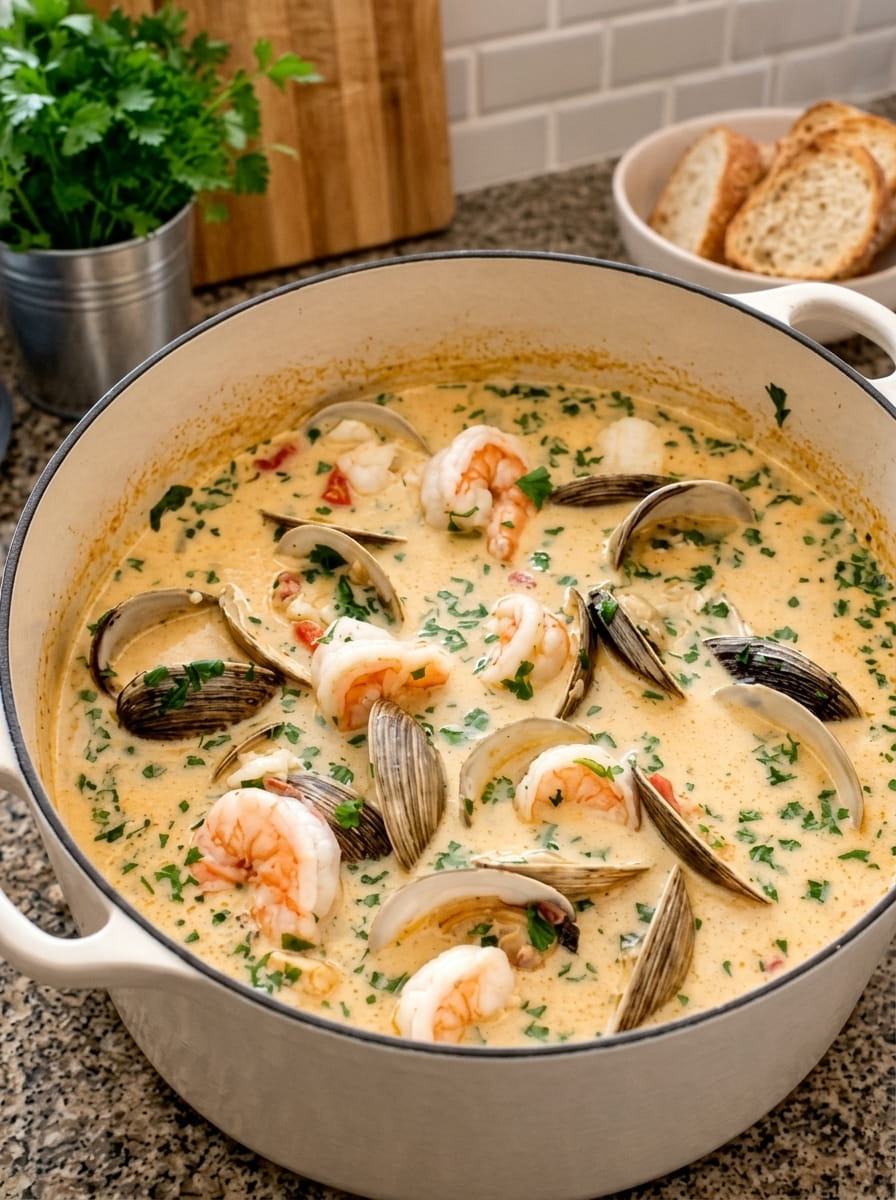
There is nothing quite like a warm bowl of homemade Rustic Seafood Soup on a chilly evening. Loaded with tender shrimp, flaky white fish, juicy mussels, and optional calamari, this comforting seafood soup brings together the wonderful flavors of the ocean with fresh vegetables, aromatic garlic, fragrant herbs, and a rich tomato-based broth.
This Rustic Seafood Soup Recipe is the perfect combination of hearty ingredients and fresh, vibrant flavors. Sweet red onions, celery, carrots, and red bell peppers create a delicious vegetable base, while garlic, paprika, thyme, and oregano add warmth and depth. Diced tomatoes and seafood stock transform everything into a savory broth that perfectly complements the delicate seafood.
A splash of dry white wine adds another layer of flavor, while fresh lemon juice and chopped parsley brighten the entire dish just before serving.
One of the best things about this homemade seafood soup is how versatile it is. You can use your favorite combination of seafood, adjust the vegetables to your liking, and make it for a casual family dinner or a special weekend meal. Despite its impressive appearance and restaurant-quality flavor, this recipe is surprisingly simple to prepare in one large soup pot or Dutch oven.
Whether you are looking for an easy seafood dinner, a comforting soup for cold weather, or a delicious way to enjoy shrimp, fish, and mussels together, this Rustic Seafood Soup is a wonderful recipe to add to your collection.
Serve it with warm crusty bread, homemade garlic bread, or a fresh green salad for a satisfying meal that everyone will enjoy.
What Is Rustic Seafood Soup?
Rustic Seafood Soup is a hearty homemade soup made with a combination of seafood, vegetables, herbs, and a flavorful broth.
Unlike creamy seafood chowders, this rustic version features a tomato-based broth that allows the natural flavors of the seafood and vegetables to shine.
The soup typically combines several types of seafood, including shrimp, white fish, mussels, and sometimes calamari. These ingredients are added toward the end of cooking to help preserve their delicate textures.
The broth begins with sautéed onions, celery, carrots, bell peppers, and garlic. Diced tomatoes and seafood stock create the foundation, while paprika, thyme, oregano, and bay leaf provide a delicious savory aroma.
A little white wine can be added for additional depth, although it is completely optional.
Fresh lemon juice and parsley finish the soup with a bright, refreshing flavor that balances the richness of the seafood.
The result is a beautiful bowl of homemade seafood soup that feels both comforting and special.
Why You’ll Love This Rustic Seafood Soup Recipe
There are many reasons why this hearty seafood soup deserves a place in your regular dinner rotation.
1. Packed With Delicious Seafood
This recipe combines shrimp, white fish, mussels, and optional calamari to create a satisfying seafood-filled meal.
Each ingredient contributes a different texture and flavor, making every spoonful interesting and delicious.
The shrimp are sweet and tender, the white fish becomes flaky, and the mussels add a wonderful ocean-inspired flavor.
2. Rich and Flavorful Tomato Broth
The broth is one of the best parts of this recipe.
Seafood stock, diced tomatoes, garlic, onions, herbs, and spices simmer together to create a savory base that complements every ingredient.
It is flavorful without being overly heavy.
3. Plenty of Fresh Vegetables
Red onions, celery, carrots, and red bell peppers provide color, texture, and natural sweetness.
These vegetables also help create a delicious foundation for the soup before the seafood is added.
4. Perfect for Family Dinners
This Rustic Seafood Soup makes a wonderful main course.
Serve it in large bowls with crusty bread, lemon wedges, and fresh parsley for a comforting dinner that feels special without requiring complicated preparation.
5. Easy One-Pot Preparation
Everything comes together in one large soup pot or Dutch oven.
First, cook the vegetables, then build the broth, simmer the flavors, and finally add the seafood.
This simple method makes cleanup easier and allows the ingredients to develop a delicious combination of flavors.
6. Easy to Customize
You can adjust the seafood combination depending on availability and personal preference.
Use more shrimp, substitute another suitable white fish, or include calamari for an additional seafood texture.
The recipe is flexible while keeping its comforting rustic character.
Ingredients for Rustic Seafood Soup
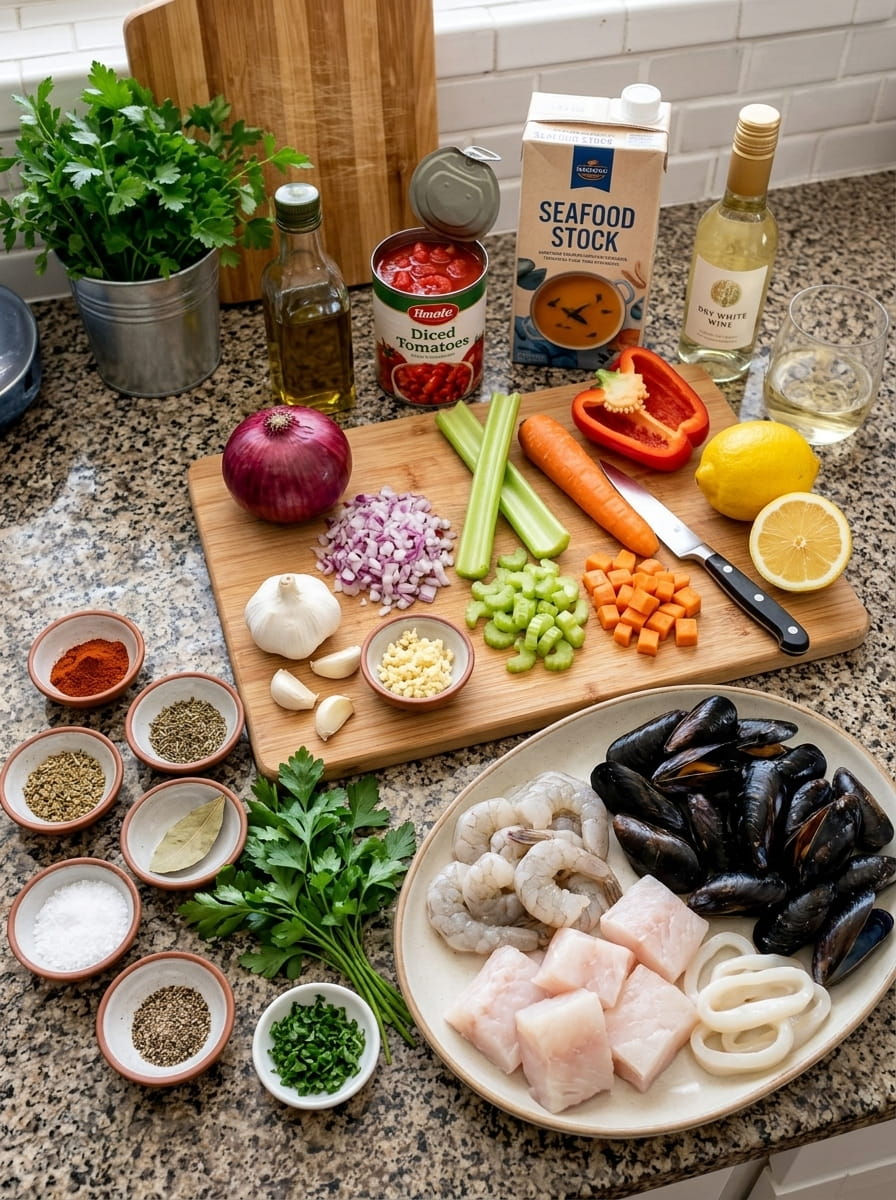
This homemade seafood soup uses fresh vegetables, seafood, herbs, and a savory tomato broth.
Here is everything you need to prepare it.
For the Vegetable Base
2 tablespoons extra-virgin olive oil
Olive oil provides the cooking fat needed to soften the vegetables and release their natural flavors.
It also adds a subtle richness to the finished soup.
1 medium red onion, finely chopped
Red onion adds natural sweetness and a savory foundation.
As it cooks, it softens and blends beautifully with the other vegetables.
3 garlic cloves, minced
Fresh garlic adds a wonderful aroma and depth of flavor.
It pairs especially well with seafood, tomatoes, and Mediterranean-inspired herbs.
2 celery stalks, chopped
Celery contributes a mild savory flavor and a pleasant texture.
It is a classic ingredient in many homemade soup bases.
1 medium carrot, diced
Carrots add natural sweetness and a little color to the broth.
They also provide a hearty vegetable texture.
1 red bell pepper, chopped
Red bell pepper brings sweetness, color, and a fresh vegetable flavor that complements the seafood.
For the Broth
1 can (14.5 oz) diced tomatoes
Diced tomatoes create the tomato-based foundation of the soup.
They provide a slightly sweet and tangy flavor that works beautifully with seafood stock.
4 cups seafood stock or fish broth
Seafood stock is essential for developing the soup’s rich savory flavor.
It provides a delicious seafood foundation without requiring you to prepare homemade stock from scratch.
½ cup dry white wine, optional
White wine adds another layer of flavor and helps create a more complex broth.
It is optional, so you can leave it out if preferred.
1 teaspoon paprika
Paprika adds warmth, color, and a mild earthy flavor.
½ teaspoon dried thyme
Thyme contributes an aromatic herbal flavor that pairs wonderfully with seafood.
½ teaspoon dried oregano
Oregano gives the broth a savory Mediterranean-inspired character.
1 bay leaf
Bay leaf slowly releases its aroma while the soup simmers.
Remember to remove it before serving.
½ teaspoon salt, or to taste
Salt enhances the natural flavors of the vegetables, broth, and seafood.
Adjust according to the saltiness of your seafood stock.
¼ teaspoon black pepper
Black pepper adds a gentle warmth that balances the other seasonings.
For the Seafood
½ pound shrimp, peeled and deveined
Shrimp provide a naturally sweet seafood flavor and tender texture.
Medium or large shrimp work well for this recipe.
½ pound white fish fillets, cut into chunks
Choose a firm white fish that holds its shape during cooking.
Cod, haddock, and similar white fish varieties are suitable choices.
½ pound mussels, cleaned and debearded
Mussels add a delicious briny flavor and make the soup look especially inviting.
Use fresh mussels that have been properly handled and cleaned.
½ pound calamari rings, optional
Calamari provides another seafood texture and makes the soup even more varied.
Because calamari can become rubbery when overcooked, add it near the end.
For Finishing
2 tablespoons fresh parsley, chopped
Fresh parsley adds a bright herbal flavor and a beautiful green garnish.
1 tablespoon fresh lemon juice
Lemon juice brightens the broth and balances its savory richness.
It is best added at the end of cooking.
Kitchen Equipment You’ll Need
Preparing this Rustic Seafood Soup does not require complicated kitchen equipment.
You will need:
- One large soup pot or Dutch oven
- A sharp kitchen knife
- A cutting board
- A wooden spoon
- Measuring cups
- Measuring spoons
- A ladle
- A clean bowl for prepared seafood
A large heavy-bottomed pot is particularly useful because it distributes heat evenly and provides enough space for the seafood and vegetables.
How to Make Rustic Seafood Soup
Follow these simple steps to prepare a delicious pot of homemade seafood soup.
Step 1: Prepare the Ingredients
Before cooking, prepare all the vegetables and seafood.
Finely chop the red onion, chop the celery, dice the carrot, and chop the red bell pepper.
Mince the garlic and set it aside.
Peel and devein the shrimp if necessary. Cut the white fish into medium-sized chunks, clean the mussels, and prepare the calamari rings if using.
Keep the seafood refrigerated until you are ready to add it to the soup.
Preparing everything beforehand makes the cooking process much easier, especially because seafood cooks relatively quickly.
Step 2: Heat the Olive Oil
Place a large soup pot or Dutch oven over medium heat.
Add the extra-virgin olive oil and allow it to warm.
Once the oil is hot, you are ready to add the vegetables.
Avoid overheating the oil because you want to soften the vegetables rather than burn them.
Step 3: Cook the Vegetables
Add the chopped red onion, celery, carrot, and red bell pepper to the pot.
Stir occasionally and cook for approximately 5–6 minutes.
The vegetables should begin to soften and release their natural aromas.
The onions become sweeter, the celery develops a mellow flavor, and the carrots and bell peppers create a colorful foundation for the broth.
Do not rush this step. Allowing the vegetables to soften properly helps develop the overall flavor of the soup.
Step 4: Add the Garlic and Seasonings
Add the minced garlic to the softened vegetables.
Stir in the paprika, dried thyme, and dried oregano.
Cook for approximately 30 seconds, stirring constantly.
The garlic should become fragrant without browning.
This short cooking step helps release the aromas of the garlic and dried herbs, giving the soup a wonderful savory foundation.
Step 5: Build the Seafood Broth
Pour the diced tomatoes into the pot.
Add the seafood stock or fish broth, followed by the optional dry white wine.
Add the bay leaf, salt, and black pepper.
Stir everything together until the vegetables and seasonings are evenly distributed.
The mixture should already have a delicious aroma at this stage.
Step 6: Simmer the Soup
Bring the broth to a gentle boil.
Once it begins bubbling, reduce the heat and allow the soup to simmer uncovered for approximately 15–20 minutes.
This gives the tomatoes, vegetables, stock, and seasonings time to blend together.
The broth should become flavorful and aromatic.
Keep the heat moderate. A gentle simmer is better than a vigorous boil because it helps the vegetables retain their texture and prepares the broth for the delicate seafood.
Step 7: Add the White Fish and Mussels
Gently add the white fish chunks and cleaned mussels to the simmering broth.
Stir carefully to avoid breaking the fish into small pieces.
Cover the pot and cook for approximately 4–5 minutes, monitoring the seafood closely.
The fish should begin turning opaque and flake easily when tested.
The mussels should open during cooking.
Discard mussels that remain closed after cooking. Never force them open or eat mussels that were already open before cooking and do not close when tapped.
Make sure all seafood reaches a safe internal temperature. Fish should reach 145°F, while shrimp and other shellfish should be cooked until properly done.
Step 8: Add the Shrimp and Calamari
Add the peeled and deveined shrimp to the pot.
If using calamari, add the rings at the same time.
Gently stir everything together.
Cook for another 3–5 minutes, or until the shrimp become opaque and firm and the seafood is fully cooked.
Shrimp generally change from gray and translucent to pink and opaque when cooked.
Avoid overcooking the seafood because it can quickly become tough or rubbery.
Cooking times can vary depending on the size of the shrimp, thickness of the fish, and type of calamari.
Step 9: Finish With Lemon Juice and Parsley
Remove the bay leaf from the soup.
Add the fresh lemon juice and chopped parsley.
Stir gently to distribute the fresh flavors throughout the broth.
The lemon adds brightness, while parsley gives the soup a fresh herbal finish.
Taste the broth and adjust the seasoning if needed.
Step 10: Serve Hot
Ladle the Rustic Seafood Soup into individual serving bowls.
Make sure each bowl contains a generous combination of seafood, vegetables, and flavorful broth.
Garnish with additional chopped parsley and a squeeze of fresh lemon.
Serve immediately while hot with crusty bread or garlic bread for dipping.
Enjoy every comforting spoonful!
Tips for Making the Best Rustic Seafood Soup
A few simple cooking techniques can make a big difference in the final result.
Use Fresh or Properly Thawed Seafood
Fresh seafood can provide excellent flavor and texture.
If using frozen seafood, thaw it safely according to package instructions, preferably in the refrigerator.
Drain excess liquid before adding it to the soup so the broth does not become unnecessarily diluted.
Avoid Overcooking the Seafood
This is one of the most important tips.
Different types of seafood cook at different speeds.
Fish, shrimp, mussels, and calamari should be added according to their cooking requirements.
Adding delicate seafood near the end helps preserve its texture and flavor.
Use a Gentle Simmer
A vigorous boil can break apart fish chunks and make shrimp tough.
Keep the broth at a gentle simmer, especially after adding the seafood.
Choose a Good Seafood Stock
The stock forms the foundation of the soup.
A flavorful seafood stock creates a richer and more satisfying broth.
If your stock is already salty, reduce the additional salt and adjust it after simmering.
Don’t Skip the Lemon
Fresh lemon juice makes a noticeable difference.
Its acidity brightens the tomato-based broth and balances the savory seafood flavors.
Prepare Everything Before Cooking
Seafood cooks quickly, so having all ingredients prepared and ready makes it easier to follow the recipe without overcooking anything.
Best Seafood to Use in Rustic Seafood Soup
One of the best things about this recipe is that you can customize the seafood combination.
Here are some options that work particularly well.
Shrimp
Shrimp are a classic addition to seafood soup.
They cook quickly, have a naturally sweet flavor, and pair beautifully with garlic, tomatoes, and lemon.
White Fish
Firm white fish is ideal because it can hold its shape in the broth.
Cod and haddock are two suitable choices.
Cut the fish into evenly sized chunks so it cooks more consistently.
Mussels
Mussels contribute a rich, briny flavor that makes the broth taste even more like the sea.
Clean them carefully and discard any that do not meet proper freshness and cooking requirements.
Calamari
Calamari adds variety and a slightly chewy texture.
Add it toward the end and avoid prolonged cooking for this quick-simmered recipe.
Other Seafood Options
You can experiment with other seafood varieties, such as scallops or suitable firm white fish.
However, remember that different seafood ingredients require different cooking times.
Add each type according to its size and cooking requirements rather than assuming they will all cook at the same speed.
Delicious Variations to Try
If you enjoy experimenting in the kitchen, there are several ways to customize this seafood soup.
1. Spicy Rustic Seafood Soup
For a spicy version, add a pinch of red pepper flakes when cooking the garlic and seasonings.
You can adjust the amount according to your preferred heat level.
The extra spice pairs wonderfully with the tomatoes and seafood.
2. Mediterranean Seafood Soup
Give the recipe a Mediterranean-inspired twist by emphasizing the oregano, thyme, parsley, olive oil, and lemon.
You can also serve it with warm rustic bread and a simple green salad.
3. Extra-Garlicky Seafood Soup
If you love garlic, experiment with additional minced garlic.
Cook it briefly with the vegetables and herbs to release its aroma.
Avoid browning it too much because burnt garlic can introduce bitterness.
4. Seafood Soup Without Wine
The white wine is optional.
Simply leave it out and use the specified seafood stock instead.
The soup will still have plenty of flavor from the tomatoes, garlic, vegetables, and herbs.
5. Extra-Vegetable Seafood Soup
For a heartier vegetable base, experiment with additional suitable vegetables.
Zucchini and other quick-cooking vegetables can be added during the simmering stage.
Avoid overcrowding the pot because the seafood should remain the star of the dish.
6. Shrimp and Fish Soup
If you prefer a simpler seafood combination, focus on shrimp and white fish.
This creates a delicious and approachable version of the recipe while preserving its signature tomato and herb broth.
What to Serve With Rustic Seafood Soup
This hearty soup is delicious on its own, but the right side dishes can make it even more satisfying.
Crusty Bread
Warm crusty bread is one of the best accompaniments.
Use it to soak up the flavorful tomato and seafood broth.
A French baguette, sourdough loaf, or rustic country bread works beautifully.
Garlic Bread
Garlic bread is another excellent choice.
Its buttery, savory flavor complements the seafood and aromatic broth.
Serve it warm with a little fresh parsley.
Simple Green Salad
A fresh green salad provides a light contrast to the rich seafood soup.
Try mixed greens, cucumber, tomatoes, and a simple lemon dressing.
Lemon Wedges
Serve extra lemon wedges alongside each bowl.
A little fresh lemon juice can brighten the broth and enhance the seafood flavors.
Roasted Vegetables
Roasted vegetables make a wonderful side dish if you want a more substantial dinner.
Choose vegetables with mild flavors that will complement rather than overpower the soup.
How to Store Rustic Seafood Soup
Seafood soup is best enjoyed freshly prepared, but leftovers can be stored carefully.
Because this recipe contains several types of seafood, proper refrigeration is important.
Refrigerating Leftovers
Allow the soup to cool slightly, then transfer it into shallow, airtight containers.
Refrigerate promptly, within two hours of cooking, or within one hour if the surrounding temperature is above 90°F.
Keep the refrigerator at 40°F or below.
For best food safety, consume refrigerated seafood leftovers within 1–2 days.
How to Reheat Seafood Soup
Reheat only the portion you plan to eat.
Place the soup in a saucepan over medium-low heat and stir gently until it reaches 165°F.
Avoid prolonged boiling because the seafood can become tough.
If the broth has thickened during refrigeration, you can add a little seafood stock or water while reheating.
Can You Freeze Rustic Seafood Soup?
Freezing is possible from a food-safety perspective when the soup is handled and frozen properly, but seafood texture may deteriorate after thawing and reheating.
Shrimp, mussels, calamari, and fish can become softer or less pleasant in texture.
For the best quality, enjoy this soup freshly prepared or within the recommended refrigerated storage period.
Common Mistakes to Avoid When Making Seafood Soup
Even a simple seafood soup can be affected by a few common cooking mistakes.
Overcooking the Shrimp
Shrimp cook quickly.
Adding them too early can make them rubbery.
Always add them toward the end of cooking.
Boiling the Soup Too Vigorously
A rolling boil can break apart the fish and affect the texture of the other seafood.
Maintain a gentle simmer.
Adding Too Much Salt
Seafood stock can already contain a significant amount of sodium.
Start with the recommended salt quantity and taste the broth before adding more.
Forgetting to Clean the Mussels
Mussels should be properly cleaned and debearded before cooking.
Discard damaged mussels and follow safe handling practices.
Adding Lemon Too Early
Fresh lemon juice is best added toward the end.
This preserves its bright flavor and helps the finished broth taste fresh.
Not Preparing the Seafood in Advance
Seafood cooks quickly, and different varieties require different cooking times.
Prepare everything before starting so you can add the ingredients at the appropriate stages.
Frequently Asked Questions About Rustic Seafood Soup
1. What Is Rustic Seafood Soup Made Of?
Rustic Seafood Soup is made with shrimp, white fish, mussels, optional calamari, vegetables, tomatoes, seafood stock, garlic, olive oil, herbs, and seasonings.
This recipe also includes fresh lemon juice and parsley for a bright finish.
2. Can I Use Frozen Seafood?
Yes.
Frozen seafood can work well in this recipe.
Thaw it safely according to the package instructions, preferably in the refrigerator, and drain any excess liquid before adding it to the soup.
Follow package instructions where they specify different cooking requirements.
3. What Is the Best Fish for Seafood Soup?
Firm white fish varieties are excellent choices.
Cod and haddock are suitable options because they hold their shape relatively well in a simmering broth.
Cut the fish into medium-sized pieces for more even cooking.
4. Can I Make Rustic Seafood Soup Without Mussels?
Yes.
You can leave out the mussels and use additional shrimp or white fish.
The soup will still have a delicious seafood flavor thanks to the seafood stock and remaining ingredients.
5. Can I Leave Out the White Wine?
Absolutely!
White wine is optional.
Simply omit it and use the specified seafood stock.
You do not need to change the other ingredients.
6. How Do I Prevent Seafood From Becoming Rubbery?
The secret is to avoid overcooking.
Add the fish and mussels first, followed by shrimp and optional calamari.
Monitor the cooking process carefully and check that all seafood is properly cooked before serving.
7. Can I Make This Soup Spicy?
Yes.
Add red pepper flakes or a little fresh chili when cooking the garlic and herbs.
Start with a small amount and adjust according to your preference.
8. Can I Prepare the Soup Ahead of Time?
You can prepare the vegetable and tomato broth ahead of time.
Cool and refrigerate the broth promptly in an airtight container.
When ready to serve, reheat the broth to a simmer and add the seafood, cooking it until fully done.
This approach helps prevent the seafood from becoming overcooked during storage and reheating.
9. Why Is My Seafood Soup Too Thin?
This recipe is designed to have a flavorful broth rather than a thick, creamy consistency.
If you prefer a more concentrated flavor, allow the vegetable and tomato broth to simmer uncovered before adding the seafood.
Avoid cooking the seafood longer just to reduce the liquid.
10. What Can I Use Instead of Seafood Stock?
Fish broth is already included as an alternative.
If neither is available, choose a suitable commercially prepared broth that complements seafood.
Keep in mind that the final flavor may be different.
11. How Long Does Seafood Soup Last in the Refrigerator?
For best food safety, refrigerated seafood soup should be consumed within 1–2 days when promptly cooled and stored at 40°F or below.
Do not leave cooked seafood soup at room temperature for extended periods.
12. What Should I Serve With Seafood Soup?
Crusty bread, garlic bread, a fresh green salad, and lemon wedges are excellent choices.
They complement the savory broth without overpowering the seafood.
13. Is Rustic Seafood Soup Good for Family Dinners?
Yes.
It is a wonderful main course for family dinners, especially during colder months.
The combination of seafood, vegetables, and savory broth creates a comforting meal that feels special enough for weekend gatherings.
14. Can I Use Only Shrimp in This Recipe?
Yes.
You can prepare a shrimp-focused variation by replacing the other seafood with additional shrimp.
Adjust the cooking time according to the size and quantity of the shrimp.
Nutrition Information
The nutritional content of Rustic Seafood Soup depends on the seafood varieties, stock, portion sizes, and exact ingredients used.
Seafood provides protein, while the vegetables contribute flavor and a variety of nutrients.
Olive oil adds fat, and the seafood stock and seasonings contribute to the sodium content.
For accurate nutritional information, calculate the recipe using the specific brands and quantities of ingredients you use.
Final Thoughts
This Rustic Seafood Soup is everything a comforting homemade seafood dinner should be: hearty, flavorful, satisfying, and filled with delicious ingredients.
The combination of tender shrimp, flaky white fish, mussels, and optional calamari creates a wonderful seafood experience, while the tomato-based broth brings everything together with garlic, sweet vegetables, aromatic herbs, and a touch of fresh lemon.
Best of all, this recipe is easy to prepare in one pot and flexible enough to accommodate different seafood preferences.
Serve it with crusty bread, garlic bread, or a fresh green salad, and enjoy a warm, comforting meal with family and friends.
Whether you’re making it for a chilly evening, a cozy weekend dinner, or a special seafood night, this homemade Rustic Seafood Soup is a recipe worth making again and again.
Print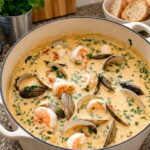
Rustic Seafood Soup – Hearty, Flavorful & Comforting
Ingredients
- 2 tablespoons extra-virgin olive oil
- 1 medium red onion, finely chopped
- 3 garlic cloves, minced
- 2 celery stalks, chopped
- 1 medium carrot, diced
- 1 red bell pepper, chopped
- 1 can (14.5 oz) diced tomatoes
- 4 cups seafood stock or fish broth
- ½ cup dry white wine (optional)
- 1 teaspoon paprika
- ½ teaspoon dried thyme
- ½ teaspoon dried oregano
- 1 bay leaf
- ½ teaspoon salt, or to taste
- ¼ teaspoon black pepper
- ½ pound shrimp, peeled and deveined
- ½ pound white fish fillets, cut into chunks
- ½ pound mussels, cleaned and debearded
- ½ pound calamari rings (optional)
- 2 tablespoons fresh parsley, chopped
- 1 tablespoon fresh lemon juice
Instructions
Step 1: Prepare the Ingredients
Before cooking, prepare all the vegetables and seafood.
Finely chop the red onion, chop the celery, dice the carrot, and chop the red bell pepper.
Mince the garlic and set it aside.
Peel and devein the shrimp if necessary. Cut the white fish into medium-sized chunks, clean the mussels, and prepare the calamari rings if using.
Keep the seafood refrigerated until you are ready to add it to the soup.
Preparing everything beforehand makes the cooking process much easier, especially because seafood cooks relatively quickly.
Step 2: Heat the Olive Oil
Place a large soup pot or Dutch oven over medium heat.
Add the extra-virgin olive oil and allow it to warm.
Once the oil is hot, you are ready to add the vegetables.
Avoid overheating the oil because you want to soften the vegetables rather than burn them.
Step 3: Cook the Vegetables
Add the chopped red onion, celery, carrot, and red bell pepper to the pot.
Stir occasionally and cook for approximately 5–6 minutes.
The vegetables should begin to soften and release their natural aromas.
The onions become sweeter, the celery develops a mellow flavor, and the carrots and bell peppers create a colorful foundation for the broth.
Do not rush this step. Allowing the vegetables to soften properly helps develop the overall flavor of the soup.
Step 4: Add the Garlic and Seasonings
Add the minced garlic to the softened vegetables.
Stir in the paprika, dried thyme, and dried oregano.
Cook for approximately 30 seconds, stirring constantly.
The garlic should become fragrant without browning.
This short cooking step helps release the aromas of the garlic and dried herbs, giving the soup a wonderful savory foundation.
Step 5: Build the Seafood Broth
Pour the diced tomatoes into the pot.
Add the seafood stock or fish broth, followed by the optional dry white wine.
Add the bay leaf, salt, and black pepper.
Stir everything together until the vegetables and seasonings are evenly distributed.
The mixture should already have a delicious aroma at this stage.
Step 6: Simmer the Soup
Bring the broth to a gentle boil.
Once it begins bubbling, reduce the heat and allow the soup to simmer uncovered for approximately 15–20 minutes.
This gives the tomatoes, vegetables, stock, and seasonings time to blend together.
The broth should become flavorful and aromatic.
Keep the heat moderate. A gentle simmer is better than a vigorous boil because it helps the vegetables retain their texture and prepares the broth for the delicate seafood.
Step 7: Add the White Fish and Mussels
Gently add the white fish chunks and cleaned mussels to the simmering broth.
Stir carefully to avoid breaking the fish into small pieces.
Cover the pot and cook for approximately 4–5 minutes, monitoring the seafood closely.
The fish should begin turning opaque and flake easily when tested.
The mussels should open during cooking.
Discard mussels that remain closed after cooking. Never force them open or eat mussels that were already open before cooking and do not close when tapped.
Make sure all seafood reaches a safe internal temperature. Fish should reach 145°F, while shrimp and other shellfish should be cooked until properly done.
Step 8: Add the Shrimp and Calamari
Add the peeled and deveined shrimp to the pot.
If using calamari, add the rings at the same time.
Gently stir everything together.
Cook for another 3–5 minutes, or until the shrimp become opaque and firm and the seafood is fully cooked.
Shrimp generally change from gray and translucent to pink and opaque when cooked.
Avoid overcooking the seafood because it can quickly become tough or rubbery.
Cooking times can vary depending on the size of the shrimp, thickness of the fish, and type of calamari.
Step 9: Finish With Lemon Juice and Parsley
Remove the bay leaf from the soup.
Add the fresh lemon juice and chopped parsley.
Stir gently to distribute the fresh flavors throughout the broth.
The lemon adds brightness, while parsley gives the soup a fresh herbal finish.
Taste the broth and adjust the seasoning if needed.
Step 10: Serve Hot
Ladle the Rustic Seafood Soup into individual serving bowls.
Make sure each bowl contains a generous combination of seafood, vegetables, and flavorful broth.
Garnish with additional chopped parsley and a squeeze of fresh lemon.
Serve immediately while hot with crusty bread or garlic bread for dipping.
Enjoy every comforting spoonful!