
Simple 3-Ingredient Greek Yogurt Almond Bread: Easy Flourless Bread Recipe
If you love homemade bread but want a recipe that is simple, satisfying, and easy to prepare, this Simple 3-Ingredient Greek Yogurt Almond Bread is a wonderful option. Made with almond flour, creamy Greek yogurt, and eggs, this tender homemade loaf comes together with just three ingredients and requires no yeast, kneading, or rising time.
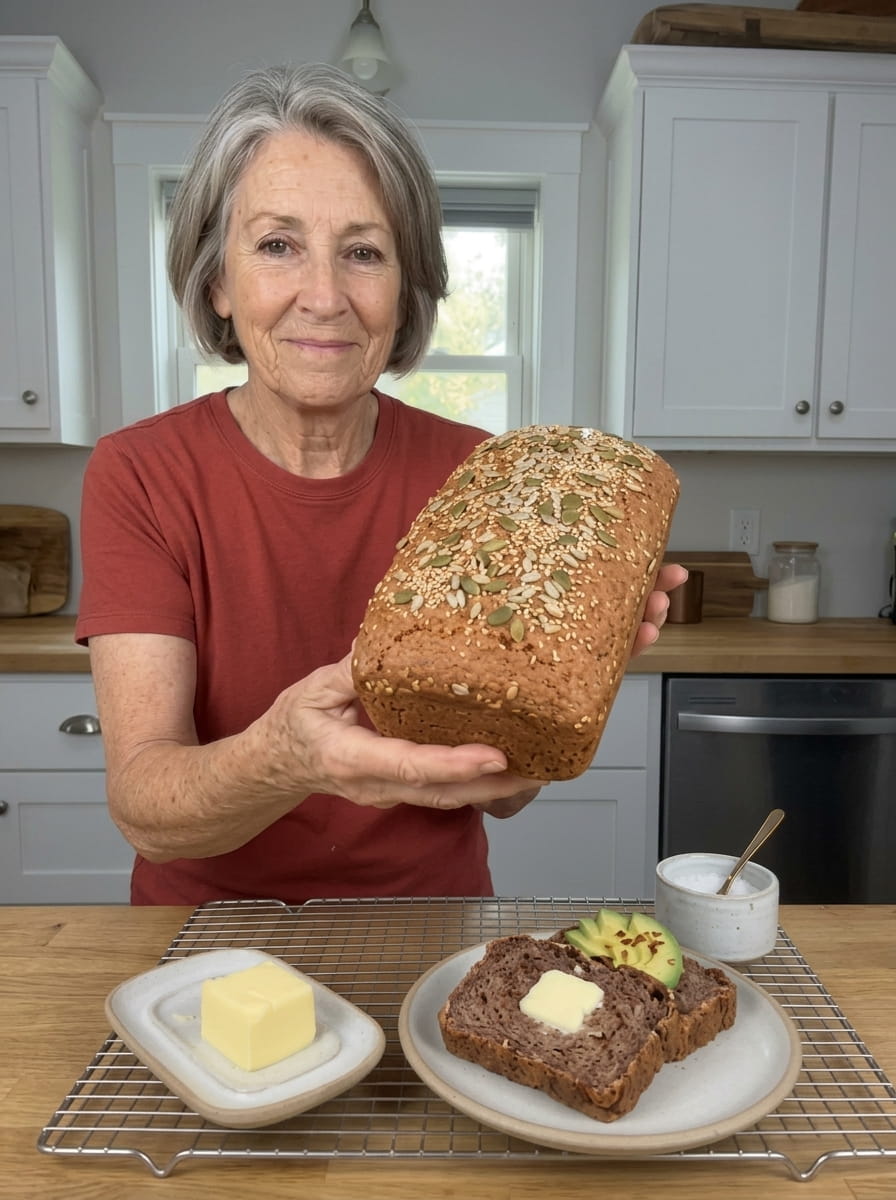
This easy Greek yogurt almond bread has a lightly nutty flavor, a moist interior, and a soft texture that works beautifully for breakfast, lunch, or snacks. Whether you enjoy a warm slice with butter, prepare avocado toast, or make a simple sandwich, this versatile loaf is an excellent addition to your collection of homemade bread recipes.
One of the best things about this almond flour bread recipe is that it relies on ingredients that each serve an important purpose. Almond flour provides the nutty base, Greek yogurt adds moisture and a subtle tang, and eggs bind everything together to create a sliceable loaf.
Unlike traditional wheat bread, this recipe does not require yeast, proofing, or kneading. You simply whisk the eggs, mix in the yogurt and almond flour, transfer the batter to a loaf pan, and bake until the center is set.
Because it uses almond flour instead of wheat flour, this bread can also be a useful option for people looking for grain-free baking ideas. However, almond flour is not suitable for people with almond allergies, and the recipe should not automatically be considered appropriate for every dietary requirement.
If you are searching for a three-ingredient bread recipe, an easy almond flour loaf, or a homemade Greek yogurt bread without yeast, this recipe offers a straightforward way to enjoy fresh bread with minimal preparation.
What Is Greek Yogurt Almond Bread?
Greek yogurt almond bread is a simple quick bread made from almond flour, Greek yogurt, and eggs. These ingredients combine to form a thick batter that bakes into a tender loaf without the need for conventional wheat flour or yeast.
Traditional bread generally relies on wheat flour to provide structure and often uses yeast to create a light, airy texture. This recipe works differently.
Almond flour provides the bulk of the batter, while eggs help the ingredients bind together as they cook. Greek yogurt contributes moisture and gives the bread a slightly tangy flavor.
The finished loaf is generally softer and more delicate than traditional sandwich bread. It has a mild almond flavor that pairs well with both savory and simple breakfast toppings.
Since the recipe does not contain yeast, there is no need to wait for dough to rise. This makes it particularly convenient when you want to prepare homemade bread without committing to a lengthy baking process.
Although the recipe is sometimes described as flourless, it does contain almond flour. More precisely, it is made without conventional grain flour, including wheat flour.
The bread can be enjoyed warm or cooled completely before slicing. Toasting the slices adds a little crispness and makes them especially delicious with butter, avocado, eggs, or cream cheese.
Why You Will Love This 3-Ingredient Almond Bread
There are several reasons to try this simple Greek yogurt almond bread recipe.
1. Only Three Ingredients
You need almond flour, plain Greek yogurt, and eggs.
There is no need to purchase yeast, bread flour, sugar, or a long list of baking ingredients. The simplicity makes this recipe especially convenient for everyday cooking.
2. No Yeast or Kneading Required
Traditional bread recipes often involve mixing dough, kneading, proofing, shaping, and allowing the dough to rise.
This recipe skips those steps entirely.
Mix the three ingredients into a batter, transfer it to the pan, and bake. It is a practical option for beginner bakers or anyone looking for a quicker homemade bread alternative.
3. A Soft and Tender Texture
Almond flour naturally contains fat, which contributes to the moist texture of baked goods.
Greek yogurt also adds moisture, while the eggs help the loaf set during baking.
When the ingredients are measured correctly and the loaf is fully cooked, the result should be tender and sliceable rather than dry or crumbly.
4. A Mild, Nutty Flavor
Almond flour gives the bread a naturally nutty taste without requiring additional flavorings.
Greek yogurt adds a subtle tang that balances the richness of the almonds and eggs.
This mild flavor makes the bread suitable for a variety of toppings, from savory avocado to simple butter or cream cheese.
5. Grain-Free Baking
Because the recipe uses almond flour rather than wheat flour, it offers an alternative for people exploring grain-free recipes.
However, almond flour is not appropriate for anyone with an almond allergy. People who need to follow a medically prescribed diet should also check whether the recipe meets their individual requirements.
6. Versatile for Different Meals
This loaf can be served at breakfast, used for open-faced sandwiches, or toasted as a snack.
You can keep the slices simple or add toppings such as eggs, cheese, avocado, tomatoes, or nut butter.
7. Easy to Customize
Although the original recipe contains only three ingredients, you can experiment with seasonings and additional ingredients if you want a more distinctive flavor.
Garlic powder, dried herbs, or a little cinnamon can create different variations, depending on whether you prefer a savory or mildly sweet bread.
Ingredients for Simple 3-Ingredient Greek Yogurt Almond Bread
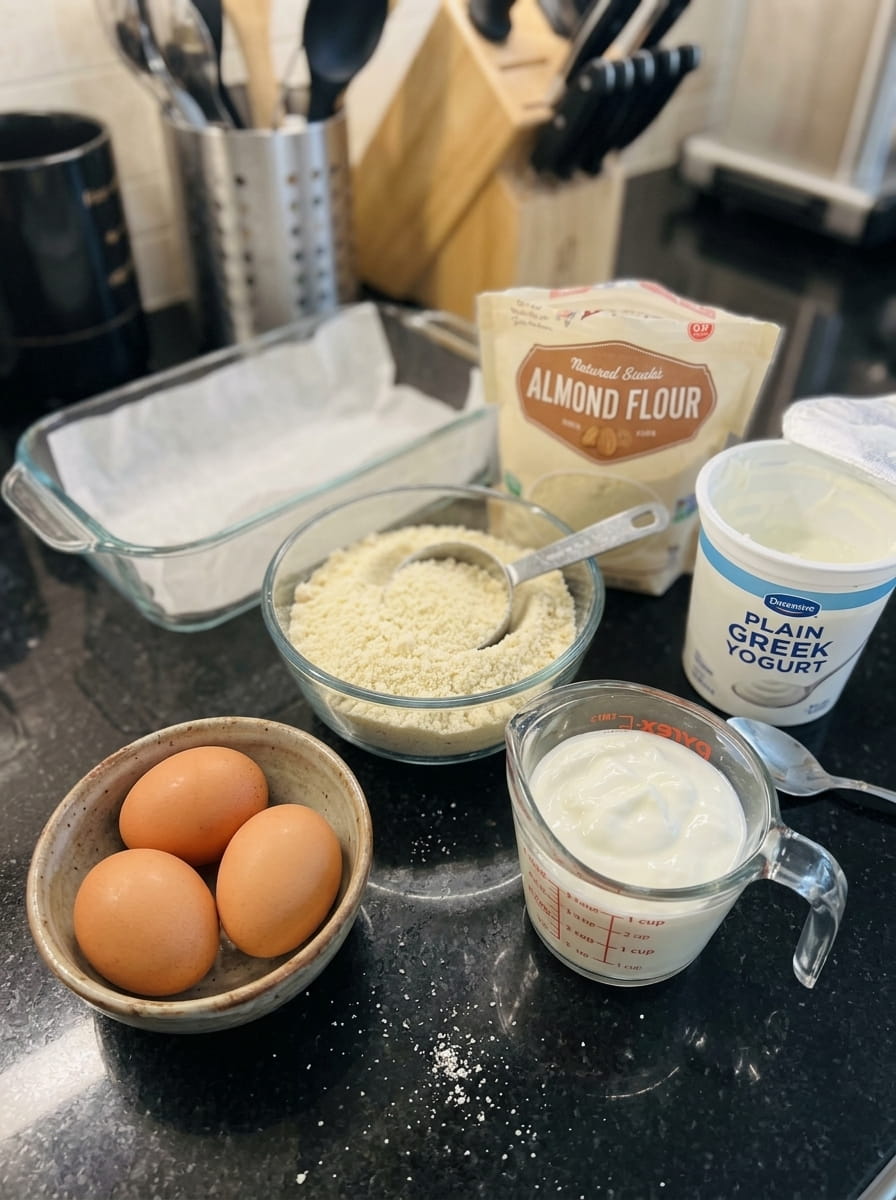
This recipe uses three basic ingredients, each of which plays an important role in the final texture.
Almond Flour: 2 Cups (About 200 g)
Almond flour provides the foundation of the loaf.
It is made from ground almonds and has a fine texture that works well in many grain-free baking recipes. Almond flour contributes a mild nutty flavor, fat, protein, and a tender crumb.
For this recipe, use finely ground almond flour rather than coarse almond meal whenever possible. Finely ground flour generally produces a more uniform batter and a smoother texture.
Measure the almond flour carefully. Too much can make the bread dense or crumbly, while too little may leave the loaf too soft to slice neatly.
For the most consistent results, use a kitchen scale and measure approximately 200 grams.
Plain Greek Yogurt: 1 Cup (245 g)
Greek yogurt adds moisture and a subtle tang to the bread.
It also contributes protein, although the exact amount depends on the brand and whether you use nonfat, low-fat, or full-fat Greek yogurt.
Choose plain, unsweetened Greek yogurt rather than a flavored variety. Added sugar and flavorings can change the taste and composition of the loaf.
Greek yogurt varies in thickness between brands. A thick, creamy product is generally a good choice because excess liquid can affect the batter’s consistency.
If the yogurt has separated in its container, stir it before measuring so the moisture is distributed evenly.
Eggs: 3 Large Eggs
Eggs help bind the almond flour and yogurt together.
As the bread bakes, the proteins in the eggs set and provide structure, allowing the loaf to hold its shape after cooling.
Eggs also contribute moisture, fat, and protein.
Use three large eggs for the most predictable result. Changing the number or size of the eggs can affect the texture and firmness of the bread.
For easier mixing, allow refrigerated eggs to sit at room temperature briefly before preparing the batter.
Equipment You Will Need
You do not need any specialized equipment to make Greek yogurt almond bread.
Gather these kitchen essentials before you start:
-
- A large mixing bowl.
-
- A whisk or fork.
-
- A spatula or wooden spoon.
-
- A small loaf pan.
-
- Parchment paper.
-
- Measuring cups or a kitchen scale.
-
- A toothpick or thin skewer.
-
- A wire cooling rack.
A kitchen scale is especially useful because almond flour can vary in volume depending on how it is packed into a measuring cup.
Parchment paper helps prevent sticking and makes it easier to remove the loaf from the pan without damaging the sides.
How to Make 3-Ingredient Greek Yogurt Almond Bread
Follow these simple steps to prepare your homemade almond flour bread.
Step 1: Preheat the Oven
Preheat your oven to 350°F (175°C).
Line a small loaf pan with parchment paper, making sure the bottom and sides are covered.
If necessary, lightly grease the pan first to help the parchment stay in place.
Preparing the pan before mixing the ingredients helps make the baking process smoother and prevents the batter from sitting unnecessarily.
Step 2: Whisk the Eggs
Crack the three large eggs into a large mixing bowl.
Whisk until the yolks and whites are thoroughly combined.
You do not need to whip the eggs into stiff peaks or incorporate a large amount of air. The goal is simply to create a uniform mixture.
Evenly mixed eggs help distribute the ingredients throughout the batter and support a consistent texture.
Step 3: Add the Greek Yogurt
Add the plain Greek yogurt to the beaten eggs.
Whisk until the mixture looks smooth and creamy.
Scrape down the sides of the bowl if yogurt collects around the edges.
At this stage, the mixture should be relatively uniform, with no large streaks of yogurt or egg remaining.
Step 4: Stir in the Almond Flour
Gradually add the almond flour to the yogurt and egg mixture.
Stir with a spatula until the ingredients are fully combined and a thick batter forms.
Avoid overmixing once the flour has been incorporated. Almond flour does not develop gluten like wheat flour, but unnecessary mixing can still make it harder to achieve a consistent batter.
The mixture should be thick enough to spoon into the loaf pan while remaining soft and moist.
If the batter seems unusually thin, double-check that you have measured the almond flour correctly and used thick Greek yogurt.
Step 5: Transfer the Batter to the Pan
Pour or spoon the batter into the prepared loaf pan.
Use a spatula to spread it evenly and smooth the top.
Try to keep the batter at a consistent depth so the loaf bakes evenly.
If the pan is too large, the batter will spread into a thinner layer and may bake more quickly. A smaller or deeper pan may require additional baking time.
Step 6: Bake Until Set
Place the loaf pan in the preheated oven.
Bake for approximately 40–50 minutes, depending on your oven and pan size.
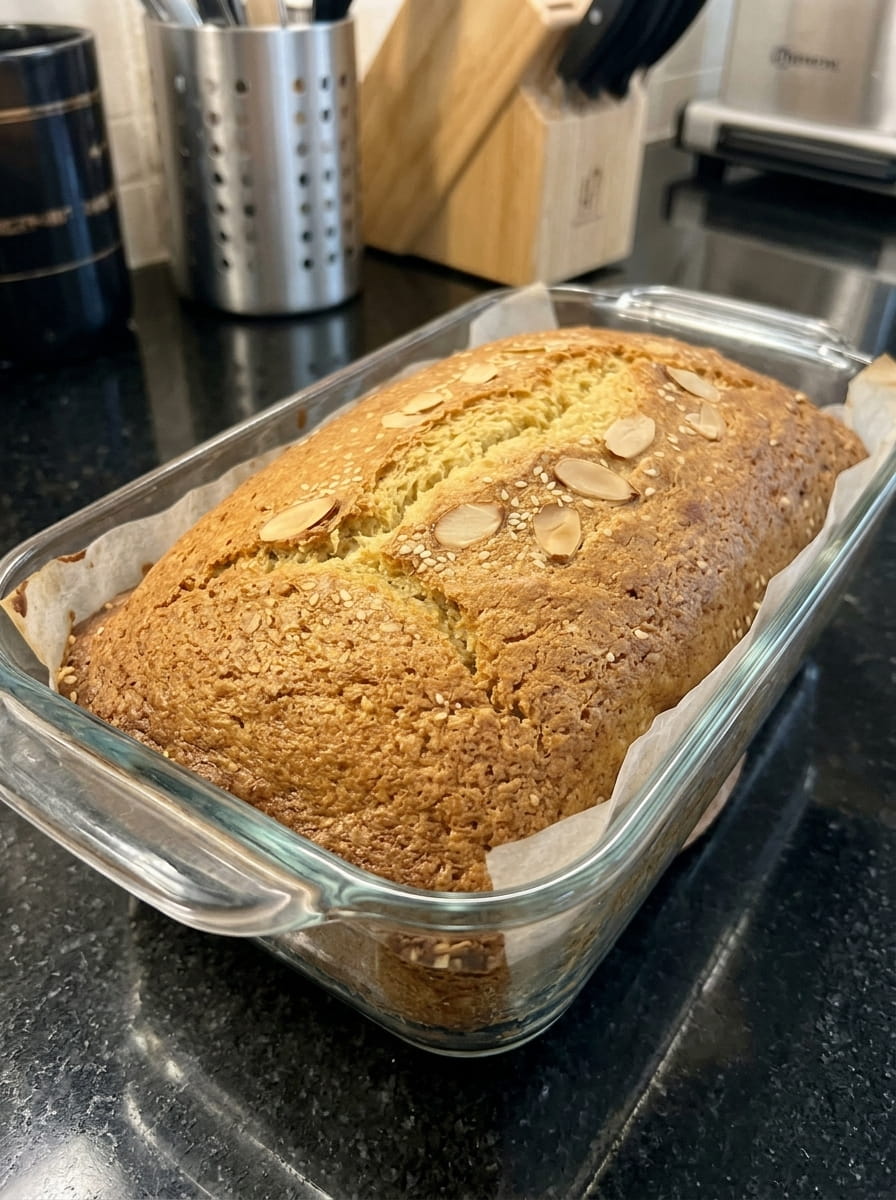
The top should become lightly golden, and the center should feel set rather than wet.
Insert a toothpick or thin skewer into the center. It should come out without wet batter clinging to it.
Because the bread contains eggs, you can also check the center with a food thermometer. Aim for at least 160°F (71°C).
If the surface browns too quickly before the middle is cooked, loosely cover the loaf with aluminum foil and continue baking.
Avoid removing the bread simply because the top looks golden. The center needs sufficient time to cook through.
Step 7: Cool the Bread
Remove the pan from the oven and let the loaf cool in the pan for 10–15 minutes.
Carefully lift it out using the parchment paper and transfer it to a wire rack.
Allow the bread to cool completely before slicing for the cleanest results.
This cooling stage is especially important for almond flour bread because it can be delicate while hot. As it cools, the structure becomes more stable and the slices are less likely to crumble.
Step 8: Slice and Serve
Once the loaf has cooled, use a sharp knife to cut it into slices.
Serve the bread plain, spread with butter, or topped with avocado, cream cheese, eggs, or your favorite sandwich fillings.
If you prefer a slightly crisp exterior, toast individual slices before serving.
The bread’s mild flavor makes it easy to combine with both simple breakfast ingredients and savory meal toppings.
Tips for Making the Best Almond Flour Bread
Although this recipe is straightforward, a few small adjustments can improve the final result.
Measure the Almond Flour Accurately
Almond flour is an important part of the bread’s structure.
Using too much can produce a dense or dry loaf, while using too little may leave the interior too soft.
Weighing the flour is the most reliable method. Aim for approximately 200 grams rather than relying entirely on cup measurements.
Use Plain, Thick Greek Yogurt
Greek yogurt brands vary in thickness and moisture content.
A thick, creamy yogurt helps create a batter with a consistent texture. Very watery yogurt may make the mixture looser than intended.
Use plain, unsweetened Greek yogurt for the best flavor balance.
Avoid Overmixing
Mix the ingredients until the batter is smooth and uniform.
There is no need to beat the mixture excessively after adding the almond flour.
Gentle mixing helps you avoid introducing unnecessary variation into the batter’s consistency.
Choose the Right Loaf Pan
A small loaf pan helps create a bread with enough depth to produce useful slices.
If you use a wider pan, the batter will spread out and may cook faster. A deeper pan may require more time.
Always judge doneness by checking the center rather than following the baking time alone.
Do Not Skip the Cooling Stage
Warm almond flour bread can be fragile.
Allowing it to cool helps the interior settle and improves the loaf’s ability to hold its shape.
If you want particularly neat slices, wait until the bread has cooled completely.
Use Fresh Eggs and Properly Stored Yogurt
Fresh ingredients contribute to good flavor and consistent results.
Keep Greek yogurt refrigerated until you are ready to use it, and follow safe food-handling practices when preparing the batter.
Toast the Slices for a Firmer Texture
If you prefer bread with a firmer surface, toast the slices after the loaf has cooled.
Toasting adds a light crispness that works especially well with butter, avocado, and cream cheese.
What Does Greek Yogurt Almond Bread Taste Like?
This bread has a mild, nutty flavor with a subtle tang from the Greek yogurt.
The almond flour contributes a rich, slightly sweet nuttiness, while the yogurt helps balance the flavor and keeps the crumb moist.
Eggs give the loaf structure, but the texture is different from conventional wheat bread. Instead of a stretchy, airy crumb, the finished bread is more tender and compact.
When baked properly and cooled completely, it should be sliceable and suitable for toasting.
The flavor is mild enough to pair with many toppings. Butter highlights the almond flavor, avocado adds creaminess, and eggs provide a savory contrast.
Cream cheese and fresh tomatoes are also excellent choices if you prefer a simple snack or open-faced sandwich.
Because the bread is not heavily seasoned, it can be adapted to different meals without overpowering other ingredients.
How to Serve 3-Ingredient Greek Yogurt Almond Bread
This loaf is versatile enough to enjoy throughout the day.
1. Almond Bread with Butter
Spread a little butter over a warm slice for a simple breakfast or snack.
The butter complements the almond flour’s natural richness and brings out the bread’s nutty flavor.
You can also add a pinch of cinnamon if you prefer a warmer flavor profile.
2. Avocado Toast
Toast a slice and spread mashed avocado over the top.
Add black pepper, lemon juice, chili flakes, or fresh herbs for extra flavor.
Because almond bread is relatively tender, avoid piling on too many heavy toppings at once.
3. Breakfast with Eggs
Serve the bread alongside scrambled eggs, a boiled egg, or an omelet.
You can also top a toasted slice with a fried egg and a little black pepper.
This makes a practical breakfast that combines protein from the eggs with the nutrients provided by almond flour and Greek yogurt.
4. Cream Cheese and Cucumber
Spread cream cheese over a slice and add thinly sliced cucumber.
Finish with black pepper, dill, or chopped chives for a refreshing savory topping.
5. Open-Faced Sandwiches
Use thicker slices as the base for turkey, chicken, cheese, tomatoes, or roasted vegetables.
Open-faced sandwiches work particularly well because they do not require the loaf to support a second slice and several heavy fillings.
6. Tomato and Cheese Toast
Add sliced tomatoes and a little mozzarella or another melting cheese.
Toast until the cheese softens, then finish with dried oregano or fresh basil.
7. Serve with Soup or Salad
Pair a slice with tomato soup, vegetable soup, or a fresh green salad.
Toasting the bread first can help it retain a pleasant texture when served alongside moist foods.
8. A Simple Snack with Nut Butter
For a different flavor combination, spread a little almond butter or another nut butter over a slice.
This creates a rich snack with a mild nutty flavor. Avoid this option if you have an allergy to the relevant nuts.
Is Greek Yogurt Almond Bread High in Protein?
Greek yogurt almond bread contains protein from all three ingredients.
Almond flour contributes plant-based protein, Greek yogurt provides dairy protein, and eggs supply additional protein.
The total amount depends on the nutritional labels of the ingredients you use, especially the type of Greek yogurt and almond flour.
As a general illustration, 200 grams of almond flour may provide around 40–44 grams of protein, one cup of Greek yogurt may provide approximately 15–25 grams, and three large eggs may provide around 18–19 grams.
This suggests that the entire loaf might contain approximately 73–88 grams of protein, depending on the specific products used.
These figures are estimates, not laboratory-tested nutrition data. Check the labels on your ingredients and calculate the total for the exact brands you use.
For example, if your loaf contains 80 grams of protein in total and you cut it into eight equal slices, each slice would provide approximately 10 grams of protein.
If you cut the loaf into ten slices, the estimated amount would be about 8 grams per slice.
Actual serving values will vary with the size and thickness of the slices.
Protein content is only one aspect of nutrition. Almond flour is energy-dense because it contains substantial fat, and Greek yogurt varies in calories and fat depending on the type.
For a more complete nutritional estimate, calculate calories, protein, fat, total carbohydrates, fiber, and other relevant nutrients using the labels on your ingredients.
Is This Bread Gluten-Free and Grain-Free?
The basic recipe contains almond flour rather than wheat flour, making it naturally grain-free when prepared with the listed ingredients.
It also contains no conventional gluten-containing grain ingredients.
However, if you need to follow a strict gluten-free diet, check all ingredient labels and prevent cross-contact with wheat or other gluten-containing foods during preparation.
Almond flour is not the same as wheat flour, and the finished bread has a different texture and nutritional composition.
It is also important to remember that almond flour is made from nuts. This recipe is not appropriate for anyone who needs to avoid almonds because of an allergy.
People following a medically prescribed diet should confirm that the recipe fits their specific nutritional and safety requirements.
How to Store Greek Yogurt Almond Bread
Because this bread contains eggs and yogurt, proper storage is important.
Refrigerating the Bread
Allow the loaf to cool completely before placing it in an airtight container.
Refrigerate it within two hours of baking, or within one hour if the surrounding temperature is above 90°F (32°C).
For best quality, aim to consume the bread within three to four days.
Keep it covered to help prevent the slices from drying out or absorbing odors from other foods in the refrigerator.
Freezing the Bread
Freezing is a convenient way to store leftover almond bread.
Allow the loaf to cool completely and cut it into individual slices.
Separate the slices with parchment paper and place them in a freezer-safe bag or container.
Label the package with the date and store it at 0°F (-18°C).
For best quality, aim to use the frozen bread within two to three months.
Freezing individual portions makes it easy to take out one or two slices whenever you need them.
Can You Store It at Room Temperature?
Because this recipe contains eggs and yogurt and has a moist texture, refrigeration is the safer storage option.
Do not leave the loaf at room temperature for extended periods. Refrigerate it promptly after cooling and serving.
Discard the bread if you notice mold, an unusual odor, or other signs of spoilage.
How to Reheat Almond Flour Bread
Reheating can improve the texture of refrigerated or frozen slices.
Toaster
Place a slice in a toaster if it fits safely and toast until warmed through.
Because almond flour bread can be more delicate than wheat bread, handle the slices gently.
Oven
Preheat the oven to approximately 325°F (165°C).
Place the slices on a baking tray and heat until warm. The exact time depends on the thickness of the slices and whether they are refrigerated or frozen.
Air Fryer
Place one or two slices in an air fryer and heat at a moderate temperature for a few minutes.
Check frequently to avoid over-browning the surface.
From Frozen
You can thaw frozen slices in the refrigerator or reheat them directly from frozen using a suitable appliance.
Allow extra time for frozen bread and check that it is warmed through before serving.
Common Mistakes to Avoid
Even a simple three-ingredient recipe can produce disappointing results if a few details are overlooked.
Using Almond Meal Instead of Fine Almond Flour
Almond meal is often coarser than almond flour and may contain more visible almond skin.
It can work in some recipes, but the finished bread may have a rougher texture.
For a more uniform loaf, use finely ground almond flour.
Adding Too Much Yogurt
Excess yogurt can make the batter too moist and may prevent the center from setting properly.
Measure the yogurt accurately and use a thick, plain variety.
Using Too Much Almond Flour
Excess flour can make the bread dense and crumbly.
Weighing the almond flour helps maintain the correct balance between dry and wet ingredients.
Removing the Loaf Too Early
The top may look cooked while the middle remains underbaked.
Use a toothpick to check the center and a food thermometer when possible. The center should reach at least 160°F (71°C).
Slicing While the Bread Is Hot
Warm almond flour bread can crumble because its structure has not fully settled.
Allow the loaf to cool completely before slicing for the best results.
Expecting a Traditional Wheat Bread Texture
This recipe does not contain wheat flour or yeast, so it will not have the same stretchy, airy texture as a conventional loaf.
It is naturally more tender and compact. Toasting can help create a firmer surface and make the slices easier to handle.
Frequently Asked Questions
1. Can I Make Almond Bread Without Yeast?
Yes. This recipe does not require yeast or a rising period.
The eggs provide structure, while the combination of almond flour and Greek yogurt forms the batter.
2. Is This Recipe Really Made With Only Three Ingredients?
Yes. The basic recipe contains almond flour, plain Greek yogurt, and eggs.
Parchment paper is used for lining the pan but is not part of the batter. Optional seasonings or toppings can be added if desired.
3. Can I Use Regular Yogurt Instead of Greek Yogurt?
You can experiment with regular plain yogurt, but it is generally thinner than Greek yogurt.
The additional moisture may affect the batter and make the loaf more difficult to set. If you want the most predictable result, use thick, plain Greek yogurt.
4. Can I Use Nonfat Greek Yogurt?
Yes. Nonfat Greek yogurt can work, although the finished loaf may differ slightly in richness and moisture.
The protein and calorie content will also vary according to the brand.
5. Can I Replace Almond Flour With Coconut Flour?
Coconut flour absorbs moisture very differently from almond flour.
It is not a reliable one-to-one replacement in this recipe. A substitution would require a separately tested formula with adjusted ingredient quantities.
6. Why Is My Almond Bread Too Moist in the Middle?
Excess moisture may result from thin yogurt, inaccurate ingredient measurements, or insufficient baking.
Print
Simple 3-Ingredient Greek Yogurt Almond Bread
Ingredients
This recipe uses three basic ingredients, each of which plays an important role in the final texture.
Almond Flour: 2 Cups (About 200 g)
Almond flour provides the foundation of the loaf.
It is made from ground almonds and has a fine texture that works well in many grain-free baking recipes. Almond flour contributes a mild nutty flavor, fat, protein, and a tender crumb.
For this recipe, use finely ground almond flour rather than coarse almond meal whenever possible. Finely ground flour generally produces a more uniform batter and a smoother texture.
Measure the almond flour carefully. Too much can make the bread dense or crumbly, while too little may leave the loaf too soft to slice neatly.
For the most consistent results, use a kitchen scale and measure approximately 200 grams.
Plain Greek Yogurt: 1 Cup (245 g)
Greek yogurt adds moisture and a subtle tang to the bread.
It also contributes protein, although the exact amount depends on the brand and whether you use nonfat, low-fat, or full-fat Greek yogurt.
Choose plain, unsweetened Greek yogurt rather than a flavored variety. Added sugar and flavorings can change the taste and composition of the loaf.
Greek yogurt varies in thickness between brands. A thick, creamy product is generally a good choice because excess liquid can affect the batter’s consistency.
If the yogurt has separated in its container, stir it before measuring so the moisture is distributed evenly.
Eggs: 3 Large Eggs
Eggs help bind the almond flour and yogurt together.
As the bread bakes, the proteins in the eggs set and provide structure, allowing the loaf to hold its shape after cooling.
Instructions
Preheat your oven to 350°F (175°C).
Line a small loaf pan with parchment paper, making sure the bottom and sides are covered.
If necessary, lightly grease the pan first to help the parchment stay in place.
Preparing the pan before mixing the ingredients helps make the baking process smoother and prevents the batter from sitting unnecessarily.
Crack the three large eggs into a large mixing bowl.
Whisk until the yolks and whites are thoroughly combined.
You do not need to whip the eggs into stiff peaks or incorporate a large amount of air. The goal is simply to create a uniform mixture.
Evenly mixed eggs help distribute the ingredients throughout the batter and support a consistent texture.
Add the plain Greek yogurt to the beaten eggs.
Whisk until the mixture looks smooth and creamy.
Scrape down the sides of the bowl if yogurt collects around the edges.
At this stage, the mixture should be relatively uniform, with no large streaks of yogurt or egg remaining.
Gradually add the almond flour to the yogurt and egg mixture.
Stir with a spatula until the ingredients are fully combined and a thick batter forms.
Avoid overmixing once the flour has been incorporated. Almond flour does not develop gluten like wheat flour, but unnecessary mixing can still make it harder to achieve a consistent batter.
The mixture should be thick enough to spoon into the loaf pan while remaining soft and moist.
If the batter seems unusually thin, double-check that you have measured the almond flour correctly and used thick Greek yogurt.
Pour or spoon the batter into the prepared loaf pan.
Use a spatula to spread it evenly and smooth the top.
Try to keep the batter at a consistent depth so the loaf bakes evenly.
If the pan is too large, the batter will spread into a thinner layer and may bake more quickly. A smaller or deeper pan may require additional baking time.
Place the loaf pan in the preheated oven.
Bake for approximately 40–50 minutes, depending on your oven and pan size.
The top should become lightly golden, and the center should feel set rather than wet.
Insert a toothpick or thin skewer into the center. It should come out without wet batter clinging to it.
Because the bread contains eggs, you can also check the center with a food thermometer. Aim for at least 160°F (71°C).
If the surface browns too quickly before the middle is cooked, loosely cover the loaf with aluminum foil and continue baking.
Avoid removing the bread simply because the top looks golden. The center needs sufficient time to cook through.
Remove the pan from the oven and let the loaf cool in the pan for 10–15 minutes.
Carefully lift it out using the parchment paper and transfer it to a wire rack.
Allow the bread to cool completely before slicing for the cleanest results.
This cooling stage is especially important for almond flour bread because it can be delicate while hot. As it cools, the structure becomes more stable and the slices are less likely to crumble.
Once the loaf has cooled, use a sharp knife to cut it into slices.
Serve the bread plain, spread with butter, or topped with avocado, cream cheese, eggs, or your favorite sandwich fillings.