
Spicy Jalapeño Pickled Eggs: A Bold, Tangy Snack You Can Make at Home
Meta Description: These Spicy Jalapeño Pickled Eggs are tangy, garlicky, and packed with heat. Soaked in a zesty vinegar brine with fresh jalapeños and classic pickling spices, they’re an easy make-ahead refrigerator snack for BBQs, snack boards, and more.
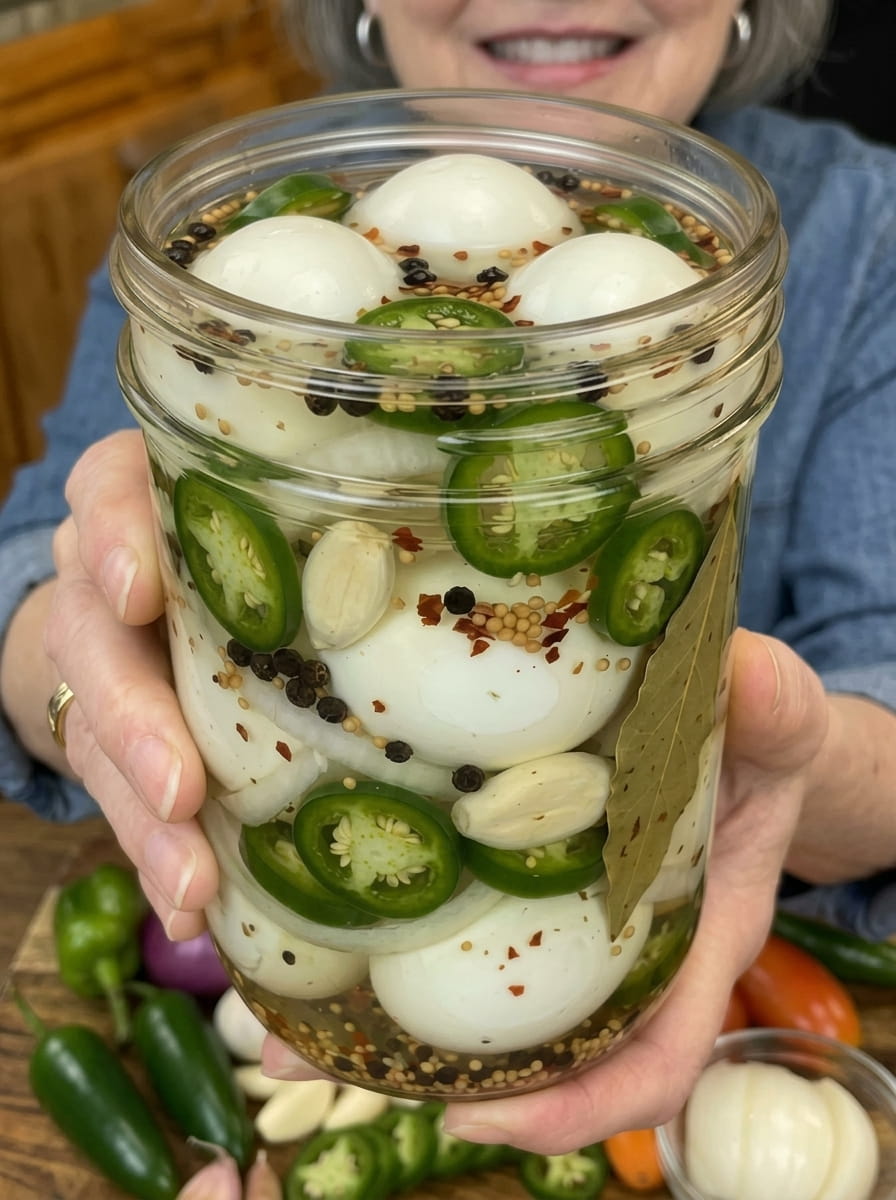
Pickled eggs have long been a beloved bar snack and pantry staple, but this Spicy Jalapeño Pickled Eggs recipe takes the classic to a whole new level. With a zesty vinegar brine infused with fresh jalapeños, garlic, red onion, and warm pickling spices, these eggs deliver bold, tangy, spicy flavor in every single bite. Whether you grew up snacking on pickled eggs from a jar at your local diner or you’re trying them for the very first time, this homemade version is easy, customizable, and far more flavorful than anything you’ll find store-bought.
This recipe is the perfect combination of simplicity and bold flavor. Hard-boiled eggs are transformed into a spicy, tangy delicacy simply by soaking in a well-seasoned brine for a few days in the refrigerator. There’s no complicated canning process required, no special equipment needed, and the ingredient list relies almost entirely on pantry staples and fresh produce you likely already have on hand.
If you love spicy, tangy, protein-packed snacks, this recipe is about to become one of your new favorites. Let’s walk through everything you need to know about making the perfect batch of Spicy Jalapeño Pickled Eggs at home.
Why You’ll Love These Spicy Jalapeño Pickled Eggs
There are so many reasons this recipe deserves a spot in your regular snack rotation. Here’s what makes it stand out:
They’re packed with protein. Eggs are a fantastic source of high-quality protein, making these pickled eggs a satisfying, nutrient-dense snack that keeps you full longer than many other snack options.
The flavor is bold and customizable. Between the fresh jalapeños, garlic, red onion, and warm pickling spices, every bite delivers layers of tangy, spicy, savory flavor. Plus, the heat level is easy to adjust to your personal preference.
They’re incredibly easy to make. With no special canning equipment or advanced techniques required, this is a beginner-friendly pickling recipe that anyone can make at home.
They’re a fantastic make-ahead snack. Since the eggs need time to soak up the brine, this is a great recipe to prepare a few days before you need it, whether that’s for a party, a BBQ, or just to have on hand for quick snacking throughout the week.
They’re low in carbs. With minimal added sugar and no starchy ingredients, these pickled eggs fit well into low carb, keto-adjacent, and high-protein eating patterns.
They’re endlessly versatile. From snack boards to sandwiches to BBQ sides, these pickled eggs can be enjoyed in countless ways beyond just eating them straight from the jar.
A Brief History of Pickled Eggs
Pickled eggs have a long history rooted in food preservation. Long before refrigeration was widely available, pickling was one of the most effective ways to extend the shelf life of hard-boiled eggs using vinegar’s natural acidity. Over time, pickled eggs became especially popular in taverns, pubs, and bars throughout the United States and United Kingdom, often served as a salty, tangy snack alongside a cold beer.
Traditional versions were often simply eggs pickled in plain vinegar brine, sometimes with beet juice added for a vibrant pink color. This modern spicy jalapeño version builds on that tradition by incorporating fresh chile peppers, garlic, and warming spices, transforming a classic bar snack into a bold, zesty treat that’s just as at home on a modern snack board as it is alongside a cold drink.
Tips for Perfectly Cooked Hard-Boiled Eggs
The foundation of any great pickled egg recipe is a perfectly cooked hard-boiled egg. Overcooked eggs can develop a chalky texture and an unappealing greenish-gray ring around the yolk, while undercooked eggs may be difficult to peel and won’t hold up as well in the brine. Here are some tips to get it right every time:
- Start with cold water. Placing the eggs in cold water before bringing it to a boil helps them cook more evenly than adding them directly to already-boiling water.
- Simmer, don’t boil vigorously. Once the water reaches a boil, reduce the heat to a gentle simmer. A rolling boil can cause the eggs to bounce around and crack.
- Time it precisely. For this recipe, 10 to 11 minutes of simmering produces a fully set yolk that’s ideal for pickling, since a firm yolk holds its texture better in the acidic brine over several days.
- Shock the eggs immediately. Transferring the eggs directly into an ice bath after cooking stops the cooking process instantly, which helps prevent overcooking and also makes peeling significantly easier.
- Peel under cool running water. Peeling the eggs under a light stream of cool water helps remove small shell fragments and makes the process faster and less frustrating.
Taking the time to properly cook and peel your eggs sets the foundation for pickled eggs with a great texture that holds up beautifully throughout the pickling process.
Why Fresh Jalapeños Make All the Difference
While many spicy pickled egg recipes rely solely on dried spices or hot sauce for heat, this recipe uses fresh jalapeño slices directly in the jar, and the difference is noticeable. Fresh jalapeños infuse the brine with a bright, grassy heat and a distinct flavor that dried spices alone simply can’t replicate. As the eggs pickle over several days, they absorb not only the tangy vinegar brine but also the essence of the fresh peppers themselves.
For those who want to control the heat level, the choice to include or remove the jalapeño seeds and membranes makes a big difference. The seeds and membranes contain the highest concentration of capsaicin, the compound responsible for a pepper’s spiciness. Keeping them in results in a noticeably spicier final product, while removing them allows the jalapeño flavor to come through with a much gentler heat.
Ingredients You’ll Need
For the Eggs
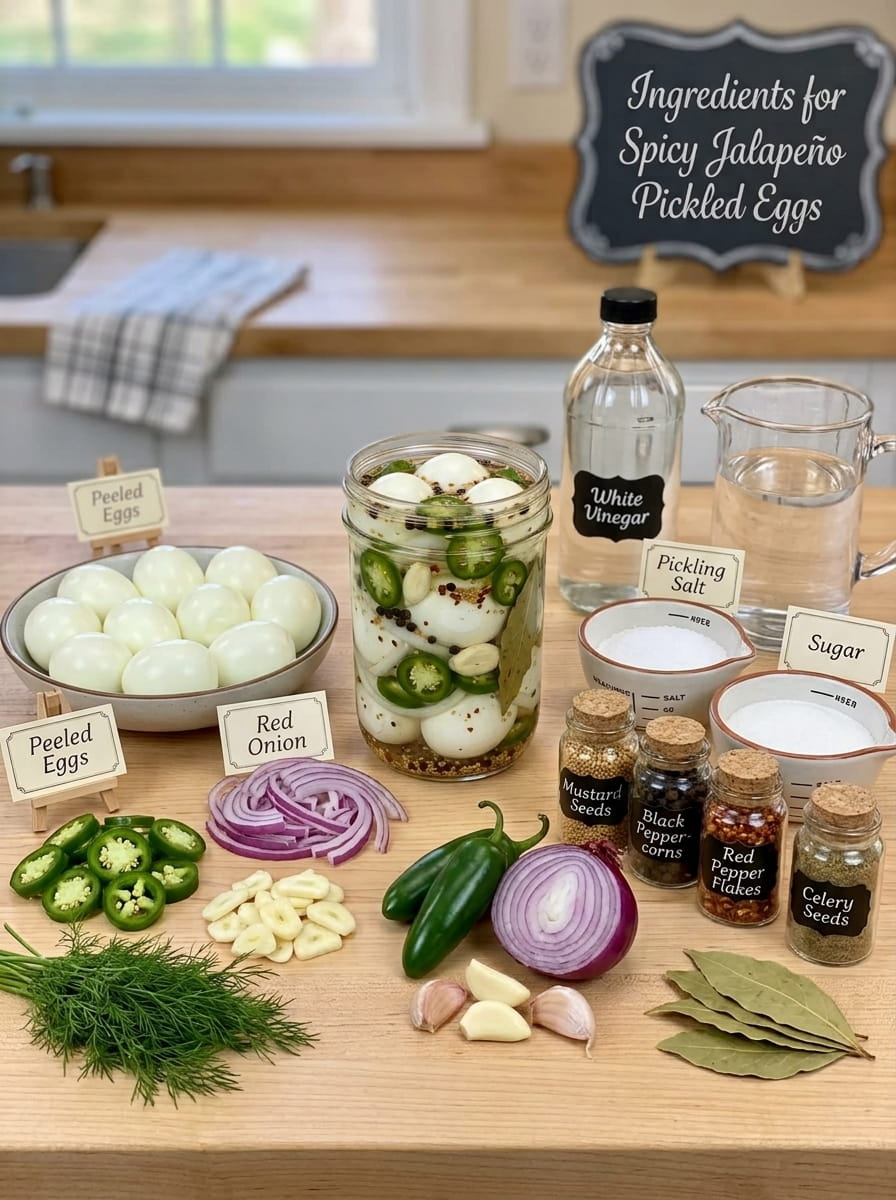
- 12 large eggs — The base of the recipe. Choose eggs that are a few days old rather than extremely fresh, as slightly older eggs tend to peel more easily after boiling.
- 3–4 fresh jalapeños, thinly sliced — Provides fresh, bright heat throughout the brine and eggs.
- 4 garlic cloves, thinly sliced — Infuses the brine with pungent, savory depth.
- ½ small red onion, thinly sliced — Adds a touch of sweetness, color, and crunch.
- 2 tablespoons fresh dill, optional — Contributes a fresh, herbal note that complements the tangy brine beautifully.
For the Pickling Brine
- 2 cups white vinegar — Forms the tangy base of the brine.
- 1 cup water — Balances the sharpness of the vinegar.
- 1 tablespoon pickling salt — Enhances flavor and supports preservation.
- 1 tablespoon sugar — Adds a subtle sweetness that balances the acidity and spice.
- 1 teaspoon mustard seeds — Contributes warm, slightly peppery flavor.
- 1 teaspoon black peppercorns — Adds mild heat and aromatic depth.
- ½ teaspoon red pepper flakes — Boosts the overall spice level of the brine.
- ½ teaspoon celery seeds — Adds a subtle earthy, herbal note.
- 1 bay leaf — Infuses the brine with gentle herbal complexity.
How to Make Spicy Jalapeño Pickled Eggs: Step-by-Step Instructions
Step 1: Cook the Eggs
Place the eggs in a single layer in a saucepan and cover them with cold water by about an inch. Set the pan over high heat and bring the water to a full boil. Once boiling, reduce the heat to maintain a gentle simmer and cook the eggs for about 10 to 11 minutes. This timing produces a fully cooked, firm yolk that holds up well throughout the pickling process.
Step 2: Cool and Peel
As soon as the eggs finish cooking, use a slotted spoon to transfer them immediately into a bowl of ice water. Let them cool completely, which usually takes about 10 minutes. Once cooled, peel the eggs carefully, rinsing them under cool water as needed to remove any small shell fragments.
Step 3: Prepare the Vegetables
While the eggs cool, thinly slice the jalapeños, garlic, and red onion. If you want a spicier final product, leave the seeds and membranes in the jalapeño slices. For a milder version, remove them before slicing.
Step 4: Make the Brine
In a saucepan, combine the white vinegar, water, pickling salt, sugar, mustard seeds, black peppercorns, red pepper flakes, celery seeds, and bay leaf. Bring the mixture to a gentle simmer over medium heat, stirring occasionally until the salt and sugar have fully dissolved.
Step 5: Pack the Jar
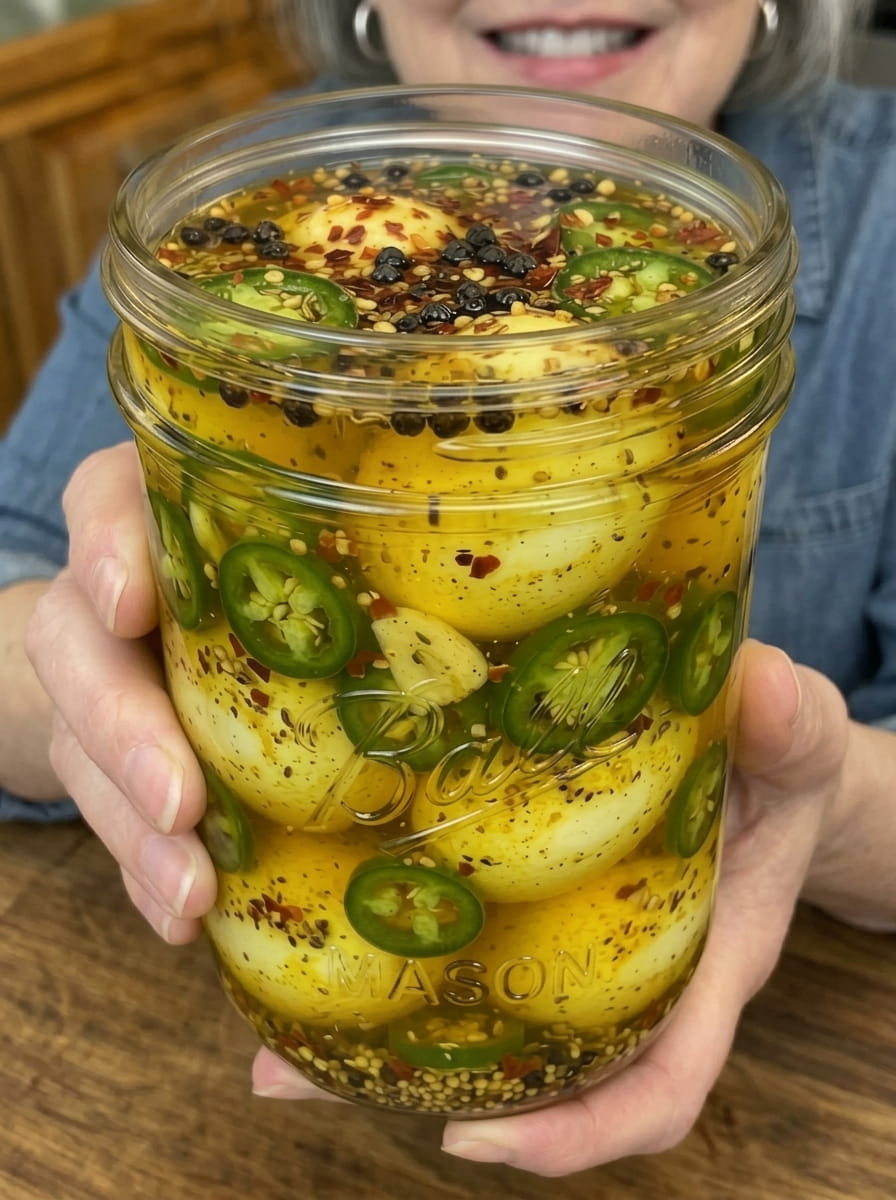
Choose a large, clean glass jar big enough to comfortably hold all 12 eggs along with the vegetables. Start by adding a portion of the sliced jalapeños, garlic, onion, and fresh dill (if using) to the bottom of the jar. Carefully place the peeled eggs into the jar, then tuck the remaining sliced vegetables and dill around and between the eggs to ensure even flavor distribution throughout the jar.
Step 6: Add the Brine
Once the brine has finished simmering, carefully pour it over the eggs, making sure they are completely submerged in the liquid. Allow the jar to cool to room temperature before moving on to the next step, as this helps prevent excess condensation from forming once the jar is sealed.
Step 7: Refrigerate
Once cooled, seal the jar tightly with its lid and place it in the refrigerator. While the eggs technically become edible after 24 hours, allowing them to pickle for three to five days produces a much more deeply developed, well-balanced flavor as the brine fully penetrates the eggs.
Step 8: Serve
Once your pickled eggs have had adequate time to develop flavor, serve them chilled straight from the jar, or incorporate them into your favorite dishes. They’re delicious alongside BBQ dishes, tucked into sandwiches, sliced over salads, arranged on a snack board, paired with burgers, or served as part of a spicy appetizer spread.
Storage and Food Safety Tips
Because this recipe is a refrigerator pickle rather than a shelf-stable canned product, proper storage is essential for both quality and food safety. Keep these guidelines in mind:
- Always store the jar in the refrigerator. Pickled eggs should never be left at room temperature for extended periods, as eggs are a perishable protein that requires consistent refrigeration.
- Use a clean utensil every time you remove an egg from the jar to avoid introducing bacteria that could shorten the shelf life of the batch.
- Make sure the eggs remain fully submerged in the brine throughout storage for the best flavor and food safety.
- This recipe has not been tested for shelf-stable canning. Pickled eggs are especially sensitive to food safety concerns due to their protein content, so they should only be made and stored using the refrigerator method described here unless following a tested, scientifically validated canning recipe specifically designed for eggs.
When properly refrigerated, these pickled eggs are typically best enjoyed within three to four weeks, though many people find the flavor is at its peak within the first one to two weeks after the initial pickling period.
Serving Ideas for Spicy Jalapeño Pickled Eggs
This recipe’s versatility makes it a fantastic addition to countless meals and occasions. Here are some of the best ways to serve them:
- Straight from the jar: Sometimes the simplest way is the best — grab a spicy pickled egg straight from the refrigerator for a quick, protein-packed snack.
- On snack boards: Sliced or whole pickled eggs add color, protein, and bold flavor to any snack or charcuterie board.
- With BBQ dishes: Serve alongside smoked meats, coleslaw, and cornbread for a tangy contrast to rich, smoky BBQ flavors.
- In sandwiches: Slice a pickled egg and add it to a sandwich for extra protein and a spicy, tangy kick.
- On salads: Quarter or slice pickled eggs and add them to green salads, potato salad, or grain bowls for a flavorful protein boost.
- Alongside burgers: Serve whole or sliced pickled eggs as a unique, flavorful side next to burgers or sliders.
- As a spicy appetizer: Set out a small dish of pickled eggs alongside other spicy appetizers for guests who love bold, fiery flavors.
Recipe Variations to Try
Once you’ve made the classic version, consider trying these variations to switch things up:
- Extra spicy version: Add a sliced habanero or serrano pepper along with the jalapeños for an intense heat boost.
- Milder version: Remove the jalapeño seeds and membranes and reduce the red pepper flakes for a gentler, more approachable spice level.
- Beet-pickled version: Add a small amount of beet juice or a few slices of cooked beet to the brine for a vibrant pink color along with a touch of earthy sweetness.
- Curry-spiced version: Add a teaspoon of curry powder to the brine for a warm, fragrant twist on the classic recipe.
- Extra garlicky version: Increase the garlic to six or more cloves for an even more pungent, savory flavor throughout the brine.
- Herb-forward version: In addition to dill, try adding fresh cilantro or parsley for a brighter, herbaceous flavor.
Frequently Asked Questions About Spicy Jalapeño Pickled Eggs
How long do pickled eggs need to sit before they’re ready to eat? While pickled eggs are technically safe to eat after 24 hours in the refrigerator, the flavor continues to develop over time. For the best, most well-rounded flavor, let the eggs pickle for three to five days before serving.
How spicy are these pickled eggs? The heat level depends largely on whether you keep or remove the jalapeño seeds and membranes, as well as how many jalapeños you use. As written, the recipe produces a moderate to spicy result, but it’s easy to adjust up or down based on your preference.
How long do pickled eggs last in the refrigerator? When properly stored in a sealed jar in the refrigerator, these pickled eggs typically stay fresh for three to four weeks.
Can pickled eggs be left at room temperature? No. Because eggs are a perishable protein, pickled eggs should always be kept refrigerated and should not be left out at room temperature for extended periods.
Can I can these pickled eggs to make them shelf-stable? This recipe is designed specifically as a refrigerator pickle. Pickled eggs are considered a low-acid food that requires very specific, tested canning procedures to be made shelf-stable safely, so this recipe should not be processed using standard water bath canning methods.
Why did my eggs turn out hard to peel? Using eggs that are a few days old rather than extremely fresh, along with an immediate ice bath after cooking, typically makes peeling much easier. Peeling under cool running water can also help remove stubborn shell fragments.
Can I reuse the brine for a second batch of eggs? It’s generally best to make a fresh batch of brine for each new batch of eggs to ensure proper acidity levels and the best possible flavor and food safety.
Final Thoughts
These Spicy Jalapeño Pickled Eggs bring together everything you could want in a bold, homemade snack: tangy vinegar, spicy fresh jalapeños, pungent garlic, and warm pickling spices, all soaked into protein-packed hard-boiled eggs. They’re easy to make, endlessly customizable, and perfect for everything from casual snacking to BBQs, parties, and game day spreads.
Once you make your first batch, don’t be surprised if this recipe becomes a permanent fixture in your refrigerator. Prepare a jar a few days ahead of time, let the flavors develop fully, and get ready to enjoy one of the boldest, most satisfying homemade snacks you’ve ever made.
Print
Spicy Jalapeño Pickled Eggs
Ingredients
For the Eggs
- 12 large eggs — The base of the recipe. Choose eggs that are a few days old rather than extremely fresh, as slightly older eggs tend to peel more easily after boiling.
- 3–4 fresh jalapeños, thinly sliced — Provides fresh, bright heat throughout the brine and eggs.
- 4 garlic cloves, thinly sliced — Infuses the brine with pungent, savory depth.
- ½ small red onion, thinly sliced — Adds a touch of sweetness, color, and crunch.
- 2 tablespoons fresh dill, optional — Contributes a fresh, herbal note that complements the tangy brine beautifully.
For the Pickling Brine
- 2 cups white vinegar — Forms the tangy base of the brine.
- 1 cup water — Balances the sharpness of the vinegar.
- 1 tablespoon pickling salt — Enhances flavor and supports preservation.
- 1 tablespoon sugar — Adds a subtle sweetness that balances the acidity and spice.
- 1 teaspoon mustard seeds — Contributes warm, slightly peppery flavor.
- 1 teaspoon black peppercorns — Adds mild heat and aromatic depth.
- ½ teaspoon red pepper flakes — Boosts the overall spice level of the brine.
- ½ teaspoon celery seeds — Adds a subtle earthy, herbal note.
- 1 bay leaf — Infuses the brine with gentle herbal complexity.
Instructions
Place the eggs in a single layer in a saucepan and cover them with cold water by about an inch. Set the pan over high heat and bring the water to a full boil. Once boiling, reduce the heat to maintain a gentle simmer and cook the eggs for about 10 to 11 minutes. This timing produces a fully cooked, firm yolk that holds up well throughout the pickling process.
As soon as the eggs finish cooking, use a slotted spoon to transfer them immediately into a bowl of ice water. Let them cool completely, which usually takes about 10 minutes. Once cooled, peel the eggs carefully, rinsing them under cool water as needed to remove any small shell fragments.
While the eggs cool, thinly slice the jalapeños, garlic, and red onion. If you want a spicier final product, leave the seeds and membranes in the jalapeño slices. For a milder version, remove them before slicing.
In a saucepan, combine the white vinegar, water, pickling salt, sugar, mustard seeds, black peppercorns, red pepper flakes, celery seeds, and bay leaf. Bring the mixture to a gentle simmer over medium heat, stirring occasionally until the salt and sugar have fully dissolved.
Choose a large, clean glass jar big enough to comfortably hold all 12 eggs along with the vegetables. Start by adding a portion of the sliced jalapeños, garlic, onion, and fresh dill (if using) to the bottom of the jar. Carefully place the peeled eggs into the jar, then tuck the remaining sliced vegetables and dill around and between the eggs to ensure even flavor distribution throughout the jar.
Once the brine has finished simmering, carefully pour it over the eggs, making sure they are completely submerged in the liquid. Allow the jar to cool to room temperature before moving on to the next step, as this helps prevent excess condensation from forming once the jar is sealed.
Once cooled, seal the jar tightly with its lid and place it in the refrigerator. While the eggs technically become edible after 24 hours, allowing them to pickle for three to five days produces a much more deeply developed, well-balanced flavor as the brine fully penetrates the eggs.
Once your pickled eggs have had adequate time to develop flavor, serve them chilled straight from the jar, or incorporate them into your favorite dishes. They’re delicious alongside BBQ dishes, tucked into sandwiches, sliced over salads, arranged on a snack board, paired with burgers, or served as part of a spicy appetizer spread.