
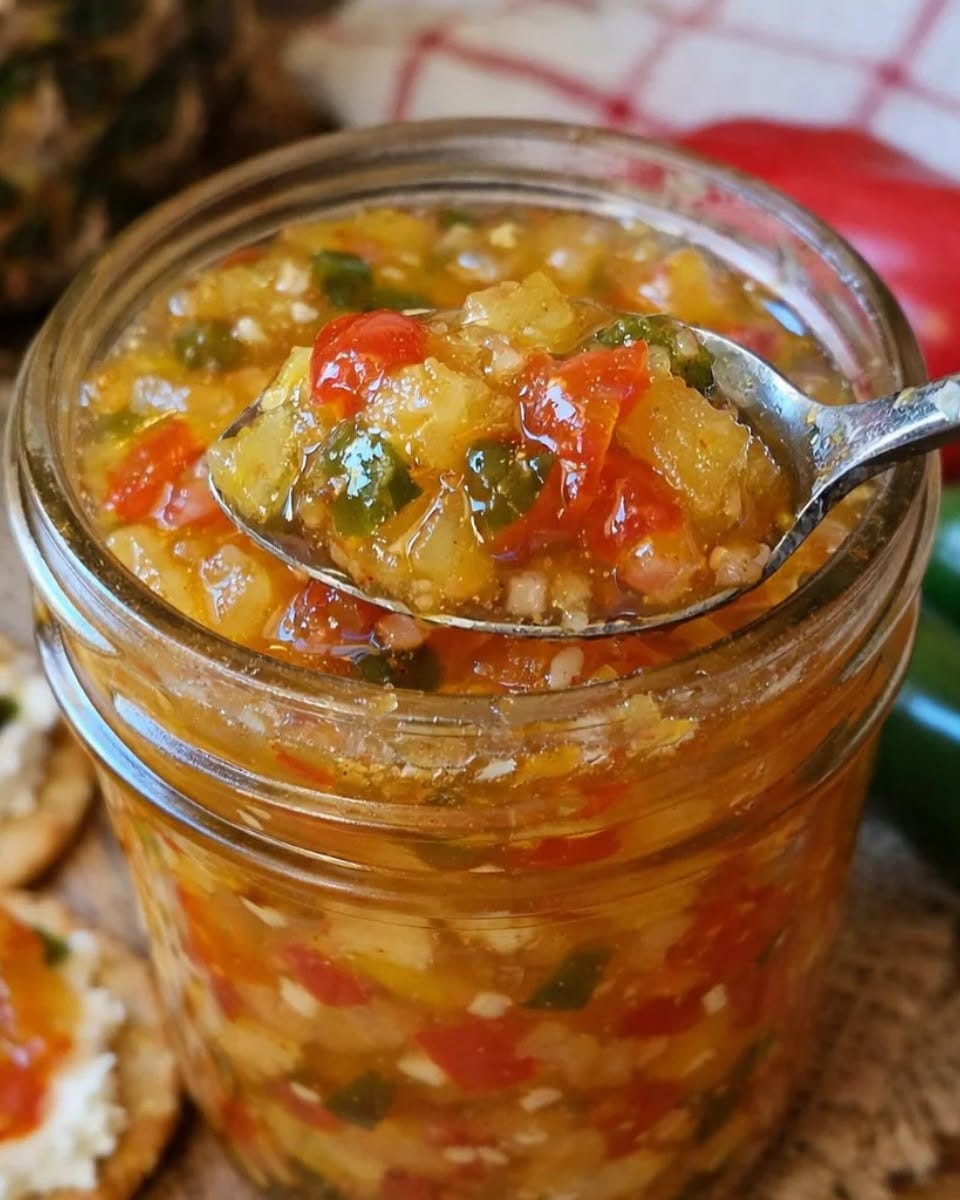
Pineapple Jalapeño Jelly: The Ultimate Sweet-Heat Spread for Crackers, Chicken, and Charcuterie
Sweet, tangy, spicy, and bursting with juicy pineapple, fiery jalapeños, bright citrus, and a glossy homemade finish, this pineapple jalapeño jelly is the ultimate sweet-heat spread. One spoonful is all it takes to make cream cheese and crackers, grilled chicken, sandwiches, burgers, and charcuterie boards even more irresistible. The balance of fruity sweetness, zesty citrus, and fiery jalapeño heat makes every bite memorable.
This is a small-batch, refrigerator-style jelly, which means you don’t need canning equipment, a water bath, or hours of kitchen time. You simmer crushed fresh pineapple with diced jalapeños, sugar, apple cider vinegar, and citrus, add powdered pectin, boil for a minute or two, and ladle the hot jelly into jars. After a few hours in the refrigerator, you have a glossy, spreadable jar of sweet heat that tastes like it came from a specialty food shop. In this guide, you’ll find the full recipe, detailed step-by-step instructions, ingredient notes and substitutions, tips for a perfect set, troubleshooting, flavor variations, serving ideas, storage advice, and answers to the questions people ask most about pepper jelly.
What Is Pineapple Jalapeño Jelly?
Pineapple jalapeño jelly is a type of pepper jelly, a Southern-style sweet and spicy condiment traditionally made from hot peppers, sugar, vinegar, and pectin. Classic pepper jelly is often served poured over a block of cream cheese with crackers, and it has been a party-table favorite for generations. This version swaps in a generous amount of crushed fresh pineapple, which brings a juicy, tropical sweetness and a touch of natural tang that pairs beautifully with the heat of fresh jalapeños.
Apple cider vinegar adds a mellow acidity, while lemon juice, lime juice, and lemon zest layer in bright citrus notes that keep the jelly from tasting heavy or one-dimensional. A little salt rounds out the flavors. Powdered fruit pectin is the setting agent that turns the sweet, spicy fruit mixture into a soft, spreadable jelly with flecks of pineapple and jalapeño suspended throughout. The result is somewhere between a jelly and a preserve: glossy, chunky, and full of flavor.
Why You’ll Love This Recipe
The perfect sweet-heat balance. Juicy pineapple, fiery jalapeño, and tangy citrus play off one another so no single flavor dominates.
Easy and approachable. If you can chop, stir, and boil, you can make this jelly. The whole process takes just a few minutes of active cooking.
No canning required. This is a refrigerator jelly, so there is no water bath, no special jars, and no complicated processing.
Incredibly versatile. Use it as an appetizer topping, a glaze, a sandwich spread, a burger condiment, or a charcuterie board centerpiece.
Beautiful and giftable. A jar of golden jelly flecked with green jalapeño looks stunning. Add a ribbon and a handwritten label, and you have a thoughtful homemade gift.
Customizable heat. You control how spicy it gets by choosing how many seeds and membranes to include.
Big flavor from simple ingredients. Pineapple, jalapeños, sugar, vinegar, citrus, pectin, and salt are all you need.
A crowd pleaser. This is one of those recipes that makes guests ask, “Where did you get this?”
Ingredients You’ll Need
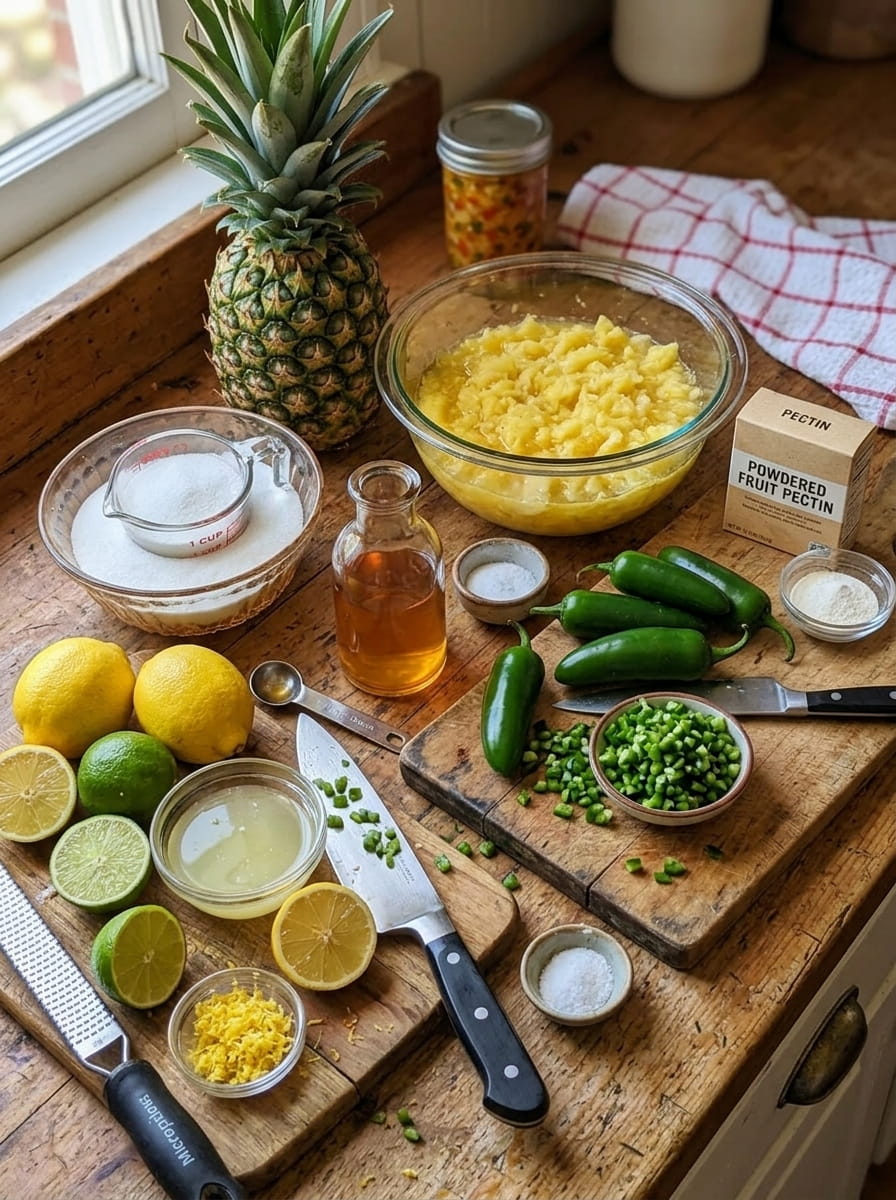
Here is everything you need to make this pineapple jalapeño jelly:
- 4 cups fresh pineapple, finely crushed
- 4 fresh jalapeños, finely diced
- 1 1/2 cups granulated sugar
- 1/2 cup apple cider vinegar
- 2 tablespoons fresh lemon juice
- 1 tablespoon fresh lime juice
- 1 box powdered fruit pectin
- 1/2 teaspoon salt
- 1 teaspoon lemon zest
You will also need clean jars with lids for storing the finished jelly.
Ingredient Notes and Substitutions
Understanding each ingredient helps you get a great set and a balanced flavor.
Fresh Pineapple
Ripe, sweet pineapple gives the best flavor. Choose one that smells fragrant at the base and has golden color on the outside. Peel it, remove the core, and chop it very finely, or pulse it in a food processor until it’s finely crushed, being careful not to purée it completely. You want small bits of fruit rather than juice. Canned crushed pineapple can work in a pinch, but fresh pineapple gives a brighter, more vibrant flavor. If you use canned, drain it well and avoid varieties packed in heavy syrup, which will add extra sugar.
Fresh Jalapeños
Jalapeños provide the heat and a fresh, slightly grassy flavor. Heat levels vary from pepper to pepper, so taste a small piece if you’re unsure. Most of the heat lives in the white membranes and seeds. For a milder jelly, remove them before dicing. For a spicier jelly, leave some or all of the seeds in. Dice the peppers very finely so the pieces suspend evenly in the jelly instead of floating or sinking. Wear gloves while chopping, and avoid touching your eyes or face. A red jalapeño or a mix of red and green gives a more colorful result. For extra heat, swap one jalapeño for a serrano or a habanero.
Granulated Sugar
Sugar sweetens the jelly and balances the vinegar and heat. It also helps the pectin set and acts as a natural preservative. This recipe uses 1 1/2 cups, which is a lighter amount than many traditional pepper jelly recipes, so the pineapple provides much of the sweetness. Do not reduce the sugar further, since it affects both the flavor and the set.
Apple Cider Vinegar
Apple cider vinegar adds a gentle fruity tang and the acidity that makes pepper jelly taste balanced rather than cloying. White vinegar can be substituted for a sharper, cleaner flavor, though apple cider vinegar pairs especially well with pineapple.
Fresh Lemon Juice, Lime Juice, and Lemon Zest
The citrus trio brightens the jelly and adds a layered, fresh flavor. Lemon juice supports the set and lifts the pineapple, lime juice adds a floral, tropical note, and lemon zest delivers aromatic citrus oils. Use fresh juice if you can, since bottled juice often tastes flatter.
Powdered Fruit Pectin
Pectin is the ingredient that makes the jelly set. This recipe calls for one box of powdered fruit pectin. Pectin products differ, so it helps to read the instructions on your box. Regular powdered pectin is designed to work with a larger amount of sugar, while low-sugar or no-sugar-needed pectin is designed to gel with less. Because this recipe uses a moderate amount of sugar, a low-sugar or no-sugar-needed powdered pectin is often the more reliable choice. If your jelly doesn’t set the way you expect, the type of pectin and the amount of sugar are the first things to check. Make sure your pectin is fresh, since old pectin loses its setting power.
Salt
A small amount of salt sharpens and rounds out the flavors, preventing the jelly from tasting flat or one-note.
How to Make Pineapple Jalapeño Jelly (Step by Step)
Follow these steps for a glossy, spreadable result.
Step 1: Prepare Your Jars and Ingredients
Wash your jars and lids in hot, soapy water, rinse well, and set them on the counter. Measure all of your ingredients before you start, because the jelly comes together quickly and you’ll want everything ready. Finely crush the pineapple and finely dice the jalapeños.
Step 2: Combine the Ingredients
Add the crushed pineapple, diced jalapeños, sugar, apple cider vinegar, lemon juice, lime juice, lemon zest, and salt to a large saucepan. Use a roomy pot, since the mixture bubbles up and expands as it boils.
Step 3: Bring to a Full Rolling Boil
Stir the mixture well and bring it to a full rolling boil over medium-high heat, stirring frequently. A full rolling boil is one that keeps bubbling vigorously even when you stir it.
Step 4: Add the Pectin
Once the mixture is boiling, add the powdered pectin and stir continuously so it dissolves evenly without clumping.
Step 5: Boil Again
Return the mixture to a vigorous boil and cook for 1 to 2 minutes, stirring constantly. Watch the timing carefully, since boiling too long can weaken the set.
Step 6: Skim the Foam
Remove the pot from the heat and skim off any foam from the surface with a spoon. Skimming gives the finished jelly a clearer, glossier appearance.
Step 7: Fill the Jars
Carefully ladle the hot jelly into clean jars, leaving about 1/4 inch of space at the top. Use a funnel if you have one to keep the rims clean, and wipe the rims with a damp paper towel before closing.
Step 8: Cool
Let the jars cool at room temperature, then refrigerate until the jelly is fully set. Don’t be alarmed if the jelly looks thin while it’s still warm. Jelly firms up as it cools.
Step 9: Chill
Chill for at least 4 hours before serving for the best glossy, spreadable texture. Some jellies need a full day to reach their final consistency.
Step 10: Serve and Enjoy
Serve over cream cheese with crackers, use as a glaze for grilled chicken, or spread onto sandwiches, burgers, and charcuterie boards.
Tips for a Perfect Pineapple Jalapeño Jelly
- Prep everything first. Jelly cooks quickly, so chop, measure, and set out jars before turning on the heat.
- Chop the fruit finely. Small, even pieces distribute well and prevent floating.
- Don’t skip the full rolling boil. Pectin needs a vigorous boil to activate.
- Stir constantly after adding pectin. This prevents clumps and scorching.
- Watch the timer. Boil for just 1 to 2 minutes after adding pectin. Overcooking can weaken the set.
- Skim the foam. A quick skim gives a prettier, clearer jelly.
- Be patient while it sets. The jelly continues to thicken in the refrigerator for several hours.
- Control the heat. Remove seeds for mild, keep them for hot, and taste your jalapeños first.
- Use a big pot. The mixture foams up and can boil over in a small saucepan.
- Use fresh pectin. Check the expiration date on the box.
Troubleshooting Common Problems
The jelly didn’t set. Give it at least 24 hours in the refrigerator first, since some jellies set slowly. If it is still runny, the most common causes are the wrong type of pectin for the amount of sugar, expired pectin, not reaching a full rolling boil, or boiling for too short or too long. A thinner jelly is still delicious as a glaze, sauce, or marinade, so don’t toss it.
The jelly is too firm. Overcooking or too much pectin can cause a rubbery set. You can warm it gently with a splash of pineapple juice or water to loosen it.
The fruit floats to the top. This happens when the jelly is poured while it is too thin and hot. Let the mixture sit for a couple of minutes after skimming, stir gently, and then fill the jars so the pieces distribute more evenly.
The jelly is too spicy. Next time, remove the seeds and membranes, or use fewer jalapeños. To tone down a finished batch, serve it with plenty of cream cheese or mix it with plain jam.
The jelly isn’t spicy enough. Add a minced serrano, a pinch of crushed red pepper flakes, or leave the seeds in on your next batch.
The jelly is cloudy. Cloudiness can come from overmixing, pressing the pineapple too hard, or not skimming the foam. It is still safe and tasty.
The flavor is too sweet. Add a little extra lemon juice or vinegar next time, or serve it with salty crackers and sharp cheeses to balance it.
Flavor Variations to Try
Extra Fiery Pineapple Habanero Jelly. Replace one or two jalapeños with a habanero for intense, fruity heat.
Mild Pineapple Pepper Jelly. Remove all seeds and membranes, and use a mix of jalapeños and sweet red bell pepper.
Smoky Pineapple Jelly. Roast the jalapeños under the broiler or on the grill before dicing, or stir in a pinch of smoked paprika.
Pineapple Mango Jalapeño Jelly. Replace one cup of pineapple with finely diced ripe mango.
Ginger Pineapple Jelly. Add a teaspoon of freshly grated ginger for a warm, zippy note.
Cilantro Lime Pineapple Jelly. Stir in a tablespoon of finely chopped cilantro and a bit more lime zest after cooking.
Red Pepper Pineapple Jelly. Use ripe red jalapeños or Fresno chilies for a vivid red-orange color.
How to Serve Pineapple Jalapeño Jelly
This jelly is a flexible, crowd-pleasing condiment. Here are some of the best ways to enjoy it.
- Cream cheese and crackers. The classic. Pour the jelly over a block of cream cheese and serve with buttery crackers or pretzel crisps.
- Charcuterie boards. Pair it with sharp cheddar, creamy brie, goat cheese, cured meats, nuts, and fresh fruit.
- Grilled chicken glaze. Brush it onto chicken during the last few minutes of grilling for a sticky, caramelized finish.
- Pork and ham. Use it as a glaze for pork chops, pork tenderloin, or holiday ham.
- Sandwiches and burgers. Spread it on turkey sandwiches, grilled cheese, chicken sandwiches, or burgers for a sweet-heat kick.
- Meatballs and wings. Warm the jelly and toss it with cocktail meatballs or chicken wings for a party appetizer.
- Baked brie. Spoon it over a warm wheel of brie wrapped in puff pastry.
- Tacos and quesadillas. A small spoonful adds a fruity, spicy note to fish tacos, carnitas, and cheese quesadillas.
- Salmon and shrimp. Brush on seafood before baking or grilling.
- Breakfast. Spread on biscuits, cornbread, or toast, or serve alongside sausage and eggs.
- Cocktails. Stir a spoonful into a margarita or whisk it into a vinaigrette.
- Straight from the jar. A little spoonful alongside cheese is delicious on its own.
Storage Information
Keep refrigerated and use within 2 to 3 weeks. Store the jelly in clean, airtight jars in the refrigerator, and use a clean spoon each time to avoid introducing bacteria.
This is a refrigerator jelly and has not been developed or tested for shelf-stable canning. Because it contains fresh low-acid ingredients like peppers and pineapple, changing the ratios or storing it at room temperature is not recommended. Always keep it cold. If you want to make a pantry-stable pepper jelly, use a recipe specifically tested for canning and follow trusted food-safety guidelines.
Freezing: If you want to keep it longer, you can freeze the jelly in freezer-safe containers, leaving extra headspace for expansion. Thaw it in the refrigerator before using. The texture may be slightly softer after thawing.
Signs of spoilage: Discard the jelly if you notice mold, an off or fermented smell, fizzing, or an unusual change in color or texture.
Nutrition Notes
Pineapple jalapeño jelly is a sweet condiment made mostly of fruit, sugar, and vinegar, so it’s best enjoyed in small amounts, such as a spoonful over cream cheese or a thin spread on a sandwich. The exact nutrition per serving depends on how much jelly your batch yields and how much you use. For precise numbers, enter your ingredients and serving size into a recipe nutrition calculator.
Common Mistakes to Avoid
Using the wrong pectin. Check the box to make sure it matches the amount of sugar in the recipe.
Not reaching a full rolling boil. Pectin needs a vigorous boil to work.
Overcooking. Boiling longer than the recommended time can weaken the set.
Purée instead of crush. Turning the pineapple into a smooth purée gives a cloudy, watery jelly. Keep it finely crushed.
Leaving big pieces of pepper. Large chunks sink or float. Dice very finely.
Skipping prep. Once the jelly starts boiling, you won’t have time to chop or measure.
Handling hot peppers carelessly. Wear gloves and wash your hands thoroughly afterward.
Storing at room temperature. This recipe is for refrigerator storage only.
Giving up too early. Wait at least 24 hours before deciding your jelly hasn’t set.
Frequently Asked Questions
How long does pineapple jalapeño jelly last?
Keep it refrigerated and use it within 2 to 3 weeks, using a clean spoon each time.
Is this recipe safe for canning?
No. This recipe is designed as a refrigerator jelly and has not been tested for shelf-stable canning. Keep the jars in the refrigerator at all times.
How spicy is this jelly?
It has a pleasant medium heat with a sweet finish, but you control the spice level. Remove the seeds and membranes for a milder jelly, or keep them in for more fire.
Can I use canned pineapple?
Yes, if you drain it very well. Fresh pineapple gives a brighter, more tropical flavor, but canned crushed pineapple in juice works in a pinch.
Can I use frozen pineapple?
Yes. Thaw it, drain off the excess liquid, and crush it finely before measuring.
What type of pectin should I use?
Use a powdered fruit pectin and follow the package directions. Because this recipe uses a moderate amount of sugar, a low-sugar or no-sugar-needed powdered pectin is often the most dependable choice. Liquid pectin is not a direct substitute.
Why didn’t my jelly set?
Common causes include the wrong type of pectin, expired pectin, not reaching a full rolling boil, or boiling too briefly or too long. Allow 24 hours in the refrigerator before deciding, and use any runny jelly as a glaze or sauce.
Can I reduce the sugar?
It’s best not to. Sugar affects the flavor, the set, and the shelf life. If you want a lower-sugar jelly, look for a recipe developed specifically with low-sugar pectin.
Can I use red jalapeños or other peppers?
Yes. Red jalapeños, Fresno chilies, serranos, and habaneros all work, and each brings a different heat level and color. Adjust the amount to taste.
Can I make it less sweet?
Add a bit more lemon juice or vinegar, or serve it with salty crackers, sharp cheese, or savory meats to balance the sweetness.
What do I serve with pineapple jalapeño jelly?
It’s best known for cream cheese and crackers, but it’s also great on grilled chicken, pork, sandwiches, burgers, baked brie, meatballs, and charcuterie boards.
Can I double the recipe?
Pectin recipes are generally best made in single batches, because larger volumes can heat unevenly and set poorly. If you need more, make two separate batches.
Why are there so many bubbles and foam?
Foam is normal when boiling fruit and pectin. Skim it off with a spoon before filling the jars, or stir in a tiny dab of butter during boiling to reduce foaming.
Can I make this jelly ahead for a party?
Absolutely. Make it a day or two ahead so it can fully set, and serve it cold or at room temperature.
Can I give this as a gift?
Yes. Just include a note that it should be kept refrigerated and used within 2 to 3 weeks, since it is not shelf-stable.
Final Thoughts
This pineapple jalapeño jelly delivers everything you want in a sweet-heat condiment: juicy pineapple, fiery jalapeños, bright citrus, and a glossy homemade finish. It takes only a few minutes at the stove, uses simple ingredients, and turns ordinary crackers, chicken, sandwiches, and burgers into something special.
Make a batch, let it chill until fully set, and then spoon it over cream cheese for the easiest, most irresistible appetizer you’ll ever serve. Once you taste that perfect balance of fruity sweetness, zesty citrus, and jalapeño heat, a jar of this jelly will become a permanent resident in your refrigerator.
Did you try this recipe? Leave a comment and rating below, and tell us how you like to enjoy your pineapple jalapeño jelly. Don’t forget to save this recipe on Pinterest for later!
Print
Pineapple Jalapeño Jelly
Ingredients
Here is everything you need to make this pineapple jalapeño jelly:
- 4 cups fresh pineapple, finely crushed
- 4 fresh jalapeños, finely diced
- 1 1/2 cups granulated sugar
- 1/2 cup apple cider vinegar
- 2 tablespoons fresh lemon juice
- 1 tablespoon fresh lime juice
- 1 box powdered fruit pectin
- 1/2 teaspoon salt
- 1 teaspoon lemon zest
You will also need clean jars with lids for storing the finished jelly.
Instructions
Follow these steps for a glossy, spreadable result.
Wash your jars and lids in hot, soapy water, rinse well, and set them on the counter. Measure all of your ingredients before you start, because the jelly comes together quickly and you’ll want everything ready. Finely crush the pineapple and finely dice the jalapeños.
Add the crushed pineapple, diced jalapeños, sugar, apple cider vinegar, lemon juice, lime juice, lemon zest, and salt to a large saucepan. Use a roomy pot, since the mixture bubbles up and expands as it boils.
Stir the mixture well and bring it to a full rolling boil over medium-high heat, stirring frequently. A full rolling boil is one that keeps bubbling vigorously even when you stir it.
Once the mixture is boiling, add the powdered pectin and stir continuously so it dissolves evenly without clumping.
Return the mixture to a vigorous boil and cook for 1 to 2 minutes, stirring constantly. Watch the timing carefully, since boiling too long can weaken the set.
Remove the pot from the heat and skim off any foam from the surface with a spoon. Skimming gives the finished jelly a clearer, glossier appearance.
Carefully ladle the hot jelly into clean jars, leaving about 1/4 inch of space at the top. Use a funnel if you have one to keep the rims clean, and wipe the rims with a damp paper towel before closing.
Let the jars cool at room temperature, then refrigerate until the jelly is fully set. Don’t be alarmed if the jelly looks thin while it’s still warm. Jelly firms up as it cools.
Chill for at least 4 hours before serving for the best glossy, spreadable texture. Some jellies need a full day to reach their final consistency.
Serve over cream cheese with crackers, use as a glaze for grilled chicken, or spread onto sandwiches, burgers, and charcuterie boards.